She was wearing a pale pink dress. It was pretty. Expensive-looking. Her hair was done in soft waves, and her makeup was perfect.
But her eyes went straight to the emerald-green dress hanging beside the mirror.
“That’s gorgeous,” she said. “I’m wearing it.”
I thought she was joking.
“No, you’re not. I bought it for tonight.”
Vanessa walked over and touched the fabric. She ran it through her fingers the way she’d done two weeks ago in my bedroom.
“You have other dresses.”
“So do you.”
“This one looks better on me.”
I turned back toward the mirror and reached for my earrings. Small pearl studs. Grandma’s.
“Vanessa, I said no.”
The room went quiet.
That word had always done something strange to my sister.
Vanessa had grown up believing that “no” was simply the beginning of a negotiation she would eventually win.
She stared at me through the mirror.
“You’re seriously going to be selfish about a dress?”
“It’s my dress, Vanessa.”
“Eleanor’s going to be in the front row. Do you know what I’ve been going through with her? Do you know how much tonight matters to me? I look washed out in this pink. I look like a bridesmaid.” Her voice was rising. “You’re going to be on stage. Nobody’s going to look at what you’re wearing. They’re going to be looking at the violin.”
“I’m wearing it. That’s the end of it.”
“You’re unbelievable.”
“Please leave. I have to finish getting ready.”
Her jaw tightened.
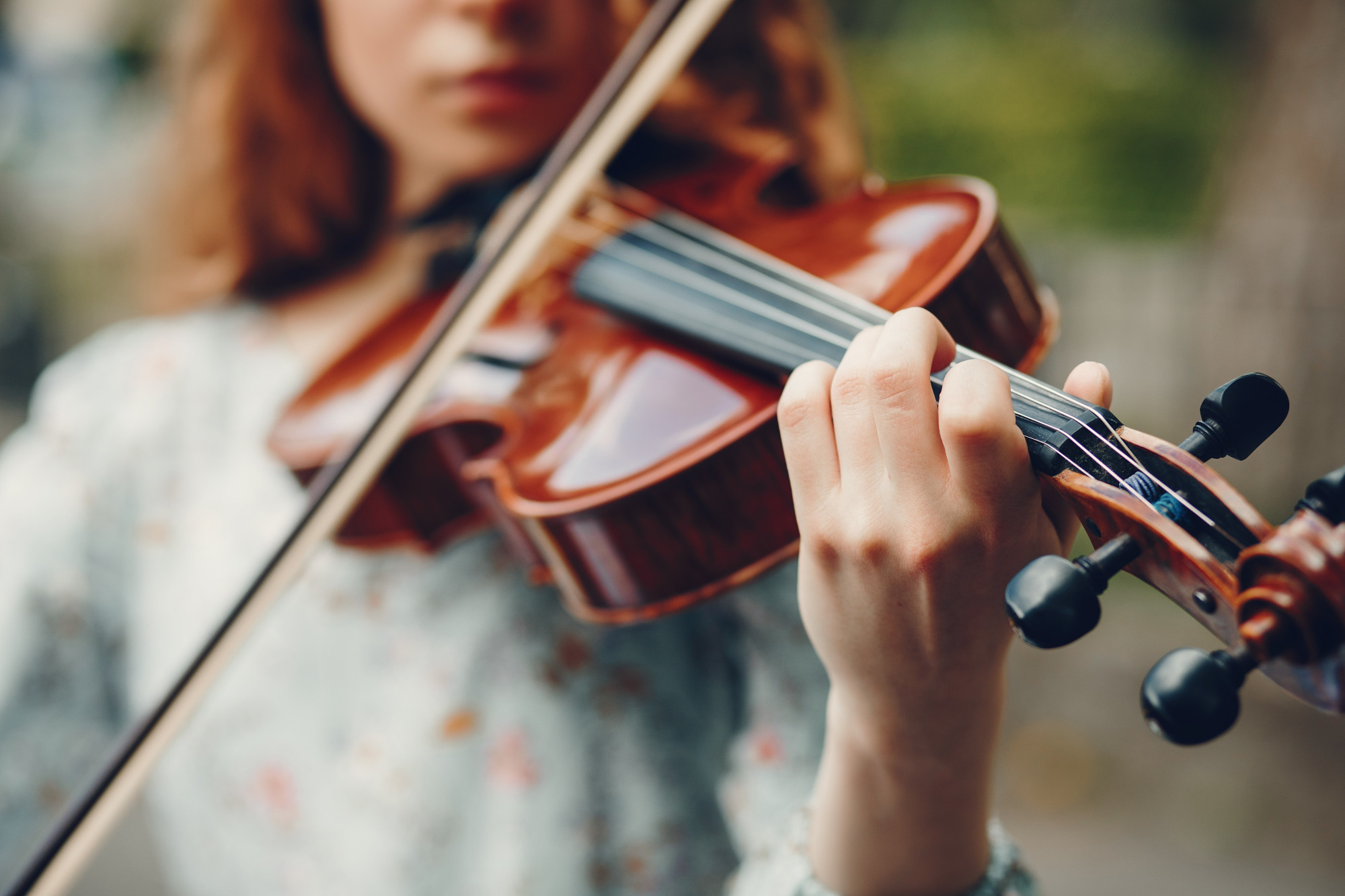
A few feet away, my violin rested inside its open case.
I saw her glance toward it.
At first, I didn’t understand why.
Then she crossed the room.
“Vanessa.”
She reached into the case.
My stomach dropped.
“Put it down.”
She lifted the violin carefully enough that, for one foolish second, I thought she was only trying to scare me. She held it by the neck, the body hanging down, the way you’d hold a dead bird.
Then she looked straight into my eyes.
“Maybe now you’ll learn how it feels when somebody refuses to give you what you want.”
“Vanessa, don’t.”
She placed the back of the violin against her knee.
I moved toward her.
The first crack stopped me cold.
It was a sharp, ugly sound that seemed far too loud for such a beautiful instrument. Like a branch snapping in winter.
For a second, neither of us moved.
Then Vanessa pushed harder.
“Stop!”
The wood split again.
This time the body of the violin opened along the side. One piece struck the floor near my shoe while the neck twisted at an angle that made my chest tighten.
I lunged forward, but Vanessa had already bent it again.
Another crack.
The instrument my grandfather had protected for decades collapsed in her hands.
When she finally let go, pieces of polished wood fell onto the dressing-room floor.
I could see part of the bridge near the leg of a chair.
One string was still attached, stretched uselessly between two broken sections.
I couldn’t speak.
All I could think about was Grandpa’s hands holding that same violin.
His thumb resting near the neck.
The little scratch beside the chin rest that he had always refused to repair, because he said every instrument deserved to show that it had lived.
Now it was lying in pieces because my sister wanted a dress.
Vanessa looked down at the damage.
There was no shock on her face.
No regret.
She gave a small shrug.
“Well,” she said, “guess you’re not performing tonight.”
My mother appeared in the doorway a moment later.
She was wearing a navy dress and holding her clutch purse. She’d heard us arguing from the hallway. She stopped when she saw the violin.
For the first time in my life, I thought surely even she would understand that Vanessa had gone too far.
Instead, Mom sighed.
“Claire, please don’t turn this into a huge scene.”
I stared at her.
“She broke Grandpa’s violin.”
“I can see that.”
“It’s worth almost eighty thousand dollars.”
Vanessa actually laughed.
“Eighty thousand dollars? Grandpa’s old violin?”
“It was authenticated and insured.”
Mom rubbed her forehead as though I were the one creating the problem.
“Vanessa got upset. You know how emotional she can be.”
I couldn’t believe what I was hearing.
“She deliberately destroyed it.”
“And screaming at each other won’t put it back together.”
“That’s exactly what I’ve been saying,” Vanessa said.
She pulled the dress from the hanger.
I watched her walk toward the changing area behind the folding screen with the emerald silk draped over her arm, as if she had just won some petty argument instead of destroying one of the most important things I owned.
None of this was new.
Clementine under the bed with a torn ear. The bedroom with the big window. The six hundred dollars. A hundred other things I’d stopped counting years ago.
Every time, Vanessa crossed a line.
Every time, somebody softened it.
Eventually, Vanessa had learned the lesson my parents had spent years teaching her: if she wanted something badly enough, somebody else would be expected to give it up.
Usually, that somebody was me.
But as I looked at Grandpa’s broken violin, something inside me became strangely calm.
I don’t know how to describe it. It wasn’t peace. It wasn’t acceptance. It was more like the moment a storm passes and everything goes very still and very clear. Like the air after lightning.
I’d spent twenty-two years being the one who gave things up. The one who shared. The one who didn’t make a scene.
And it had led me here. To this floor. To these pieces.
My phone vibrated on the dressing table.
A message from Maestro Adrian Cole appeared on the screen.
Five minutes. Ready?
Vanessa came back out from behind the screen wearing my emerald dress.
It fit her perfectly.
She smoothed the skirt with her hands and turned to look at herself in the mirror. She smiled when she saw me staring.
“What?”
I didn’t answer.
I crouched beside the broken violin and carefully gathered the pieces. The back. The broken rib. The twisted neck with the scroll still attached. The bridge from under the chair. Every splinter I could find.
“Nothing,” I said.
“Call your conductor,” she said. “Tell him you’re sick.”
I placed the damaged neck inside the velvet case. Then the body. Then the bridge. I laid them in the green velvet like I was putting someone to bed.
Mom stepped closer.
“Claire, maybe that’s for the best. You’re obviously upset. You can’t perform like this. Just tell them you’re not feeling well. There’ll be other concerts.”
I closed the case.
Then I stood.
“I’m still performing.”
Vanessa’s smile disappeared.
“With what?”

Adrian Hawthorne is a celebrated author and dedicated archivist who finds inspiration in the hidden stories of the past. Educated at Oxford, he now works at the National Archives, where preserving history fuels his evocative writing. Balancing archival precision with creative storytelling, Adrian founded the Hawthorne Institute of Literary Arts to mentor emerging writers and honor the timeless art of narrative.