Megan went. I heard the screen door, and then I didn’t hear anything at all for long enough that I looked up.
Karen was standing on the porch.
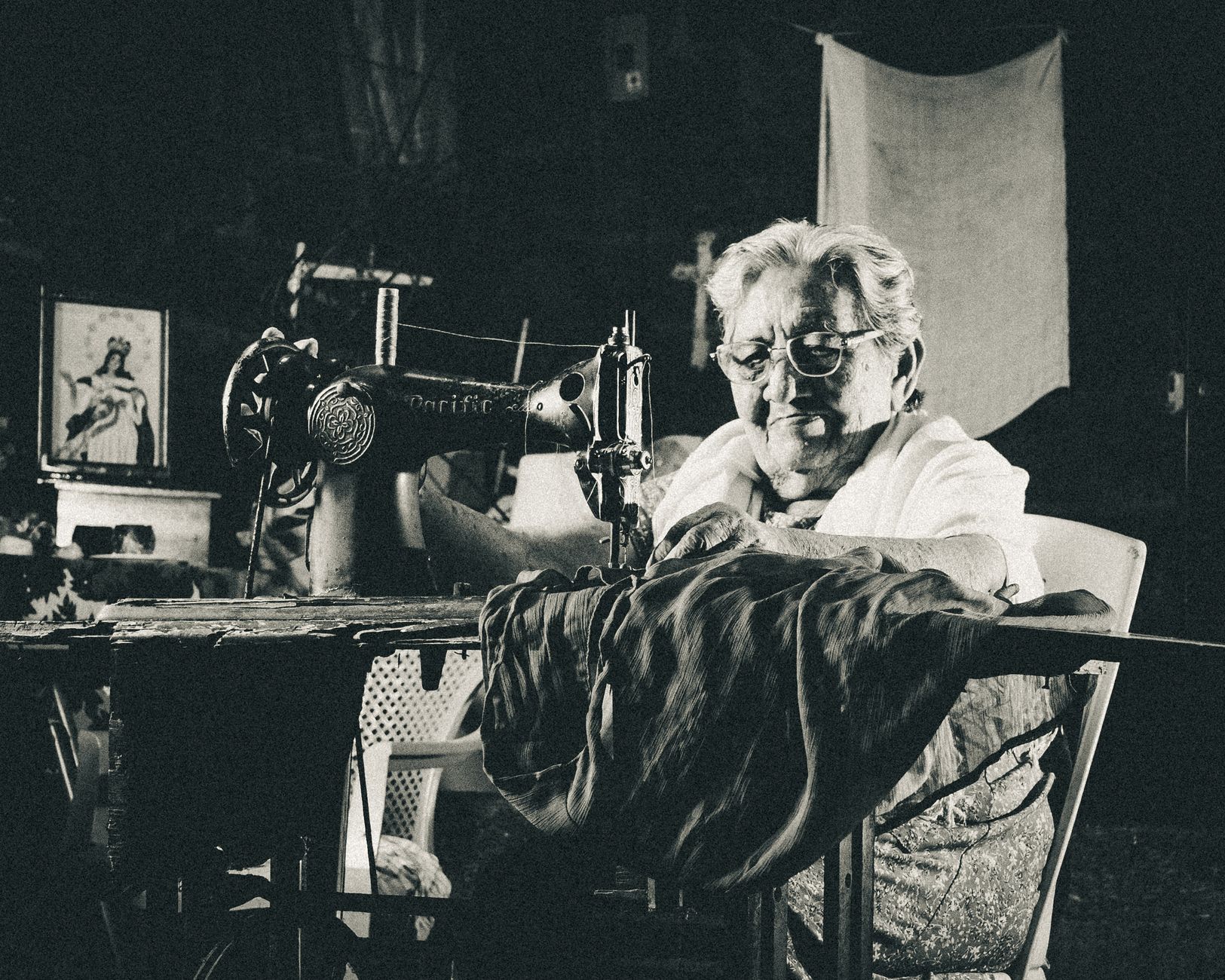
She had on her church cardigan and she was holding her pocketbook in front of her with both hands. She wasn’t looking at Megan. She was looking past her, at the machine. I’d left the light on over the needle.
“I could hear it from the yard,” she said. Her voice wasn’t steady. “Before I got out of the car. I sat there with the window down. I thought, well, that’s Mama sewing. And then I thought, no, it is not.”
Nobody moved.
“I’m Karen,” she said to Megan. “I’m the one who sold it. You don’t owe anybody one thing, and I’d be obliged if you’d let me come in.”
“Yes, ma’am,” Megan said. “Of course.”
Karen came in as far as the edge of the linoleum. She looked at Hannah, standing there in that blue, with the red basting thread still showing at one shoulder and the bottom bristling with pins.
“Oh,” she said. Just that.
Then she turned to me, and she said it. She didn’t dress it up, and she didn’t wait to be asked.
“I heard you, that Saturday. You told me what was under that sheet and I heard every word. And I taped another box.” She took a breath. “I have been trying to work out why. I think if I’d lifted that sheet I’d have had to sit down. And if I had sat down in that house, Denise, I don’t believe I’d have got back up. So I didn’t lift it. I didn’t lift anything. I just carried it all out the door as fast as I could go.”
“Karen.”
“Let me finish, I practiced this in the car. That’s a reason. It’s not an excuse. I sold our mother’s sewing machine for forty dollars, and if you’d come one day later I’d have boxed her last dress for the church rummage sale and never known it. I did that. Not the landlord, and not being tired.” She looked at Hannah. “I’m sorry, sweetheart. I am so sorry.” She looked at Megan. “And I’m sorry you got pulled into the middle of my family’s mess.”
Megan’s eyes were swimming. “It’s been the nicest mess I ever had,” she said.
I got up off my knees.
“I’ve got something of yours,” I said.
I took the note out of my cardigan pocket and handed it to my sister.
She pulled her reading glasses down out of her hair. I watched her read it. I watched her get to the fourth line and stop, and go back, and read it again with her lips moving. Karen rolls a better hem than either one of us. I taught her first. Ask her.
Karen put her hand flat against her breastbone and held it there.
“She wrote that a week before,” I said. “Maybe less. I’ve had it since last Monday, and I didn’t call you, because I was mad, and because I wanted to be the one who finished it. That’s mine to be sorry for. And here’s the rest. You did three years of Tuesdays and Thursdays. I did Sundays, when it suited me. I should have been in that house with a tape gun two weeks ago, and you’d never have been carrying anything by yourself.”
Karen folded the note along Mama’s folds. She didn’t hand it back right away.

Specialty: Emotional Turning Points
Rachel Monroe writes character-driven stories about betrayal, second chances, and unexpected resilience. Her work highlights the emotional side of family conflict — the silences, the misunderstandings, and the moments when someone quietly decides they’ve had enough.