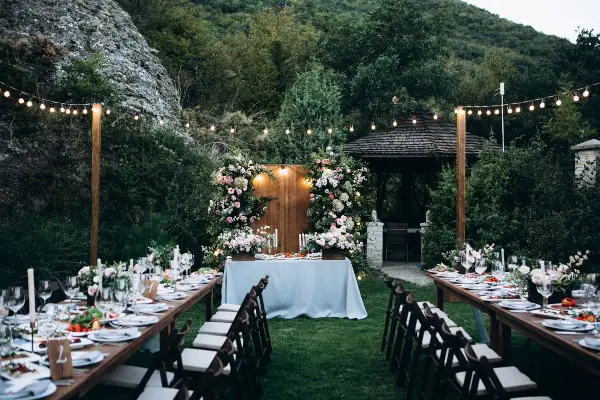
Harold Dawson was first in line. Naturally. He’d been standing by the stack of plates since 5:15.
“Give me an end piece if you’ve got one,” he said.
“I’ve got one.”
I laid it on his plate and handed it across. He didn’t move along. He stood there holding that plate in both hands, and he looked at me with his pale old eyes.
“I got a letter in Korea,” he said. “Winter of fifty-one. From a girl I’d been writing to since basic training. She’d married a fella from Fredonia.”
He nodded slowly.
“Thought it’d kill me. Then I met Dorothy at a box supper the year I got home. We had fifty-eight years.”
“Thank you, Harold.”
“I’m just telling you what happened,” he said, and he shuffled off down the line toward the potatoes.
They came through like that for forty minutes.
The pharmacy girls hugged me across the steam pans and got gravy on their sleeves. Daddy’s friends from the post couldn’t think of a thing to say, so they all said “looks good” about the beef. Derrick’s Aunt Judy took my free hand and held it against her cheek for a second and couldn’t say anything at all.
Emma threw petals at every single one of them.
And at about ten minutes to six, with sixty people still in line, the door by the POW flag opened.
Lorna came in.
She had changed her shoes, I noticed. She’d been wearing navy heels at the church. Now she had on flats. She was still in the navy dress with the matching jacket. The one she and I had driven all the way to Joplin together to find. She had her purse on her arm and her car keys in her hand.
She didn’t look around. She came straight up the side of the room along the paneling, right past the whole line.
The band wasn’t playing yet. So when the talking died down, table by table, as people saw her, there was nothing to cover the quiet.
She stopped across the steam table from me.
Lorna was sixty-two. She’d been a widow for eight years. She’s a small, upright, careful woman who irons her pillowcases. And in the four years I’d dated her son, she had never once been unkind to me.
That was the part I couldn’t get past, standing there.
She taught me her mother’s noodle recipe. She sat with me at the hospital in Wichita for six nights the week my own mother died, because Derrick had to work.
“Amy Jo,” she said.
“Lorna.”
“I’ll take the ring now. I’d just as soon not make a second trip.”
She said it quietly. But it was a quiet room.
The ring was her mother’s. A small round diamond in a yellow gold setting from 1948. Derrick hadn’t bought it. Lorna had taken it out of her own jewelry box and handed it to him to give to me, and she’d cried while she did it.
I was never going to keep that ring. There was no version of that day where I kept it.
But it was also on my left hand. And my left hand was wrapped around a serving spoon, dripping with beef juice, in front of a hundred and forty people.

Sophia Rivers is an experienced News Content Editor with a sharp eye for detail and a passion for delivering accurate and engaging news stories. At TheArchivists, she specializes in curating, editing, and presenting news content that informs and resonates with a global audience.
Sophia holds a degree in Journalism from the University of Toronto, where she developed her skills in news reporting, media ethics, and digital journalism. Her expertise lies in identifying key stories, crafting compelling narratives, and ensuring journalistic integrity in every piece she edits.
Known for her precision and dedication to the truth, Sophia thrives in the fast-paced world of news editing. At TheArchivists, she focuses on producing high-quality news content that keeps readers informed while maintaining a balanced and insightful perspective.
With a commitment to delivering impactful journalism, Sophia is passionate about bringing clarity to complex issues and amplifying voices that matter. Her work reflects her belief in the power of news to shape conversations and inspire change.