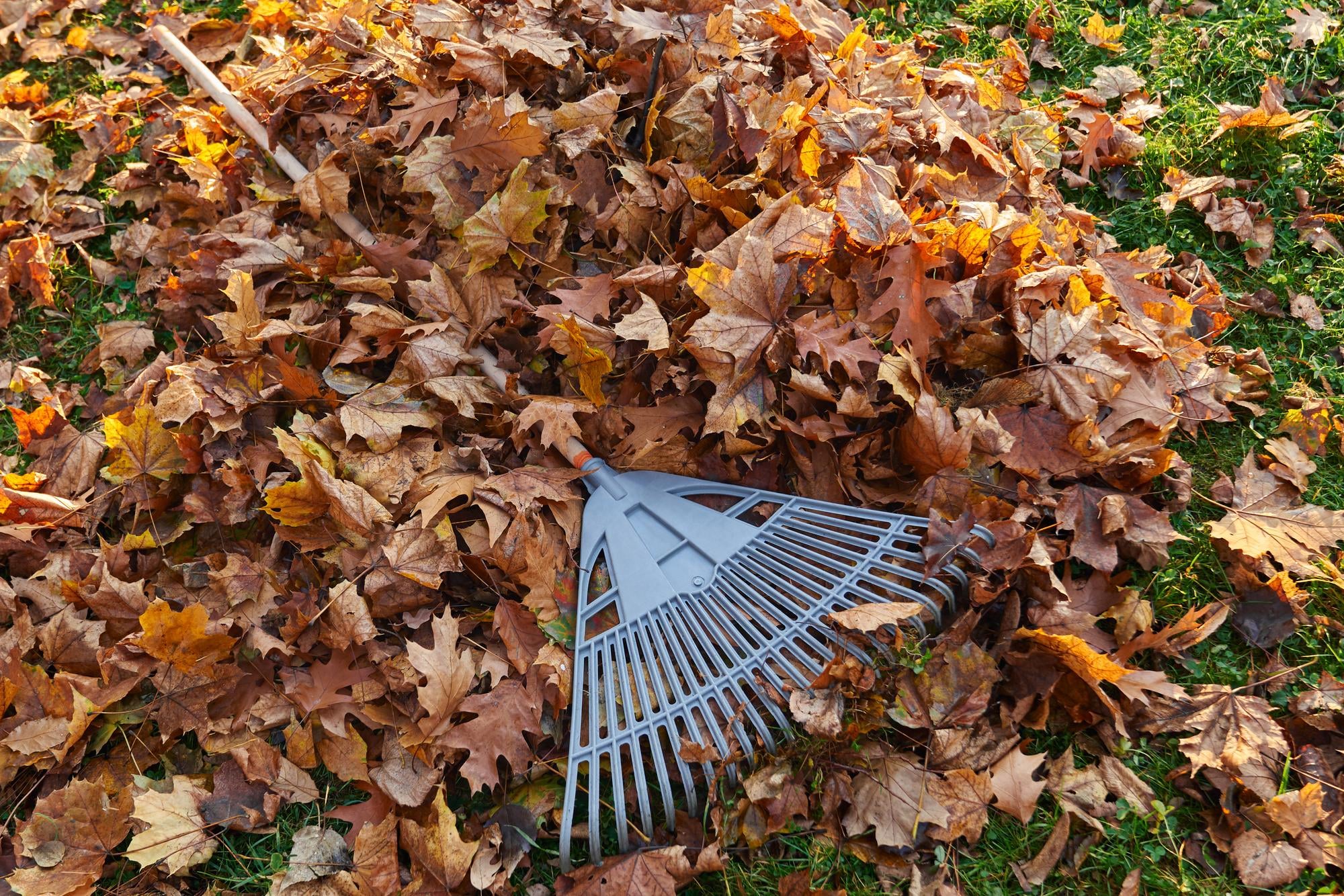
The Leaves
At 8:45 on Saturday morning, Denise Varga opened her front door.
I was sitting on my own front porch. In my old wooden rocking chair. The one Helen bought at an estate sale in 1987 and refinished herself on our back patio. I had a cup of coffee. Black. In the blue mug with the chip in the handle.
I watched her come out.
She was wearing a wide straw sun hat with a yellow ribbon. A white linen blouse. Pearls. Pressed khaki slacks. Gardening clogs that had never touched dirt. She was carrying a cup of coffee in a china cup with a saucer. Like the Queen of England.
A silver Lexus was pulling up to the curb in front of her house. The first car full of judges. From the Ohio Association of Garden Clubs. A man and two women. A young fellow with a big camera was getting out of a Honda behind them. The newspaper.
Denise stepped out onto her porch. She smiled at the street. Her big, bright, president-of-the-garden-club smile.
Then she looked at her front lawn.
The smile stayed on her face for about one second.
Then it slid off.
The coffee cup hit the porch steps and broke.
I’m seventy-seven years old.
My name is Walter Haines. I was an electrician for forty-one years. Commercial wiring. Hospitals and schools and office buildings all over central Ohio. I retired in 2012. I’ve lived at 10 Birch Lane in Oak Hollow, Ohio, since 1979.
My wife Helen has been gone eight years.
Pancreatic cancer. She was seventy-one. They found it in March. She died in August. At home. In a hospital bed the hospice people set up in our living room. By the front window. So she could see the yard.
I keep the yard nice because she liked it nice.
That’s the only reason. I’m not a gardener. I was never a gardener. Helen was the gardener. For forty-four years, she planted and pruned and mulched and fussed, and I mowed when she told me to and carried the heavy bags and dug holes where she pointed.
After she died, I didn’t know what to do with any of it.
I’d stand in the backyard and look at her roses and not know whether to water them or cut them or leave them alone.
So I bought a book. The Ohio Gardener’s Year. I read it at the kitchen table. I made notes. I taught myself.
I learned what she was doing all those years. Why she cut the roses back in March. Why she mulched in May. Why she split the hostas every third fall.
And I did it.
Edges trimmed. Hedges square. Leaves raked by Halloween.
Every year.
Because she liked it nice.
It’s not much of a yard. A quarter acre. A little brick ranch with white trim. A front lawn with a flagstone walk Helen laid herself in 1983. Two little dogwood trees by the porch. Her rose bed along the side of the house. Her hostas under the back window. Her vegetable garden in the back corner. A wooden fence on three sides.
Helen’s chair is still on the back patio. A green Adirondack. I painted it again this spring. I sit in it sometimes in the evening. I don’t sit in mine. Mine is next to it. I just sit in hers.
Our neighbor Denise moved in six years ago.
The house next door at 12 Birch Lane had belonged to the Kowalskis for thirty years. Nice people. Stan and Irene. Stan died in 2016. Irene went to live with her daughter in Cleveland. The house sat empty for a year.
Then Denise bought it.
She was about sixty, I’d guess. Short gray hair cut close. Sharp face. Sharp voice. She drove a little red Subaru. She worked odd hours. I’d hear her car leave at strange times. Ten at night. Six in the morning.
She didn’t come over to introduce herself. I went over with a loaf of banana bread. Helen always did that for new neighbors. I didn’t know how to make banana bread. I bought it at the Kroger and put it on one of Helen’s plates.
Denise opened the door about six inches.
“Yes?”
“Walter Haines,” I said. “Next door. Welcome to the neighborhood.”
She looked at the banana bread. Then at me. For a long time.
Something crossed her face. I didn’t know what it was then.
“Thank you,” she said.
She took the plate. She closed the door.
She never gave the plate back.
She’s the president of the Oak Hollow Garden Club.
She joined the first spring she lived here. By the second spring, she was president. I don’t know how. Helen was in that club for twenty-six years and never got higher than recording secretary.
She has a sign in her flower bed that says so.
OAK HOLLOW GARDEN CLUB — HOME OF THE PRESIDENT.
White wooden sign. Green letters. On a little post. Right in the middle of her front bed.
Her front yard is something to see. I’ll give her that. Roses. Hydrangeas. Daylilies. Coneflowers. Black-eyed Susans. Boxwoods trimmed into little balls. A birdbath. A stone path. Every year it looks like a magazine.
And in the middle of her backyard, there’s an oak.
The oak was there before either of us. Stan Kowalski told me once his father planted it in 1950. It’s huge now. Seventy feet tall. Branches spread out over half her yard.
And over the fence.
Into mine.
The first fall, I came outside one morning and my whole backyard was covered.
It was late October. A Tuesday. I went out with my coffee to sit in Helen’s chair.
And I stopped on the patio.
My backyard was covered in leaves.
Not with my leaves.
My two little dogwoods don’t drop much. A few hundred leaves, maybe. I rake them up in an afternoon.
These were oak leaves. Big brown ones. Thousands of them.
Piled against my fence like a snowdrift. Four feet deep in places. Spilling across the lawn. Over Helen’s hostas. Into her rose bed. Covering the vegetable garden.
I stood there with my coffee.
Then I heard it.
A high-pitched whine. On the other side of the fence.
A leaf blower.
Denise was on her side with a rake and a leaf blower.
She had on a sweatshirt and work gloves and a pair of safety goggles. The blower was strapped to her back. She was pointing it right at the fence. Right at the gap under the boards. Blowing.
Leaves were flying. Over the fence. Under the fence. Through the fence. Into my yard.
“Morning, Walter!” she called. She had to shout over the blower.
I walked over to the fence.
“Denise,” I said. “Those are your leaves.”
She turned off the blower.
She pushed her goggles up on her forehead. She looked at me. At the leaves piled against my side.
“Leaves don’t have names, Walter,” she said.
She laughed.
She pulled her goggles back down.
She kept blowing.
I asked her nicely.
Twice.
The first time was that afternoon. I went over and knocked on her front door. She opened it six inches again.
“Denise,” I said. “I’d appreciate it if you’d bag your own leaves. Instead of blowing them into my yard. They’re smothering my wife’s hostas.”
“Your wife’s?” Denise said. “I thought she passed.”
“She did,” I said. “They’re still hers.”
Denise looked at me for a long time.
“I’ll think about it,” she said.
She closed the door.
The next morning, there were more.
The second time I asked was a week later. She was in her backyard again. With the blower. I went to the fence.
“Denise,” I said. “Please. I’m asking you nicely. Please stop blowing your leaves into my yard.”
She turned off the blower.
She leaned on her rake.
And she smiled at me.
“You’re retired, Walter,” she said. “You’ve got nothing but time.”
She tapped the handle of her rake.
“I have a job,” she said.
I want you to know I’m not a fighter.
I never have been. Not in seventy-seven years.
Helen used to say I’d apologize to a door if I walked into it. She said it at parties. She said it to our son. She said it to the doctor in the hospital when the doctor asked if I was a difficult patient.
“Walter?” Helen said. “Walter would apologize to a door if he walked into it.”
She was right.
I’ve never been in a fight. I’ve never yelled at anybody. I’ve never sent food back at a restaurant. When the electric company overcharged us for three months in 1994, Helen had to call them, because I couldn’t.
I’m not a fighter.
So I said, “I sure do.”
And I raked them up.
Every leaf.
It took me four days. My back hurt. My knees hurt. I’m seventy-one then. Seventy-seven now.
I raked them off Helen’s hostas. Out of her rose bed. Out of the vegetable garden. Off the lawn. Out from under the fence.
Into big brown paper yard bags.
The kind you buy at the hardware store. Thirty-gallon. Five to a pack. $3.49 at Ace on Main Street.
I filled twenty-two of them.
But I didn’t put them out on the curb.
The city picks up yard waste every Wednesday in the fall. Brown paper bags at the curb. All you have to do is drag them out.
I didn’t.
I put them in my garage.
I don’t know exactly why.
I’ve thought about it a lot.
I think part of it was Helen. She hated waste. She composted everything. Coffee grounds. Eggshells. Banana peels. Leaves. She had three compost bins behind the garage and she turned them with a pitchfork every Sunday after church.
She used to say leaves were the best thing in the world for a garden. She called them black gold. She said if you let them sit for two or three years, they turn into the richest soil you’ve ever seen.
Leaf mold, she called it.
I think part of it was that.
But mostly, I think it was this:
They weren’t mine.
I stood in my garage that first night and looked at twenty-two brown paper bags full of somebody else’s leaves.
And I thought, I’m not going to throw these away.
They aren’t mine to throw away.
I bought a black marker.
A Sharpie. At the Ace on Main Street. The same day I bought the bags.
I wrote the date on every bag.
OCT 24 — D.V.
OCT 26 — D.V.
OCT 28 — D.V.
D.V. for Denise Varga.
And I bought a notebook.
A little spiral one. Green. From the Walgreens. I put it on my workbench in the garage. Next to my old tools. Next to the coffee can full of screws I’ve been saving since 1979.
And I started taking pictures.
I’m not good with phones. Kyle set mine up for me. He showed me how to use the camera. He showed me how to print pictures at the Walgreens. You just plug the phone into the machine and press a button.
Every time Denise blew leaves over my fence, I took a picture.
From my kitchen window. From the patio. From behind Helen’s chair.
I printed them at the Walgreens.
I taped them into the notebook. Next to the date. Next to the number of bags.
Oct. 24. 8:15 a.m. Denise. Blower. Over the fence. 4 bags.
Oct. 26. 7:40 a.m. Denise. Rake. Pushing through the gap by the gate. 3 bags.
Oct. 28. 9:02 a.m. Denise. Blower. Laughing. Waved at camera. 5 bags.
She saw me take the pictures.
She waved.
Every time.
She’d see me in the kitchen window with my phone and she’d turn off the blower and wave at me. Big. Like a parade.
Then she’d turn the blower back on.
Year one, twenty-two bags.
The next fall, it happened again.
October. The oak started dropping. And one morning I came out with my coffee and my backyard was covered.
Denise on her side. With the blower.
“Morning, Walter!”
I didn’t say anything.
I went inside. I got my rake.
I bagged every leaf.
I wrote the dates on the bags. I took the pictures. I put them in the notebook.
Year two, thirty.
Year three, she cut down her hedge.
There was a row of privet along her side of the fence. Stan Kowalski planted it in 1985. It was six feet tall. Thick. It caught a lot of the leaves before they got to my fence.
In September of year three, a tree service came and tore it out. Every bush. Down to the roots.
I asked one of the workers why.
“Lady says it was blocking her view,” he said.
She didn’t have a view. On the other side of that hedge was my fence.
With the hedge gone, the leaves didn’t stop at the privet anymore. The wind took them straight across her yard and right over my fence.
She didn’t even need the blower that year. Not as much.
She still used it.
“Morning, Walter!”
Forty-one bags.
Year four, thirty-eight.
Year five, forty-four.
Year six, thirty-nine.
My garage filled up.
Two-car garage. Helen’s old Buick on one side. I hadn’t driven it in eight years. I couldn’t. Her sunglasses were still on the dashboard. Her lipstick was still in the cup holder.
My pickup on the other side.
I moved my pickup to the driveway in year three.
By year five, the bags were stacked to the rafters. On both sides of the Buick. Along the back wall. In front of the workbench. On top of the chest freezer. Behind the water heater.
You could barely walk through.
My grandson Kyle came over one Christmas and opened the garage door.
Kyle is my son’s boy. My son, Mark, lives in Phoenix. He’s a pharmaceutical rep. He calls on Sundays. He comes home once a year if I’m lucky.
But Kyle stayed in Ohio. He went to Ohio State. He’s twenty-four now. He’s a high school shop teacher in Westerville. Like his grandpa should have been, Helen used to say.
He comes over every other Sunday. He helps me with things. He fixed my gutters. He set up my phone. He taught me how to watch the Buckeyes on the computer.
He looks like Helen. Around the eyes. He has her laugh.
It was Christmas Eve. Year four. He’d come over to help me carry the tree in.
He went out to the garage to get the stand. The old metal one Helen kept on the shelf above the workbench.
He opened the side door.
He just stood there.
“Grandpa,” he said.
I came up behind him.
He was staring at the bags. Floor to ceiling. Brown paper. Rows and rows. A hundred and thirty-one of them by then. Each one with a date in black marker.
“Grandpa,” he said again. “What is all this?”
“Leaves,” I said.
He turned and looked at me.
“Why are you keeping them?”
I thought about it.
“Because they aren’t mine,” I said.
He thought I was losing it.
I could see it on his face. The look you give an old man when you think the wheels are starting to come off.
He walked into the garage. He picked up one of the bags. He read the date.
OCT 31 — YR 3 — D.V.
“D.V.?” he said.
“Denise Varga,” I said. “Next door.”
“These are her leaves?”
“Every one.”
He looked at the bags. He looked at me.
“Grandpa,” he said slowly. “Why are her leaves in your garage?”
So I showed him the notebook.
He sat on an overturned bucket next to the workbench. He turned the pages.
I’d been at it four years by then. The notebook was thick. Pictures taped in. Dates. Times. Number of bags. Little notes in my handwriting. Block capitals. Electrician’s handwriting.
Oct. 19. Yr 2. 7:30 a.m. Denise. Blower. 6 bags. Smothered H’s hostas again.
Oct. 25. Yr 3. Tree service took out the privet. 3 trucks. Denise watched from her porch.
Nov. 2. Yr 3. 8:10 a.m. Denise. Blower. Laughing. Waved. 7 bags.
Oct. 22. Yr 4. 6:50 a.m. Denise. “Nothing but time, Walter!” Waved at camera. 5 bags.
Every bag had a date written on it.
Every date had a photo in the notebook.
Denise blowing leaves over my fence. Denise laughing. Denise waving at the camera.
Kyle turned the pages for a long time.
When he got to the end, he closed the notebook.
He looked up at me.
“Grandpa,” he said. “This is insane.”
“Maybe.”
“Have you called the city? There’s got to be a code. Some kind of ordinance. You can’t just blow your leaves into your neighbor’s yard.”
“I asked her nicely,” I said. “Twice.”
“Twice? In four years?”
“Your grandmother used to say I’d apologize to a door if I walked into it.”
Kyle laughed. He couldn’t help it.
Then he stopped laughing.
He looked at the bags again.
“What are you going to do with them?” he asked.
I didn’t answer.
I didn’t know yet.
Kyle carried the Christmas tree stand into the house. He didn’t say anything else about the leaves that night.
But I caught him looking at me. Over dinner. Over the pie I bought at Kroger and put on one of Helen’s plates.
Like he was worried.
The truth is, I didn’t know what I was doing.
Not for a long time.
I just knew that every fall, somebody pushed something onto my side of the fence that wasn’t mine. And laughed about it. And waved at the camera.
And every fall, I picked it up.
And I didn’t throw it away.
Because if I threw it away, it was like saying it was okay.
And it wasn’t okay.
This September, a flyer came in my mailbox.
Glossy. Full color. A picture of roses on the front.
OAK HOLLOW GARDEN CLUB — ANNUAL GARDEN TOUR.
Saturday, October 25. 9:00 a.m. to 3:00 p.m.
Join us for a walking tour of Oak Hollow’s finest gardens! This year, we are honored to welcome judges from the Ohio Association of Garden Clubs, who will be evaluating our featured home for the State Garden of Distinction Award.
FEATURED HOME: 12 BIRCH LANE.
Home of Club President Denise Varga.
There was a photo of her front yard. Taken in June. The roses in full bloom. The hydrangeas. The little boxwood balls. The birdbath. The sign.
OAK HOLLOW GARDEN CLUB — HOME OF THE PRESIDENT.
Denise’s house.
Judges from the state. A photographer from the Columbus Dispatch.
The tour was Saturday at nine.
I put the flyer on the refrigerator.
Under a magnet shaped like a tomato. Helen’s.
I looked at it every morning for a month.
The leaves started coming down in the middle of October.
And Denise started blowing.
“Morning, Walter!”
Every morning. Seven o’clock. Like an alarm clock.
I bagged them. I dated them. I took the pictures.
Thirty-nine bags by October twenty-third.
Two hundred and fourteen bags total.
Six years.
On Thursday, October twenty-third, I was standing at the kitchen window with my coffee.
Denise was in her backyard. Not with the blower. With a pair of pruning shears. Trimming her boxwoods into perfect little balls. Getting ready for the judges.
She had a list taped to her back door. I could see it from my window. Two pages. Typed.
She looked up. She saw me in the window.
She smiled.
She held up the pruning shears and snipped the air. Like a little wave.
Then she pointed at the oak tree.
It was still dropping. The last of the leaves.
She pointed at the tree.
Then she pointed at my yard.
And she laughed.
I went to the phone.
I called Kyle.
“Kyle,” I said. “You busy Friday night?”
Friday night, Kyle came over with his pickup truck.
A big Ford F-250. Black. With a long bed. He borrowed a trailer from the shop at Westerville High. A flatbed. Sixteen feet.
He backed up to my garage at seven p.m.
He got out. He looked at me.
“You sure about this, Grandpa?”
I wasn’t.
“Yes,” I said.
We worked until two in the morning.
Here’s what we did.
We loaded the bags into the truck. And the trailer. Two hundred and fourteen of them. Brown paper. Thirty gallons each. Each one with a date in black marker.
They weren’t heavy. That’s the thing about old leaves. After a few years, they don’t weigh much.
But they’d changed.
The oldest bags, year one and year two, didn’t rustle anymore. They’d gone soft. Heavy and dark and damp at the bottom. When Kyle picked up one of the year-one bags, the bottom of the paper tore, and what came out wasn’t leaves anymore.
It was soil.
Black. Rich. Crumbly. It smelled like a forest floor after rain.
Leaf mold.
Black gold.
Helen was right.
We drove it all next door.
Twelve Birch Lane. Fifty feet from my driveway to hers. We drove it anyway. Back and forth. In the dark. With the headlights off. Kyle said it’d be quieter.
Denise’s house was dark. Her car was gone. I knew it would be. She’d left at ten. Like she did most nights.
And we put every bag on her front lawn.
Not dumped. Not scattered.
Placed.
Kyle’s a shop teacher. He measures everything.
We laid them out in rows. Straight rows. Twelve bags across. Eighteen rows deep. Each bag eighteen inches from the next. Like gravestones in a cemetery. Like a little brown paper army.
They covered her whole front lawn. Edge to edge. From the sidewalk to her porch. From her driveway to the property line.
Two hundred and fourteen bags.
Every one facing the street. Every date facing out.
OCT 24 — YR 1 — D.V.
OCT 26 — YR 1 — D.V.
NOV 2 — YR 3 — D.V.
OCT 22 — YR 6 — D.V.
We arranged them in order. Oldest in the front row by the sidewalk. Newest by the porch. So you could read them like a book. Six years of Octobers. Walking up her front walk.
And then the last thing.
Kyle’s idea.
I’d given him the notebook. He took it to the copy place in Westerville on Friday afternoon. He blew up the photos. Big. Poster size. Eighteen by twenty-four. Thirty-one of them.
Denise with the blower. Denise with the rake. Denise in front of the oak tree. Denise laughing. Denise waving at the camera.
And under each one, in big black letters, a caption. Kyle typed them. Straight from my notebook.
“Leaves don’t have names, Walter.” — Oct. 24, Year 1.
“You’re retired, Walter. You’ve got nothing but time.” — Oct. 31, Year 1.
“Morning, Walter!” — Oct. 22, Year 4.
We mounted them on wooden stakes. From Kyle’s shop.
And we put them in her flower beds.
Between the boxwood balls. Among the hydrangeas. Next to the birdbath.
And right next to her sign.
OAK HOLLOW GARDEN CLUB — HOME OF THE PRESIDENT.
At the very end of her front walk, at the foot of her porch steps, we put a card table.
On the card table, we put the notebook. The green spiral one. Open to the first page.
And a sign. Hand-lettered. By me. In block capitals.
RETURNED TO OWNER.
214 BAGS. 6 YEARS.
THESE ARE YOURS, DENISE.
— WALTER, 10 BIRCH LANE
We finished at 2:04 a.m.
Kyle and I stood on the sidewalk in the dark and looked at it.
Two hundred and fourteen brown paper bags in perfect rows under the streetlight. Thirty-one photographs of a woman laughing. A card table with a notebook.
Kyle didn’t say anything for a long time.
“Grandpa,” he said finally. “Is this crazy?”
I looked at it.
“Probably,” I said.
I didn’t sleep.
I sat in Helen’s chair on the back patio until the sun came up.
At six-fifteen, I heard Denise’s car pull into her driveway. Home from wherever she goes at night.
I heard the car door. Her footsteps.
She came in through her side door. From the driveway. Through her garage.
She didn’t go out front.
She didn’t see.
At 8:45 on Saturday, Denise opened her front door in a sun hat and pearls. Carrying a cup of coffee.
The first car full of judges was pulling up to the curb.
Denise looked at her front lawn.
The coffee cup hit the porch steps and broke.
Then it was very quiet.
The judges got out of the Lexus. A tall man in his sixties with a bow tie and a clipboard. Two women in their fifties. Name tags on lanyards. OHIO ASSOCIATION OF GARDEN CLUBS — STATE JUDGE.
They stood on the sidewalk.
They looked at the lawn.
The young man from the Dispatch came up behind them with his camera.
He looked at the lawn.
He raised his camera.
Up and down Birch Lane, front doors were opening.
The Hendersons across the street. The Patels next to them. Old Mrs. Feeney on the corner, who’s ninety-one and doesn’t miss anything.
And the garden club ladies. Arriving for the tour. In their sun hats. Parking up and down the street. Getting out of their cars.
Stopping on the sidewalk.
Staring.
Denise stood on her porch. Over the broken china cup. Coffee pooling around her clogs.
She looked at the bags.
At the rows. At the dates.
At the photographs sticking out of her hydrangeas.
At herself. Eighteen by twenty-four. Laughing. Waving at the camera.
“You’re retired, Walter. You’ve got nothing but time.”
Her face went white.
Then red.
Then she turned her head.
And she looked at me.
Sitting on my front porch. In Helen’s rocking chair. With my coffee.
“WALTER!”
I’ve never heard a human being scream like that.
The man from the Dispatch jumped. One of the judges dropped her clipboard. Mrs. Feeney’s little dog started barking on the corner.
Denise came down her porch steps. Through the coffee. Over the broken china. Down her front walk. Between the rows of bags.
She stopped at the card table.
She looked at the notebook.
She looked at the sign.
RETURNED TO OWNER. 214 BAGS. 6 YEARS. THESE ARE YOURS, DENISE.
She turned around.
“What have you done?” she said. “What have you done?”
I stood up.
I set my coffee down on the porch railing.
I walked down my steps. Across my lawn. To the property line. Where my grass stops and her bags start.
I stopped.
“They’re your leaves, Denise,” I said.
“They’re garbage!” Denise shouted. “You dumped garbage on my lawn! On the day of the state judging! You’ve ruined everything! You’ve ruined—”
She looked at the judges.
At the photographer.
At the garden club ladies on the sidewalk. Twenty of them. In their sun hats. Staring.
“Call the police,” she said. “Somebody call the police. He trespassed. He vandalized my property.”
Nobody moved.
The tall judge in the bow tie walked up the sidewalk.
He stopped at the first row of bags. He bent down. He read the date on the first one.
OCT 24 — YR 1 — D.V.
He looked at the next one. And the next.
He walked along the row. Reading.
Then he walked to the card table.
He picked up the notebook.
He turned the pages. Slowly.
The whole street watched him.
He turned the pages for five minutes.
He didn’t say anything.
When he got to the end, he closed it.
He looked at me.
“Sir,” he said. “Are you Walter?”
“Yes, sir.”
“These are her leaves?”
“Yes, sir. From the oak in her backyard. Blown over my fence. Every fall. For six years.”
He looked at the notebook again.
“And you kept them,” he said slowly. “All of them. For six years. In bags. With the dates.”
“Yes, sir.”
“Why?”
I thought about it.
“Because they aren’t mine,” I said.
The judge looked at me for a long time.
Then he looked at Denise.
“Mrs. Varga,” he said. “Is this true?”
Denise opened her mouth.
She closed it.
She looked at the photographs in her hydrangeas. At herself with the blower. Laughing.
“Leaves don’t have names, Walter.”
“It’s just leaves,” she said. Her voice was shaking. “It’s just leaves. Everybody’s leaves blow around. It’s fall. It’s nature. He’s being ridiculous. He’s an old man with nothing to do and he’s been stewing about this for—”
“Six years,” the judge said quietly.
Denise stopped.
One of the other judges, a woman with short blond hair, had walked over to the back rows. The year-one bags. By the sidewalk.
She knelt down. She looked at one of the torn ones. The one Kyle had ripped the night before.
She reached in.
She came out with a handful of black soil.
She held it up. She smelled it.
“Harold,” she said to the man in the bow tie. “Come look at this.”
He walked over.
She held out her hand.
“Leaf mold,” she said. “Six years old. Look at this. Look at the texture.”
He took a pinch. He rubbed it between his fingers.
“That’s the best soil I’ve seen in thirty years,” he said.
The blond judge stood up.
She looked at me.
“Sir,” she said. “You turned these into leaf mold?”
“Not on purpose,” I said. “My wife used to. She said if you left leaves alone long enough, they turn into black gold. I just left them alone.”
“Your wife was right,” she said.
Denise was standing in the middle of her front walk.
Between the bags.
Twenty garden club ladies watching her. Three state judges. A newspaper photographer. Mrs. Feeney and her barking dog.
“This is my garden tour,” she said. Very quietly. “This is my day. I’ve been working on this for a year. I was going to win. For the club. For Oak Hollow. Nobody from Oak Hollow has ever won the State Garden of Distinction. Not once in forty years.”
She looked at me.
“And you ruined it,” she said. “With a pile of trash and a notebook.”
Then she turned around.
She walked back up her front walk. Past the bags. Past the card table. Past the photographs.
Up her porch steps. Through the spilled coffee. Over the broken cup.
She went inside.
She closed the door.
The judges stood on the sidewalk for a while.
The tall man, Harold, looked at the house. Then at the bags. Then at me.
“We’ll have to reschedule the judging,” he said quietly. “Obviously. We can’t evaluate the garden like this.”
“I understand,” I said.
He looked at me for a long moment.
“For what it’s worth, Mr. Haines,” he said, “I’ve been judging gardens for twenty-two years. I’ve seen a lot of neighbor disputes. I’ve never seen anybody keep receipts like this.”
He almost smiled.
Then he got back in the Lexus. The two women got in after him.
They drove away.
The photographer from the Dispatch took about forty more pictures.
Then he left too.
The garden club ladies stood on the sidewalk. Whispering. Looking at the bags. Looking at Denise’s closed front door. Looking at me.
One of them walked over. Phyllis Abernathy. She was in the club with Helen for twenty years. She came to Helen’s funeral. She brought a ham.
She stopped in front of me.
“Walter,” she said quietly. “Six years?”
“Six years.”
“Did she really say you’ve got nothing but time?”
I nodded.
Phyllis looked at the photographs. At Denise laughing.
“Helen would’ve had her head,” she said.
“Helen would’ve,” I said.
Then the ladies left.
One by one. They got back in their cars. The tour was over before it started.
Kyle came out of my house.
He’d been inside the whole time. Watching through the front window. He came down the porch steps and stood next to me on the lawn.
He was grinning.
“Grandpa,” he said. “That was legendary.”
I didn’t say anything.
“Did you see her face? When she saw the bags? And the judge reading the notebook? And the best soil I’ve seen in thirty years?” He laughed. “You won, Grandpa. You actually won.”
I looked at Denise’s front door.
Closed. Silent.
The broken china cup on the porch steps. Coffee soaking into the wood.
The sun hat, lying on the porch where she’d dropped it. With its yellow ribbon.
“I don’t feel like I won,” I said.
Kyle stopped grinning.
I went inside.
I sat in Helen’s chair. Not the one on the patio. Her chair in the living room. The blue recliner by the front window. Where the hospice bed used to be.
I sat there all afternoon.
I looked out the window at Denise’s lawn. At two hundred and fourteen brown paper bags in perfect rows. At thirty-one photographs of a woman laughing.
And I heard Helen.
Not really. I’m not crazy. But I heard her the way you hear somebody after forty-four years. In your head. In her voice.
Walter Haines, she said. What did you do?
I didn’t have an answer.
I’d spent six years telling myself I was keeping the leaves because they weren’t mine.
Because it wasn’t right. Because she laughed. Because she said nothing but time.
But sitting in Helen’s chair, looking at Denise’s closed front door, I knew that wasn’t the whole truth.
I’d wanted somebody to see.
For six years, I’d raked those leaves alone. Every fall. In the cold. With my bad back and my bad knees.
And nobody saw.
Not Mark in Phoenix. Not the neighbors. Not the garden club. Nobody.
Helen would’ve seen. Helen saw everything.
But Helen was gone.
So I made everybody see.
I put it on Denise’s lawn. In front of the judges and the newspaper and the whole street.
Not because it was right.
Because I was lonely.
At six-thirty that evening, there was a knock on my front door.
I got up. Slowly. My knees.
I opened the door.
Denise was standing on my porch.
Not in the sun hat and pearls. In jeans and a gray sweatshirt. The sweatshirt said ST. ANN’S HOSPICE — COLUMBUS.
Her face was blotchy. Her eyes were red. She’d been crying.
She was holding something.
A plate.
A white plate with little blue flowers around the edge.
Helen’s plate.
The one I brought the banana bread on. Six years ago.
“I came to give this back,” she said.
Her voice was flat. Tired.
She held it out.
I took it.
“Thank you,” I said.
She didn’t leave.
She stood there on my porch. In her hospice sweatshirt. Looking at me.
“Can I come in?” she said. “There’s something you need to know.”
I made coffee.
She sat at my kitchen table. In Helen’s chair. I didn’t tell her it was Helen’s chair. I didn’t have the heart.
She held the cup in both hands. She didn’t drink it.
She looked around the kitchen. At the curtains Helen made. At the tomato magnet on the refrigerator. At the garden club flyer under it.
FEATURED HOME: 12 BIRCH LANE.
“You don’t remember me,” Denise said.
I looked at her.
“From the banana bread,” I said. “Six years ago.”
“No,” Denise said. “Before that.”
She took off her reading glasses. She set them on the table.
“Eight years ago,” she said. “August. I had longer hair then. Dark. I dyed it. And I wore a name tag that said DEE.”
I stared at her.
“I was the night nurse,” she said quietly. “St. Ann’s Hospice. Weekends. I sat with Helen four nights a week for the last five weeks.”
I put my coffee down.
I couldn’t hold it.
I remembered.
Not her face. Not clearly. Those weeks are a fog. I didn’t sleep. I didn’t eat. I sat next to the hospital bed in the living room and held Helen’s hand and watched her breathe and waited.
But I remembered Dee.
The night nurse. Friday through Monday. She came at ten p.m. and left at six a.m. She’d make me go lie down. She’d say, Go to bed, Walter. I’ve got her. I’ll come get you if anything changes.
I’d lie down on the couch in the den. Ten feet away. I’d listen to her talk to Helen through the wall. Quietly. All night. I couldn’t make out the words.
Dee was there the night Helen died.
August fourteenth. A Sunday. Four-ten in the morning.
She came and got me. She said, Walter. It’s time.
I held Helen’s hand.
Dee stood behind me with her hand on my shoulder.
Helen opened her eyes one more time. She looked at me. She looked past me. At Dee.
And she said something.
I thought it was to me.
Make him go outside.
Then she closed her eyes.
“She said it to me,” Denise said quietly. “Not you. Make him go outside. She’d been saying it for weeks. Every night. When you were asleep in the den.”
I couldn’t speak.
“She talked about you all night,” Denise said. “Every night I was there. She couldn’t sleep either. She’d talk. About you. About the yard. About forty-four years.”
She looked down at her coffee.
“She said you’d stop living,” Denise said. “After she was gone. She said you’d go into the house and close the curtains and sit in her chair and never come out. She said the only thing that ever got you outside was her telling you to. Walter, mow the lawn. Walter, dig a hole here. Walter, carry these bags.”
Denise swallowed.
“She said, Dee, he’s going to die of quiet. He’s not going to die of anything else. He’s going to die of quiet in that house. Somebody has to make him go outside.”
I put my hands over my face.
“I didn’t know what to do with that,” Denise said. “I’m a hospice nurse. I hear things like that every week. Dying people worry about who they’re leaving. I always say, Don’t worry. They’ll be okay.”
She shook her head.
“But she made me promise,” she said. “The last week. She grabbed my hand. She was so weak. She grabbed my hand and she said, Promise me, Dee. Promise me somebody will make him go outside.”
“And you promised,” I said through my hands.
“I promised,” Denise said. “I didn’t mean it. I thought it was just something you say to a dying woman.”
“Two years later,” Denise said, “the house next door came up for sale.”
I lowered my hands.
“I’d been driving past,” she said. “Now and then. On my way home from shifts. I’d come down Birch Lane at six in the morning. I’d look at your house.”
She looked out the window.
“The curtains were always closed,” she said. “The lawn was mowed. The hedges were square. But the curtains were always closed. And I never saw you. Not once. In two years.”
I didn’t say anything.
“Then I saw the For Sale sign next door,” she said. “And I thought about Helen grabbing my hand. Promise me.”
She laughed. A small, broken laugh.
“My husband left in 2014,” she said. “For his dental hygienist. Very original. My daughter lives in Oregon. I was renting an apartment in Grandview. I didn’t have anything keeping me anywhere.”
She looked at me.
“So I bought it,” she said. “I bought the house next door. Because of a promise I made to a dying woman.”
I stared at her.
“You bought the Kowalski house,” I said slowly. “Because of Helen.”
“I bought it because I couldn’t stop thinking about her,” Denise said. “About you. Sitting in the dark. Dying of quiet.”
“And the banana bread,” I said. “When I came over.”
Denise put her hand over her mouth.
“You came to my door,” she said. “With banana bread. From the Kroger. On Helen’s plate. And you said welcome to the neighborhood.”
She was crying now.
“And you didn’t recognize me,” she said. “You looked right at me and you didn’t know who I was. And you looked so old, Walter. So gray. Like a ghost. Like you hadn’t been outside in two years.”
“I hadn’t,” I said quietly.
“I couldn’t say anything,” Denise said. “I opened my mouth to tell you. Walter, it’s me, it’s Dee, I sat with Helen. And nothing came out. I just took the bread and closed the door.”
She wiped her eyes.
“I kept the plate,” she said. “Because it was hers. I couldn’t give it back. It felt like the only thing I had of her.”
“Then that first fall,” Denise said, “I was raking. In the backyard. And the oak was dropping. And the wind blew some leaves over your fence.”
She swallowed.
“And you came outside,” she said. “For the first time. I’d lived there four months and I’d never seen you outside except to mow. And you came out on the patio. With your coffee. And you saw the leaves.”
She looked at me.
“And you came to the fence,” she said. “And you talked to me.”
“So you kept doing it,” I said.
“I kept doing it,” Denise said. “Every morning. With the blower. And every morning, you came outside.”
“You laughed at me.”
“I laughed,” Denise said, “because you were mad. Do you understand? You were mad. You were alive. For the first time since Helen died, you were angry about something. You came to the fence and you said Denise, those are your leaves. And your face was red. And you were standing up straight.”
She laughed. Wet and broken.
“Helen said you’d die of quiet,” she said. “So I made noise. A leaf blower. Every morning. At seven a.m. I figured you couldn’t die of quiet with a leaf blower going off next door.”
I couldn’t say anything.
I sat at my kitchen table and looked at this woman.
This sharp-faced, gray-haired, sixty-something woman in a hospice sweatshirt. Who’d blown her leaves over my fence for six years. Who’d laughed. Who’d waved at the camera.
Who said leaves don’t have names, Walter.
Who said you’ve got nothing but time.
“Nothing but time,” I said.
Denise closed her eyes.
“That was the worst thing I’ve ever said to anybody,” she said. “I know it. I knew it when I said it.”
“Why’d you say it?”
“Because you were going to stop,” she said. “That second time. You came to the fence and asked me nicely. And I could see it in your face. You were going to give up. You were going to go back inside and close the curtains and let the leaves sit there.”
She looked at me.
“So I made you mad,” she said. “On purpose. I said the meanest thing I could think of. You’re retired. You’ve got nothing but time. I have a job.” She shook her head. “And it worked. You went and got your rake. You raked for four days. Outside. In the cold. Every day.”
“And the hedge?” I said. “Year three. You cut down Stan’s privet.”
Denise looked at the table.
“Year three, you stopped coming to the fence,” she said. “You’d come out. You’d see the leaves. And you’d just go get your rake. You wouldn’t talk to me anymore. You wouldn’t even look at me.”
“I was taking pictures,” I said.
“I know,” Denise said. “I saw. I waved.” She almost smiled. “But you stopped talking. And I thought, he’s going back inside. A little at a time. So I took out the hedge. So more leaves would come over. So you’d have to be outside longer.”
“That cost money.”
“Eleven hundred dollars,” Denise said.
I put my head down on the kitchen table.
Right there. On Helen’s tablecloth. The one with the strawberries.
And I cried.
I don’t cry. I didn’t cry at Helen’s funeral. I didn’t cry when they lowered her into the ground at Green Lawn Cemetery. I didn’t cry when I came home to the empty house and her lipstick was still in the cup holder of the Buick.
I put my head down on the kitchen table in front of my next-door neighbor and cried like a little boy.
Denise didn’t say anything.
She reached across the table.
She put her hand on my arm.
And she left it there.
When I could talk again, I lifted my head.
“I put your leaves on your lawn,” I said. “In front of the state judges. And the newspaper. And the whole garden club.”
“You did,” Denise said.
“With pictures of you laughing.”
“Thirty-one of them,” Denise said. “Kyle did a nice job. The lettering was very clean.”
“I ruined your garden tour.”
“You did.”
“Your State Garden of Distinction.”
“I’ll never get it now,” Denise said. “The Dispatch is going to run the photos. Garden Club President’s Lawn Buried in Six Years of Neighbor’s Revenge. Or something like that.”
I put my face in my hands again.
“I’m so sorry, Denise,” I said. “I went too far. I’m so sorry.”
Denise was quiet for a long time.
“Did you?” she said finally.
I looked up.
“Go too far?” she said. “Did you?”
“I humiliated you,” I said. “In front of everybody.”
“You did,” Denise said. “I’ve never been so humiliated in my life. I stood in my house for three hours with the curtains closed. Like you.” She almost laughed. “I sat in my chair in the dark. I didn’t answer the phone. Phyllis called eleven times.”
She looked at me.
“And then I thought about it,” she said. “About what I did. For six years. I blew my leaves over your fence and laughed at you. Every fall. I took out a hedge to make it worse. I told a seventy-seven-year-old widower he had nothing but time.”
She shook her head.
“I did it for a reason,” she said. “A good reason. I thought. But you didn’t know the reason. All you knew was that the woman next door was cruel to you. Every single fall. For six years.”
She picked up Helen’s plate from the table. She looked at it.
“I’d have put the bags on my lawn too,” she said quietly.
“Why didn’t you just tell me?” I said. “Six years ago. When I brought the banana bread. Walter, it’s me. Dee. I sat with Helen.”
Denise looked at the plate in her hands.
“Because I was scared,” she said. “Because you’d look at me and see the night Helen died. Every time. You’d see the hospice nurse who came and woke you up at four in the morning and said it’s time.”
She set the plate down.
“I didn’t want to be that to you,” she said. “I wanted to be something else. Even if it was something that made you mad.”
We sat at my kitchen table until it got dark.
She told me things I didn’t know about Helen’s last five weeks. Things Helen said in the middle of the night. Stories about me I’d forgotten. The time I apologized to the mailbox when I backed into it in 1991. The time I drove four hours to Cincinnati because Helen said she missed the Graeter’s ice cream from when she was a girl.
“She said you’d do anything if she asked,” Denise said. “She said that was her favorite thing about you. And the thing that scared her most. Because when she was gone, nobody would ask.”
At eight o’clock, Denise stood up.
“I should go,” she said. “I have to figure out what to do with two hundred and fourteen bags of leaf mold.”
I walked her to the door.
On the porch, she stopped.
She looked at her front lawn. Dark now. The bags in their rows under the streetlight.
“Harold Pell called,” she said. “The judge. In the bow tie. This afternoon.”
“What did he say?”
“He said they’d reschedule,” Denise said. “For the spring. May. He said I could still be considered for the State Garden of Distinction.”
“That’s good.”
“He said one more thing,” Denise said.
She looked at me.
“He said if I wanted a real chance at winning,” she said, “I should use the leaf mold. He said it was the best soil he’d seen in thirty years. He said it’d make my roses the best in the state.”
She paused.
“He said the judges would want to know where it came from,” she said. “He said the story would matter. To the committee.”
I looked at the bags.
At two hundred and fourteen brown paper bags of six-year-old leaves.
That had turned into black gold.
Because I left them alone long enough.
Because Helen was right.
“I’m not much of a gardener,” I said. “Helen was the gardener. I just do what the book says.”
“I know,” Denise said. “I’ve watched you. For six years. You do everything the book says. In the right order. On the right day. Your edges are perfect.”
She looked at my yard. In the dark. My square hedges. My trimmed edges. Helen’s rose bed along the side of the house.
“Your yard is better than mine,” she said quietly. “It always has been. I’ve been president of the garden club for five years and my neighbor’s yard is better than mine and he doesn’t even know it.”
“What if,” I said slowly. “What if we did it together?”
Denise looked at me.
“The spring,” I said. “For the judges. What if we used the leaf mold. In your beds. And mine. What if we made the gardens go together. Across the fence.”
“Across the fence?”
“Stan’s hedge is gone,” I said. “There’s just the fence now. Helen’s roses are on my side. Your hydrangeas are on yours. What if we took out a few boards. Put in a gate. Made it one garden.”
Denise stared at me.
“One garden,” she said.
“Helen’s on one side,” I said. “Yours on the other.”
Denise was quiet for a long time.
“Harold Pell would love that,” she said finally.
“Would you?”
She looked at me.
At the old man in the doorway. Who apologizes to doors.
“Yes,” she said. “I would.”
Kyle came over Sunday morning.
I told him everything.
He sat at the kitchen table and listened. He didn’t say anything until I was done.
“She was the night nurse?” he said. “Grandma’s night nurse?”
“Four nights a week. The last five weeks.”
“And she bought the house next door. Because Grandma made her promise.”
“Yes.”
“And she blew the leaves over the fence for six years to keep you from dying of quiet.”
“That’s what she says.”
Kyle put his face in his hands.
“Grandpa,” he said through his fingers. “We put thirty-one posters of her in her hydrangeas.”
“I know.”
“I made the lettering really clean.”
“She noticed,” I said. “She said so.”
Kyle groaned.
Then he started laughing.
He laughed so hard he fell off the kitchen chair.
We moved the bags that afternoon.
Kyle and me. And Denise.
We didn’t take them away. We took them out of the bags.
We dumped them. Into Denise’s flower beds. And mine. Into Helen’s rose bed. Under her hostas. Into the vegetable garden in the back corner.
Six years of leaves.
Black. Rich. Crumbly. Smelling like a forest floor after rain.
We spread it with shovels and rakes and our hands.
By the end of the day, we were covered in it. All three of us. Black to the elbows.
Denise stood in the middle of Helen’s rose bed. With dirt on her face. And her hospice sweatshirt. And she laughed.
“This is the best soil I’ve ever touched,” she said. “Helen would lose her mind.”
“Helen would say I told you so,” I said.
“She would,” Denise said. “She absolutely would.”
Kyle took the photographs out of the hydrangeas.
All thirty-one of them. He stacked them on the card table.
He looked at Denise.
“What do you want me to do with these?” he asked. “I can throw them out.”
Denise looked at the stack.
At herself. Laughing. Waving at the camera.
“You’re retired, Walter. You’ve got nothing but time.”
“Keep them,” she said.
Kyle looked surprised.
“In the garage,” Denise said. “With the notebook. In case I ever forget.”
“Forget what?”
She looked at me.
“That it’s not enough to do the right thing for the right reason,” she said. “If the person you’re doing it for doesn’t know why. All they see is the cruelty.”
We took out three boards from the fence that winter.
Kyle built a gate. White. Arched. With a latch. He made it in his shop at Westerville High. His students helped.
He carved something into the top of the arch. Small. You have to look for it.
H.H. & D.V.
In April, we planted.
Roses on both sides. Helen’s old varieties. The ones in her garden notebook. I found it in the hall closet. Forty-four years of notes. What she planted. When. Where. What worked. What didn’t.
Denise read every page.
She cried at some of them.
1997 — Walter dug the bed for the David Austins. Complained the whole time. Did it perfect.
2003 — Walter apologized to the hose when he stepped on it. I love that man.
2015 — Last year planting. Can’t kneel anymore. Walter did it all. Asked me where every single bulb went. Wrote it down. He’ll keep it going. I know he will.
The roses came in in May.
Bigger than I’ve ever seen. Pink and red and white and yellow. Climbing over the new gate. Spilling across both yards.
The hostas under Helen’s window were enormous. The hydrangeas on Denise’s side were the size of beach balls. The vegetable garden in my back corner had tomatoes by June.
Black gold.
The judges came back on May seventeenth.
Harold Pell in his bow tie. The two women. And a different photographer from the Dispatch.
They walked through Denise’s front yard. Then through the gate. Into mine. Then back through.
They looked at everything. They wrote on their clipboards.
At the gate, Harold Pell stopped.
He read the carving at the top of the arch.
H.H. & D.V.
He looked at me.
“Helen Haines?” he said.
“My wife,” I said.
He looked at Denise.
“And D.V.,” he said.
Denise nodded.
He looked at the roses. At the leaf mold. At the gate.
He didn’t say anything.
He just wrote something on his clipboard.
They gave it to us in June.
The Ohio State Garden of Distinction.
The first time in forty years anybody from Oak Hollow ever won.
Not to Denise.
Not to me.
To both of us. The certificate says 12 & 10 Birch Lane.
A joint award. The first one they’d ever given, Harold Pell said. He said the committee argued about it for two hours.
He said the leaf mold won it.
He said the story won it more.
The Dispatch ran a picture.
The two of us. Standing at the gate. In front of the roses. Denise in her straw sun hat with the yellow ribbon. Me in my old flannel shirt.
The headline said: SIX YEARS OF LEAVES, ONE GARDEN.
Kyle framed it. It’s in my kitchen. Next to the tomato magnet.
It’s October again.
The oak is dropping.
This morning, I came outside at seven with my coffee.
My backyard was covered.
Oak leaves. Thousands of them. Against the fence. Over the hostas. In the rose bed.
And I heard it.
A high-pitched whine. On the other side of the gate.
A leaf blower.
I walked over to the gate.
Denise was on her side. In her hospice sweatshirt and her work gloves and her safety goggles. With the blower on her back. Pointing it right at the gate.
She saw me.
She turned off the blower. She pushed her goggles up on her forehead.
“Morning, Walter!” she called.
I looked at the leaves in my yard.
“Denise,” I said. “Those are your leaves.”
She grinned.
“Leaves don’t have names, Walter,” she said.
Then she reached behind her.
And picked up a rake.
A second rake. Brand new. Green handle. With a red bow tied on it.
She held it out to me. Over the gate.
“You’re retired,” she said. “You’ve got nothing but time.”
I took the rake.
“I sure do,” I said.
We raked all morning.
Both yards. Together. Through the gate. Back and forth.
We didn’t bag them.
We piled them. Behind my garage. Where Helen’s old compost bins used to be. Kyle rebuilt them in August.
Three bins. One for each year.
We’ll turn them every Sunday after church.
In two years, they’ll be black gold.
At noon, Denise went inside. She came back out with two cups of coffee. And a plate.
Helen’s plate. White with little blue flowers around the edge.
There was banana bread on it.
Homemade.
“From Helen’s recipe,” Denise said. “It was in the notebook. Page forty-one.”
I looked at the banana bread.
“She always said I’d apologize to a door,” I said.
“I know,” Denise said. “She told me.”
“She also said I’d die of quiet.”
Denise looked at me.
“I know,” she said. “She told me that too.”
She handed me the plate.
“Not on my watch, Walter,” she said.
We sat in the two green Adirondack chairs on my back patio.
Helen’s and mine.
I sat in Helen’s. Denise sat in mine.
We ate banana bread and drank coffee and looked at the leaves still falling from the big oak.
They drifted over the fence. Through the gate. Into my yard.
Neither of us got up to rake them.
There’s no rush.
We’ve got nothing but time.

Specialty: Quiet Comebacks & Personal Justice
David Reynolds focuses on stories where underestimated individuals regain control of their lives. His writing centers on measured decisions rather than dramatic outbursts — emphasizing preparation, patience, and the long game. His characters don’t shout; they act.