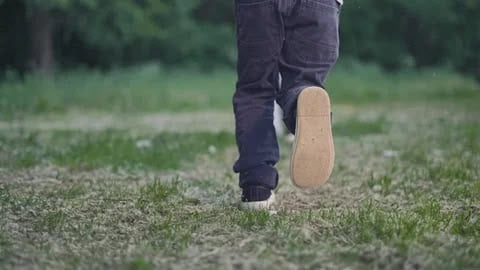
The walk to school took ten minutes in the morning and ten minutes back in the afternoon, and I had made it with Noah every single day for four years without variation. I knew every crack in the sidewalk. I knew which yard had the dog that barked at the fence and which house had the rosebushes that went wild in July and which corner smelled like woodsmoke in October because the man who lived there burned leaves in a barrel despite the neighborhood association’s position on the matter. I knew the walk the way you know the routes you travel when you are thinking about something else, which was most of the time, because there was always something else to think about.
Noah had been making his case for three weeks.
He was systematic about it in the way he was systematic about things he wanted, which was a quality I had watched develop in him over the past year or two with the mixture of pride and slight wariness that parents feel when their children begin to resemble real negotiators. He had pointed out the distance, which was less than half a mile. He had noted the sidewalks, which were continuous and in good condition. He had reminded me that his classmate Jacob had been walking home alone since fourth grade, which I had initially dismissed and then quietly verified with Jacob’s mother at pickup one afternoon, confirming that it was true and that Jacob had not yet encountered any difficulty.
I had held out because holding out felt like the responsible position. Because he was eleven and the world was large and I was the only parent he had, which meant all of my anxiety about that fact had no one to share itself with and tended to concentrate.
On Friday morning I gave in.
I made him repeat the rules back to me in the kitchen while he ate his cereal. Come directly home. No alternate routes. No stopping. Message me the moment you leave school. He gave me the look that eleven-year-olds have been giving their mothers since the beginning of recorded time, the look that communicates an entire paragraph of mild exasperation in a single expression, and said that he knew, Mom, and took his backpack and went to school.
The day moved the way days move when you are waiting for something. I worked from home on Fridays, handling the bookkeeping accounts that I maintained for three small businesses, and the work was detail-oriented enough that it usually absorbed me entirely. That Friday it did not fully absorb me. I checked my phone more than I needed to. I got up and refilled my coffee twice without drinking much of either cup.
At 3:08 my phone lit up.
Noah: Leaving now. See you soon.
I sat back in my chair and let out a breath I had apparently been holding since morning. I thought about going to the window and decided against it because standing at the window watching for him was exactly the kind of thing that would ensure he never felt trusted with a ten-minute walk, and I was trying to be the kind of parent who extended trust in increments rather than surveillance in perpetuity.
Ten minutes passed.
Then fifteen.
At the twenty-minute mark I got up and went to the window anyway.
The sidewalk in front of the house was empty.
I told myself there were reasonable explanations. He had stopped to look at something. A friend from school was walking the same direction and they had been talking. He had tied a shoelace. Children on their first independent walks home took longer because they were not on the automatic pilot of a route they had traveled a thousand times, they were actually seeing it, noticing things, moving at the pace of someone who is experiencing a small freedom for the first time.
I was still telling myself this at the twenty-five minute mark when my phone rang.
Mrs. Harper’s name on the screen.
Margaret Harper had moved onto our street when Noah was eight, about a year after Daniel left. She was a widow in her mid-sixties whose son lived in another city and who had settled into the neighborhood with the quiet competence of someone who did not require much from other people but was reliably available to them when they needed something. She had brought Noah a loaf of banana bread on his birthday every year, which was his favorite and which she made from scratch. She had watched him for an hour on a Tuesday afternoon when my car had broken down and I had needed to wait for the tow. There had been a month, about two years after Daniel left, when I had been at the grocery store with a cart I could not entirely afford and she had appeared beside me in the checkout line and quietly handed the cashier money for a bag of items I had been planning to put back, and she had done it without ceremony and changed the subject before I could properly respond.
I answered the phone with my heart already doing something I did not like.
There was silence on the other end, and then a breath that shook on the inhale.
She was crying.
I asked if Noah was hurt and she said no, no, he was fine, and then she asked me to come outside, and I went through the front door without fully processing the shoe situation, one on and one not, and crossed the porch and the front walk and reached the sidewalk.
Mrs. Harper was standing near the edge of her driveway. One hand was over her mouth and her eyes were wet and she had the expression of someone who has been holding something for a long time and has just felt the hold give way.
Noah was standing a few feet from her. His backpack was still on. His clothes had dust on them in the way that clothes get dusty when someone has been kneeling on pavement, or maybe on a gravel verge, and he was watching me with the specific expression that children wear when they cannot yet determine whether the incoming parental response will be warm or corrective.
Between them on the sidewalk was an object.
I stopped.
I looked at it for a moment without speaking, my brain doing the thing that brains do when they encounter something that should not be in the context they are standing in, running a quick and silent refusal before the recognition arrives anyway.
It was a silver watch.
I had bought it seventeen years ago. I had saved for it across four months, setting aside small amounts from each paycheck with the particular determination of someone who has decided that a thing is worth the patience required to obtain it. It was a good watch, not extravagant but well-made, with a clean face and a bracelet that had some weight to it, the kind of watch that was meant to be worn for a long time. I had given it to Daniel on our tenth anniversary, and before I wrapped it I had taken it to a jeweler on Dearborn Street and had a message engraved on the back: Wherever life takes us, remember where home is. And then my initial, because the engraving space was small and because I was twenty-nine years old and believed that some things did not need to be stated in full because the person receiving them already knew everything the abbreviated version stood for.
After Daniel left, a photograph of him wearing the watch had stayed in my drawer for four years. I had not been able to throw it away, which I had analyzed on various quiet evenings and decided was not sentiment for Daniel specifically but something more complicated, some relationship to the version of myself that had saved for the watch and chosen the words and believed in the gesture that I was not ready to discard.
I looked at my son.
His clothes were dusty. He had been kneeling somewhere. His face held the complicated expression of someone who has done something he believes was right but is not entirely sure how it will land.
“Noah,” I said. “What happened here?”
Mrs. Harper made a sound beside me.
She was still crying, quietly now, with the steadiness of someone who has moved through the acute part of it into something more sustained. She was looking at the watch on the sidewalk and then at me and then back at the watch, and there was something in her expression that was not only emotion. There was the expression of someone who has arrived at a decision they have been approaching for a long time and has finally crossed the threshold of it.
“Claire,” she said. “I think it’s finally time I told you the truth.”
She had started noticing things three years ago, she said.
Not immediately when she moved onto the street. The first several months she had been occupied with the ordinary adjustments of a new place, new neighbors, the particular project of learning the rhythms of a block, who left for work at what time, which houses had dogs, where the good light was in the afternoon. She had met me in the way you meet the neighbors whose houses are close to yours, over the fence and in the driveway, in the gradual accumulation of brief conversations that eventually become something that resembles knowing someone.
She had met Noah and observed what she later described to me as a boy doing his level best under circumstances that were not level.
And she had observed me.
She said this carefully, not as though she was confessing to surveillance but as though she wanted me to understand the sequence. She had observed me managing a life that had been reorganized by someone else’s departure, working the hours I worked, maintaining the household, getting Noah to school and to his activities and through his school years with the methodical love of someone who has no margin for anything but the essential. She had brought banana bread and offered to watch him and quietly supplemented the grocery cart because these were things she could do, and she had done them because she had determined in the early months on our street that we were worth doing things for.
The questions about Daniel were not, as I had assumed, casual curiosity.
She had known him.
Not from our marriage and not from the neighborhood. From before. From a period before I had met him, when her late husband Robert had worked in the same commercial sector Daniel would later enter, and their orbits had intersected at events and professional dinners in a way that had produced an acquaintance, loose but specific. She had known of him the way people in industries know of each other, by name and reputation and the specific texture of how someone conducts themselves in professional contexts.
When she moved onto our street and learned that I was the ex-wife of Daniel Covey, the acquaintance had reorganized itself in her mind into something more pertinent. She had made inquiries. She had been careful about this, about not telling me what she was doing because she was not certain enough of what she was finding to bring it to me, and because she was aware that what she was investigating touched something I had clearly closed and set aside as best I could.
What she had found, gradually and through channels I would have had no reason to access myself, was that Daniel had not gone far.
He was in the city. He had been in the city, or near it, for most of the four years since he left. The story of the other state, the phone call from somewhere else, had been real in the short term and false in the longer one. He had returned within the first year. He was living with some degree of regularity in a neighborhood about forty minutes from ours.
He had also, Mrs. Harper said, been struggling.
She did not use this as extenuation. She said it as information. The professional life he had been building before he left had not sustained itself. There had been a period of difficulty I did not have the full details of but that had produced visible effects, and one of those effects was that he had spent the last several months in a state of relative transience that I understood, once she described it, as a kind of bottoming out.
She had known this for about six weeks. She had been deciding what to do with the knowing.
Then Noah had not come home on time from his first independent walk.
And when he did come home, he had the watch.
He told the story standing on the sidewalk with his dusty clothes and his backpack and the slightly wary expression of someone narrating something he is still processing. He had been walking home on the correct route, following every instruction. About four blocks from school, on a stretch of sidewalk that ran along a small park, he had seen a man sitting on one of the benches near the path.
He had not recognized him at first because he had not seen him in four years, and four years at his age was a long time, long enough for a face to be stored in the memory at a different scale and with different context than the version currently sitting on a park bench.
Then he had recognized him.
He had stopped walking. He said he stood there for what felt like a long time but was probably a few seconds, trying to figure out what to do, because he was eleven years old and his mother had given him specific instructions and the presence of his father on a park bench four blocks from home was not something any set of instructions had addressed.
Daniel had recognized him too. He had looked up and gone very still.
Noah said he had walked over.
He said this matter-of-factly, as though it had not been a decision of any particular magnitude, though I understood that for an eleven-year-old boy who had grown up with a father-shaped absence at the center of his life, walking toward his father on a park bench was an act of more courage than most adults would easily produce.
They had talked. Noah said it was weird, and then corrected himself and said it was more like quiet than weird, and I understood that he was trying to be accurate rather than dramatic, which was one of the things I most recognized as his own specific quality. His father had looked, Noah said, like he had not been sleeping enough. He was wearing the same jacket he wore in the photograph Noah kept in his room, the one from before he left, which he had apparently kept. He did not seem to be expecting anything.
Somewhere in the conversation, Daniel had shown Noah the watch.
He had been wearing it. Noah had asked about it, the way children ask about objects that seem to have some personal significance attached to them, and Daniel had explained what it was. He had taken it off and held it and told Noah that the message on the back had been put there by his mother.
Noah had asked if he could see.
Daniel had handed it to him.
Noah had read the engraving. Wherever life takes us, remember where home is. Then his initial. C.
He said he had sat with the watch in his hands for a minute.
Then he had asked his father if he could bring it home to me.
He said his father had looked at him for a long time without saying anything.
Then he said yes.
Noah had put the watch in his jacket pocket and walked the rest of the way home, which was why it had taken twenty-five minutes instead of ten, and which was why his clothes had dust on them from the park bench, and which was why Mrs. Harper, who had been at her window when Noah came down the street and who had understood in an instant what the watch in his hand meant, had called me before he reached the front door because she needed a moment before she could speak properly.
I stood on the sidewalk and looked at my son.
There are moments in parenting that you do not anticipate because they do not belong to any category you thought to prepare for. Not the milestones that everyone mentions, not the first day of school or the first bike ride or the first heartbreak. The unanticipated ones. The moments where your child does something that reveals them to be already more than you knew, already operating at a moral or emotional register you had not yet finished mapping, and you realize that whatever you have been doing all these years has been working in ways you could not have measured.
Noah had seen his father sitting on a park bench.
He had walked toward him.
He had talked to him.
He had asked to bring me back the watch.
I picked it up from the pavement.
The metal was warm from having been worn. The face was exactly as I remembered, the clean unfussy dial, the bracelet that had always been slightly too large for Daniel’s wrist and that he had never had sized because he intended to get around to it. I turned it over.
The engraving was still there. The words I had written at twenty-nine in the full confidence of a person who does not yet know which life takes them where. Wherever life takes us, remember where home is. And my C.
I closed my fingers around it.
Mrs. Harper was watching me with the careful attention of someone who has spent three years carrying knowledge on someone else’s behalf and is now standing in the moment of having relinquished it and is not yet certain it was the right time but understands the time is gone regardless.
“I should have told you sooner,” she said.
“You told me when you knew enough to tell,” I said.
This was true, and I meant it, and I could see that she needed to hear it in a way that went beyond politeness.
I looked at Noah.
“You walked over to him,” I said.
“Yeah,” he said.
“You didn’t have to.”
“I know,” he said. “But he was just sitting there.”
He said it simply, without drama, with the clear-eyed pragmatism that I had watched develop in him across years of being a child in a household that was working hard and making do. He was not performing forgiveness and he was not performing nonchalance. He had seen a man sitting alone on a bench who happened to be his father, and he had gone over because the alternative, walking past, had seemed like the worse of the available choices.
I put my arm around him and held him for a moment on the sidewalk. He let me, which he did not always do at eleven, sometimes shrugging off the hugs with the same mild impatience he brought to the rules about routes and messages. He held still.
That evening I sat at the kitchen table after Noah had gone to bed with the watch in front of me.
I had been thinking, across the afternoon and the dinner I made and the homework Noah finished at the table, about what I wanted to do with what I now knew. Daniel was forty minutes away. He had been closer than the other state for three years. He was, by the account I had assembled from Mrs. Harper’s careful telling and Noah’s simpler one, not doing particularly well.
I was not full of feeling for Daniel. I want to be precise about this because the imprecise version is easier and less true. I was not carrying unresolved love for him or the particular grief of a person who has been left and spends years hoping for a return. What I had spent four years doing was working, and raising Noah, and managing a life that had been made smaller by someone else’s departure and that I had expanded again through the ordinary patient effort of a person with no alternative. I had not been waiting for Daniel. I had been living.
But Noah had walked toward his father on a park bench.
And Daniel had given him the watch.
And I had known, in the moment I read the engraving again on the sidewalk, that the words I had chosen at twenty-nine were not about Daniel specifically. They had never been only about Daniel. They were about something I believed, a position I held about what home was and how it was made and what it meant to return to it, and that position had not changed even if every other dimension of the situation surrounding it had.
I did not call Daniel that night.
I sat with the watch for an hour and then I put it on the kitchen counter in a place where it would be visible in the morning, where Noah would see it when he came down for breakfast. Then I went to bed.
I called him on Sunday afternoon.
Noah was at a neighbor’s house, and I sat in the kitchen with my phone and the watch and called the number that Mrs. Harper had given me, which she had found through her careful months of inquiry and had written on a piece of paper she pressed into my hand on Saturday morning when she came over with coffee and we sat and talked for two hours.
He answered on the third ring.
His voice was the same and also different in the way voices are when someone has been through something that has not been kind to them. The same register, the same particular way he had of letting a sentence develop slowly before it arrived, but with something changed in the texture of it, something worn down that had previously been more solid.
“Noah told me,” I said, “that you gave him the watch to bring home.”
A pause.
“I thought you should have it back,” he said.
“It was a gift,” I said. “I gave it to you.”
“I know what it was.”
The silence between us was not uncomfortable in the way that silences can be between people who have accumulated a lot of unresolved things. It was uncomfortable in a more ordinary way, the silence of two people who have not spoken in four years and are standing at either end of an enormous amount of elapsed time that neither of them can efficiently summarize.
“Noah looked good,” he said.
“He is good,” I said. “He walked home alone for the first time on Friday. He’s been pushing for it for a month.”
“He walked over to me,” Daniel said. There was something in how he said it that I recognized as the thing you feel when someone does something generous toward you that you know you have not earned. “He didn’t have to.”
“That’s what he said about you,” I said. “That you were just sitting there.”
Another silence.
“I’ve been trying to figure out how to do this,” he said. “How to come back around. I know I don’t have a right to just show up.”
“No,” I said. “You don’t.”
“I’m not asking to.”
“I know you’re not,” I said. “But Noah is eleven, and he walked over to you on a park bench and asked if he could bring me your watch, and I’m his mother, and that means I’m going to have to think about this.”
I could hear him breathing on the other end.
“I’m not the same person,” he said. “I know that doesn’t mean much.”
“It doesn’t mean nothing,” I said. “It just means I’d need to see it over time rather than take your word for it right now.”
“That’s fair,” he said.
“It would be about Noah,” I said. “That’s what I need you to understand. Not about us, not about four years ago, not about an explanation I may or may not ever want to hear. It would be about whether you can show up for him consistently, over time, without disappearing again.”
“Yes,” he said. The word was quiet and without hedging, and I held it for a moment, not trusting it yet but not discarding it.
“I’m going to talk to Noah,” I said. “And then we’ll see.”
I ended the call and sat in the kitchen with the watch on the counter.
I was not the twenty-nine-year-old who had written those words to a man she expected to spend her life with. I was thirty-four and I had worked reception and bookkeeping and raised an eleven-year-old boy into someone who walked toward hard things instead of past them, and I had done all of this alone, and it had cost me the particular cost that everything worth building costs.
I picked up the watch.
I read the engraving one more time.
Wherever life takes us, remember where home is.
Noah came home at five o’clock, coming through the front door with his jacket half off before he had finished walking through it, the way he always did, dropping his shoes in the entry without pausing to put them together because that was a daily negotiation we had not yet concluded. He came into the kitchen and went to the refrigerator and found the apple slices I had cut and put in a container, and he sat at the table and ate them and looked at the watch on the counter.
“Are you mad at me?” he said.
“Not even a little bit,” I said.
He looked at the watch.
“Are you going to keep it?”
I thought about this for a moment.
“I think so,” I said.
He nodded, processing this with the particular quiet that he moved into when he was thinking about something he had not finished working out.
“Mom,” he said.
“Yeah?”
“He seemed like he was sorry.”
I sat down across from him at the table.
“I know,” I said. “We’re going to take that slowly. See what it looks like over time.”
He nodded again, with the same pragmatism he had brought to the park bench, the same willingness to let the situation develop at the pace it required rather than the pace anyone would choose.
“Okay,” he said.
He finished his apple slices and went to do his homework.
I stayed at the table with the watch and the late afternoon light coming through the kitchen window, the same window where I had stood at seven in the morning sending him off on his first walk home alone, the window I had gone to at twenty-five minutes when the sidewalk was empty.
He had come home.
He always came home.
That was the thing about Noah, the thing I had been building toward without entirely knowing it across four years of single mornings and long work nights and grocery store calculations and banana bread from a neighbor who had been carrying more than bread. He was not a child who walked past hard things pretending they were not there. He was a child who walked toward them and asked the right questions and came home and told the truth about what he had found.
Wherever life takes us, remember where home is.
I had written those words for Daniel and they had come back to me through my son’s hands, dusty from a park bench, carried in a jacket pocket on a ten-minute walk that had taken twenty-five minutes and changed something I had not known was still capable of being changed.
I set the watch on the windowsill where the light hit it.
Then I started making dinner, the way I did every evening in the house I had kept, in the life I had built, in the home I had remembered how to be.

Adrian Hawthorne is a celebrated author and dedicated archivist who finds inspiration in the hidden stories of the past. Educated at Oxford, he now works at the National Archives, where preserving history fuels his evocative writing. Balancing archival precision with creative storytelling, Adrian founded the Hawthorne Institute of Literary Arts to mentor emerging writers and honor the timeless art of narrative.