Admiral on Deck
The text arrived while I was signing the final page of my retirement paperwork.
I was sitting at my desk on the fourth floor of the headquarters building at Naval Station Norfolk. Rain hammered the window. Outside, the harbor was gray and churning. Sailors in foul-weather jackets rushed across the pier through ankle-deep puddles. Somewhere out past the breakwater, a ship’s horn groaned through the storm. Long and low. Like an animal in pain.
I had a black Montblanc pen in my hand. A gift from my first commanding officer in 1992. I’d signed every set of orders in my career with it.
I was on the last line.
Bennett, Claire Elizabeth. Admiral, United States Navy. Request for Retirement. Effective 1 June.
My phone buzzed on the desk.
I glanced at it.
My father.
Please don’t humiliate us by wearing that uniform to Melanie’s wedding.
I stared at the screen.
Then a second message.
No one gives a damn about your Navy career. Not this weekend. This is your sister’s day.
I set my pen down.
I’d spent thirty-six years in the United States Navy.
I’d stood on the bridge of a guided-missile destroyer in the Persian Gulf while Iranian fast boats circled us at forty knots. I’d commanded a carrier strike group off the coast of Yemen. I’d made decisions at three in the morning that determined whether sailors went home to their families or came home in flag-draped boxes.
I’d written forty-one letters to forty-one mothers.
I’d survived things I still don’t talk about. Things that wake me up some nights at 0300 with my heart pounding and the taste of salt and jet fuel in my mouth.
Yet somehow, my eighty-year-old father’s words cut deeper than any enemy ever had.
Admiral Claire Bennett.
Four stars. Thirty-six years of service. One of only a handful of women in the history of the United States Navy to wear four stars.
To the Navy, I was a leader.
To my family, I was still Difficult Claire.
I was the daughter who asked too many questions.
At six, I wanted to know why the sky was blue and why my father’s hands shook when the Fourth of July fireworks went off. At ten, I wanted to know why girls couldn’t be altar servers. At fourteen, I wanted to know why my uncle Tommy’s picture was in a frame on the mantel with a little folded flag next to it, and why nobody would ever talk about him.
“Don’t ask so many questions, Claire,” my father would say. “It’s not becoming.”
I was the daughter who chose the Naval Academy instead of the future they’d planned for me.
That future was a nice college. The University of South Carolina, maybe. A degree in education or nursing. A husband from a good Charleston family. Children. Church on Sundays. Sunday dinner at my parents’ house on Tradd Street.
The future my sister Melanie got.
And I was the daughter who missed holidays.
Christmas in 1996. I was on the USS Arleigh Burke in the Adriatic.
Thanksgiving in 2001. I was in the Arabian Sea, three months after the towers fell.
Easter in 2003. The night the war in Iraq started. I was on the bridge of a destroyer launching Tomahawks at Baghdad.
My mother’s seventieth birthday. My father’s seventy-fifth. Melanie’s first wedding.
I sent cards. I called from satellite phones that cut out every thirty seconds. I sent gifts from Bahrain and Naples and Yokosuka.
It was never enough.
I could practically hear my father’s voice.
Don’t make everything about you, Claire.
My younger sister, Melanie, had always been different.
Six years younger. Blonde when I was brown. Soft when I was sharp. Everybody adored her. She smiled at the right times. She wore the right clothes. She never challenged anybody. She was homecoming queen at Ashley Hall. She was a debutante at the St. Cecilia Ball. She married a Charleston lawyer at twenty-three and had two children by twenty-seven.
My parents called her their princess.
I was the opposite.
I was the one who argued with my father at the dinner table about politics. About history. About whether Robert E. Lee was a hero.
I was the one who came home from Sunday school and asked the priest why God let my uncle Tommy die in Vietnam when he was only nineteen.
I was the one who, at seventeen, walked into my father’s study and announced I’d been accepted to the United States Naval Academy at Annapolis.
My father didn’t look up.
He was reading the Post and Courier in his leather chair. He folded the newspaper. Very slowly. Very precisely. Into thirds. The way he did everything.
He set it on the side table.
He looked at me over his reading glasses.
“Women,” he said, “don’t belong on warships.”
Melanie was eleven. She was sitting on the floor of the study playing with her Barbie dolls.
She laughed.
Just a little giggle. Like Daddy had told a joke.
I never forgot it.
I went anyway.
I took the bus to Annapolis in July of 1984 with one duffel bag and forty dollars. My mother cried at the bus station. My father didn’t come.
He didn’t come to my graduation in 1988 either. Or my commissioning. Or my first change of command. Or my promotion to captain. Or rear admiral.
He didn’t come to anything.
That night, after I signed my retirement papers, I drove home through rain-soaked streets.
Norfolk at night in the rain. Neon signs blurring on the wet pavement. Tattoo parlors and pawnshops and bars full of sailors. Then the quieter streets of Ghent. The old brick townhouses.
My townhouse greeted me with silence.
No husband. I’d been engaged once. To a naval aviator named Michael. He died in a training accident off the coast of Virginia Beach in 1997. His F-14 went into the ocean at night. They never found him.
No children.
No family waiting at the door.
Just memories.
I hung my wet coat on the hook by the door.
I poured a glass of bourbon. Woodford Reserve. Two fingers. Neat.
I sat on the edge of my bed.
On the bedroom door, in a clear plastic garment bag, hung my dress white uniform.
I’d had it pressed that afternoon. For the retirement ceremony next week.
Four silver stars on each shoulder board. Gleaming faintly through the opening in the bag.
My phone buzzed again.
This time, my mother.
Please don’t upset your father this weekend. Melanie deserves peace. Just come as a guest. Wear something nice. A dress. Something feminine.
A bitter laugh escaped me.
Something feminine.
I was fifty-eight years old. I’d commanded eleven thousand sailors. I’d briefed the President of the United States in the Situation Room.
And my mother wanted me to wear something feminine.
After decades of service, my family still treated me like the problem.
At 2112, my phone rang.
The caller ID said: HAYES.
Retired Master Chief Ramon Hayes.
He’d been my command master chief on the USS Carl Vinson in 2010 and 2011. The senior enlisted sailor on a nuclear aircraft carrier. Six thousand sailors. Ramon knew every single one of them by name.
He was sixty-four now. Retired. Living in Virginia Beach with his wife, Rosa. Volunteering at the VA hospital in Hampton.
He’d been at my side for the worst night of my career.
He was the only person in the world I trusted completely.
“Ramon,” I answered.
He didn’t waste words.
“You’re going to Charleston tomorrow,” he said.
“That’s usually how weddings work.”
“I heard about your father.”
I closed my eyes.
“News travels fast.”
“Your mother called Rosa,” Ramon said. “Rosa called me. She’s worried about you.”
“I’m fine.”
“You’re drinking bourbon alone in the dark,” Ramon said. “I can hear the ice.”
“There’s no ice.”
“Then you’re drinking it neat,” he said. “Which is worse.”
I almost smiled.
“Half the defense community will be there,” Ramon said.
I frowned.
“At Melanie’s wedding? Why would they be?”
There was a pause on the line.
A long one.
“Wait,” Ramon said slowly. “You really don’t know?”
A strange feeling settled in my stomach.
“Know what?”
“Who’s on the guest list,” Ramon said.
I sat up straighter.
“No,” I said. “I don’t know anything about the guest list. I haven’t spoken to Melanie in two years. My mother sent the invitation. I RSVP’d. That’s it.”
Ramon was quiet.
“Claire,” he said. “Who’s your sister marrying?”
“Some man named Jack,” I said. “She met him in Charleston last year. My mother said he’s retired. Military, maybe. She said he works for the government now. Something administrative.”
Ramon started laughing.
Softly at first. Then harder.
“Ramon.”
“I’m sorry,” he said. “I’m sorry, Admiral. I just—”
He couldn’t stop.
“Ramon.”
“Something administrative,” he said. Wheezing. “Your mother said something administrative.”
“What’s so funny?”
He took a breath.
“Claire,” he said. “Your sister is marrying Captain Jack Coleman.”
I stopped breathing.
Captain John “Jack” Coleman. United States Navy. Retired.
Twenty-eight years as a Navy SEAL. SEAL Team Four. SEAL Team Six. Commanding officer of Naval Special Warfare Development Group. Silver Star. Two Bronze Stars with V for valor. Three Purple Hearts.
Now the civilian deputy director of operations at U.S. Special Operations Command.
Something administrative.
“Jack Coleman,” I whispered.
“Jack Coleman,” Ramon said.
I knew Jack Coleman.
I’d never met him face-to-face. Not really. But I knew him.
I knew his voice.
At three o’clock in the morning on March 14, 2011, his voice came through a radio on the flag bridge of the USS Carl Vinson in the Arabian Sea.
Crackling. Breaking up. Gunfire in the background.
“Vinson, Vinson, this is Raven Six. We are pinned down. Fourteen souls. Two critical. Grid follows. We need exfil. We need it now.”
“Ramon,” I said. “Does Jack know? That Melanie is my sister?”
“I don’t think so,” Ramon said. “Bennett’s a common name. And from what Rosa says, your family’s never exactly talked you up.”
I closed my eyes.
“Your father told Jack that Melanie’s older sister works for the Navy in some capacity,” Ramon said. “In Norfolk. Some kind of desk job.”
He paused.
“That’s what Jack told one of his guys,” Ramon said. “Who told a guy I know. Who told me. Last week.”
“A desk job,” I said.
“A desk job,” Ramon said.
“Who else is coming?” I asked.
“Jack’s whole community,” Ramon said. “He’s retiring from SOCOM next month. The wedding’s turning into a send-off. Every SEAL he ever served with. Their wives. The SOCOM commander’s coming. General Whitfield. Two other four-stars. The Chief of Naval Operations might stop by.”
He paused.
“And the guys from Raven,” Ramon said quietly.
I couldn’t speak.
“Claire,” Ramon said. “You spent your entire life standing tall for people who never appreciated you.”
My eyes drifted to the garment bag hanging on my bedroom door.
My dress white uniform.
Four silver stars.
“Wear it,” Ramon said.
“My father will lose his mind.”
“Good,” Ramon said.
I laughed despite myself.
Then his voice became serious.
“Because tomorrow,” Ramon said, “when you walk into that room, your father is going to discover something.”
“What’s that?”
“That he’s spent thirty-six years underestimating the wrong daughter.”
The line went silent.
I stared at the uniform.
I didn’t sleep much.
At 0300, I woke up. The way I always do. Heart pounding. The taste of salt and jet fuel.
March 14, 2011.
I lay in the dark and remembered.
I was a rear admiral then. One star. Commander of Carrier Strike Group One. Embarked on the Carl Vinson. We were in the northern Arabian Sea. Supporting operations in Afghanistan and the Horn of Africa.
At 0247, the watch officer woke me.
“Admiral. Flag bridge. Urgent.”
I was there in ninety seconds.
A SEAL team had been inserted into Yemen the night before. Fourteen operators. A hostage rescue. A kidnapped aid worker. An American nurse named Sarah Lindqvist.
Something went wrong.
They got the hostage. But on the way to the extraction point, they were ambushed. Hundreds of fighters. Heavy weapons. They were pinned down in a dry wadi forty miles inland.
Two of them were critically wounded.
Their extraction helicopters had been diverted. A mechanical problem. A weather problem. A paperwork problem. Nobody could give me a straight answer.
The SEALs had been on the radio for an hour.
Nobody was coming.
I listened to the radio.
“Vinson, Vinson, this is Raven Six. We are pinned down. Fourteen souls plus one precious cargo. Two critical. We need exfil. We need it now.”
Raven Six. The team leader.
His voice was calm. Too calm. The voice of a man who knew he was probably going to die and was going to sound professional while he did it.
I had two Seahawk helicopters on the flight deck. HSC-15. The Red Lions. Armed. Fueled. Crews on standby.
I picked up the secure phone.
I called the operational commander. In Bahrain.
He told me to hold.
“Admiral Bennett, that’s not your mission. That’s a SOCOM asset in a denied area. We don’t have authorization for naval aviation to cross into Yemeni airspace. The political implications—”
“Sir,” I said. “I have fourteen Americans and a hostage pinned down. Two of them are bleeding out. Their extraction isn’t coming. I have two armed helicopters on my deck.”
“Hold, Admiral. That’s an order. We’re working it.”
“How long?”
“Two to four hours. We need State Department clearance. We need—”
I looked at the radio.
“Vinson, this is Raven Six. Be advised. We have one KIA. Repeat. One KIA. Second critical is fading. We are low on ammunition. Requesting status of exfil.”
One killed.
Thirteen left.
I put down the phone.
I turned to Ramon. Standing next to me on the flag bridge. Arms crossed. Face like stone.
“Master Chief,” I said. “What would you do?”
Ramon looked at me.
“Ma’am,” he said. “With respect. It’s not my decision.”
“I know,” I said. “I’m asking anyway.”
Ramon looked at the radio.
“I’d get those boys,” he said.
I picked up the phone to the flight deck.
“Launch the Red Lions,” I said. “Both birds. Grid follows. Bring them home.”
The air boss paused.
“Admiral,” he said. “Do we have authorization?”
“You have mine,” I said.
The Seahawks launched at 0311.
They crossed into Yemeni airspace at 0347.
They reached the wadi at 0402.
Under fire. Both helicopters took rounds. One door gunner was wounded.
They pulled out thirteen SEALs, one body, and an American nurse named Sarah Lindqvist.
They landed on the Carl Vinson at 0441.
The second critical SEAL lived.
He was in surgery in our medical department for nine hours. He lost his left leg below the knee. He lived.
I was relieved of command eleven days later.
For disobeying a direct order. For violating the airspace of a sovereign nation. For creating an international incident.
I was told my career was over.
It wasn’t.
The Secretary of the Navy reviewed the case. He read the radio transcripts. He talked to the SEALs. He talked to Sarah Lindqvist.
He reinstated me in June.
He promoted me to two stars in September.
He said, privately, in his office at the Pentagon, “Admiral, if I ever court-martial an officer for saving thirteen SEALs and a hostage, you can personally throw me off the Pentagon roof.”
I never met Raven Six.
He was medevaced to Landstuhl in Germany the morning after. Wounded. Shrapnel in his shoulder. By the time he got back to the States, I’d been relieved.
I heard he tried to find me. To thank me.
I didn’t make it easy. I didn’t want to be thanked.
I’d lost one of his men. A twenty-six-year-old petty officer named Daniel Okafor. From Houston. He was the one who died before the helicopters got there.
I wrote to his mother.
I never felt like I deserved thanks.
Raven Six was Lieutenant Commander Jack Coleman.
The next morning, I drove to Charleston.
Five and a half hours. I-64 to I-95 to I-26. The rain stopped somewhere around Richmond. By the time I crossed into South Carolina, the sky was clear and hot and Lowcountry blue.
The uniform was in a garment bag in the back seat.
I almost didn’t wear it.
I almost stopped at a Target in Summerville and bought a dress. Something feminine.
I thought about my mother. Please don’t upset your father. Melanie deserves peace.
I thought about my father. No one gives a damn about your Navy career.
I thought about Ramon.
He’s spent thirty-six years underestimating the wrong daughter.
I didn’t stop at Target.
I changed at the Francis Marion Hotel on King Street.
I’d done it thousands of times. I could do it in my sleep. The white trousers. The white tunic with the high collar. The gold buttons. The shoulder boards with four silver stars.
The ribbons.
Seven rows. Thirty-one ribbons. Distinguished Service Medal with two gold stars. Legion of Merit with four. Bronze Star. Navy and Marine Corps Commendation. Combat Action Ribbon. Every campaign from Bosnia to Afghanistan.
I put on my cover. The white hat with the gold oak leaves on the brim.
I looked at myself in the hotel mirror.
Fifty-eight years old. Gray hair cut short. Lines around my eyes from thirty-six years of squinting into the sun on the bridge of a ship.
I looked like my uncle Tommy.
In the picture on my parents’ mantel. In his Navy dress whites. Nineteen years old. The year before he died.
The wedding was at the William Aiken House on King Street.
A big antebellum mansion with white columns and wrought-iron balconies and a courtyard full of live oaks dripping with Spanish moss. The ceremony was in the garden. The reception was in the ballroom.
I was late. On purpose.
I didn’t want to cause a scene at the ceremony. That was Melanie’s.
I arrived at 1830. The ceremony was over. The guests had moved into the ballroom for the reception.
I stood outside the ballroom doors.
I could hear a string quartet inside. Laughter. Glasses clinking.
My heart was pounding.
Not like 0300 on the flag bridge.
Worse.
I took a breath.
I straightened my cover.
I stepped through the ballroom doors.
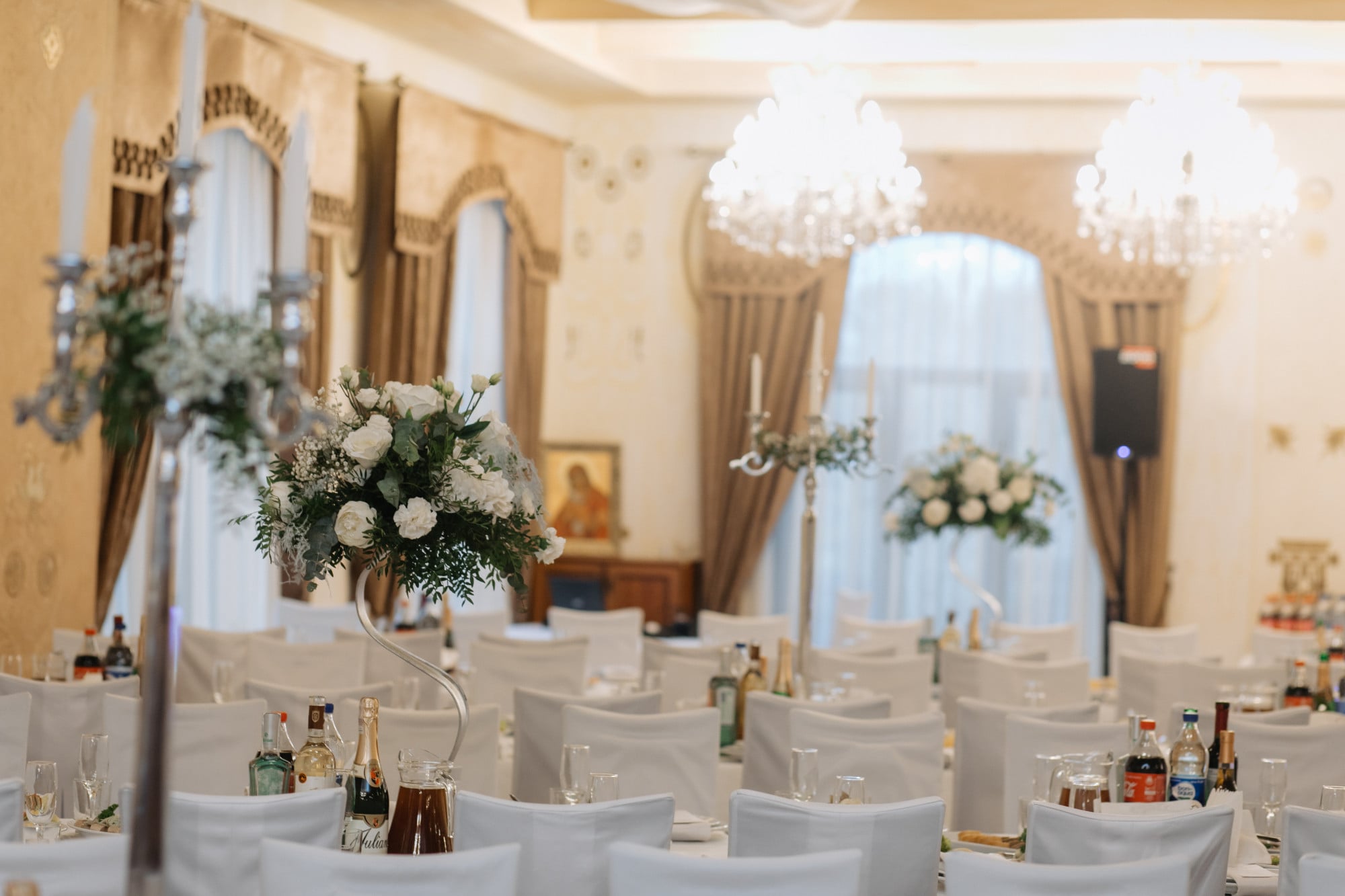
The ballroom was enormous.
Crystal chandeliers. Gold-framed mirrors. White linen on forty round tables. Candles. Magnolias in silver vases.
Three hundred people.
At the far end, on a raised dais, the head table.
My sister. In an ivory gown. Fifty-two years old and still beautiful.
Next to her, a man in Navy dress blues. Broad-shouldered. Gray-haired. A scar running from his left ear down his jaw.
My parents at the end of the head table. My father in a gray suit. My mother in lavender.
And everywhere else, at table after table after table, men in uniform.
Navy dress blues. Gold Tridents on their chests. The SEAL insignia.
Not a few.
Almost two hundred.
I took three steps into the room.
A man at the nearest table looked up.
Fifties. Commander’s stripes on his sleeves. A Trident. A Silver Star.
He saw me.
He saw the white uniform. The four silver stars.
He saw my face.
His face went white.
He stood up so fast his chair fell over backward.
It hit the hardwood floor with a crack that echoed through the whole ballroom.
The string quartet stopped.
Three hundred heads turned.
The commander drew himself up to attention.
And his voice thundered across the room.
“ADMIRAL ON DECK!”
And then—
They stood.
All of them.
Every SEAL in the room.
Nearly two hundred men. Some in their twenties. Some in their seventies. Chairs scraping. Glasses rattling. Silverware falling.
They rose to their feet and snapped to attention.
The sound of it filled the ballroom. Like a wave breaking.
Then silence.
Total silence.
The generals stood too. At a table near the front. General Whitfield, the SOCOM commander, in his Army green uniform with four stars on each shoulder. Two other four-stars. A Marine. An Air Force.
They stood at attention.
The civilians didn’t know what was happening.
The Charleston society people. My mother’s friends from church. Melanie’s friends from Ashley Hall. My brother-in-law’s law partners.
They looked around. Confused. Some of them half-stood. Some stayed in their seats.
At the head table, my sister stood frozen. Holding her champagne glass.
My mother had her hand over her mouth.
My father was staring at me.
His face had gone completely gray.
And the groom.
Captain Jack Coleman.
He was staring at me too.
He didn’t move.
He stood at the head table in his dress blues with his Silver Star and his three Purple Hearts. Staring at me across the ballroom.
Then he stepped down from the dais.
He walked across the ballroom floor.
Between the tables. Past the SEALs standing at attention. Past the generals. Past the confused Charleston society.
He stopped in front of me.
He looked at my face.
At the four stars.
At the name tag on my chest.
BENNETT.
He looked at it for a long time.
Then he looked back at the head table.
At his bride.
At my sister.
Bennett.
“Admiral Bennett,” he said quietly.
His voice.
I knew that voice.
Vinson, Vinson, this is Raven Six.
“Captain Coleman,” I said.
He came to attention.
He raised his hand.
And he saluted me.
Then he dropped the salute.
And he did something no Navy captain has ever done to a four-star admiral in the history of the United States Navy.
He hugged me.
He put his arms around me. Right there. In the middle of the ballroom. In front of three hundred people.
He held on.
His shoulders were shaking.
“Fourteen years,” he said into my ear. “Fourteen years I’ve been looking for you. To say thank you. You wouldn’t let me.”
I couldn’t speak.
“You got us out,” he said. “Raven. You launched the Red Lions. You lost your command for it.”
“I lost Okafor,” I whispered.
Jack pulled back.
He held me by the shoulders.
“You didn’t lose Okafor,” he said. “Yemen lost Okafor. You saved the other thirteen. And Sarah Lindqvist.”
His eyes were wet.
“And me,” he said.
He turned around.
He faced the room.
“Gentlemen,” he said. Loud. His command voice. “At ease.”
Two hundred SEALs relaxed. But nobody sat down.
“Most of you know the story,” Jack said. “Raven. Yemen. March fourteenth, 2011.”
A murmur went through the room.
“Most of you know the ending,” Jack said. “Two Seahawks came out of the dark at 0402. Into a hot LZ. Under fire. And pulled fourteen of us out of that wadi.”
He put his hand on my shoulder.
“Most of you never knew who sent them,” he said.
The room was dead silent.
“This is Admiral Claire Bennett,” Jack said. “In 2011, she was a one-star. Commanding Carrier Strike Group One. On the Vinson.”
He looked around the room.
“She was ordered to hold,” he said. “By her chain of command. For two to four hours. While they waited for the State Department.”
Someone at a table in the back said a word I won’t repeat.
“We didn’t have two to four hours,” Jack said. “We had one KIA. Petty Officer Danny Okafor. And Chief Marcus Bell bleeding out from a femoral artery.”
He pointed.
At a man at a table near the front. Fifties. Sitting next to a woman in a green dress.
He was wearing dress blues. And a prosthetic leg. I could see it below the cuff of his trousers.
“That’s Marcus,” Jack said. “He lost his leg. He lived.”
Marcus Bell stood up.
He looked at me across the ballroom.
He came to attention.
He saluted.
“Admiral Bennett disobeyed a direct order,” Jack said. “She launched both helicopters. Without authorization. Into denied airspace. Knowing it would end her career.”
He paused.
“She was relieved of command eleven days later,” he said.
The room murmured.
“And I’ve spent fourteen years,” Jack said, “trying to find her. To shake her hand. To tell her that thirteen men are alive. That fourteen families got their husbands and fathers and sons back. That Sarah Lindqvist went home to her kids in Minneapolis.”
His voice broke.
“And she wouldn’t let me,” he said. “Because she thought she didn’t deserve it. Because she lost one.”
He turned to me.
“Admiral,” he said. “Every man in this room who was on Raven is here tonight. Every one. Except Danny.”
He looked around.
“Raven,” he said. “Stand up.”
Twelve men stood up.
From tables all over the ballroom.
Some in uniform. Some in suits. One in a wheelchair, who pushed himself up on the arms of his chair until he was standing.
Twelve men.
Plus Jack.
Plus Marcus with his prosthetic leg.
Fourteen.
Minus one.
They walked toward me.
Through the tables. Through the crowd.
They stopped in a line in front of me.
They came to attention.
They saluted.
All of them. At once.
I couldn’t see.
I couldn’t see anything. My eyes were full.
I returned the salute.
My hand was shaking.
At the head table, my father hadn’t moved.
He was standing behind his chair. Gripping the back of it with both hands. His face was gray.
He was staring at me.
At the line of SEALs saluting me.
At General Whitfield and the other four-stars standing at attention.
At three hundred people in a ballroom in Charleston staring at his daughter.
Then I saw my sister.
Melanie.
She was coming down from the dais. In her ivory gown. Holding her skirt up with one hand.
She walked across the ballroom floor.
She stopped next to Jack.
She looked at me.
Her face was white.
“Claire,” she said.
“Hi, Mel.”
“I didn’t know,” Melanie said.
Her voice was shaking.
“I didn’t know any of this. The four stars. Yemen. Raven. Jack’s men. I didn’t know.”
She looked at Jack.
“You told me about Raven,” she said. “On our third date. You told me about an admiral who saved your life and lost her career. You said her name was Bennett. You said you’d been looking for her for fourteen years.”
Jack nodded.
“I said that’s my last name too,” Melanie said. “I said what a coincidence.”
She looked back at me.
“I didn’t even think,” she said. “I didn’t even think it could be you. Because Daddy always said you had a desk job. In Norfolk. Something administrative.”
The room was silent.
Everybody was listening.
“Mama said you were a secretary,” Melanie said. “For some officer. She said you typed reports. She said it was sad. That you never married. That you never had children. That you wasted your life on the Navy and all you had to show for it was a desk.”
She was crying now.
“I believed them,” she said. “For thirty years. I never asked.”
“Claire,” Jack said quietly. “Your father knew.”
I looked at him.
“When I asked for Melanie’s hand,” Jack said. “In March. At their house on Tradd Street. I told your father about Raven. About the admiral named Bennett. I said I’d been looking for her.”
He looked at the head table.
At my father.
“He said he’d never heard of her,” Jack said.
The ballroom went completely still.
I looked at my father.
He was still standing behind his chair at the head table. Gripping it so hard his knuckles were white.
He was looking at the floor.
“Excuse me,” I said.
I walked across the ballroom.
Past the line of Raven SEALs. Past the generals. Past three hundred people.
I climbed the three steps to the dais.
I stopped in front of my father.
He didn’t look up.
He was eighty years old. Thin. Stooped. His hair completely white. Liver spots on his hands.
He was wearing the same gray suit he wore to Melanie’s first wedding. Thirty years ago.
And pinned to his lapel, a tiny enamel pin.
Navy blue. With an anchor.
I’d never seen it before.
“Dad,” I said.
He didn’t answer.
“Dad,” I said again. “Look at me.”
He lifted his head.
He looked at me.
At my uniform. At the four stars. At the ribbons.
His eyes were full of tears.
“You knew,” I said quietly. “When Jack told you. About Raven. About an admiral named Bennett. You knew.”
He didn’t say anything.
“You told him you’d never heard of her,” I said.
My voice broke.
“Why?”
My father opened his mouth.
Nothing came out.
He closed it.
He looked at the floor again.
My mother stood up.
She came around the table. In her lavender dress. She stood next to my father.
She put her hand on his arm.
“Edward,” she said quietly. “Tell her.”
My father shook his head.
“Edward,” my mother said. “It’s time. Tell her.”
My father looked at my mother.
Then he looked at me.
He reached into the inside pocket of his gray suit.
His hand was shaking.
He took out something.
A newspaper clipping.
Folded small. Yellowed. Soft from being handled a thousand times.
He unfolded it. Slowly. Very precisely. Into thirds. The way he did everything.
He handed it to me.
It was from the Virginian-Pilot. Norfolk’s newspaper.
June 18, 2011.
NAVY REINSTATES ADMIRAL RELIEVED AFTER YEMEN RESCUE
There was a photo. Me. In dress whites. Walking across the pier at Norfolk. One star.
Underneath, the article. Three columns.
Rear Admiral Claire Bennett, who was relieved of command in March after ordering two Navy helicopters into Yemeni airspace to rescue a pinned-down SEAL team and a kidnapped American nurse, has been reinstated by Navy Secretary Ray Mabus…
I looked up at my father.
“Where did you get this?”
He didn’t answer.
“Dad. That’s a Norfolk paper. You live in Charleston. Where did you get this?”
My father took a breath.
“I subscribe,” he said.
His voice was barely a whisper.
“To the Virginian-Pilot,” he said. “Since 1988. Since you were stationed in Norfolk the first time. I subscribe. I read it every day.”
I stared at him.
“And the Navy Times,” he said. “And the Stars and Stripes. I’ve read every issue since you graduated from Annapolis.”
“He has a box,” my mother said quietly.
“Barbara,” my father said.
“He has a box, Claire,” my mother said. “In his study. In the bottom drawer of his desk. Under the tax records. A shoebox.”
My father closed his eyes.
“Every article,” my mother said. “Every promotion announcement. Every change of command. Every photo. Every mention of your name in any newspaper in thirty-six years.”
She looked at my father.
“He goes in there at night,” she said. “When he thinks I’m asleep. And he reads them. Over and over.”
I couldn’t breathe.
“Why?” I said to my father. “Why would you—you told Jack you’d never heard of me. You told everyone I had a desk job. You never came to anything. Not my graduation. Not my commissioning. Not my promotions. Nothing.”
My father looked at me.
His face crumpled.
“Because of Tommy,” he said.
The ballroom was silent.
Three hundred people. Two hundred SEALs. Four generals.
Silent.
“My brother,” my father said. “Thomas. Tommy. He was nineteen.”
His voice was shaking so badly I could barely understand him.
“He joined the Navy in 1967,” my father said. “Against our father’s wishes. He wanted to see the world. He wanted to do something that mattered.”
My father looked at my uniform.
“He was a gunner’s mate,” he said. “On the USS Frank E. Evans. A destroyer. In the South China Sea.”
He swallowed.
“On June 3, 1969,” my father said, “the Evans collided with an Australian aircraft carrier. In the middle of the night. During an exercise. The ship was cut in half.”
I put my hand over my mouth.
“Seventy-four men died,” my father said. “Tommy was one of them. They never found his body. He went down with the bow.”
“I was twenty-four,” my father said. “I was on the USS Brinkley Bass. Another destroyer. In the same task group. I was a radioman.”
I stared at him.
“Dad,” I whispered. “You were in the Navy?”
My father looked at me.
“Four years,” he said. “1965 to 1969. I never told you. I never told anybody.”
He touched the tiny anchor pin on his lapel.
“I heard it on the radio,” he said. “The collision. I was on watch. I heard the Evans go down. I heard the mayday calls. I heard men screaming.”
His voice broke completely.
“I heard my brother’s ship sink,” he said. “And there was nothing I could do.”
I couldn’t speak.
My mother was crying. Melanie was crying. Jack Coleman was standing at the bottom of the dais with his hand over his mouth.
“I got out in December,” my father said. “I came home to Charleston. I married your mother. I got a job at the bank. I never talked about the Navy again. Not once. I put my uniform in a trunk in the attic. I never opened it.”
He looked at me.
“And then,” he said, “seventeen years later, my daughter walked into my study and said she was going to Annapolis.”
“I was so scared, Claire,” my father said. “I was so scared. I looked at you and I saw Tommy. Nineteen years old. Wanting to see the world. Wanting to do something that mattered.”
He was sobbing now. An eighty-year-old man. In a gray suit. At his daughter’s wedding.
“I said women don’t belong on warships,” he said. “Because I couldn’t say what I meant.”
“What did you mean?” I whispered.
My father looked at me.
“I meant please don’t go,” he said. “I meant I can’t lose you too. I meant I heard my brother’s ship sink and I can’t hear yours.”
“So I didn’t come,” my father said. “To your graduation. To your commissioning. To anything. Because if I came, I’d have to see you in that uniform. On those ships. And I’d have to admit you were out there. Where Tommy was.”
He wiped his face.
“And every night,” he said, “I’d go into my study. And open the box. And read about you. Every promotion. Every command. Every ship.”
He looked at the clipping in my hand.
“And when I read about Yemen,” he said, “I didn’t sleep for a month. My daughter. In the Arabian Sea. Sending helicopters into a war zone. Disobeying orders. Getting relieved.”
He shook his head.
“I was so proud of you, I couldn’t breathe,” he said. “And so scared, I couldn’t speak.”
“And Jack,” I said. “When he told you about Raven. About the admiral named Bennett.”
My father closed his eyes.
“I lied,” he said. “I said I’d never heard of her.”
“Why?”
My father opened his eyes.
He looked at Jack. At the bottom of the dais.
“Because if I admitted it,” he said, “I’d have to admit everything. That I knew. That I’d always known. That I’d been reading about my daughter in a shoebox for thirty-six years and never once told her I was proud.”
He looked at me.
“And I didn’t know how to do that,” he said. “I was too ashamed. Of how I’d treated you. Of every holiday I made you feel like you didn’t belong. Of every time I said don’t make everything about you.”
“And the text,” I said. “Last night. No one gives a damn about your Navy career.”
My father put his face in his hands.
“I knew Jack’s men would be here,” he said through his fingers. “I knew the Raven men would be here. Jack told me. He said he’d invited them all.”
He lowered his hands.
“I knew if you wore the uniform,” he said, “they’d recognize you. And everybody would know. Melanie. Your mother’s friends. The whole city.”
He looked at me.
“And they’d know that I’d lied,” he said. “For thirty-six years. They’d know what kind of father I was.”
The ballroom was silent.
I looked at my father.
Eighty years old. Stooped. Gray. Crying. With a tiny Navy anchor pinned to his lapel that he’d never once shown me.
A radioman on the Brinkley Bass. Who heard his brother’s ship sink in the South China Sea.
Who subscribed to the Virginian-Pilot for thirty-six years.
Who kept a shoebox in the bottom drawer of his desk.
I didn’t say anything.
I reached up.
I unpinned something from my uniform.
A small gold pin. On my left breast pocket. Below my ribbons.
The Surface Warfare Officer insignia. A ship’s bow cutting through waves. Crossed swords.
I’d earned it in 1990. On the USS Arleigh Burke. My first ship.
I’d worn it every day for thirty-six years.
I reached out.
I pinned it on my father’s lapel.
Next to his tiny enamel anchor.
My father looked down at it.
He didn’t say anything.
He couldn’t.
“Dad,” I said. “Thirty-six years ago, you told me women don’t belong on warships.”
He closed his eyes.
“You were wrong,” I said.
“I know,” he whispered.
“But you weren’t wrong to be scared,” I said.
He opened his eyes.
“I was scared too,” I said. “Every day. For thirty-six years. Every time I sent sailors into danger. Every time I wrote a letter to a mother.”
I touched the pin on his lapel.
“I wrote forty-one letters, Dad,” I said. “To forty-one families. Every one of them was somebody’s Tommy.”
My father started to sob.
I put my arms around him.
My eighty-year-old father. In his gray suit. At my sister’s wedding. In front of three hundred people.
He held on to me.
Like he was drowning.
“I’m sorry,” he said into my shoulder. “I’m so sorry, Claire. I’m so sorry.”
“I know, Dad.”
“I should have come,” he said. “To your graduation. To everything. I should have been there.”
“You’re here now,” I said.
Then I heard a sound.
Behind me.
A chair scraping.
I turned around.
General Whitfield was standing at the bottom of the dais.
Sixty-two. Army. Four stars. Commander of United States Special Operations Command. Ranger. Delta. Thirty-eight years.
He climbed the three steps.
He stopped in front of my father.
He looked at the two pins on my father’s lapel. The tiny Navy anchor. The Surface Warfare insignia.
“Sir,” General Whitfield said. “What ship did you say you were on?”
My father looked at him.
“Brinkley Bass,” he said. “DD-887. Radioman. 1965 to 1969.”
General Whitfield nodded slowly.
“And your brother was on the Frank E. Evans,” he said.
“Yes, sir.”
General Whitfield looked at my father for a long time.
Then he came to attention.
And he saluted.
My father stared at him.
A four-star general. Saluting a former radioman. In a gray suit. At a wedding.
“Sir,” General Whitfield said. “On behalf of the Department of Defense. Thank you for your service. And for your brother’s.”
He held the salute.
“And thank you,” he said, “for your daughter.”
My father raised his hand.
Slowly. Shaking.
He hadn’t saluted anyone in fifty-six years.
He returned the salute.
Then Jack Coleman climbed the dais.
And Marcus Bell, on his prosthetic leg.
And the other Raven men. One by one. All twelve.
They stood in a line on the dais. In front of my father.
They came to attention.
They saluted.
My father returned every single one.
Tears streaming down his face.
Melanie was standing next to me.
She took my hand.
“Claire,” she said. “I’m sorry. For laughing. In Daddy’s study. When I was eleven.”
I looked at her.
“You remember that?”
“I’ve always remembered it,” Melanie said. “I didn’t know why I laughed. I just knew Daddy said something and I wanted him to like me. So I laughed.”
She squeezed my hand.
“I’ve been laughing at the wrong things my whole life,” she said. “And you’ve been out there doing the right ones.”
Jack came over.
He put his arm around Melanie.
He looked at me.
“Admiral,” he said. “Will you do me a favor?”
“Anything.”
“Will you give a toast?” he said. “At my wedding? To your sister?”
I looked at Melanie.
Fifty-two years old. In an ivory gown. Crying. Holding my hand.
My sister. Who called me Difficult Claire behind my back for thirty years. Who believed I was a secretary in Norfolk. Who laughed when our father said women didn’t belong on warships.
Who married the man whose life I saved.
Without either of us knowing.
“Yes,” I said.
Someone handed me a champagne glass.
I stood at the front of the dais. In my dress whites. Four stars.
Three hundred people looked up at me.
“I’m not much of a speechmaker,” I said. “I’ve spent thirty-six years giving orders. Short ones. Launch the Red Lions. That kind of thing.”
The SEALs laughed.
“But I want to say something about my sister,” I said.
I looked at Melanie.
“When we were little,” I said, “Melanie used to crawl into my bed during thunderstorms. In our house on Tradd Street. She was scared of the thunder. She’d shake. And I’d hold her and tell her it was just the sky clearing its throat.”
Melanie put her hand over her mouth.
“Then I went to Annapolis,” I said. “And I went to sea. And I wasn’t there anymore. For the thunderstorms. For a lot of things.”
I looked at her.
“I’m sorry, Mel,” I said. “I’m sorry I wasn’t there.”
I raised my glass.
“Tonight,” I said, “my sister married a man who knows what it’s like to be pinned down in the dark. Who knows what it’s like to wait for somebody to come.”
I looked at Jack.
“He’ll be there for the thunderstorms,” I said. “I know he will. Because I’ve heard him on the radio at three in the morning. Calm. Professional. Holding thirteen men together while the world was ending.”
I looked back at Melanie.
“You married well, little sister,” I said.
I raised my glass higher.
“To Melanie and Jack,” I said.
Three hundred glasses went up.
“To Melanie and Jack!”
Then I turned.
To my father.
“And to Thomas Bennett,” I said. “Gunner’s Mate Third Class. USS Frank E. Evans. June 3, 1969.”
The ballroom went silent.
Two hundred SEALs came to attention.
“Lost at sea,” I said. “But never forgotten.”
My father stood up.
He raised his glass.
His hand was shaking.
“To Tommy,” he said.
“To Tommy,” three hundred people said.
My retirement ceremony was nine days later.
On the pier at Naval Station Norfolk. Next to the USS Dwight D. Eisenhower. A sunny morning in June. The harbor blue and calm. Gulls everywhere.
Five hundred people.
The Chief of Naval Operations spoke. The Secretary of the Navy. General Whitfield.
Ramon Hayes spoke. He told the story of the flag bridge. Master Chief, what would you do? He cried through the whole thing. So did everyone.
Jack and Melanie were in the front row.
And next to them, my mother. In her lavender dress.
And next to her, in a folding chair on the pier, my father.
He was wearing his old Navy uniform.
Dress blues. From 1969. He’d gone up to the attic. Opened the trunk. For the first time in fifty-six years.
It didn’t fit. It was too big now. He’d lost forty pounds since he was twenty-four. My mother had pinned it in the back.
He wore the white sailor’s cap. The Dixie cup.
And on his chest, two pins. A tiny enamel anchor.
And my Surface Warfare insignia.
At the end of the ceremony, the boatswain’s mate piped me ashore.
The old Navy tradition. The bosun’s whistle. Six sideboys in two lines. Three on each side.
I walked between them. Down the pier. Away from the ship. For the last time.
When I reached the end of the sideboys, the announcement came over the loudspeaker.
“Admiral, United States Navy. Departing.”
I stopped.
I turned around.
I looked at the front row.
I walked back.
Past the sideboys. Past the podium. To the front row.
I stopped in front of my father.
I reached into my pocket.
I took out a small blue box.
I’d had it for a week. Since the wedding.
I’d made some calls. To the Navy Personnel Command. To the Naval History and Heritage Command. To an old friend who worked in the Board for Correction of Naval Records.
“Dad,” I said. “Stand up.”
He looked at me.
My mother helped him up.
He stood on the pier in his too-big 1969 dress blues.
“Petty Officer Edward Bennett,” I said. “Radioman Third Class. USS Brinkley Bass.”
My father stared at me.
“On June 3, 1969,” I said, “following the collision of the USS Frank E. Evans with the HMAS Melbourne, you remained on watch on the Brinkley Bass radio room for thirty-one consecutive hours. Relaying rescue communications. Coordinating search patterns. Maintaining contact with the survivors in the water.”
My father’s face crumpled.
“You did not leave your post,” I said. “Even when you knew your brother was aboard the Evans. Even when you heard the mayday calls. You stayed. And because you stayed, one hundred and ninety-nine men were pulled from the water alive.”
I opened the blue box.
Inside was a medal.
A bronze cross. On a blue and gold ribbon.
The Navy and Marine Corps Commendation Medal.
“Your commanding officer recommended you for this,” I said. “In July of 1969. The paperwork was lost when the Brinkley Bass was decommissioned. Nobody ever followed up.”
My father couldn’t speak.
“I followed up,” I said.
I pinned it on his chest.
Above the anchor. Above my Surface Warfare pin.
On his 1969 dress blues.
Then I stepped back.
I came to attention.
And I saluted my father.
He stood on the pier at Naval Station Norfolk. Eighty years old. In a uniform fifty-six years old. Crying so hard he could barely stand.
He raised his hand.
He returned the salute.
Behind me, someone shouted.
I didn’t need to turn around. I knew the voice.
Ramon Hayes. Retired Master Chief. Six thousand sailors. He knew every one of them by name.
He’d come to attention. Next to the sideboys.
And his voice thundered across the pier.
“SAILOR ON DECK!”
Five hundred people stood up.
The Chief of Naval Operations. The Secretary of the Navy. General Whitfield. Jack Coleman and the Raven men.
My mother. My sister.
They stood at attention.
For my father.
My father looked around the pier.
At five hundred people standing for him.
At his daughter in her dress whites.
At the medal on his chest.
He put his hand on it.
He looked at me.
“Claire,” he whispered.
“Yes, Dad?”
He didn’t say anything for a long time.
Then he said the words I’d been waiting fifty-eight years to hear.
“I’m proud of you.”
I’ve been retired for a year now.
I moved to Charleston.
A little house on Sullivan’s Island. Ten minutes from my parents. With a porch that looks out at the ocean.
Melanie comes on Sundays. With Jack. We sit on the porch and drink sweet tea and Jack tells stories about Raven that he’s never told anybody else.
During thunderstorms, Melanie calls me.
Just to talk.
My father comes on Tuesdays.
He drives himself. He’s not supposed to. My mother hates it.
He brings the shoebox.
We sit at my kitchen table and go through it. Every clipping. Every photo. Every promotion announcement.
He tells me where he was when he read each one. What he was thinking. How scared he was. How proud.
For thirty-six years, he couldn’t say it.
Now he can’t stop.
Last month, he brought something else.
A photograph. Black and white. Faded. In a cheap plastic frame.
Two young men in Navy dress blues. Standing on a pier in San Diego. 1968.
Arms around each other’s shoulders. Grinning.
My father. Twenty-three. And his little brother.
Tommy. Nineteen.
“I want you to have this,” my father said.
I looked at it.
At my uncle Tommy. Who I’d only ever seen in the picture on the mantel. With the folded flag.
He was grinning. Squinting into the California sun.
He looked just like me.
“He’d have liked you,” my father said quietly. “Tommy. He’d have been so proud. He always said the Navy needed more people who asked too many questions.”
I looked at my father.
“He said that?”
“All the time,” my father said. “He drove the chiefs crazy. Why do we do it this way? What if we tried it that way? They called him Difficult Tommy.”
He laughed. Through his tears.
“You got that from him,” he said. “Difficult Claire.”
I put the photograph on my mantel.
Next to the folded flag from my retirement ceremony.
Next to a small brass plaque Jack Coleman gave me at the wedding. From the Raven men.
It has fourteen names engraved on it.
Thirteen in black.
One in gold.
PO2 Daniel Okafor. 1985–2011.
And underneath, one line:
Admiral on deck. Always.
People ask me sometimes about that night in Charleston.
The ballroom. The two hundred SEALs. Admiral on deck.
They ask if it felt good. Walking in. Watching my father’s face.
They expect me to say yes.
I tell them the truth.
It didn’t feel good.
Not at first.
For about thirty seconds, standing in that ballroom with two hundred SEALs at attention, I felt something close to triumph. Look at me, Dad. Look at who I am. Look at what you missed.
And then I saw his face.
Gray. Gripping the back of a chair. Staring at the floor.
And I didn’t feel triumph anymore.
I felt sad.
For an old man who heard his brother’s ship sink. Who came home and put his uniform in a trunk. Who looked at his seventeen-year-old daughter and saw a nineteen-year-old ghost.
Who couldn’t say please don’t go.
So he said women don’t belong on warships.
He was wrong.
But he wasn’t cruel.
He was scared.
There’s a thing they teach you in the Navy. At the Academy. On your first ship.
You never leave a sailor behind.
Not in the water. Not in a wadi in Yemen. Not anywhere.
I spent thirty-six years living by that.
I launched two helicopters into enemy territory and lost my command for it.
I wrote forty-one letters.
I never left anybody behind.
Except my father.
He was a sailor too.
He was in the water. For fifty-six years. Holding on to a shoebox in the bottom drawer of his desk. Too ashamed to call for help.
Nobody came for him.
Until his daughter walked into a ballroom in Charleston.
In dress whites.
And somebody shouted Admiral on deck.
And for the first time in fifty-six years, my father had to stand up.
That’s the thing about being on deck.
It means you’re there.
You showed up.
You’re not hiding below. You’re not pretending. You’re not lying about who you are.
You’re standing on the deck. In the wind. Where everybody can see you.
My father stands on my porch now.
Every Tuesday.
In his old Dixie cup. With his medal pinned to his cardigan.
He looks out at the ocean.
Sometimes he salutes it.
I don’t ask why.
I know who he’s saluting.
And sometimes, when he leaves, he stops at my front door.
He turns around.
And he says it.
Quietly. Just to me.
“Admiral on deck.”
And I say it back.
“Sailor on deck, Dad.”
And he smiles.
And he goes home.

Adrian Hawthorne is a celebrated author and dedicated archivist who finds inspiration in the hidden stories of the past. Educated at Oxford, he now works at the National Archives, where preserving history fuels his evocative writing. Balancing archival precision with creative storytelling, Adrian founded the Hawthorne Institute of Literary Arts to mentor emerging writers and honor the timeless art of narrative.