Amber,” Marjorie said, and she set the second sheet down very gently, the way you set down something that might still be hot. “Is this your signature?”
Nobody moved. The coffee I had poured sat steaming in six cups, untouched. Outside my dining room window, a neighbor’s sprinkler ticked across the wet Oregon grass.
Patrice kept her hands folded on the portfolio. She is sixty-one, silver-haired, a CPA who has done my books for twenty-two years and has never once raised her voice at anything, including the IRS.
“That’s a copy of the loan modification dated March 9th, three years ago,” she said. “Signed by Curtis and Amber. Notarized.”
Marjorie’s eyes went down the page, and I watched her lips move over one line. Then she looked at her daughter.
“This says you told Darlene we were co-signing.”
Amber opened her mouth. Nothing came out.
I should tell you how I got to my own dining room table on a Saturday morning, because the call on Thanksgiving was only the last stitch in something that had been coming apart for years.
My name is Darlene Kowalski. I’m sixty-four. I run a small bookkeeping and tax practice out of a converted back bedroom in Beaverton, Oregon, and I’ve done it since my husband, Frank, died eleven years ago. He was a long-haul electrician’s foreman, a big, easy man who hummed Patsy Cline while he cooked eggs. His heart stopped in our driveway on a Sunday in April, with the garage door half open. I found him when I came back from church.
Frank left me the house, a $150,000 life insurance policy through his union, and a pension that paid me $1,640 a month. I put the insurance money in a certificate of deposit at Willamette Credit Union and lived on the pension and what I earned preparing returns. I wasn’t rich. I was careful. A bookkeeper learns early that careful is its own kind of wealth.
I had two children. Pam, the elder, a dental hygienist in Spokane, practical like me, a phone-every-Sunday kind of daughter. And Curtis.
Curtis was the baby, the one who looked like Frank, with the same crooked grin and the same trick of making you forgive him before he’d finished apologizing. He was thirty-eight now, a regional sales manager for a flooring company. He had a good job and a better smile and a way of being just about to get on his feet.
I loved him more than was good for either of us. I’ll say that plainly.
He met Amber at a friend’s wedding in Portland. She was thirty-four, glossy and quick, in marketing for a real-estate firm. Her parents, Ted and Marjorie Whitlock, lived in Lake Oswego in a house with a circular drive and a view of the water. Ted had sold a commercial insurance agency and retired at fifty-eight. Marjorie chaired two charity boards and had a way of looking at your shoes before she looked at your face.
I liked Amber, at first. I want to be fair. She brought me flowers the first time we met and asked about Frank. When she and Curtis married, in a vineyard in the Willamette Valley, I paid $6,500 toward the catering, because Curtis had said, “Mom, we’re a little short, and I hate to ask.”
He never asked. That was the trick of it. He’d say, “I hate to ask,” and it would already be done.
Their first car died in the second year, a transmission, and Curtis called me from the shoulder of Highway 26. I wired $7,000 to the dealership that afternoon. Then came the house.
It was a four-bedroom colonial in Hillsboro, listed at $489,000. They’d fallen in love with it, and they were short on the down payment by $22,000. Curtis came to my kitchen table one evening in October, six years ago, with a folder and a face like a man at a graveside.
“Mom, I wouldn’t ask…”
“Then don’t.”
“We’d pay it back. I swear. It’s a loan, not a handout. I want to do it right.”
I looked at my son. I thought of Frank, who never borrowed a dollar he couldn’t see the end of. And I did the one thing in that whole sorry history that I’m proud of.
I called Patrice.
“If you’re going to lend it,” she said, over the phone, “put it in writing. Not because you don’t trust him. Because you do, and you’d like to keep it that way.”
So we drew it up. A promissory note for $22,000, at three percent simple interest, payable in full within five years, with a modest schedule. Patrice’s notary, a retired schoolteacher named Beverly Tran, stamped it at Patrice’s office on October 14th. Curtis and Amber both signed. I remember Amber’s pen, a thin silver one, and how lightly she held it, like a woman signing for a package.
I wired the money from the credit union on October 17th. I filed the note in a gray folder marked KOWALSKI–C, in the bottom drawer of my desk. And I forgot it, the way you forget a vaccination card.
I thought that was the end of the paper.
What came next wasn’t one request. It was a hundred small ones.
First, a monthly $400, “just until the baby’s daycare costs settle.” Their son, Owen, was born that winter. I set up an automatic transfer from my checking account at Willamette Credit Union. It was easier than writing a check.
Then $275 a month for Owen’s preschool enrichment program, which became his elementary “STEM academy.” Then $150 for Mari’s gymnastics, when Mari was born two years later. A $300 one-time for a ski trip. A $1,200 for an orthodontist. I stopped keeping track in my head. The transfers went out on the first of the month, quietly, like rain.
I never asked for thanks. I want you to understand that. I wanted my grandchildren to have things I couldn’t give my own kids at their age.
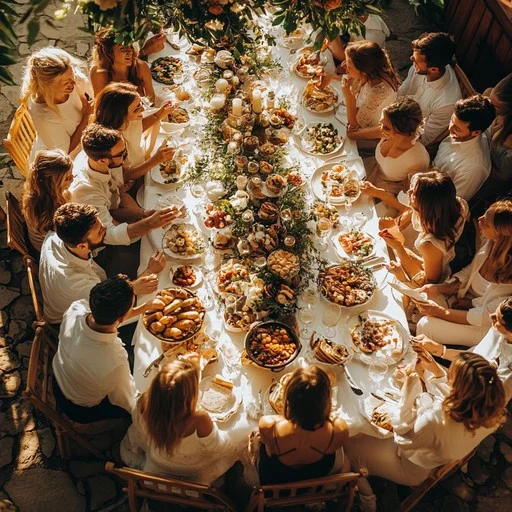
But the thing about money that moves in one direction is that it begins to carry a weight of its own. The phone calls got shorter. Curtis, who used to call on Sundays, started texting. Hey Mom, love you, crazy week. Thanksgiving, which had been mine for thirty-five years, moved to Lake Oswego in the second year. “Marjorie has the bigger dining room,” Curtis explained. “And Ted’s smoking a turkey. Come anyway!”
I came. I sat at the end of Marjorie’s long glass table, near the kitchen door. She served me a plate before everyone else, so I wouldn’t “feel rushed.”
Christmas visits shrank from a whole day to an afternoon, and then to a morning. Mari’s birthday, Owen’s piano recital, a school play. Invitations became afterthoughts. The photographs on Marjorie’s mantel showed her and Ted at Disney, at the lake, on a boat, with Owen and Mari on their knees. There was not one of me.
I told myself it was the way of things. A mother-in-law is always at the outside edge of a young family. I’d been one myself.
But I kept the transfers going. I’ll tell you why. I was afraid that if I stopped, I’d vanish.
Then came the Thanksgiving of the call.
I’d cooked anyway. I do it every year, out of stubbornness, a small turkey, a pan of Frank’s mother’s stuffing, cranberry sauce from fresh berries. It gives the day a shape. I’d made up my mind that Curtis and I would at least coordinate a time to drop off the grandchildren’s gifts, so I called at four in the afternoon, when I thought they’d be between courses.
He answered on the second ring.
“Hey, Mom. Happy Thanksgiving.”
“Happy Thanksgiving, honey. I wanted to see about bringing over the gifts for the kids. I’ve got a sweater for Mari and the science kit Owen asked for. Could I stop by tomorrow?”
A pause. Background noise, laughter, silverware, a child shrieking.
“Oh. Sorry, Mom. We’re celebrating at another house this year.”
“Another house?”
“Amber’s folks are hosting, you know. Her aunt’s in from Arizona, it’s a whole thing.” He cleared his throat. “Maybe next week.”
“Of course. I understand.”
I did. That was the awful part. I understood perfectly. I stood in my kitchen with the phone against my ear and the oven ticking and the potatoes steaming and a feeling like a coin dropping down a well.
“Okay, Mom. Love you.”
I waited for the click.
It didn’t come.

Sophia Rivers is an experienced News Content Editor with a sharp eye for detail and a passion for delivering accurate and engaging news stories. At TheArchivists, she specializes in curating, editing, and presenting news content that informs and resonates with a global audience.
Sophia holds a degree in Journalism from the University of Toronto, where she developed her skills in news reporting, media ethics, and digital journalism. Her expertise lies in identifying key stories, crafting compelling narratives, and ensuring journalistic integrity in every piece she edits.
Known for her precision and dedication to the truth, Sophia thrives in the fast-paced world of news editing. At TheArchivists, she focuses on producing high-quality news content that keeps readers informed while maintaining a balanced and insightful perspective.
With a commitment to delivering impactful journalism, Sophia is passionate about bringing clarity to complex issues and amplifying voices that matter. Her work reflects her belief in the power of news to shape conversations and inspire change.