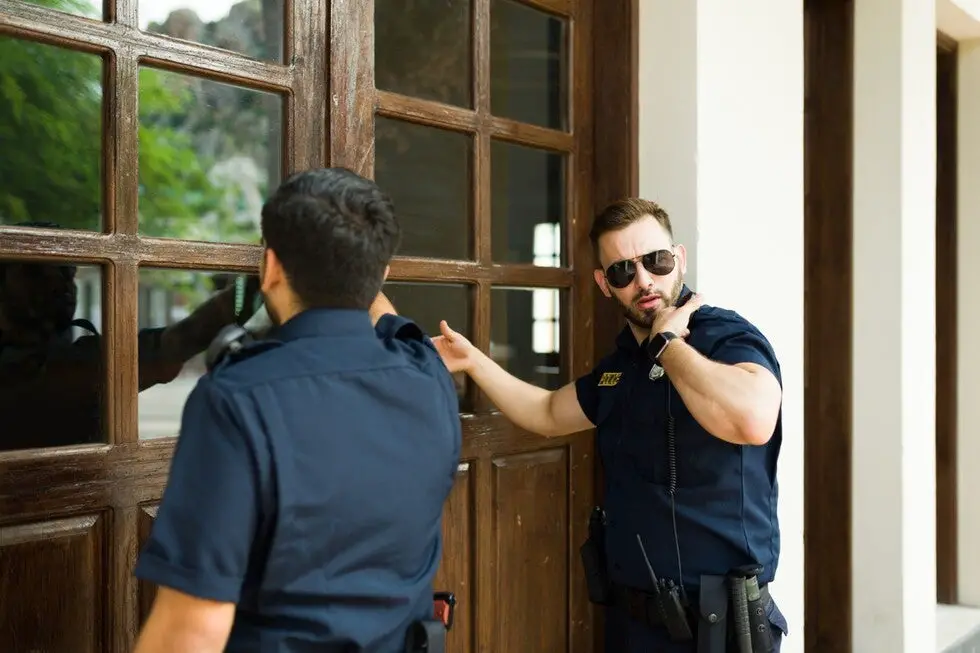
I rode in my patrol car behind the ambulance to Providence St. Vincent Medical Center. Eli sat in the back seat. He’d buckled himself in without being told and held his backpack in his lap.
I’d called the Oregon Department of Human Services child abuse hotline from the house. They were sending a caseworker to the hospital. I’d also called the Aging and People with Disabilities office about Josephine. Officer Brooks stayed behind at the house with Rick.
Halfway to the hospital, Eli spoke up from the back seat.
“Officer Dunham?”
“Yeah, buddy.”
“Is my dad going to be in trouble?”
I looked at him in the rearview mirror.
“I don’t know yet,” I said. Honest. “I need to talk to him. Was he home this afternoon?”
“He was sleeping. He sleeps in the day. He works nights at the Amazon place in Troutdale. Twelve hours.” Eli looked out the window. “Rick and Darla came to live with us when Grandma got sick. Dad said they were going to take care of her so he could work. He said that’s what family does.”
“Did your dad know about the lock on Grandma’s door?”
Eli was quiet for a while.
“Darla told him it’s so Grandma doesn’t wander outside at night and get hit by a car,” he said. “She told him Grandma has dementia and doesn’t know where she is. Dad believes her. He comes home in the morning and they tell him Grandma’s sleeping. He goes to bed. Then he goes to work.”
“Does he ever go in Grandma’s room?”
“Darla says it upsets her when he goes in. She says it makes her confused.”
I gripped the steering wheel.
“And the lock on the refrigerator?”
“Darla says I’m getting fat,” Eli said. “She says I have to earn my food. I get a sandwich after I do the dishes and fold the laundry and clean the bathroom.”
He said it like he was telling me the weather. Like it was just the rules. Like it was normal.
They all believe this is normal.
“Eli,” I said. “When did you decide to come find me?”
“Last week,” he said. “Grandma told me about you.”
I almost drove through a red light.
“Your grandma told you about me?”
“She said she taught at Rieke Elementary for a long time. She said a policeman used to come to her school and read to the kids every Friday. Officer Dunham. She said he had a mustache and he did all the voices.” Eli looked at me in the mirror. “You don’t have a mustache.”
I didn’t say anything for a minute. I couldn’t.
Twenty years ago, when I was a young patrol officer, I used to read to the third graders at Rieke Elementary on Friday afternoons. Charlotte’s Web. The whole thing, a chapter a week. I did a terrible pig voice.
I shaved the mustache off in 2009. Connie never liked it.
“I used to have one,” I said. My voice cracked. “Your grandma has a good memory, buddy.”
“She told me you were the kind of policeman who listens,” Eli said. “She said if I found you, you’d come see her. And you did.”

Lila Hart is a dedicated Digital Archivist and Research Specialist with a keen eye for preserving and curating meaningful content. At TheArchivists, she specializes in organizing and managing digital archives, ensuring that valuable stories and historical moments are accessible for generations to come.
Lila earned her degree in History and Archival Studies from the University of Edinburgh, where she cultivated her passion for documenting the past and preserving cultural heritage. Her expertise lies in combining traditional archival techniques with modern digital tools, allowing her to create comprehensive and engaging collections that resonate with audiences worldwide.
At TheArchivists, Lila is known for her meticulous attention to detail and her ability to uncover hidden gems within extensive archives. Her work is praised for its depth, authenticity, and contribution to the preservation of knowledge in the digital age.
Driven by a commitment to preserving stories that matter, Lila is passionate about exploring the intersection of history and technology. Her goal is to ensure that every piece of content she handles reflects the richness of human experiences and remains a source of inspiration for years to come.