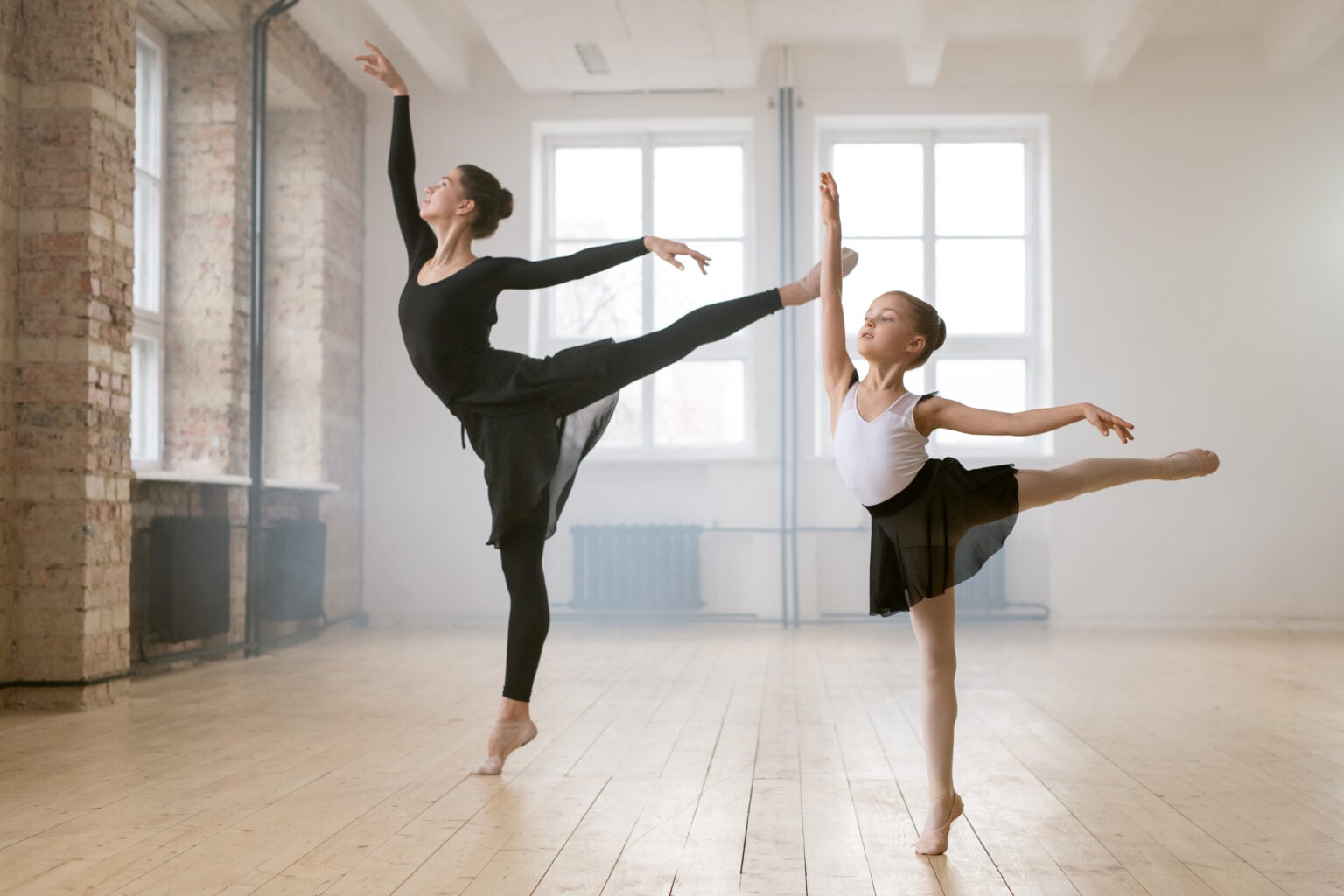
By the time April and the spring recital came around, Audrey was dancing in our kitchen again.
Every morning, while she waited for her toast.
“You’re going to kick the refrigerator,” I’d tell her.
“Mom. I need to be disciplined. I control my movements.”
She still got nervous before rehearsals. She still came home some nights frustrated with a combination she couldn’t get right.
But she’d stopped hiding her shoes.
On the night of the recital, the Westbrook Academy spring performance was held at a high school auditorium in Overland Park. Six hundred seats. Every one of them full.
Scott and I got there an hour early so we could sit in the front row. He’d bought a bouquet of pink roses at Hy-Vee on the way, $24.99, and he held it on his lap like it was made of glass.
I found Audrey near the backstage doors before she went in to warm up.
She was in her costume. A pale pink tutu with tiny silver flowers sewn along the bodice. Her hair was pulled into a tight bun with a ribbon wound around it.
“Nervous?” I asked.
“A little,” she said.
She reached up and adjusted the ribbon in her hair. Then she looked at me and gave me a small smile.
“Mom,” she said. “Watch this.”
I squeezed her hand.
“Always,” I said.
Twenty minutes later, the house lights dimmed. The music swelled. The curtain went up.
And my daughter walked out onto that stage under the bright lights.
Just before the music started for her solo, before she rose up onto her toes, she searched the front row. Her eyes moved across the faces until she found mine.
I smiled at her.
And my daughter smiled back.
She danced that waltz like she was made of air. Every turn. Every leap. Every single movement disciplined and controlled. Not once did she look like a girl who’d been told she wasn’t good enough.
When she finished, the whole auditorium stood up.
Scott stood up so fast he dropped the roses. He was crying. I was crying. A woman behind us I’d never met put her hand on my shoulder and said, “Is that your daughter?”
“That’s my daughter,” I said.
After the show, in the crowded lobby, a girl with dark curly hair worked her way through the crowd toward us. She was holding a single white carnation.
It was Mia.
She stopped a few feet away from Audrey. Her face was nervous and pink.
“You were amazing,” Mia said. “I just wanted to tell you. I’m so proud of you, Aud. I always was.”
Audrey looked at her for a long moment.
Then she stepped forward and hugged her.
“Audition again next year,” Audrey said into her shoulder. “Please. I want to dance with you.”
Mia laughed and cried at the same time. “Okay,” she said. “Okay. I will.”
On the drive home, Audrey sat in the back seat with her bouquet of roses and her white carnation in her lap, her costume crumpled under her coat, her bun falling apart.
“Mom?” she said, somewhere on I-435.
“Yeah, honey?”
“Thanks for coming to the studio that day. Without telling anybody.”
I looked at her in the rearview mirror.
“I’ll always come,” I said. “Even when you tell me not to. Especially then.”
She smiled and leaned her head against the window.
And by the time we got home, she was asleep. Still holding the roses. Still wearing her pointe shoes.
Sophia Rivers is an experienced News Content Editor with a sharp eye for detail and a passion for delivering accurate and engaging news stories. At TheArchivists, she specializes in curating, editing, and presenting news content that informs and resonates with a global audience.
Sophia holds a degree in Journalism from the University of Toronto, where she developed her skills in news reporting, media ethics, and digital journalism. Her expertise lies in identifying key stories, crafting compelling narratives, and ensuring journalistic integrity in every piece she edits.
Known for her precision and dedication to the truth, Sophia thrives in the fast-paced world of news editing. At TheArchivists, she focuses on producing high-quality news content that keeps readers informed while maintaining a balanced and insightful perspective.
With a commitment to delivering impactful journalism, Sophia is passionate about bringing clarity to complex issues and amplifying voices that matter. Her work reflects her belief in the power of news to shape conversations and inspire change.