That hurt worse than the slap. I had trained both of those boys myself. In Dewitt’s first week, I bought him lunch because he was too proud to admit he was broke until payday.
I didn’t turn around. If I fought my own soldiers at my own gate, she’d get exactly the story she wanted: an unstable sergeant who attacked a colonel’s wife and then turned on her own men. So I shut my eyes, stood still, and waited for their hands to close on my arms.
I had never been so scared or so alone in that uniform.
“Sergeant,” Dewitt whispered. He sounded close to crying. “I’m sorry. I’m really sorry.”
His fingertips touched my sleeve.
Then I heard an engine.
It was a deep, heavy rumble coming up the road from the main post. Dewitt jerked his hand back, and I opened my eyes.
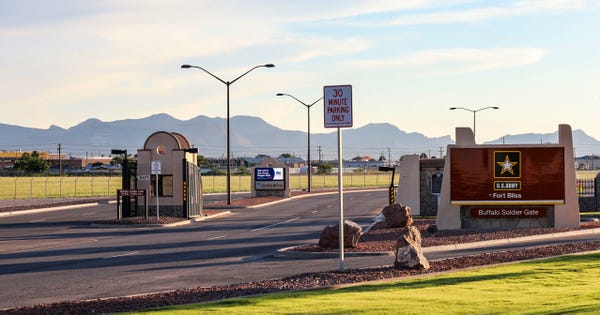
The engine got louder until a black military truck came through the shimmering afternoon heat. Four silver stars shone on the front plate, and every soldier at Gate Six snapped up straight. Private Dewitt stepped away from me, his face suddenly white. Private Salas came to attention so fast his boots scraped the gravel.
Vivian Harmon turned toward the truck, and for the first time since she’d hit me, her confidence slipped. The truck stopped a few feet from her Mercedes, and the rear door opened. A tall general got out. His face was cold as he took in the scene.
“Sergeant Conroy,” he said, looking straight at me. “Report.”
I brought my heels together and gave him the facts with nothing added: the closure order, the unauthorized vehicle, the assault, and her order to two privates to pull me off my assigned post. I didn’t mention the pain in my cheek or the humiliation burning under my collar.
He listened without interrupting. Then he turned to Vivian, who had suddenly remembered how to smile.
“General, thank goodness you’re here,” she said sweetly. “This sergeant got aggressive when I asked her to open the gate. I had to defend myself.”
Neither Dewitt nor Salas said a word. Their silence told me how scared they were, and I couldn’t blame them.
Vivian lifted her chin. “My husband is Colonel Bruce Harmon. I’m sure he’ll be very interested to hear how his soldiers are treating people.”
The general didn’t smile. He studied her face like he’d just recognized someone from an old photograph.
“Vivian,” he said quietly, “you haven’t changed much in twenty-eight years.”
The color left her face. For a moment she didn’t look like the colonel’s wife everyone was afraid of. She looked like someone standing in front of a door she had spent decades keeping locked.
“Sir, I don’t know what you mean,” she whispered.
The general glanced at the two privates, then back at me. “Nobody leaves this gate until military police command gets here. And Sergeant Conroy, I want your incident report preserved exactly the way you gave it.”
Vivian took a quick step toward him. “Please. Whatever you think you know, my husband can explain—”
“Your husband,” the general cut in, “has spent twenty-eight years protecting a secret that was never his alone to bury.”
He reached inside his uniform and took out a worn photograph. When Vivian saw it, her knees nearly gave out.
Then he said five words that silenced everyone at Gate Six.
“Tell them what happened that night.”

Specialty: Quiet Comebacks & Personal Justice
David Reynolds focuses on stories where underestimated individuals regain control of their lives. His writing centers on measured decisions rather than dramatic outbursts — emphasizing preparation, patience, and the long game. His characters don’t shout; they act.