Eli was in the hospital for another three weeks after he woke up, then in a rehab facility in Brewer for six more. He had a fractured pelvis, three broken ribs, a broken collarbone, and a traumatic brain injury that the doctors said would take months to heal fully. He had to learn to walk again with a walker, and then a cane. He had headaches, and some days he forgot words in the middle of a sentence.
But he was alive. The doctors kept saying it like it surprised them.
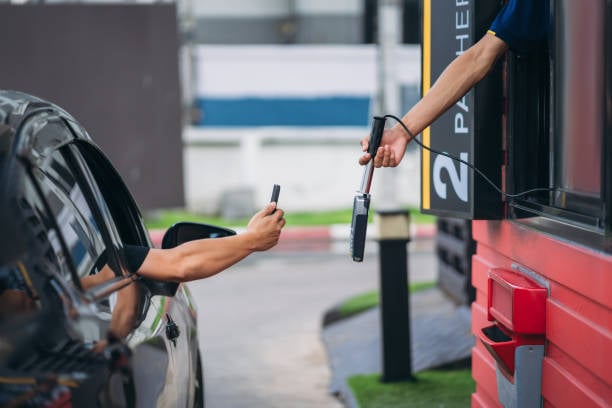
I went to see him on a Sunday afternoon at the rehab center, the first time he was well enough for visitors besides family. I brought him a small hot chocolate in a Mug & Muffin cup with a lid, and I set it on his tray table.
He looked at it, and then he looked at me, and his face turned red all the way to his ears.
“You’re the window lady,” he said.
“I’m the window lady,” I said. “Rosemary. Ro.”
“I’m sorry,” he said. “For holding up your line. Every morning. That guy Kurt was always so mad.”
“Kurt’s been paying for your hot chocolate for the last month,” I said.
Eli stared at me.
“Kurt?”
“People surprise you,” I said.
I sat down in the vinyl chair beside his bed.
“Eli, can I ask you something? Why didn’t you ever tell her? You stood in front of that woman for over a year, four hundred and twelve mornings by my count. You could have just pulled up to her window and said thank you.”
He picked at the edge of his blanket for a long time.
“My mom died owing everybody,” he said quietly. “The hospital, the electric company, the landlord. She was always apologizing to people. ‘I’m sorry I’m late with the rent. I’m sorry, I’ll pay you next week.'” He swallowed. “Then she got sick, and she didn’t go to the doctor because she was scared of owing more. And she died in that hospital owing thirty-one thousand dollars.”
“Eli…”
“And then this nurse,” he said, “this stranger, came out to the waiting room every morning for nine days and handed me a hot chocolate. A dollar twenty-five. And she never asked for anything. She didn’t want me to owe her. She just wanted me to have something warm.” He looked up at me with wet eyes. “Do you know what that’s like, when you’ve watched your whole family drown in owing people? To have somebody just give you something?”
I couldn’t answer.
“I didn’t want to pay her back,” Eli said. “I didn’t want her to feel like I was settling a debt. I wanted to give it to her the same way she gave it to me. Without her knowing. Without her owing me.” He shrugged with his good shoulder. “I figured if she knew it was me, it would turn into a thing. A transaction. I didn’t want it to be a transaction.”
“Four hundred and twelve mornings,” I said. “Seven dollars and sixty cents a day. That’s over three thousand dollars, Eli. That’s half your lumberyard money.”
“It’s a dollar twenty-five a day,” he said. “Nine days. It was the only thing anybody gave me that whole year.”

Sophia Rivers is an experienced News Content Editor with a sharp eye for detail and a passion for delivering accurate and engaging news stories. At TheArchivists, she specializes in curating, editing, and presenting news content that informs and resonates with a global audience.
Sophia holds a degree in Journalism from the University of Toronto, where she developed her skills in news reporting, media ethics, and digital journalism. Her expertise lies in identifying key stories, crafting compelling narratives, and ensuring journalistic integrity in every piece she edits.
Known for her precision and dedication to the truth, Sophia thrives in the fast-paced world of news editing. At TheArchivists, she focuses on producing high-quality news content that keeps readers informed while maintaining a balanced and insightful perspective.
With a commitment to delivering impactful journalism, Sophia is passionate about bringing clarity to complex issues and amplifying voices that matter. Her work reflects her belief in the power of news to shape conversations and inspire change.