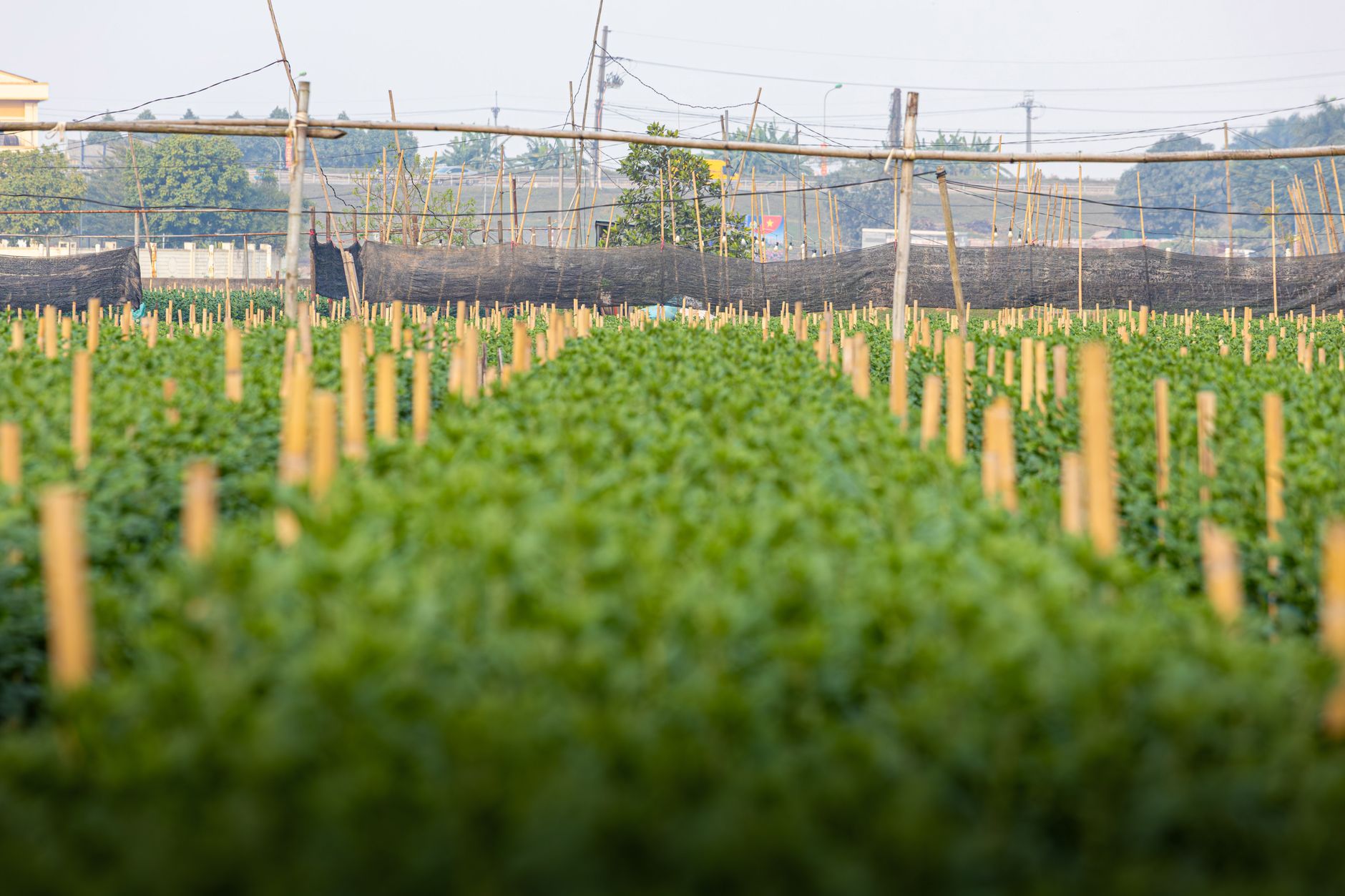
It took twenty minutes, following the line of orange caps, thirty-one of them, spaced a hundred and twenty feet apart, each stamped LS 211. The sun went down behind us and turned the stubble to copper. A pheasant clattered up out of the ditch and sailed away over the field.
At the west end, the strip met a gravel lane.
I’d known that lane my whole life. A wide gravel apron cut through the fence, with a swing gate on cedar posts and two concrete culverts underneath. The field entrance. The only one. It led along a long dirt track to the back eighty, the middle quarter, and the home place. Every truck, combine, grain wagon, and manure spreader on the Dekker farm had gone through that gate since 1961.
I stood at the gate with my hand on the post.
“That’s inside the strip,” Gil said. “The gate. The culverts. The lane, for the first three hundred feet, until it forks.”
I turned slowly and looked south over all that flat, dark ground with the light going out of it.
“Mr. Okafor. Is there another way in?”
“No, ma’am. The river’s on the south. The Pruitts’ fence is on the east. The railroad right-of-way runs along the west side, fenced, with no crossing. I walked every foot of it.” He swallowed. “The only legal access to your brother’s land from a public road is through this gate.”
“Which I own.”
“Which you own, ma’am. Outright.”
It was nearly dark by the time we reached the east end. The sky had turned the clear, deep green of a Nebraska dusk, with Venus hanging low over the river. Under a huge old cottonwood stood a squat white pump house with a tin roof and a padlock.
“That’s the well,” I said. “It’s the only one.”
“Yes, ma’am. The stock well. It feeds the house, the barn, and the tank in the north pasture.”
“Dad dug it in 1967.”
“It’s inside the strip. Eleven feet in. Your father had my dad set a pin right at the corner.”
I put my hand on the cool tin of the pump house.
“So Dale can’t water a steer without crossing my ground,” I said slowly. “Or get a truck into his field.”
“No, ma’am.”
I thought of my brother in Dad’s chair with his boots up, laughing.
“There’s one more thing,” Gil said quietly. “It’s under us.”
He took a small, battered notebook from his vest and held it open in the last gray light. It was a pencil sketch with arrows.
“Your dad’s drainage tile. The main line. Twelve-inch clay pipe, laid in 1962. It runs the whole length of this strip, east to west, about four feet down. Every lateral line on the farm ties into it.” His voice was gentle. “Every acre your brother owns drains through this ground.”
I knew those drawings. I’d kept them in a folder in Dad’s desk for thirty years and marked them in red pencil every time a line failed. But I’d never once thought about the main as a single thing.
“If I blocked it…”
“If that main ever got blocked, ma’am, your brother’s fields would be underwater by June.”
I stood there in the near-dark with a stranger’s notebook in my hand, and slowly I began to understand what my father had done.
It wasn’t a trick. It was something much quieter and more careful. A man who’d spent seventy-nine years on one piece of ground, and who’d learned in a dialysis chair how land is described, had sat down with a surveyor and a lawyer and found the exact narrow strip of earth that every other acre depended on.
He hadn’t taken anything from Dale. He’d given Dale the farm, the house, the machinery, and every acre in Exhibit A, just as the will said.
He’d just kept the door.
Pins are good, he’d said.
I stood beside that pump house and cried. I hadn’t cried at the funeral, or at the reading, or on my porch with the survey on my knee. It came up from somewhere deep and old, and I let it. Gil Okafor stood a respectful distance away with his hat in his hands, studying a cottonwood tree.
“I’m sorry,” I said finally. “I’m not usually like this.”
“It’s all right, ma’am. My dad said your father was the clearest client he ever had. He said, ‘Walt Dekker came in with a plan, a bucket of flags, and cash in his pocket. And he didn’t change a single word.'”
I laughed through the tears. “That’s him.”

Ethan Blake is a skilled Creative Content Specialist with a talent for crafting engaging and thought-provoking narratives. With a strong background in storytelling and digital content creation, Ethan brings a unique perspective to his role at TheArchivists, where he curates and produces captivating content for a global audience.
Ethan holds a degree in Communications from Zurich University, where he developed his expertise in storytelling, media strategy, and audience engagement. Known for his ability to blend creativity with analytical precision, he excels at creating content that not only entertains but also connects deeply with readers.
At TheArchivists, Ethan specializes in uncovering compelling stories that reflect a wide range of human experiences. His work is celebrated for its authenticity, creativity, and ability to spark meaningful conversations, earning him recognition among peers and readers alike.
Passionate about the art of storytelling, Ethan enjoys exploring themes of culture, history, and personal growth, aiming to inspire and inform with every piece he creates. Dedicated to making a lasting impact, Ethan continues to push boundaries in the ever-evolving world of digital content.