Room in the Boat
Part One: The Cut Rope
Mud sucked at my tall rubber boots as I came back down the bank. It was a Saturday at the end of March, a quarter past six in the morning, and the fog still lay thick on the Wabash. The whole river bottom smelled of wet leaves and cold water and the faint diesel that always hangs over the bluff road on fishing mornings. I’d walked up to my truck for the thermos of coffee I’d forgotten on the seat. Five minutes, maybe six. I came back down through the sycamores with the thermos in one hand and my tackle box in the other, already thinking about the first cast.
The rope was still tied to Grandpa’s stake. That was the first thing I noticed, and for a second it made no sense, because the stake was there and the knot was there and the boat was not. The iron stake had been driven into the clay bank in 1979, and it had rusted the color of a pumpkin. Around it was the yellow nylon bow line I’d tied myself an hour earlier, two half hitches and a round turn, the way Grandpa taught me when I was seven.
I set down the thermos and picked up the loose end. It stopped a foot short of the water. It wasn’t frayed the way old rope frays, slow and fuzzy from rubbing. It was clean on one side and ragged on the other, the way rope looks when somebody saws through it with a pocketknife in a hurry.
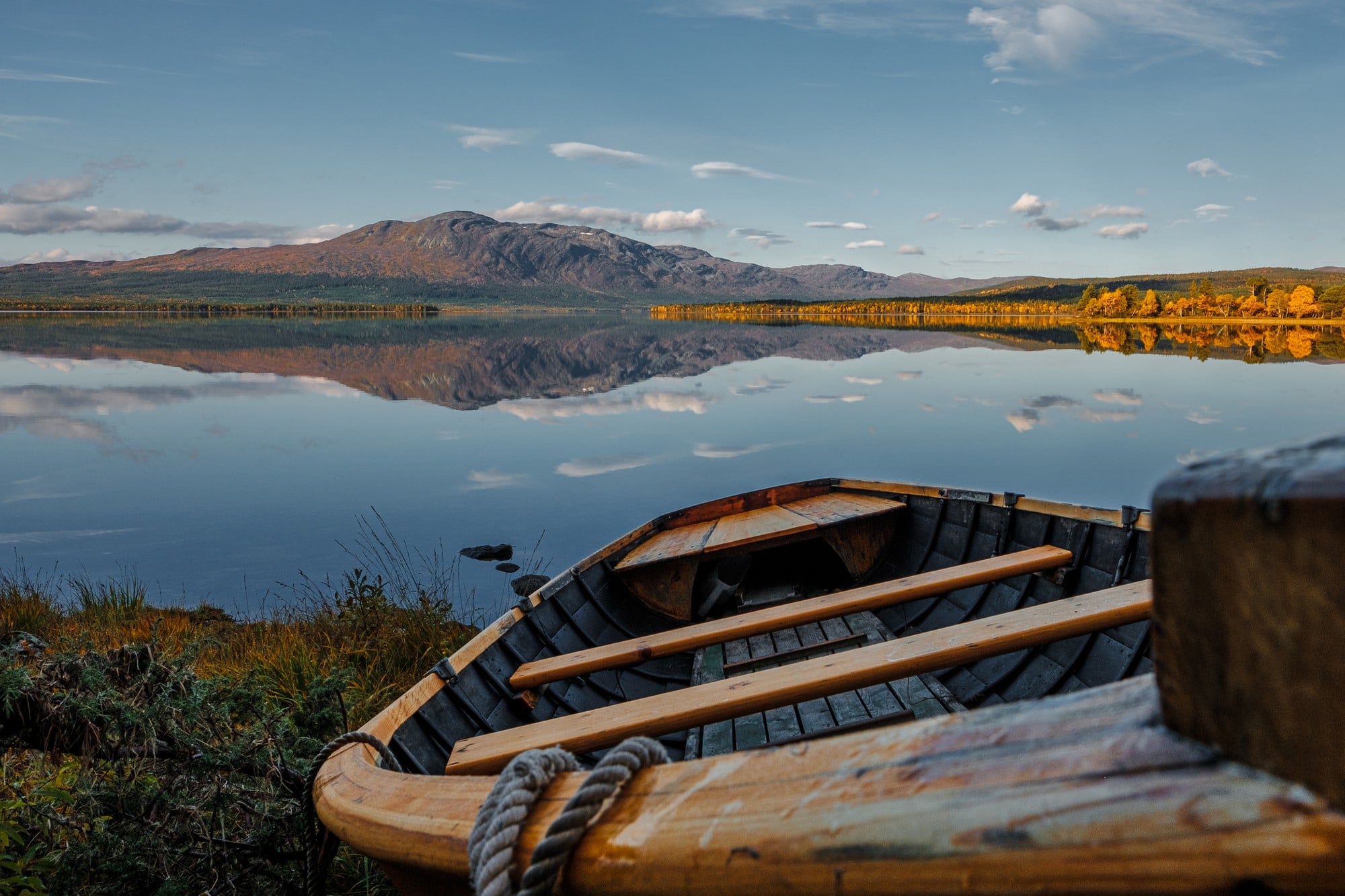
Out on the brown river, Grandpa’s green jon boat was turning slowly in the current. Fourteen feet of riveted aluminum, painted John Deere green in 1984, with a fifteen-horse Evinrude on the stern and a dent in the starboard bow from a stump in the flood of ‘93. It was sixty yards out and drifting downriver without me, spinning gently like a leaf on a puddle.
Up past the sycamores, a truck door shut.
I turned around. I couldn’t see the road from the gravel bar, only the gray trunks of the trees and the fog caught in the branches. But I heard the engine catch, and I heard the sound underneath it, a little metallic tick-tick-tick in the idle, like a clock winding down. I knew the tick in that diesel. Everybody in Wabash County knew it.
Part Two: Lamar
Lamar is my cousin. He’s thirty-six, five years older than me, and he drives a 2004 Ford F-250 with a Powerstroke diesel that’s had a bad injector since 2019. He’s never fixed it. He says it gives the truck personality. You can hear that tick from a quarter mile away, and I stood on the gravel bar with a cut rope in my hand and listened to it pull away along the bluff road until the sound faded into the fog. Then it was just me and the river and Grandpa’s boat getting smaller.
Twice that spring Lamar had told me the hole below the sycamores was his. The first time was at the bait shop in Mount Carmel in early March, while I was buying nightcrawlers and chicken livers and he was buying a case of Busch Light. He looked at what was in my hands and asked if I was going out to the sycamore hole. When I said I planned to, first warm Saturday, he stared at me for a long moment. “That’s my hole, Jeanette,” he said, and then he paid for his beer and left without another word.
The second time was at the church potluck two weeks later. He came up behind me at the dessert table without saying hello. “I saw your truck down at the sycamores Tuesday,” he said. I told him I’d only been checking the water level. “Stay off that hole,” he said, and he took a square of Mrs. Hedrick’s peach cobbler and walked away.
The hole wasn’t Lamar’s. It wasn’t mine either. It was Grandpa’s.
Leroy Tolliver fished that hole for forty-six years. He bought forty acres of river bottom in 1978 with his savings from the oil refinery in Robinson, and the best part of those forty acres was the bend below the sycamores, where the river cuts a pool twenty-two feet deep against the clay bank. There’s a sunken cottonwood log on the bottom that the blue cats and flatheads love. Grandpa caught a sixty-one-pound flathead there in 1987, and the picture still hangs in the bait shop in Mount Carmel: Grandpa in his overalls holding that fish up by the gill with both hands, grinning so wide you can see the gap where he lost a tooth in Korea.
He took his boys fishing there, my daddy and my uncle Monte. Later he took his grandkids, Lamar and me. When I was six and Lamar was eleven, Grandpa would put us both in the green boat, Lamar in the front seat, me in the middle, and himself in the back with the tiller. Lamar baited my hooks because I was scared of the chicken livers. Grandpa told us stories about the flood of 1937, when the water came up over the courthouse steps in Mount Carmel, and about the year a bald eagle stole a catfish right off his line. Those were the best mornings of my childhood. I think they were the best of Lamar’s too, though I didn’t understand that until much later.
Part Three: Two Hundred Sixty-Two Afternoons
Grandpa had a stroke in the fall of 2021. He was eighty-four. It took his right hand, his right leg, and most of his words. He couldn’t drive anymore and couldn’t walk without a cane, which meant he couldn’t get to the river, and for a man like Grandpa that was worse than the stroke itself.
That’s when I started driving him. I’m Jeanette Tolliver, I’m thirty-one, and I carry the rural mail route out of Mount Carmel. Route 3 is a hundred and fourteen miles of county roads and farm lanes and river bottom, and I’ve carried it since I was twenty-three. I finish at two in the afternoon, so I started driving out to Grandpa’s house on the county line after work. I’d help him into my truck and drive the four miles to the bluff road, then help him down through the sycamores one slow step at a time, his cane in one hand and my arm in the other.
He couldn’t run the motor anymore, so I ran it. I’d take us out to the middle of the hole and drop anchor, bait his hook, and cast for him because he couldn’t manage it left-handed. Then I’d put the rod in his good hand, and he’d sit in the back of the boat watching the line like it was the most important thing in the world. He could hardly talk. But when a fish hit, he’d say one word, Whoa, and his whole face would light up like he was eleven years old.
I drove him to the river two hundred and sixty-two times over two springs and summers and falls. I know the number because I counted later, after he was gone, going back through the calendar on my kitchen wall.
Lamar never came. He couldn’t, and I need to explain why, because nothing he did that spring makes sense otherwise.
His daddy, my uncle Monte, died two Februarys ago. Monte was Grandpa’s younger son, my daddy’s little brother, sixty-one years old, a grain truck driver for the co-op, loud and funny and as big as a door. He loved the river more than anyone, more than Grandpa even, and he went down to the sycamore hole every Sunday all winter long just to look at the water. One cold Sunday he and Lamar were standing on the gravel bar talking about the catfish that would come up from the deep water in April. Monte put his hand on his chest and sat down on the gravel.
There’s no cell service in the river bottom. Lamar couldn’t call anybody, and he couldn’t leave his father to run up the bank to the truck. So he knelt on the frozen gravel and did CPR for twenty-two minutes, until his arms gave out. Monte died in his arms, right there at the edge of the hole, ten feet from the water.
Grandpa died the next July, peacefully, in his sleep. His will was two pages long. The farm and the house went to be sold and split between my daddy and Lamar, for Monte’s share. The boat went to me. The lawyer read the line out loud at his office in Mount Carmel: To my granddaughter, Jeanette, I leave my green jon boat, my Evinrude, my tackle, and my stake at the sycamore hole. She drove me to the river two hundred and sixty-two times after I couldn’t drive myself. The river’s hers now.
Lamar stood up and walked out of the lawyer’s office. He didn’t come to Thanksgiving that year, or Christmas. Daddy tried to explain it to me afterward. When he and Monte were boys, Monte always said that when Grandpa was gone, the boat was his, and the plan had always been for Monte to pass it on to Lamar. “But Monte went first,” Daddy said, “and you were the one driving Grandpa to the river.” Lamar took it hard. He’d taken everything hard since the gravel bar. He stopped going to church, quit his job at the John Deere dealership to drive a gravel truck, and quit calling his mother.
Part Four: Your Call
So there I was on the gravel bar with a cut rope in my hand and my grandfather’s boat drifting toward the Ohio River, and the first thing I thought about was the sheriff.
It’s a crime to cut somebody’s boat loose. Criminal mischief at the least, maybe theft if the boat sank. Sheriff Dale Wolfe had known Grandpa for forty years, and he’d have come out that morning. But I could see exactly how it would go. Calling the law on my own cousin over a cut rope would split the family right down the middle, and Aunt Kathleen had buried enough. She’d lost her husband and her father-in-law in eighteen months. I couldn’t make her watch her only son get arrested for setting loose his dead grandfather’s boat.
So I called Daddy instead. He was twenty-eight days out on a Mississippi towboat, a deckhand pushing grain and coal barges between St. Louis and New Orleans, the same job he’s worked for thirty years. He answered on the fourth ring, and I could hear the deep throb of the engines behind him. Somewhere below Memphis, he said. I told him all of it: the rope, the knife cut, the truck door, the tick in the diesel.
He was quiet so long I thought the call had dropped. “Lamar,” he said finally.
“Lamar,” I said.
He sighed, and the river noise filled the silence between us. “Your call, Jeanette,” he said. “But get the boat back first.”
I’m thirty-one years old and I carry the mail through ice storms and spring floods. I don’t cry over rope. I sat in my truck on the bluff road and started calling every river house I knew. There are maybe thirty camps along the lower Wabash between Mount Carmel and the Ohio, old cabins up on stilts with screened porches and johnboats tied below, and every one of them is on my route. I called the Hendersons, the Bakers, the Pruitts, the old Hatfield place, the Methodist church camp. Nobody had seen a green jon boat.
At one o’clock my phone rang. It was Newt Fry.
“Your granddaddy’s boat is hung in a willow sweep two miles down,” he said. “Indiana side, below the Coffee Creek bend. My grandson spotted it running trotlines this morning. Come on down. We’ll get her.”
Newt is seventy-four and has lived at the mouth of Coffee Creek his whole life. He fished with Grandpa every spring for fifty years and carried both caskets, Grandpa’s and Monte’s. When I got to his ramp, he and his grandson Travis were waiting in Newt’s big aluminum work boat with a tow strap and a come-along. It took them an hour to work Grandpa’s boat free. It had jammed sideways into a pile of fallen willows on the outside of the bend, full of leaves and branches, the motor caught in the roots. Travis hooked the strap to the bow, and Newt backed off slow until the green boat groaned, scraped, and came loose.
They towed it back to the ramp and tied it to Newt’s dock. Newt climbed down into it and looked it over, and then he picked up the bow line, the other half of the yellow rope still tied to the stake upriver, and held the end out so I could see it.
“That’s a knife,” he said. “That ain’t a snag.”
He didn’t ask who. He didn’t have to.
Part Five: A New Prop
The propeller was bent flat. Two of the three blades on Grandpa’s old Evinrude had folded back like the petals of a flower where they’d hit a root or a rock in the willows. “She won’t run like that,” Newt said. “You’ll want a new one.”
I drove an hour to the marine supply in Vincennes and paid a hundred and sixty dollars for a new prop, and that evening I put it on myself in my driveway. Daddy taught me how when I was twelve: pull the cotter pin, back off the nut, slide the old prop off the shaft, then thrust washer, prop, spacer, nut, torque it down, new cotter pin, bend the ends. It took forty-five minutes. When I finished, my hands were black with grease, and Grandpa’s boat sat on its trailer cleaned out and whole again, the new prop shining silver against the old green paint.
I stood there in the driveway and thought about Lamar. I thought about him kneeling on frozen gravel, pushing on his father’s chest for twenty-two minutes with nobody to call. And I thought about the knife, and how a man would have to be hurting very badly to take it to his grandfather’s boat. I didn’t feel like calling the sheriff anymore. I felt something closer to sorrow, and that surprised me.
Then I got in my truck and drove out to Aunt Kathleen’s.
She lives in a little brick ranch on the county road north of town, the house she and Monte bought in 1988, with a big front yard and a vegetable garden and a bird feeder Monte built out of an old hubcap. When I pulled in, she was on her knees in the grass, pulling henbit.
Henbit is a little purple-flowered mint that comes up in every lawn in southern Illinois in March. It’s harmless, and most people leave it alone, but Monte hated it. Every spring he got down on his knees and pulled every plant by hand, one at a time, grumbling that the yard looked like it had a rash. Now Aunt Kathleen was out there in an old flannel shirt and Monte’s work gloves, far too big for her hands, doing the same thing. She’s fifty-nine, small and wiry, with short gray hair and freckles across her nose. She cooked at the elementary school in Mount Carmel for thirty years.
She hadn’t been on the river since the funeral. For years, Lamar used to take her every Sunday after church in Monte’s old red boat. Monte ran the motor, Lamar baited her hooks, and she sat up front with her face in the sun. After the gravel bar, Lamar quit asking, and she quit going. She sold the red boat that fall to a man from Vincennes.
She looked up from the henbit and asked what I was doing out there on a Saturday. I didn’t tell her about the rope or the knife or the willow sweep. “Aunt Kathleen,” I said, “you want to go catch a catfish?”
She sat back on her heels with a little purple plant in her gloved hand and looked at me for a long time. “Honey,” she said, “I don’t know if I still can.”
“You sit,” I said. “I’ll do the rest.”
Part Six: The First Sunday
She was waiting at the end of her driveway after church the next day in jeans, an old Purdue sweatshirt, and a straw hat. She was holding a fishing rod, and I knew it the moment I saw it: a seven-foot white Ugly Stik with a scratched Penn reel and a strip of red electrical tape wrapped around the handle where Monte’s thumb used to rest. He caught more catfish on that rod than any man in the county. She got into my truck with it across her lap and didn’t say a word about it, so I didn’t either.
I helped her down through the sycamores the way I used to help Grandpa. At the edge of the gravel bar she stopped and stood still for a long time, looking at the brown water and the deep hole under the bank, and at one particular stretch of gravel ten feet from the water. I knew exactly what she was looking at, and I didn’t say anything. I just waited until she took a breath, walked across the gravel, and stepped into the boat.
She sat down on the middle seat and laid Monte’s rod carefully on the floor beneath it. She didn’t fish with it, and I didn’t ask why. I handed her Grandpa’s old brown Shakespeare with the Zebco reel, baited it with a chicken liver, and cast it into the middle of the hole for her. Then I turned around to bait my own hook.
She caught a four-pound blue cat before my line was even wet. I was still threading the liver when her rod bent double and she grabbed it with both hands. “Oh!” she cried. “Oh, Jeanette! Oh, oh, oh!” She didn’t play it or let it run. She cranked that Zebco so hard it squealed and hauled the fish up over the side like she was drawing a bucket from a well. It landed flopping on the aluminum floor, gray-blue on top and white underneath, with whiskers as long as my finger.
She stared at it, and then she laughed so loud that a great blue heron standing in the shallows across the river leapt into the air and flapped off downstream, croaking in protest. That made her laugh even harder, until she had to wipe her eyes. “Monte would’ve hollered at me for horsing it in,” she said. “He’d say, Kathleen, you’re gonna tear its lip off. Let it run. I never once listened to him.”
Then she went quiet for a long while, sitting with the fish at her feet and her eyes on that stretch of gravel. I unhooked the catfish, put it on ice, baited her hook again, and cast it back out. When I handed her the rod, she held it a long moment before she spoke. “Thank you, honey,” she said, so softly I barely heard it over the water.
We went back the next Sunday, and the next, and the one after that, all through April, rain or shine. I’d pick her up at noon, and she’d be waiting with Monte’s rod across her lap. Every week she laid it under the seat, and every week she fished with Grandpa’s instead.
She talked a little more each time. She told me about the little Baptist church in Allendale where she and Monte were married in 1987, and how he’d proposed on one knee on that very gravel bar, in the mud. She told me he used to sing Merle Haggard off-key while he ran the motor. She talked about Lamar, too, about the bluegill he caught there when he was four and how he cried because he thought it was hurting, about how he and his father did everything together, fishing and hunting and tearing apart truck engines on Saturdays.
“He was holding his daddy when it happened,” she said one Sunday near the end of the month, looking at the gravel. “Twenty-two minutes. He told me afterward he counted the whole time.” She turned her hands over in her lap. “He hasn’t been back since. Not to the river, not to church, hardly to my house. I lost my husband that day, and I think I lost my son too.”
I thought about the rope, and I kept my mouth shut.
Part Seven: Newt at the Ramp
In early May, Newt told Lamar what he’d found. I wasn’t there, but Travis told me, and by the next morning so had half the county.
It was a Saturday at the Coffee Creek ramp, seven o’clock, with eight or nine trucks and trailers lined up and the regulars launching their johnboats. Lamar pulled in with his ticking diesel to buy bait out of the cooler Newt keeps at the top of the ramp. He didn’t have a boat anymore. Newt walked over to him right there in front of everybody.
“Lamar,” he said, “I pulled your granddaddy’s boat out of a willow sweep a few weeks back, two miles down. The bow line was cut. Clean on one side, ragged on the other.” He held up his hand as if he were still holding the rope. “I’ve been on this river seventy-four years. I know a snag from a knife.”
The regulars went quiet. Newt didn’t raise his voice. “Your granddaddy fished with me fifty years. I carried his casket, and I carried your daddy’s too. I don’t know why you did it, son, and I’m not asking.” He laid his hand on Lamar’s shoulder. “But you need to know that I know.”
Lamar didn’t argue. He didn’t deny anything or get angry. Travis said he just stood there holding a foam cup of nightcrawlers for a long moment, and then he got in his truck and drove away.
That Friday there was a hundred and sixty dollars in my mailbox. I check a lot of mailboxes for a living, but I had never found cash in my own. It was a plain white envelope with no stamp and no address, eight twenty-dollar bills folded once. There was no note. I stood at the end of my driveway holding it for a long time. A hundred and sixty dollars was exactly what I’d paid for the prop, and the only people who knew that number were Newt, the clerk in Vincennes, and whoever had thought to ask.
By the middle of May, Lamar was up on the bluff road above the hole most Sundays.
I first noticed on the second Sunday of the month. Aunt Kathleen was fishing and I was eating a peanut butter sandwich when I heard it, faint through the trees: tick-tick-tick. Through a gap in the sycamores I could see a slice of the bluff road and a white F-250 parked on the shoulder with the engine running. He didn’t get out. He just sat there watching. He was there the next Sunday, and the one after that. On the third week Aunt Kathleen saw him too. She looked up at the truck for a long time without saying a word, and then she went back to her line. He never came down.
That was the week I moved the cooler. Grandpa’s boat has three aluminum bench seats. I sit in the back by the tiller, and Aunt Kathleen sits in the middle. For the first five Sundays I’d kept the big red Igloo on the front seat, but on the sixth I set it on the floor at her feet and left the front seat empty. It wasn’t strictly Monte’s seat, since this wasn’t his boat, but it was where he always sat when Grandpa took the family out, from the time he was a boy until he was a grown man, facing the hole. Aunt Kathleen noticed. She looked at the empty seat and then at me, and she didn’t say anything, but I saw her swallow.
Every Sunday she brought Monte’s rod, and every Sunday it stayed under the seat.
Part Eight: June
By June she was baiting her own hooks. On the first Sunday of the month, I reached for the chicken livers and she took the container right out of my hand. “I’ve got it, honey,” she said, and threaded one on three times the way Monte taught her so it wouldn’t fly off. Her cast was a little sidearm flip that landed twenty feet from the boat, nothing pretty, but it was hers. That afternoon she hooked a seven-pound channel cat, and this time she let it run. She worked it slowly and let it tire itself out, and when it finally lay in the bottom of the boat, she looked at it for a long while. “Monte would’ve been proud of that one,” she said.
The Sunday before the Fourth was the hottest day of the year so far, ninety-two degrees, with the cicadas screaming in the sycamores and the river low and green-brown and lazy. We’d pulled the boat up on the gravel bar to eat in the shade, sitting on two overturned buckets with ham sandwiches and mason jars of iced tea. There were three channel cats in the cooler already. We were sitting near the spot, not on it but near it. When we’d pulled the boat up, Aunt Kathleen had walked right past it without stopping and without looking away, and I realized it was the first time she’d done that.
Up on the bluff, a truck door shut. Aunt Kathleen and I both looked up. The tick of the diesel stopped, and for a moment there was nothing but the cicadas and the river. Then came boots, sliding and crashing down through the brush, dirt and leaves and loose rock tumbling down the bank ahead of them, until Lamar stepped out onto the gravel.
He was wearing jeans, a gray T-shirt, and a Caterpillar cap pulled low, and he was carrying a cheap Walmart rod with the price tag still on it. He looked thinner than I remembered and older, with circles under his eyes and a scruffy beard and hands that weren’t quite steady. He walked to the water’s edge, ten feet from the place where his father sat down, and stopped. He didn’t look at the spot, and he didn’t look at me. He looked at his mother.
“Mama,” he said, and his voice broke on the word. “Is there room?”
Aunt Kathleen set her sandwich down on the bucket as carefully as if it were made of glass. She stood up, walked across the gravel to the boat, and reached under the front seat, the empty one. She came back out holding Monte’s white Ugly Stik with the red tape on the handle. She’d brought it every Sunday for eleven weeks and never once fished with it, and as she carried it across the gravel to her son, I finally understood why.
She held it out to him. “It’s been waiting for you,” she said.
Part Nine: What Lamar Said
Lamar looked at his father’s rod in his mother’s hands, at the red tape worn smooth by Monte’s thumb, and he didn’t take it. His face crumpled, and he sat down hard on the gravel at the edge of the water and put his face in his hands. He cried the way I’d never heard a grown man cry, his whole body shaking, sounds coming out of him from somewhere so deep I don’t think he knew it was there. Aunt Kathleen knelt beside him and put her arms around him and didn’t say a word. I stayed by the boat. It wasn’t my moment to step into.
After a long time, he lifted his head and looked at me for the first time. “Jeanette,” he said, “I cut the rope.”
“I know,” I said.
“I sat up on the bluff for an hour that morning watching you load the tackle and sit down in Grandpa’s seat.” He wiped his face on his sleeve. “Every time I look at this hole, I see Daddy sitting down. Right there.” He pointed at the gravel without looking at it. “When you walked up to your truck, I came down with my knife. I don’t even know what I meant to do. I just wanted it to stop. I thought if the boat was gone, nobody would sit here anymore. Nobody would be fishing where he died.” His voice cracked again. “It was Grandpa’s boat. It was the last thing he had, and I sent it down the river. I’m so sorry.”
I walked across the gravel and sat down on his other side, so he was between his mother and me. The rocks were hot through my jeans. “Lamar,” I said, “can I tell you something about Grandpa?”
He nodded without looking up.
“After the stroke, when I drove him out here, he couldn’t say much of anything. But every day he’d point up at the bluff, at the road through the trees, and say one word: Monte.” I felt Lamar go still beside me. “He thought your daddy was coming. Every day he’d look up there and wait for him to walk down through the sycamores, and I never had the heart to tell him Monte was gone.”
I took a breath. “Then one day the next spring, he pointed up at the bluff and said a different word. He said Lamar. And he said it every day after that, for a whole year. He’d point at the road and say your name, and then he’d wait.”
Lamar put his hand over his mouth.
“He didn’t leave me the boat because he loved me more,” I said. “He left it to me because I was the one who’d keep bringing it back to the hole. Somebody had to keep coming until you were ready. I think he knew that.”
Part Ten: Monte’s Seat
Lamar sat on the gravel a long time, looking out at the river. Then he did something I don’t think he’d done in two and a half years: he turned his head and looked straight at the place where his father sat down. He looked at it for a long time, and something in his face loosened, the way a knot gives when you finally find the right end to pull.
He stood up and helped his mother to her feet, and then he held his hand out to me and pulled me up too. He picked his father’s rod up off the gravel and ran his thumb over the red tape. “You never fished with it, Mama,” he said. “Eleven Sundays.”
“It was your daddy’s,” she said, and laid her palm against his cheek. “He’d want you to have it. I didn’t know when you’d come, so I just kept bringing it.”
We got in the boat, all three of us. I took my seat in the back with the tiller and Aunt Kathleen took the middle with Grandpa’s Shakespeare. Lamar stood at the edge of the gravel looking at the empty front seat for a moment, and then he stepped in and sat down in it.
The old Evinrude caught on the first pull, and the new prop churned the water white. I backed us off the gravel bar and motored out over the deep water, and when I dropped the anchor, Lamar opened the chicken livers and threaded one onto his father’s hook three times through. He stood up in the bow and cast, a long, beautiful cast that sang off the Penn reel and landed with a soft plop right over the sunken cottonwood log, exactly where Grandpa used to put it, and Monte after him. Then he sat down and held the rod in both hands and watched the line.
Nobody spoke. The cicadas sawed away in the trees, and a heron settled into the shallows on the far bank. Then the rod bent double so hard the tip went under the water.
“Whoa,” Lamar said.
Aunt Kathleen and I both froze, because it was Grandpa’s word, the only one the stroke had left him. Lamar got to his feet in the bow, and he didn’t horse it. He let it run. Line screamed off the reel toward the deep water under the bank, the drag clicking, and he held on and worked it back and let it run again. Ten minutes went by, then fifteen. Aunt Kathleen was on her feet in the middle of the boat gripping the gunwale and shouting, “Keep your tip up, baby! Keep your tip up!” At eighteen minutes the fish finally rolled up beside the boat: a flathead, mottled yellow and brown, with a broad flat head and a mouth like a bucket. It took both of us to lift it into the net and over the side. On Newt’s scale that evening it weighed thirty-four pounds.
Lamar stood in the bow breathing hard, looking down at the fish flapping on the floor of his grandfather’s boat. Then he lifted his eyes to the gravel bar, to the spot. “Daddy,” he said quietly, “did you see that?”
Part Eleven: Daddy Comes Home
Daddy came home off the towboat in July and drove straight to the bluff road on his first Sunday back. When he came down through the sycamores, he found four people on the gravel bar: Aunt Kathleen in her straw hat, me in my rubber boots, Lamar in his Caterpillar cap, and a little boy I’d never once seen at the river.
Colt is Lamar’s son. He was six that summer, and Lamar had never taken him fishing, not since Monte died. Now Colt stood at the water’s edge with a little blue Snoopy rod and a red-and-white bobber, crying because he’d caught a bluegill and was sure it was hurting. Lamar knelt beside him on the gravel and said, “It’s okay, buddy. Here, I’ll show you how to let it go,” and he cupped his son’s hands around the little fish and lowered them together into the water.
Daddy stood at the foot of the bank watching for a long time. Then he walked across the gravel, stopped beside me, and put his arm around my shoulders. “Your call, Jeanette,” he said, nodding toward Lamar and Colt. “You made the right one.”
That fall Lamar replaced the bow line. I found it on a Saturday in October when I came down the bank at noon. The old yellow nylon was gone, cut end and all. In its place was a line braided by hand from three strands of tarred twine, twisted tight and even the old way, the way Grandpa used to make his trotlines. It was tied to the iron stake with two half hitches and a round turn.
Fastened to the other end, where it wrapped the bow cleat of the green boat, was a little brass tag from the hardware store in Mount Carmel, the letters stamped one at a time by hand:
LEROY. MONTE. KATHLEEN. JEANETTE. LAMAR. COLT. THERE’S ROOM.
Part Twelve: Every Sunday
It’s April again now, and we go to the river every Sunday after church. I pick up Aunt Kathleen at the end of her driveway, where she’s always waiting in her straw hat with a cooler of ham sandwiches, and Lamar meets us on the bluff road with Colt. His truck still ticks. He says he’s never fixing it now. “That way you’ll always know I’m coming,” he told his mother.
Four of us fit in Grandpa’s boat, barely. I sit in the back with the tiller. Aunt Kathleen sits in the middle with Grandpa’s Shakespeare and baits her own hooks, and she never horses them in anymore; she’s teaching Colt to let them run, the boy sitting on the floor at her feet with his Snoopy rod. And Lamar sits in the front seat with his father’s Ugly Stik, the red tape on the handle wearing smooth under a new thumb.
Last Sunday, while we were eating sandwiches on the gravel bar, Aunt Kathleen did something she had never done before. She stood up, walked across the gravel, and stopped at the spot where Monte sat down. She stood there a long while in the warm April sun, and then she lowered herself onto the gravel right where he had been.
Lamar watched her for a moment. Then he got up, walked over, and sat down beside her, and Colt followed and climbed into his daddy’s lap. Aunt Kathleen looked over at me and patted the gravel on her other side, and I went and sat down too.
The four of us sat there together on the gravel bar below the sycamores, looking out at the water, and for a long time nobody said anything at all. Then Colt pointed across the river. “Look, Daddy, a heron.”
A great blue heron stood in the shallows on the far side of the hole, watching us with that patient, prehistoric stare. Aunt Kathleen laughed. “That’s the one I scared off last spring with my four-pound blue cat,” she said.
“How do you know it’s the same one?” Colt asked.
She thought about it for a moment, her arm around her grandson and her eyes on the water where her husband and her father-in-law had fished for half a century. Then she looked at Lamar, and then at me.
“Because it came back,” she said. “Everything comes back to this river eventually, if you leave room.”

Adrian Hawthorne is a celebrated author and dedicated archivist who finds inspiration in the hidden stories of the past. Educated at Oxford, he now works at the National Archives, where preserving history fuels his evocative writing. Balancing archival precision with creative storytelling, Adrian founded the Hawthorne Institute of Literary Arts to mentor emerging writers and honor the timeless art of narrative.