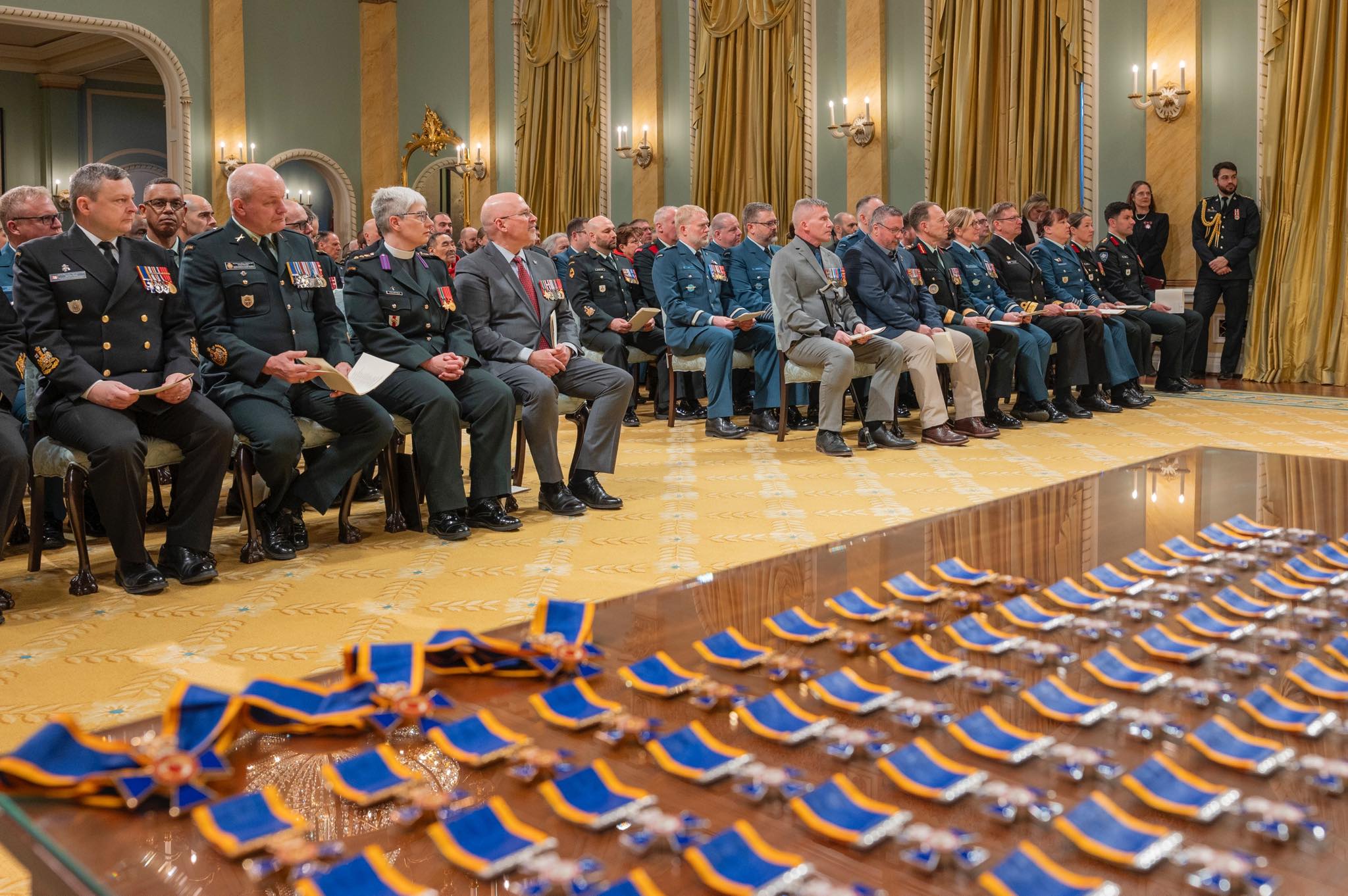
I went to the presentation in the Wellington Room at nine o’clock. I was ten minutes early.
Sergeant Marcus Webb’s wife was there, a small woman named Denise with tired eyes and a church hat. She had their two boys with her, maybe eight and ten, both in little clip-on ties. Marcus himself was still at a medical center in Virginia doing rehab on his shoulder, but he’d sent them anyway.
“He said I had to hug you,” Denise told me. “He said it was an order.”
She hugged me. I let her. The older boy shook my hand very seriously and said, “Thank you for bringing my dad back.” I had to look at the ceiling for a while after that.
There were six of us being recognized that night. Coleman, my staff sergeant, was there with his wife. Two engineers. A medic named Torres who had kept Okafor alive on the helicopter. General Vance read each citation himself, and pinned each medal himself, and when he got to mine, he leaned in close and said, “Your mother would have been proud of you, Captain.”
I stared at him. “How did you know about my mother?”
“Major Ruiz does her homework,” he said, with the faintest ghost of a smile. “And so do I.”
When I turned around after he pinned the Silver Star to my chest, I saw two people standing at the very back of the room near the door.
Vivian, her face washed clean of makeup, her silver dress wrinkled, clapping so hard her palms must have hurt.
And my father, standing a few feet behind her. Not clapping. Just watching. His hands hanging at his sides.
I didn’t know what he was thinking. For once in my life, I didn’t try to guess.
After the presentation, Vivian found me in the hallway. She threw her arms around me. “That was the most amazing thing I’ve ever seen,” she whispered. “Em, I’m so sorry. I’m so, so sorry. For everything. For the texts. For not asking. For believing him.”
“I know, Viv.”
“Can I come over tomorrow? I’ll bring real coffee. And maybe pie. Mrs. Delgado’s not the only one who can feed you.”
I laughed for the first time all night. “Yeah. Come over.”
Dad was waiting by the coat check when I went to get my things. He held my coat out to me, the way he used to hold my winter jacket when I was small.
I took it.
“Can we talk?” he said quietly. “Not tonight. I know not tonight. But soon?”
I looked at him for a long time.
“Mr. Brennan’s office,” I said. “Monday at ten. You, me, Vivian, and him. Bring every piece of paper you have from Hartwell Strategic and from Bay Colony Savings.”
He flinched. “Emily, I’m your father. We don’t need lawyers.”
“You put my name on a loan, Dad. We needed a lawyer the second you did that.”
He opened his mouth to argue. Then something in his face gave way, and he just nodded.
“Monday at ten,” he said.
I put on my coat and walked out past the doorman into the cold Boston rain. The doorman saw the Silver Star on my chest and stood a little straighter.
“Captain,” he said.
“Tell your son to stay safe up at Drum,” I said.
“Yes, ma’am.”
I got in a cab and gave the driver my address. As the Ardmore disappeared behind us in the rain, I leaned my head against the window and closed my eyes, and I thought about Danny Reyes saying, I thought nobody was coming.
Somebody always comes, I’d told him.
Tonight, for the first time in years, somebody had come for me.

Specialty: Quiet Comebacks & Personal Justice
David Reynolds focuses on stories where underestimated individuals regain control of their lives. His writing centers on measured decisions rather than dramatic outbursts — emphasizing preparation, patience, and the long game. His characters don’t shout; they act.