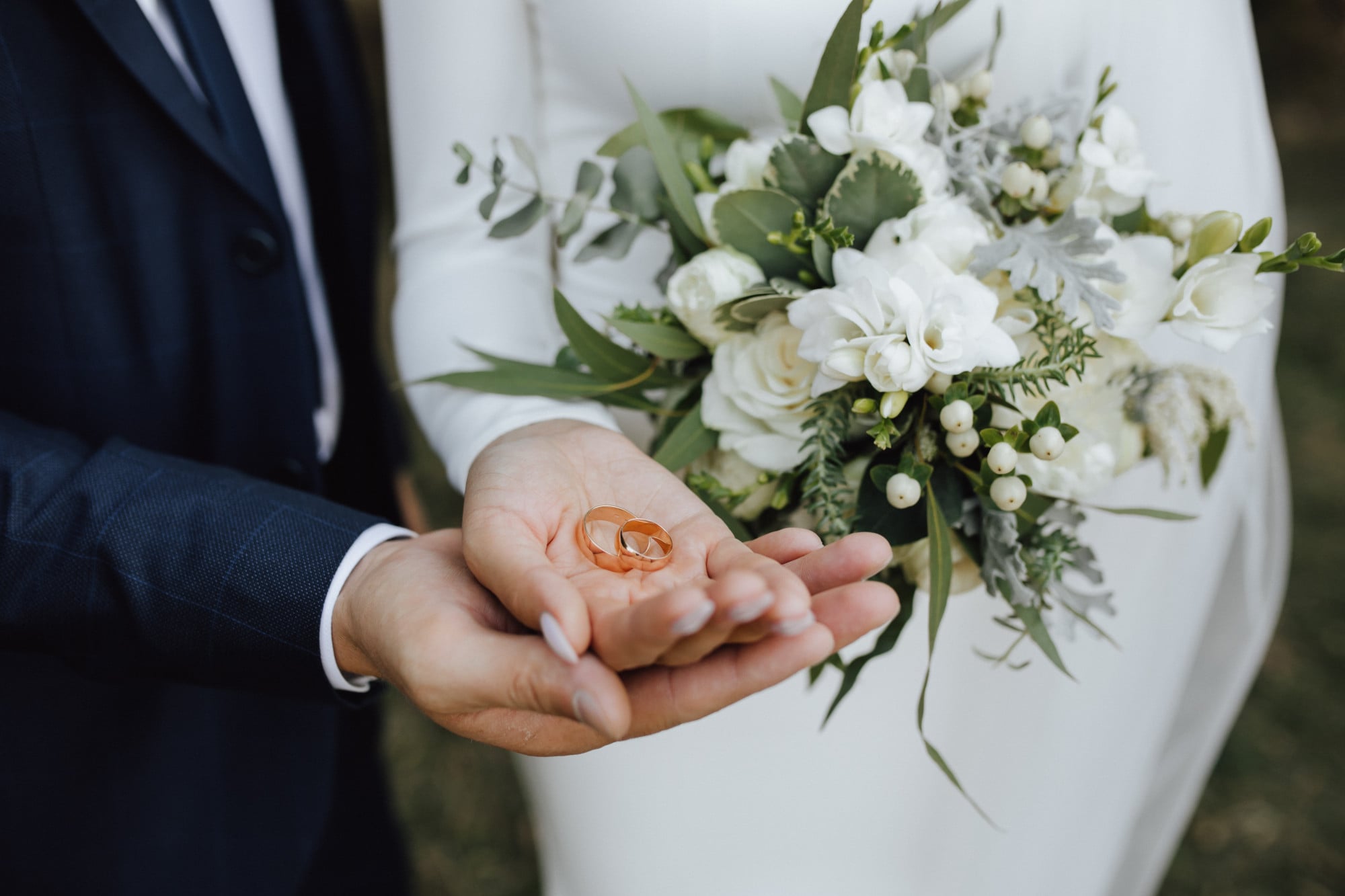
The Hook by the Back Door
My father was supposed to walk me down the aisle. He spent an entire year rehearsing for it, which was something to see from a man who had never in his life done anything at less than full speed. He practiced in the hallway of his little house in Moore, Oklahoma, with a broom standing in for me, counting under his breath and trying to slow his long legs down to a wedding march.
“Step, together,” he would mutter. “Step, together. Lord, Rae, this is harder than riding through a hailstorm.”
He died in March, eleven weeks before the wedding. Pancreatic cancer, found too late, the way it almost always is. He was sixty-one years old. By the end he weighed a hundred and forty pounds and couldn’t walk to the mailbox, but every single evening he still had me prop him up in the hallway with the broom so he could practice his steps. He’d make it four or five before he had to sit down, and then he’d look up at me from his chair, out of breath, and grin.
“I’ll get it,” he said. “I’ve got till June.”
He didn’t have till June.
So I found a way to bring him with me anyway. On the morning of my wedding, after my maid of honor had laced me into my gown and pinned my veil and stepped back to cry, I drove to Dad’s empty house in Moore and walked through it alone. His leather vest was still hanging on the hook beside the back door, where he’d hung it every night for thirty-five years. In the biker world they call it a cut. It still carried the smell of motor oil and Marlboros and the cinnamon gum he chewed when he was trying to quit, which was always.
I took it down and pulled it on over my lace gown. It hung past my hips and the shoulders drooped halfway to my elbows, and the leather was cracked and soft as an old glove. On the back, stitched in red and white around a winged wheel, were the words RED RIVER RIDERS and OKLAHOMA. On the front, over his heart, was the little name tab he’d worn since 1987. HAWK.
And just below the collar on the back, small enough that most people never noticed it, was a patch nobody else in the club had. A single white angel wing, hand-embroidered, with uneven stitches. His mother sewed it on for him the year he joined, because she said a man who rides a motorcycle needs all the help he can get.
I stood in my father’s kitchen in my wedding dress and his cut and looked at myself in the dark window over the sink. I looked ridiculous. I looked exactly right.
Chapter Two: First Dinner
I should tell you about Tyler’s mother.
Linda Brennan is fifty-eight years old, a high school librarian in Edmond, with silver hair cut in a sharp bob and reading glasses on a beaded chain. She raised Tyler alone. His father died when Tyler was a baby, in some kind of car accident, and she never remarried. She is polite and precise and she irons her blue jeans, and from the very first night I met her, she was cold to me.
That first dinner was at a nice Italian place in Bricktown, almost two years ago, a few months after Tyler and I got engaged. Tyler wanted our parents to meet, and I wanted it too, so we booked a table for five: Tyler and me, Linda, and my dad, and Dad’s lady friend Marlene, who he’d been seeing since my mother left when I was six. Dad wore his good shirt, a pressed white button-down, and his good jeans, and he left the cut at home because I asked him to. He combed his gray beard. He was so nervous he chewed through half a pack of cinnamon gum in the car.
Linda was polite through the bread and the salad. She asked me about my job as a dental hygienist, and she asked Dad where he worked, and he told her he’d been a diesel mechanic for the Oklahoma Department of Transportation for thirty-one years and had just retired. She nodded and said that must have been interesting. She never once asked a follow-up question.
And all through dinner, I watched her eyes. Dad has tattoos on both forearms, faded blue and green, an eagle and a rose and my name in old English letters. Every time he reached across the table for the salt or the parmesan, his sleeves rode up, and every time, Linda’s eyes drifted down to his arms and stayed there. She never said the word biker. She didn’t have to.
At the end of the night, in the parking lot, she shook Dad’s hand very briefly and then let go of it like it was hot. In the car on the way home, Tyler was quiet for a long time before he finally spoke.
“She’s not like that,” he said. “I don’t know what that was. She’s never like that.”
“It’s fine,” I said. It wasn’t fine.
Dad didn’t say anything about it in the car. But that night, after Marlene went home, I found him sitting on his back step in the dark with his cut on, smoking one of the cigarettes he swore he’d quit. When I sat down beside him, he looked at me with an expression I didn’t understand. It wasn’t hurt. It looked almost like fear.
“Rae,” he said. “What did Tyler say his daddy’s name was?”
“Michael,” I said. “Michael Brennan. Why?”
He took a long drag and looked out at the dark yard. “No reason,” he said. “Just wondered.”
Chapter Three: Rehearsal
After that first dinner, Linda and I settled into a kind of polite truce. She came to my bridal shower and brought a lovely set of towels and left after an hour. She helped Tyler pick out his suit. She called me “dear” in a voice that made it sound like a word she’d looked up in a dictionary. When Dad got sick, she sent a card, signed with her full name.
Dad never complained about her. That was what got me. He’d stood up for me my whole life, and when my mother walked out he’d raised me alone on a mechanic’s paycheck, braiding my hair before school with his big greasy hands and coming to every volleyball game in his cut with the Riders lined up behind him in the bleachers. If anybody ever looked at me wrong, Dad looked at them right back until they found somewhere else to look. But when it came to Linda, he went quiet.
“Give her time,” was all he’d say. “People carry things you can’t see.”
He started practicing his walk in the spring of last year, about the time Tyler and I set the date. At first I thought he was joking, but he was dead serious. He had watched a video online of a father walking his daughter down the aisle, and he’d noticed the man was walking too fast, and he decided right then that he was not going to rush his daughter down the aisle in front of God and everybody. So he practiced.
He practiced in the hallway with a broom. He practiced in the parking lot of the Walmart. He practiced at the Riders’ clubhouse, a cinder-block building off Highway 9 with a pool table and a jukebox, where the guys would hum “Here Comes the Bride” in their deep, terrible voices while he walked up and down between the pool table and the bar with his elbow crooked for a daughter who wasn’t there.
“Step, together,” he’d say. “Step, together.”
Then in January, he started losing weight. In February, he turned yellow. In March, he was gone.
The night before he died, in the hospice room at Norman Regional, he held my hand and made me promise something. He was barely awake by then, and his voice was a whisper. He asked me to promise I wouldn’t cancel the wedding. He made me promise I’d get married in June like we planned, and that I wouldn’t let anybody walk me down the aisle that I didn’t want to.
“And Rae,” he said, right at the end, so quietly I had to lean down to his mouth. “Be good to Tyler’s mama. Whatever she does. You hear me? Be good to her.”
I said I would. I didn’t understand why he said it. I thought it was the morphine.
Chapter Four: The Back Pews
The wedding was at First Christian Church in Norman, the second Saturday in June, at two in the afternoon. It’s an old brick church with tall windows and white pews, and the June sunlight came through the windows in long gold stripes across the aisle. There were maybe a hundred and fifty people. Tyler’s family on the left, from Edmond and Oklahoma City. My family on the right, which wasn’t much of a family after Dad, just my aunt and two cousins and Marlene and my friends from work.
And in the back two pews on my side, eleven of the men Dad used to ride with.
I didn’t ask them to come. I didn’t have to. They’re the Red River Riders, a motorcycle club that’s been around since 1979, mostly veterans and retired working men, the kind of club that does toy runs at Christmas and escorts funerals for fallen soldiers. Dad was a member for thirty-five years. When he died, they rode two hundred bikes in his funeral procession, and the line stretched from the church in Moore all the way to the cemetery three miles away.
That morning they had shaved and trimmed their gray beards and ironed their jeans, and every one of them wore a clean white shirt under his cut. They sat in the back two pews in a row with their hands folded in their laps like boys in Sunday school. Tank Barker, Dad’s best friend for forty years, sat on the end nearest the aisle. He’s six foot five and two hundred and eighty pounds with a beard down to his belt, and when he saw me come into the vestibule in my gown and Dad’s cut, he put his face in his big hands.
Tyler saw me from the front of the church. My groom, standing at the altar in his gray suit, saw me in the doorway in my white lace and my father’s black leather vest, and he broke down. He just stood there in front of the whole church and cried, and his best man had to hand him a handkerchief.
His mother, Linda, stayed dry-eyed. She sat in the front pew on the left in a pale blue dress with her hands folded on her purse, looking straight ahead at the altar. She didn’t turn around to look at me. Not yet.
When the music started, the eleven Riders stood up from the back pews. Nobody told them to. They just stood, all together, the way they stand at a military funeral when the flag goes by. Eleven gray-bearded men in leather and ironed jeans, standing at attention in the back of a Christian church, and every one of them wiping his eyes.
I took a breath. I lifted my bouquet. And I started down the aisle by myself, in my father’s cut. Step, together. Step, together. Slow, the way he practiced.
Chapter Five: The Side Door
I’d gotten about halfway to the altar when Linda turned around.
People always turn to look at the bride. Everybody else in the church had already turned. Linda was the last. She turned in her pew slowly, the way you turn when you’re doing something because you’re supposed to, and her eyes went first to my face and then to my dress and then to Dad’s cut.
And I saw the moment she noticed the patches.
She was looking at the front of the vest at first, at the Red River Riders rocker and the HAWK name tab over my heart. Then I passed her pew, and she turned a little farther to follow me, and she saw the back. The winged wheel. The red and white letters. And the little hand-stitched angel wing just below the collar.
Her face didn’t flush. It went pale instead, as if every drop of blood had been pulled out of it at once. I saw it happen out of the corner of my eye as I walked past. Her mouth opened. Her hand went to her chest.
I kept walking. I told myself it was the biker thing again, that she was horrified that I’d worn a motorcycle vest to my own wedding in her son’s church. I lifted my chin and kept my eyes on Tyler.
Behind me, I heard a sound. A purse being grabbed off a pew. I turned my head a little and saw Linda on her feet, shoving her way past her own sister, Carol, who was sitting on the aisle. Carol said, “Linda?” out loud, and Linda didn’t answer. She pushed past Carol’s knees and past the end of the pew and walked fast across the front of the church to the little side door by the choir loft. With the entire church looking on, she pulled it open and went through it, and it banged shut behind her.
The organist kept playing. She didn’t know what else to do.
Somewhere behind me, in the pews on my side, somebody muttered loud enough for half the church to hear. “Well, guess that tells us how she feels about people like us.” I think it was one of the Riders. Maybe Tank. His voice is hard to mistake.
I reached the altar. Tyler took my hand. His hand was shaking, and he looked at me like a man whose heart was being torn in two. He kept glancing at that side door, and then back at me, and then at the door again.
“Go,” I whispered. “If you need to go after her, go.”
He shook his head. He held my hand tighter. “Not now,” he said. “Not today. I’m here.”
I got through my vows somehow. To this day, I couldn’t tell you a word I said. I know Tyler cried through his. I know the pastor said something about two families becoming one, and somebody in the Riders’ pews made a sound like a laugh that got swallowed. I know when the pastor said “You may kiss the bride,” Tyler kissed me so hard my veil slid off, and the eleven Riders in the back started clapping before anybody else did.
Chapter Six: The Empty Chair
The reception was at a little event barn outside Norman, with string lights in the rafters and long wooden tables and a dance floor made of plywood. Marlene had done the flowers, sunflowers in mason jars, because sunflowers were Dad’s favorite. There was barbecue from a place in Moore that Dad used to go to, and a cake from the Walmart bakery that he would have called the best cake in Oklahoma.
Linda’s seat at the reception stayed empty.
It was at the head table, between Tyler’s grandmother and her sister Carol, with a little white place card in calligraphy that said Mrs. Linda Brennan, Mother of the Groom. Carol kept looking at it. Tyler’s grandmother kept asking where Linda was. Nobody had an answer.
Tyler kept glancing down at his phone. I watched him do it all through dinner. He’d pick it up and look at the screen and set it face down on the tablecloth, and then pick it up again. He’d sent his mother eleven texts by the time they cut the barbecue. Every time he looked, the screen showed nothing. No reply. No missed call.
“She’s never done anything like this,” he said quietly, under the music. “Never. Not in my whole life.”
“I know,” I said. I put my hand on his.
But inside, I was boiling. I’d held it together through the church and the photographs and the receiving line. I’d smiled at a hundred and fifty people. I’d thanked Tyler’s aunts and uncles for coming, and every single one of them had glanced at Dad’s cut and then at the empty chair at the head table, and I could see them deciding whose fault it was.
The Riders sat together at a table near the back, quiet, eating their barbecue and not talking much. Every so often Tank would look over at the empty chair, and then at me, with an expression on his face I couldn’t read. He looked almost sick.
Once our first dance was over, I’d had all I could stand. We danced to “Amazed” by Lonestar, because it was the song playing in Tyler’s truck the night we met, and halfway through the song I looked over Tyler’s shoulder at that empty chair at the head table and something inside me just snapped. When the song ended, I kissed Tyler, told him I needed some air, gathered up my skirt in both hands, and walked straight out the big barn doors into the parking lot.
Dad’s cut was still on my shoulders. I hadn’t taken it off all day. I’d made up my mind somewhere between the altar and the reception that I was going to drive to Edmond myself if I had to, and let that woman hear every last thing I thought of her. About walking out of her own son’s wedding. About the way she looked at my father’s arms. About the card she sent to his hospice room with her full name signed at the bottom, like a stranger.
I didn’t have to drive to Edmond. Her car was in the parking lot.
Chapter Seven: The Photograph
It was a silver Camry, parked at the far end of the gravel lot under a cottonwood tree, half in the shadows. I almost walked right past it. Then I saw the shape of her through the windshield, sitting in the driver’s seat, and I stopped.
She was sitting by herself in her car with the engine off. In the heat. It was ninety-three degrees that afternoon, and the windows were rolled up, and she’d been out there for four hours. I walked toward the car in my gown and Dad’s cut with my skirt in my fists, with every word I’d been saving lined up and ready.
Then I got close enough to see her face, and the words went right out of my head.
Her mascara had streaked in dark lines that ran clear down to her chin. Her silver bob was flat and damp with sweat. Her reading glasses were hanging crooked on their beaded chain. She was crying, and from the look of her, she’d been crying the whole four hours.
She held a worn, faded photograph in both hands, the way you’d hold the one thing you were scared to death of losing. She was looking down at it. She didn’t see me until I was right beside her door.
Then she looked up. She looked at my face, and then at the cut, and her own face crumpled. She reached over and opened the car door, slowly. She didn’t get out. She just turned in her seat and tilted the photograph toward me so I could see.
It was a picture taken from a little distance, an old snapshot printed on drugstore paper, faded orange and soft at the corners from being handled. It showed the shoulder of a highway at night, lit up bright by fire. On the left side of the picture, a car was going up in flames. On the right, at the edge of the asphalt, was a young man down on one knee.
He was in a black leather vest, with long dark hair and a short beard, and he had a wailing baby cradled against his chest in both arms. His head was bent over the baby. His back was to the camera.
On the back of the vest, lit by the fire, I could see the winged wheel. The red and white letters. And just below the collar, small but clear in the firelight, a single white angel wing with uneven stitches.
It was my father, thirty years younger, wearing that very same cut.
Linda lifted her eyes to mine, her chin trembling.
“For thirty years I’ve been searching for this man,” she said, barely above a whisper. “The baby in his arms is Tyler.”
Chapter Eight: Interstate 40
I don’t remember sitting down. I remember that suddenly I was sitting in the passenger seat of Linda’s Camry in my wedding dress, with the skirt crushed under the dashboard and the car door hanging open to let some air in, and she was holding the photograph out between us so we could both look at it.
“December nineteenth, 1996,” she said. “Interstate 40, about six miles east of Elk City. We were driving to my mother’s in Amarillo for Christmas. Michael was driving. Tyler was four months old, asleep in his car seat in the back.”
She told it the way you tell something you’ve told yourself every night for thirty years, in order, without stopping.
There was ice on the highway that night, black ice you couldn’t see. A pickup coming the other way hit it and crossed the median and hit them head-on. The Camry they had then, a little blue Corolla, spun twice and went off into the ditch on its side, and the engine caught fire. Linda was thrown halfway out the passenger window. She remembered lying in the frozen grass with her leg broken in two places, looking at the car and the fire coming up from under the hood, and screaming Tyler’s name.
“I couldn’t get up,” she said. “I couldn’t move. I could hear him crying in the back seat. I could hear him, and I could see the fire, and I couldn’t get to him.”
Cars went by on the interstate. Some of them slowed down. A group of motorcycles went by, she said, five or six of them, and slowed, and she remembered thinking thank God, and then they sped up and kept going. She lay in the grass and watched their taillights disappear.
“I’ve hated motorcycles ever since,” she said. “Every time I see a biker, I see those taillights going away. Every time.” She looked at me. “Every time your father reached across the table for the salt.”
Then one of them came back. One bike. It turned around in the median and came back and stopped on the shoulder, and a man jumped off and ran down into the ditch. He went straight to the burning car. She watched him kick in the back window of the Corolla with his boot and climb halfway in through the broken glass with the fire coming up through the floor. She watched him come back out with Tyler in his arms, still strapped in his car seat, screaming.
He carried Tyler up to the shoulder and knelt down with him in the light from the fire, and then he went back for Michael. He tried. She watched him try three times, she said, until the fire was too high and the heat drove him back and his hands were burned. Michael was pinned behind the wheel. He was already gone. The doctors said later that he died on impact, that he never felt the fire. But the man in the vest didn’t know that, and he kept trying until somebody else pulled him back.
“Somebody else,” I said. “There was somebody else?”
“Another rider,” she said. “A big man. He came back too, after the first one. He took the picture. I didn’t know that till later.” She touched the photograph. “And then the ambulance came, and the troopers, and somebody put me on a stretcher, and I was screaming for my baby. And a paramedic brought Tyler to me and laid him on my chest on the stretcher. Not a scratch on him.” She shook her head. “And when I looked for the man who saved him, he was gone. Both of them were gone. Nobody got their names.”
Chapter Nine: Thirty Years
She spent the next thirty years looking for him.
She told me all of it in that hot car under the cottonwood tree, while the music from the reception drifted out across the gravel. The trooper’s report listed an unidentified motorcyclist, white male, approximately thirty, no name given. Michael’s funeral was in Edmond on Christmas Eve, and she went to it on crutches with Tyler in a carrier on her chest. After the funeral she started looking.
She called the Oklahoma Highway Patrol every month for a year. She put an ad in the Elk City paper and the Oklahoman and the Amarillo Globe-News, a little box ad that said Searching for the motorcyclist who saved my baby on I-40 on December 19. She offered a reward of five thousand dollars, which was most of what she had left after the funeral. Nobody claimed it. The insurance settlement from the other driver’s company came two years later, and she put all of it in a trust for Tyler’s college, and she put the reward money in a separate savings account at her credit union with a note that said FOR HIM.
“It’s still there,” she said. “Five thousand dollars and thirty years of interest. Eleven thousand, last time I looked. I never touched it.”
The photograph came in the mail in the fall of 1998. A plain envelope with an Oklahoma City postmark and no return address. Just the snapshot inside, and a note on a torn piece of paper in blocky handwriting. It said: He won’t let me tell you his name. But he wanted you to know your boy was never alone. A friend.
“That’s how I knew there were two of them,” she said. “Somebody took this picture. Somebody who knew him. And the man in the vest didn’t want to be found.”
She’d studied that photograph for thirty years. She’d looked at the back of every leather vest in every parking lot in Oklahoma. She’d looked up motorcycle clubs on the internet when the internet came, and she’d found the Red River Riders’ website once, years ago, and seen the winged wheel and the red and white letters. But there were hundreds of members over the years, she said, and every one of them wore the same patch. The only thing different on the vest in the photo was that little white angel wing. And she’d never found another one.
“I almost called the club,” she said. “A dozen times. I’d pick up the phone, and I’d see those taillights going away on I-40, and I couldn’t do it.” She wiped her face with the back of her hand. “I was afraid. Afraid they’d laugh at me. Afraid he was dead. Afraid he was some terrible man who’d done one good thing in his life and I’d find out the rest.”
“And at the first dinner,” I said slowly. “In Bricktown.”
She closed her eyes. “Your father reached across the table,” she said, “and I saw his tattoos. And I thought about the taillights. And I was cold to him, Rae, I was cold and I was rude and I’ll be sorry for it the rest of my life.” Her voice broke completely. “He was so thin. He was so sick, and gray, and his hair was gone from the treatment. He looked nothing like the man in this picture. Nothing. And he sat across from me for two hours, and I never once looked at his face long enough to see it.”
She turned the photograph over in her hands.
“And today,” she said, “you walked down the aisle in his vest. And I turned around to look at you. And there it was. That little white wing. Right there on the back, the same one I’ve stared at for thirty years.” She pressed the picture to her chest. “And I knew I’d sat across a table from the man who saved my son’s life, and looked at his arms and thought he was trash. And now he’s dead, and I never said thank you.”
Chapter Ten: Tank
I don’t know how long we sat there. Long enough for the sun to drop behind the cottonwood. Long enough for my hands to stop shaking. Linda cried and I cried, and somewhere in there she reached over and took my hand in both of hers and held on to it the way she’d held the photograph.
Then somebody knocked softly on the roof of the car.
I looked up. Tank Barker was standing beside the open door, with his huge hands hanging at his sides and his beard wet and his face the color of ashes. He’d followed me out. I don’t know how long he’d been standing there, but from his face, long enough.
“Rae,” he said. His deep voice was shaking. “Ma’am.” He looked at the photograph in Linda’s lap. “I took that picture.”
Linda stared up at him.
“Hawk and me were riding back from a toy run in Clinton,” Tank said. “Six of us. It was icy and we were running late, and we went right past your wreck. Everybody did. I’m ashamed of it. Hawk was in the back of the group, and he saw you in the grass, and he yelled, and nobody stopped.” He swallowed. “Then he peeled off and turned around in the median. And I went after him. The others kept going.”
He crouched down beside the car door, slowly, his big knees cracking, so he was eye level with Linda.
“He went in that car twice, ma’am. Once for the baby and once for your husband. He’d have gone a third time if I hadn’t pulled him off. His hands were burned so bad he couldn’t hold a wrench for a month.” Tank’s voice cracked. “I had one of those little throwaway cameras in my saddlebag from the toy run. I don’t know why I took it. I guess I wanted somebody to know.”
“You sent it to me,” Linda whispered.
Tank nodded. “Two years later. I saw your ad in the Oklahoman. I showed it to Hawk and he said no. He said he didn’t save your husband, and he couldn’t stand to have you thank him for half a job. He made me swear I’d never tell you his name.” He wiped his eyes. “I sent the picture anyway. I figured that wasn’t breaking my word, exactly. I figured you ought to know your boy was never alone out there.”
Linda put her hand over her mouth.
“Did he know?” I asked. My voice came out strange. “Tank. Did Dad know it was Tyler? When he met him?”
Tank looked at me for a long time. Then he nodded slowly.
“Not at first,” he said. “The night after that first dinner, he called me. Two in the morning. He said, Tank, her husband’s name was Michael Brennan, and he died in a car fire on I-40 when the boy was a baby.” Tank shook his head. “He knew. He knew right then. He spent the whole next year walking up and down our clubhouse with a broom, practicing to walk you down the aisle to the same boy he pulled out of that car.”
I couldn’t breathe.
“He wanted to tell you, ma’am,” Tank said to Linda. “He talked about it every week. But then he got sick. And he said the last thing you needed was some dying old biker showing up on your doorstep reminding you of the worst night of your life.” He reached into the pocket of his own cut. “He gave me something. Right before he passed. He said if you two ever found out on your own, I should give it to you. And if you didn’t, I should burn it.”
He held out an envelope. It was plain and white, a little bent, with two names on the front in my father’s blocky printing. Rae. Linda.
Chapter Eleven: The Letter
Linda wouldn’t open it. She held it for a long time, and then she handed it to me. “You,” she said. “He was your father.”
I opened it right there in the car, with Tank crouched beside the door and the reception music drifting across the parking lot. The paper was a sheet torn from a spiral notebook, written in pencil in Dad’s handwriting, shaky from the cancer. I read it out loud. I had to stop four times.
Rae and Linda, it said. If you’re reading this, Tank kept his word, and you two figured it out on your own, which is how it should be. I’m sorry I didn’t tell you. I wanted to. I’m a coward about some things.
Linda, I knew you at the first dinner. Not your face, I never saw your face that night, it was dark and you were hurt bad. I knew you when Tyler said his daddy’s name. I went home and sat on my back step and cried like a baby. I’ve been thinking about your husband for thirty years. I went in that car twice and I couldn’t get him out, and I’ve never stopped seeing it. When you looked at my arms at that dinner, I figured you had every right. I figured somehow you knew I’d let him burn.
I know you’re going to want to thank me. Please don’t. I only did half of it. But I want you to know something. That baby I carried up out of that ditch grew up to be the best young man I ever met. He loves my girl better than I ever knew how to love anybody. When I shook his hand the first time, I thought, well Lord, You do have a sense of humor.
Rae, be good to Linda. She’s been carrying that night by herself for thirty years, same as me. Neither one of us should have to carry it anymore. I’m sorry I won’t be there to walk you down the aisle. I practiced. You should’ve seen me. Step together, step together. I hope Tank hummed.
All my love, both of you. Daddy. Hawk.
When I finished, nobody said anything. The car was very quiet. Tank had his face in his hands again, his big shoulders shaking. Linda was holding the photograph against her chest with both arms. I folded the letter back up along its creases and held it in my lap.
Then Linda did something I will never forget. She reached over and touched the leather of Dad’s cut, on my shoulder. She ran her fingers down it, very gently, until they found the little angel wing on the back. She held her fingertip on it the way you’d touch a sleeping baby’s cheek.
“Thirty years,” she whispered. “I’ve been looking for this for thirty years. And it walked right past me.”
Chapter Twelve: Step Together
We went back into the barn together, the three of us, just after nine o’clock. Linda had wiped her face with a napkin from her glove box and fixed her mascara as best she could in the rearview mirror, and she held the photograph in one hand and my hand in the other. Tank walked behind us with his hand on her shoulder.
The music stopped when we came through the doors. The DJ saw us and just turned it off. A hundred and fifty people turned around in their chairs and stared, at the bride in her father’s cut, and the mother of the groom with her face scrubbed raw, and the biggest biker in Oklahoma walking behind them like an honor guard.
Tyler stood up so fast at the head table he knocked over his chair. He came across the dance floor to us. He looked at his mother’s face, and then at mine, and then at the photograph in his mother’s hand.
“Mom,” he said. “What is it? What happened?”
Linda held out the picture. He took it. He looked at it for a long time, at the burning car and the young man kneeling on the shoulder with the screaming baby, and I watched him slowly understand. He had heard the story of that night his whole life. He’d never seen the picture. Linda had never shown it to anybody.
“That’s the cut,” he said. His voice was barely a whisper. He looked up at me, at the vest on my shoulders. “That’s Hawk’s cut.”
“That’s my father,” I said. “And that’s you.”
Tyler made a sound I’d never heard him make. He sank down on his knees right there on the plywood dance floor in his wedding suit, holding the photograph, and his mother knelt down beside him and put her arms around him. In the back of the barn, the eleven Riders stood up from their table, all together, and stood there with their heads bowed.
Later that night, after the cake and the toasts, after Tank stood up on a chair and told the whole room what Hawk had done on I-40 in 1996 and Tyler’s grandmother fainted dead away and had to be fanned with a program, Linda came and found me. I was standing by the dance floor with a glass of punch, still in Dad’s cut. She took the glass out of my hand and set it on a table.
“Your father practiced,” she said. “For a year. To walk you down the aisle.”
“Every night,” I said.
“Then somebody should finish it for him.” She held out her arm, crooked at the elbow, the way a father holds it. “I don’t know the steps. You’ll have to teach me.”
The DJ didn’t need to be told. The Riders had already gone to talk to him. He played “My Girl” by the Temptations, the song Dad always sang off-key in the truck when I was little. And Linda Brennan, fifty-eight, a high school librarian from Edmond who irons her jeans and was once afraid of every biker in Oklahoma, took my arm and walked me slowly across that plywood dance floor in front of everybody.
“Step, together,” I whispered to her. “Step, together. Slow. He didn’t want to rush me.”
“Step, together,” she repeated, and her voice broke, and she kept walking. At the other end of the dance floor, Tyler was waiting, and when we reached him, Linda put my hand in his the way my father would have, and then she put both of her hands over ours and held them there.
The eleven Riders hummed along behind us in their deep, terrible voices, exactly the way they used to at the clubhouse, for a man who practiced with a broom.
Six months later, on the nineteenth of December, the three of us drove out to Interstate 40, six miles east of Elk City. Linda had never been back. We parked on the shoulder in the cold with our flashers on, and Tank and nine of the Riders pulled up behind us on their bikes and shut off their engines. Linda walked down into the ditch in her good wool coat to the spot she says she’ll never forget, and she knelt in the frozen grass where she’d lain thirty years before.
She had a check in her hand, eleven thousand, four hundred and twelve dollars from her credit union, made out to the Red River Riders Toy Run. The reward money. FOR HIM. She gave it to Tank right there in the ditch, and he held it like it might break, and then he put his arms around her.
Then she reached into her coat pocket and took out the photograph and looked at it one more time. I had Dad’s cut on, zipped up over my winter coat, the way I wear it every year now on this day. She turned and looked at the angel wing on my back, the one his mother sewed for a son who needed all the help he could get, and she smiled at me through her tears.
“He was never alone out here,” she said. “Your father. And neither was my boy.”
Tyler put his arm around his mother on one side, and I put mine around her on the other, and we stood there together on the shoulder of the highway in the December wind while the trucks went by. Not one of us was in any hurry to leave. We’d learned, all of us, from a man who spent a whole year teaching himself to slow down.

Adrian Hawthorne is a celebrated author and dedicated archivist who finds inspiration in the hidden stories of the past. Educated at Oxford, he now works at the National Archives, where preserving history fuels his evocative writing. Balancing archival precision with creative storytelling, Adrian founded the Hawthorne Institute of Literary Arts to mentor emerging writers and honor the timeless art of narrative.