By the Garbage
“Mom,” my son said. “It’s by the garbage.”
He was standing in the doorway of my brother’s living room in his red flannel shirt with no coat on, and there was snow melting in his hair. He’d gone out to the van to get his grandmother’s other present, a little box of the peppermint bark she likes from the candy shop in De Pere, and he’d come back in empty-handed. His face was very pale. His voice was very quiet.
I didn’t understand at first. I was sitting on the end of Danica’s white sectional with a cup of coffee in my lap and torn wrapping paper around my feet, and I looked up at him and said, “What is?”
“The chest,” Rowan said. “Grandma’s chest. It’s out by the garbage cans.”
I set my coffee down on the glass end table. Then I got up and went to the big front window and looked out.
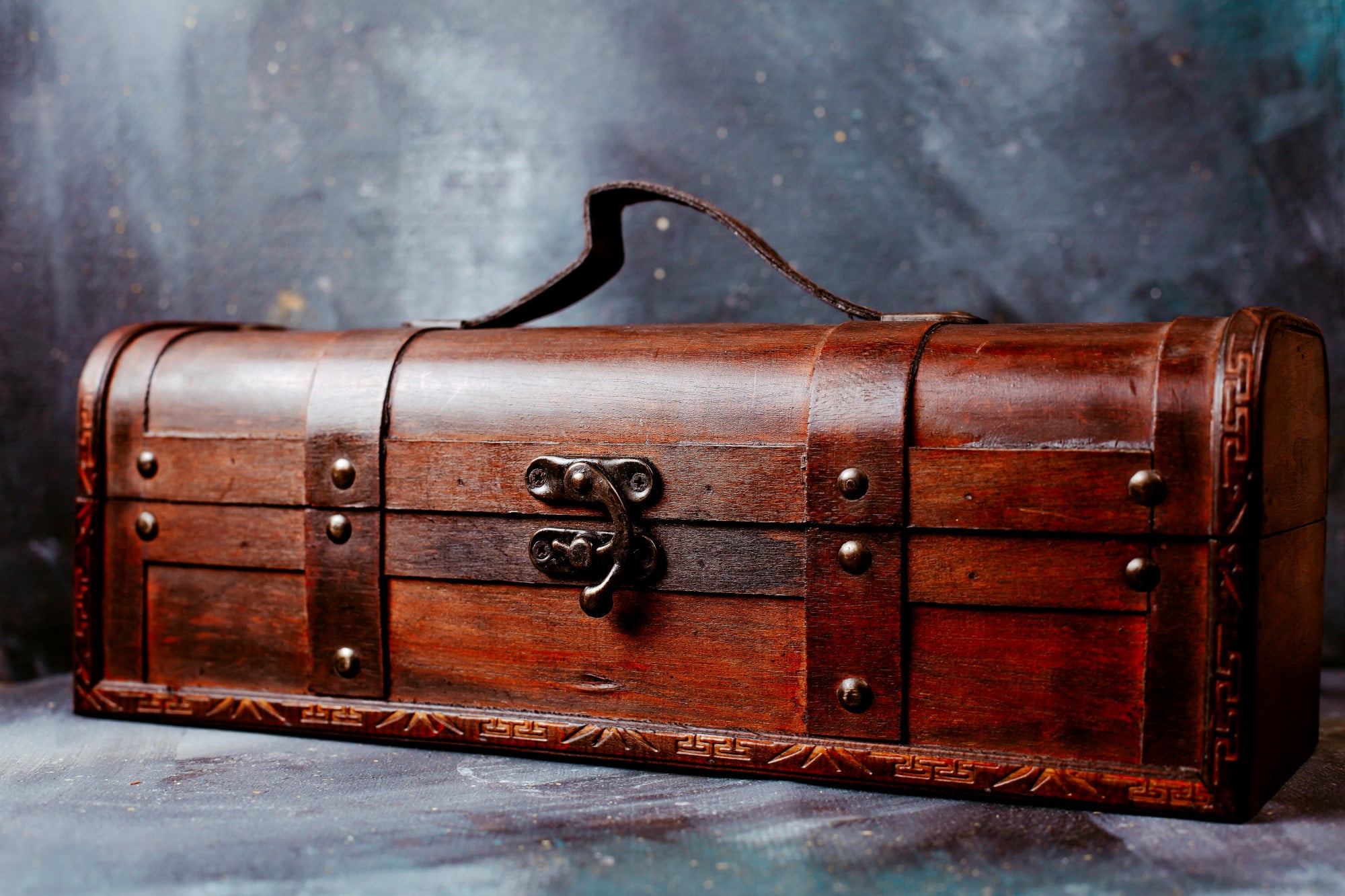
Snow lay on every roof in the cul-de-sac, bright and clean in the Christmas afternoon sun. Snow on the lawns, snow on the mailboxes, snow piled on top of the pine wreath on the house across the street. The driveway in front of my brother’s house had been shoveled that morning, and the garage door was standing open. And there, at the end of the garage, beside the two black plastic trash cans, sat the cedar chest my son had spent four months building for his grandmother.
It was sitting right out in the bright snow like junk. Like an old couch somebody puts at the curb for the garbage truck. The brass handles caught the sunlight. There was a little drift of snow already starting to collect on the lid.
My son Rowan worked on that chest from September to the week before Christmas break. He mowed lawns all summer to pay for the cedar. Every Saturday from June to August, he pushed our old Toro up and down eleven lawns in our neighborhood in Ashwaubenon, Wisconsin, for twenty-five dollars a lawn, and he put every dollar in a coffee can on his dresser.
It took a hundred and eighty-five dollars for the boards. Aromatic red cedar, from a lumber yard in Green Bay. Plus a thirty-five dollar shop fee to the school and twenty-two dollars for the brass handles, which he picked out himself at the Menards. He drew the plans on graph paper at our kitchen table in August. He cut every board himself on the table saw in Mr. Kowalczyk’s shop class at Ashwaubenon High School, and he glued the joints and clamped them and planed the lid flat by hand.
He sanded it until his teacher told him to stop. Mr. Kowalczyk actually called me in November. He said he’d been teaching shop for twenty-three years and he’d never seen a kid sand anything like that. He said Rowan stayed after school three days a week. He said, “Mrs. Tanner, I had to take the sandpaper away from him. He was going to sand it into sawdust.”
And now it was sitting by my brother’s garbage cans in the snow.
I turned around from the window. My sister-in-law, Danica, was sitting in the armchair by the Christmas tree, folding wrapping paper into neat squares to save for next year, like nothing had happened.
Chapter Two: Four Months
I should tell you about Rowan.
He’s fifteen, a sophomore. He’s tall and skinny, all elbows and knees, with my husband’s dark hair and my father’s long hands. He doesn’t talk much. He never has. When he was little, the other kids played soccer and video games, and Rowan sat in his grandfather’s garage watching him build birdhouses. My dad died when Rowan was nine, and I think something in Rowan went quiet then and never quite came back.
Until shop class.
He signed up for Woodworking One as a freshman because it was the only elective that fit his schedule. By October, he was staying after school. By spring, he’d built a bookshelf for his room and a spice rack for me and a step stool for his grandmother. Mr. Kowalczyk let him take Woodworking Two as a sophomore, even though it’s supposed to be for juniors.
In August, he came to me at the kitchen table with a sheet of graph paper.
“I want to build Grandma a cedar chest,” he said. “For Christmas. For her sweaters.”
I looked at the drawing. He’d drawn it in pencil, from the front and the side and the top, with every measurement written in. Forty inches long, twenty inches deep, eighteen inches high. A lid that lifted on brass hinges. Brass handles on each end. A little molding around the bottom.
“Why cedar?” I asked.
“Because of Great-Grandpa Emil,” he said.
My mother’s father was Emil Jaskolski, a Polish farmer from Pulaski, Wisconsin, who died in 1992. He had a cedar-lined closet in his farmhouse where he kept his Sunday suit and his wool coats, and my mother used to tell us that when she was a little girl, she’d hide in that closet during thunderstorms, because the smell made her feel safe. She told Rowan that story when he was little. I didn’t know he remembered it.
“She says she misses it,” Rowan said. “Grandma. She told me last time we were over. She said she hasn’t smelled cedar since Grandpa Emil’s farm got sold.”
He worked on it every day from September to the week before break. He cut the boards in September. He glued up the panels in October. He fit the lid in November and spent three weeks sanding it. He oiled it with three coats of finish that made the red and cream stripes in the cedar glow like a sunset.
And on the last day before break, he burned something into the underside of the lid with a wood-burning pen he borrowed from Mr. Kowalczyk. He wouldn’t let me see. He said it was a surprise for Grandma.
Chapter Three: The Guest Room
My mother is seventy-four. Her name is Lorraine Jaskolski Brandt, and she was a nurse at St. Vincent Hospital in Green Bay for thirty-eight years. She raised Kyle and me in a little ranch house on the west side of Green Bay, and she lived in that house alone for six years after my father died.
Then two winters ago, she fell on the ice in her driveway, getting the mail. She broke her hip in two places and lay there in the snow for forty minutes before a neighbor found her. She had surgery at Bellin Hospital and spent six weeks in a rehab center in De Pere. When she came out, she couldn’t do stairs, and her house had a basement with the laundry in it, and she couldn’t live there alone anymore.
My husband and I have a little two-bedroom house in Ashwaubenon with a steep front stoop and one bathroom up a flight of stairs. We couldn’t take her. Kyle had a big new house in a subdivision in Hobart, four bedrooms, with a main-floor bedroom and a walk-in shower.
She has lived with my brother Kyle and his wife Danica since her fall two winters ago.
She sold her house on the west side. It went for a hundred and sixty-two thousand dollars. And she gave Kyle and Danica forty-eight thousand dollars of it to remodel the main-floor bedroom for her. They put in a new accessible bathroom with grab bars and a seat in the shower, and wider doors for her walker, and new flooring. Kyle told her it was only fair, since she’d be living there. Nobody wrote anything down. She just wrote them a check.
Her room is the one Danica still calls the guest room.
I noticed it the first time I visited after she moved in. Danica showed me the remodel, the new bathroom with the grab bars, the wide doorway. “And this is the guest room,” she said. “Where your mom’s staying.”
Staying. Like she was visiting for a week.
The room was beautiful, I’ll give Danica that. Gray walls, white trim, a white bed with gray pillows, a white dresser, a gray rug, a white lamp. It looked like a picture in a magazine. But there was nothing of my mother in it. Her furniture had gone to an estate sale. Her pictures were in a box in Kyle’s basement. Her sewing machine, her quilts, her rocking chair from her mother, all gone. Danica said there wasn’t room for them. She said they didn’t go.
I knew why it mattered to her.
Danica grew up with nothing. Kyle told me once, after a few beers at a Packers game. Her mother raised four kids alone on a failing dairy farm up near Shawano, and when Danica was eight, they lost the house and moved into the old milking barn, which her uncle had partly converted into a place to live. She lived in that barn for six years. Concrete floor, wood stove, the smell of old hay and cattle that never came out of the walls no matter how much they scrubbed. She told Kyle she used to wash her clothes in the bathtub at school so nobody would smell the barn on her.
She put herself through nursing school at UW Oshkosh. She married my brother. She works in billing at Bellin Health. And that house in Hobart is the one thing she ever got perfect. White and gray and clean, with nothing out of place and nothing that smelled like anything but candles.
But you do not set a boy’s gift to his grandma out with the trash.
Chapter Four: Christmas Afternoon
We drove over Christmas afternoon, snow on every roof in the cul-de-sac.
Just Rowan and me. My husband Brett drives plow for Brown County, and he’s been out every Christmas Day for twelve years, because snow doesn’t care what day it is. He’d left at four in the morning when the storm came through. He texted me a picture at noon of the inside of his plow truck cab, with a Santa hat on the dashboard and a thermos of coffee and the wipers going. Merry Christmas from County Road EB.
Rowan carried the chest out to our van that morning wrapped in an old moving blanket. He wouldn’t let me help. He laid it in the back on top of another blanket and drove the whole way with his hand back on it, like he was holding it still.
When we pulled into the cul-de-sac in Hobart, Kyle was in the driveway with a shovel. He saw the blanket in the back of the van and came over with snow on his boots.
“That it?” he asked. “The famous chest?”
“That’s it,” Rowan said.
“Let’s get it in before Mom sees it,” Kyle said. “Danica’s got her in the living room with the presents.”
Rowan and Kyle carried the chest in together. Through the front door, down the hall, into the living room, where my mother was sitting in her recliner by the window in her red Christmas sweater with a blanket over her knees. She saw them coming with the big blanket-wrapped shape between them, and her face lit up.
“What on earth?” she said.
They set it down on the carpet in front of her. Rowan pulled off the moving blanket.
My mother didn’t say anything. She looked at it for a long time. The red and cream stripes in the cedar glowing in the light from the window. The brass handles. The little molding Rowan had cut around the bottom.
Then she leaned forward in her recliner, slowly, because of her hip, and she reached out and put her hand on the lid. She ran her fingers along the grain.
“Rowan,” she said. “You made this?”
“In shop class,” he said. “Since September.”
Mom lifted the lid and breathed in.
She closed her eyes. She sat there with the lid up and her face over the open chest, breathing in the cedar, and I watched her face change. All the lines in it softened. She looked about nine years old.
“Oh, honey,” she said. “That smells like my dad’s closet.”
Danica smelled it too. She was standing behind the couch with a stack of wrapping paper, and the smell of the cedar reached her, and her nose wrinkled.
“It smells like a barn,” she said.
Nobody laughed. Not one of us.
My mother opened her eyes and looked up at her daughter-in-law. Rowan stood there beside the chest with his hands at his sides. Kyle looked at his wife, then at the floor.
Then his phone buzzed in his pocket. It was Dave Lindgren from three doors down, whose truck wouldn’t start in the cold, and could Kyle come jump it. Kyle hesitated. Mom told him to go. He grabbed his coat and his jumper cables and went out the front door.
We went back to opening presents.
Chapter Five: The Hand Truck
I don’t know exactly when Danica did it. I didn’t see her go.
It was about ten minutes later. We’d opened a few more presents. Mom got a new pair of slippers from Kyle and a book of crossword puzzles from me. Rowan got a gift card to Menards from his grandma, which made him grin. Danica got up at some point and said she was going to check on the ham. I didn’t think anything of it.
She must have gone out through the kitchen into the garage. She must have come back through the side door from the garage into the hall. She must have wheeled it out through the garage on Kyle’s hand truck, the red one he uses to move bags of water softener salt. While we were opening presents twenty feet away, with the TV playing A Christmas Story with the sound turned down.
When she came back to the living room, she sat down in the armchair by the tree and started folding wrapping paper.
About ten minutes later, Rowan went out to the van for Mom’s other gift. He came back in still in his flannel, no coat.
“Mom,” he said. “It’s by the garbage.”
I looked at where the chest had been sitting. At the empty carpet in front of Mom’s recliner. Then at Mom. She was sitting very still in her chair with her hands folded on the blanket over her knees. She had seen it go. I knew it from her face. She had watched Danica take it and hadn’t said a word.
I turned to Danica in the armchair. She was folding a square of red paper with little snowmen on it. She didn’t look up.
“It doesn’t go with anything,” she said. “It can go to the curb or to your house.”
I stood there in her living room. I could feel the blood in my face. I could feel every word I wanted to say lining up behind my teeth.
It was Christmas, Mom’s home, and Rowan’s gift, so I did not make it a fight. I just went and got the chest.
I put my boots on.
Rowan was already out the door.
Chapter Six: The Sweaters
His jaw was tight the way his dad’s gets. Brett gets that look when somebody cuts him off on the highway with a plow full of salt, and he doesn’t say anything, but you can see the muscle in his jaw jump. Rowan had it. He walked down the snowy driveway in his flannel shirt and his sneakers, with no coat on, straight to the trash cans.
I followed him. I took one end. He took the other.
It’s heavy, cedar is. Forty inches of solid wood with an inch-thick lid. And the brass handles were cold enough to sting. They’d been sitting out in the snow for ten minutes, and the metal was so cold it burned my bare fingers. I didn’t let go.
We lifted it. There was snow on the lid, and it slid off onto the driveway.
“Don’t look at the house,” I told him. “Look at me.”
He looked at me. His eyes were wet. He’s fifteen, and he’s six feet tall, and he hasn’t cried in front of me since his grandpa’s funeral. He was very close to it now.
“Just look at me,” I said again. “We’re going to carry this inside and put it where it belongs. That’s all.”
Danica watched from the front door. She stood there in the doorway with the storm door open, in her white sweater, with her arms crossed. She didn’t say anything. She didn’t move to stop us.
We carried it right past her. Up the front walk, through the front door, past her in the doorway, close enough I could have touched her. Down the hall. Past the living room. Into my mother’s room at the end of the hall.
Mom was already there. I don’t know how she got there so fast, with her walker and her hip. She must have gotten up the minute we went outside. She was sitting up on the bed, against the gray pillows, with her walker parked beside her and her slippers on.
“Foot of the bed,” she said. “Facing the window.”
We set it down. At the foot of the white bed, on the gray rug, with the front of it facing the big window that looks out on the backyard and the snow.
“Now the sweaters,” she said. “Bottom drawer first.”
So we folded them.
I opened the bottom drawer of Danica’s white dresser. Mom’s sweaters were in there, crammed in tight, because the drawers were small and Mom has a lot of sweaters. She’s always cold. She has been since her fall.
Her navy cardigan. The one she wore over her scrubs at St. Vincent for twenty years, with a little pocket on the front where she kept her pens. The gray one with the wooden buttons, that my father bought her for their fortieth anniversary at a shop in Door County. A blue one, a green one, a brown one with leather patches on the elbows.
The Christmas one with the reindeer my aunt knitted in 1979. My mother’s sister, Aunt Bea, who died in 2004, knitted it for Mom the first Christmas after I was born. It’s red and white and green, with a row of reindeer marching across the chest and one reindeer with a red pom-pom for a nose. Mom has worn it every Christmas Eve for forty-six years. It has a hole in one elbow that she’s mended three times.
Mom told us which went on top. She sat on the bed and pointed, one at a time, and Rowan and I folded them the way she showed us, sleeves in, then in thirds, and laid them in the chest. The navy on the bottom. Then the brown. Then the blue and green. Then the gray one with the wooden buttons.
“The reindeer last,” she said. “On top. So I can get to it.”
Rowan opened the lid wider to make room.
That was when she saw what he had burned into the underside.
On the inside of the lid, in the very center, in brown letters burned into the red cedar with a wood-burning pen, in a fifteen-year-old boy’s careful printing.
For Grandma. Love, Rowan. 2025.
And under it, smaller, a little drawing burned into the wood. A little farmhouse with a cedar tree beside it. Great-Grandpa Emil’s farm, in Pulaski, from the old photograph that hangs in my hallway.
She put her hand flat on it and did not say anything for a long time.
Chapter Seven: The Doorway
I heard a truck door shut in the driveway. Boots stamping on the step. Kyle’s voice in the kitchen, asking where everybody went.
Then his footsteps coming down the hall.
He stopped in the doorway of Mom’s room. He was still in his coat, with snow on his shoulders and his jumper cables coiled in one hand. His cheeks were red from the cold.
Mom was holding the reindeer sweater over the open chest. She was sitting on the edge of the bed with the sweater in both hands, and the chest open at the foot of the bed with all her other sweaters folded inside, and Rowan kneeling beside it holding the lid up.
Danica was right behind him. She’d followed him down the hall from the kitchen. She stood in the hallway behind him with her arms crossed.
Kyle looked at the chest. Then at his wife.
Nobody said anything for a long time. I could hear the furnace running. I could hear the TV in the living room, Ralphie’s mother on A Christmas Story saying something about the leg lamp.
“Dave said there was a chest by our garbage cans,” Kyle said finally. Quietly. “When I walked back up the street. He said, Kyle, did you mean to throw that out? It looks brand new.” He looked at Danica. “I told him no. I told him Rowan made it for Mom. And then I came up the driveway and it was gone, and there were footprints in the snow.”
Danica didn’t say anything.
“Did you put it out there?” Kyle asked her.
She uncrossed her arms. She crossed them again.
“It doesn’t go with anything, Kyle,” she said. “Look at it. It’s orange. It smells. The whole room smells like a barn now. I spent forty-eight thousand dollars on this room.”
“Mom spent forty-eight thousand dollars on this room,” Kyle said.
Danica’s face went red. She opened her mouth and closed it.
My brother is not a confrontational man. He never has been. He’s an accountant for a paper company in Green Bay, and his whole life he’s been the one who smooths things over, who changes the subject, who says let’s not fight on a holiday. I’d never once in my life heard him speak to his wife that way.
He set his jumper cables down on the hall floor. He walked into Mom’s room. He walked over to the foot of the bed and looked down into the chest, at the folded sweaters, at the underside of the lid. At what Rowan had burned there.
He read it. For Grandma. Love, Rowan. And the little farmhouse with the cedar tree.
He knelt down on the gray rug beside his nephew and put his hand on the lid next to his mother’s hand.
“Grandpa Emil’s closet,” he said softly. “God, Mom. I forgot about that closet.”
Mom looked at him. Her eyes were wet.
“I hid in it,” Kyle said. “Remember? When I was six. The night Grandpa died. I hid in his closet with his coats, and you found me in there in the morning, asleep.”
“I remember,” Mom said.
Kyle stayed there on his knees for a long moment. Then he stood up and turned around and looked at his wife in the doorway.
“Danica,” he said. “Can I talk to you? In the kitchen?”
Chapter Eight: Danica
They were in the kitchen for a long time. Rowan and Mom and I stayed in her room. I could hear their voices through the wall, low at first, then louder, then low again. I couldn’t hear what they said. I didn’t try.
Mom finished putting the reindeer sweater on top of the pile in the chest. Then she smoothed it with her hand. Then she sat there on the edge of the bed looking at it.
“She’s not a bad person, Lainey,” Mom said quietly. “Danica.”
I looked at her.
“She’s scared,” Mom said. “All the time. I’ve lived in this house two years. I see it every day. She cleans when she’s scared. She cleans until her hands are raw. She bought a new set of white towels last month because one of them had a little stain on it.” Mom shook her head. “She’s never once been mean to me. Not really. She brings me tea. She drives me to my doctor’s appointments. She sits with me when Kyle works late. She’s just…” Mom searched for the word. “She’s just never once let me have anything of mine in here.”
“Why didn’t you tell us?” I asked.
Mom looked at the chest. “Because I’m a guest,” she said. “That’s what she calls this room. The guest room. And a guest doesn’t complain.”
Rowan, still kneeling beside the chest, looked up at his grandmother.
“You’re not a guest, Grandma,” he said. “You paid for this room.”
Mom looked at him for a long time. Then she reached out and put her hand on his dark hair.
After a while, the kitchen went quiet. Then I heard footsteps in the hall, and Danica came into the doorway. Alone. Kyle stayed in the kitchen.
She’d been crying. Her mascara was smudged under her eyes. She stood there in the doorway in her white sweater with her hands clasped in front of her, and she didn’t look at me. She looked at the chest.
“Can I come in?” she asked.
Mom nodded.
Danica came in. She walked across the gray rug slowly and stood at the foot of the bed beside the chest. She looked down into it at the folded sweaters and the reindeer on top. Then she looked at Rowan, still kneeling beside it.
“Rowan,” she said. “I’m sorry.”
He didn’t say anything. He looked up at her.
“It’s beautiful,” Danica said. “It is. It’s the most beautiful thing in this house.” Her voice cracked. “And when your grandma opened it and I smelled it, I was eight years old again. In my uncle’s barn. In the winter, with the wood stove going and the walls sweating and that smell. Old cedar boards and hay and animals.” She shut her eyes. “My uncle lined the walls of the room where we slept with old cedar planks he pulled off a corncrib. To keep the mice out. It never got the smell out of anything. I smelled like that barn for six years.”
Rowan didn’t move.
“Every kid in my school knew,” Danica said. “They’d hold their noses when I sat down. They called me Barn Girl. All the way through eighth grade.” She opened her eyes. “And when I smelled that chest, I just panicked. I couldn’t breathe. I wanted it out. I wanted it gone. I didn’t even think. I just got the hand truck.”
She looked at the chest for a long time.
“And then I sat there folding wrapping paper,” she said, “like it was nothing. Because if I act like it’s nothing, maybe it is.” She shook her head. “That’s what I’ve done my whole life. I put things out with the trash and act like they were never there.”
Chapter Nine: What Mom Said
Mom let her talk. She let Danica stand there and say all of it. When she was done, Mom sat for a while on the edge of the bed with her hands in her lap.
Then she said something I’d never heard her say. Not in my whole life.
“Danica,” she said. “Sit down. Next to me.”
Danica hesitated. Then she sat down on the edge of the white bed beside her mother-in-law.
“I lived in a barn too,” Mom said.
Danica turned and stared at her.
“In 1958,” Mom said. “When I was seven. My father’s house burned down in March. The whole farmhouse, in Pulaski. A chimney fire. We lived in the hay barn for a whole summer while he rebuilt it. Me and my mother and my sister Bea and my father. On cots, in the hayloft.” She smiled a little. “I’d forgotten it. I hadn’t thought about it in years. Until you said that.”
“I didn’t know,” Danica whispered.
“Nobody knows,” Mom said. “We didn’t talk about it. You didn’t, back then. It was something you were ashamed of. Poor people lived in barns.” She reached over and took Danica’s hand in hers. “When my father rebuilt the house, the first thing he did was line one closet with cedar. Just one. Because cedar’s what he could afford. And he told me it was the safe place. The place that was ours. That nothing could take from us.”
Danica was crying again.
“That’s why I hid in it, during storms,” Mom said. “That’s why it smells like home to me. To you, it smells like the barn. To me, it smells like getting out of the barn.” She squeezed Danica’s hand. “Same smell. Different ending.”
Nobody said anything. Rowan sat back on his heels on the gray rug, staring at his grandmother.
“Danica,” Mom said. “I want to tell you something, and I want you to hear it. This house is beautiful. You made it beautiful. You came from nothing and you made something perfect, and I’m proud of you. I’ve told Kyle that a hundred times.” She paused. “But I don’t live in a magazine. I live in this room. And I’m seventy-four years old, and I’ve lived in it for two years, and there’s not one thing in it that’s mine.”
She looked at the white walls and the gray rug and the white dresser and the gray lamp.
“I’m not a guest,” she said quietly. “I’d like this to be my room. With my things in it. And I’d like that chest to stay at the foot of my bed. And if it smells like a barn, then that’s all right. It smells like my father too.”
Danica sat there for a long time on the edge of the bed with her mother-in-law’s hand in hers. Then she nodded. She couldn’t speak. She just nodded.
Kyle was standing in the doorway. I don’t know how long he’d been there.
Chapter Ten: The Kitchen Table
We stayed for Christmas dinner. All of us. Ham and scalloped potatoes and green bean casserole and a pan of my mother’s kolaczki, the little Polish cookies with apricot filling that she taught Danica to make the first Christmas after she moved in. Brett came at six, straight from his plow shift, still in his county coveralls, and ate three plates and fell asleep on the white sectional with his boots off. Danica covered him with a blanket. She didn’t say a word about the couch.
After dinner, while Rowan and Danica did the dishes, Kyle and I sat at the kitchen table with coffee.
“I didn’t know,” he said. “About the room. About Mom feeling like a guest. I work twelve-hour days in tax season. I come home and she’s in her room and Danica’s made dinner, and everything looks fine.” He shook his head. “I should’ve seen it.”
“Kyle,” I said. “Can I ask you something? About the forty-eight thousand.”
He looked at me.
“Did anybody write anything down?” I asked. “When she gave you the money?”
He was quiet for a long time. “No,” he said finally. “She just wrote us a check. We put it in our account and paid the contractor.”
I’d been thinking about this for a year. Ever since a woman at my work, in the billing office at Aurora BayCare, told me about her own mother. How her mother gave her brother money to help buy a house, and then three years later needed a nursing home. And how Medicaid, which pays for most nursing homes in Wisconsin once your money runs out, looks back five years at every dollar you gave away. If you gave money to your kids with nothing in writing, they treat it as a gift. And you get penalized. You have to pay out of your own pocket for months before Medicaid will help.
I told Kyle all of it.
“Mom’s seventy-four,” I said. “She’s got a bad hip. She might need a nursing home someday. And if she does, and the state looks at that forty-eight thousand dollar check with nothing in writing, she could be stuck.”
Kyle stared at me. He’s an accountant. I watched him understand it faster than I had.
“We need an elder law attorney,” he said slowly.
“We need an elder law attorney,” I said.
We found one in January. A woman named Patricia Novak in De Pere, who’d been doing elder law for nineteen years. Kyle and Danica and Mom and I sat in her office on a Thursday afternoon, and she explained it to all of us. She said there were ways to fix it. She drew up a written agreement, signed by everybody, that said Mom’s forty-eight thousand dollars was payment for the right to live in that room for the rest of her life. A life lease, she called it. With the value of it figured out by a formula, so it wasn’t a gift. She said it should protect Mom if she ever needed care.
Danica signed it first. She signed her name right under the line that said the room at the end of the hall belonged to Lorraine Brandt for as long as she lived.
Then she turned to Mom. “Lorraine,” she said. “I’m going to make you a sign. For your door.”
Chapter Eleven: Spring
Danica made the sign herself, in February. Out of a piece of cedar.
She called Rowan on a Saturday and asked if he could help her. He was surprised. So was I. She drove over to our house in Ashwaubenon in her white SUV, and she sat at our kitchen table with Rowan and a scrap of cedar he had left over from the chest. He showed her how to sand it. He showed her how to use the wood-burning pen. She was terrible at it. Her hand shook, and her letters came out crooked, and she burned her thumb twice.
But she did it. She sat at our kitchen table for three hours on a Saturday afternoon with my fifteen-year-old son, both of them bent over a little piece of red cedar, and she burned the letters into it herself.
LORRAINE’S ROOM.
Then she sanded it and oiled it, and when she was done, she held it up to her nose and breathed in. She closed her eyes.
“It’s not so bad,” she said quietly. “When it’s yours.”
She hung it on the door of Mom’s room that same day. The white door at the end of the gray hall, in the perfect white-and-gray house in Hobart. A little crooked sign made of red cedar, the only red thing in the whole hall.
Then, over the next two months, Mom’s things started coming back.
Kyle went down to the basement and brought up the box of her photographs. Her wedding picture went on the dresser. A picture of Dad holding baby Rowan went on the nightstand. A picture of Great-Grandpa Emil’s farm in Pulaski went on the wall beside the window. Danica found Mom’s grandmother’s rocking chair at a resale shop in Shawano, where the estate sale company had sold it, and bought it back for sixty dollars. She put it in the corner of Mom’s room by the window, next to the cedar chest.
In March, Danica came to our house again. Alone this time. She had a cardboard box with her.
“Rowan,” she said. “I need help with something.”
Inside the box was a small wooden box. Old and broken, the lid split in half, the hinges rusted. It looked like something a child might keep treasures in.
“My grandma made this for me,” Danica said. “When I was seven. Before we moved into the barn. She died when I was nine.” She looked at Rowan. “It got broken when we moved. I’ve kept it in the back of my closet for thirty years. I never let anybody see it.”
Rowan picked it up and turned it over in his long hands. He looked at the split lid, the rusted hinges, the old dried-out wood.
“It’s cedar,” he said.
Danica nodded slowly. “It’s cedar.”
He fixed it. It took him six weeks after school in Mr. Kowalczyk’s shop. He glued the split lid and clamped it and sanded it and replaced the hinges with little brass ones from the Menards. He oiled it until it glowed. When he gave it back to her, Danica sat in her car in our driveway and opened the lid and breathed in, and she cried so hard Rowan had to go back in the house because he didn’t know what to do.
Chapter Twelve: Next Christmas
We spent the next Christmas at Kyle’s house too.
Snow on every roof in the cul-de-sac. Brett out on his plow, sending pictures of his Santa hat on the dashboard. Rowan sixteen now, taller, driving us there himself with his new license and his hands at ten and two.
When we came in the front door, the house smelled like cedar.
Not a lot. Just a little. It came from the end of the hall, from the room with the crooked sign on the door. But it filled the whole front entry, mixed in with the smell of the ham in the oven and the pine tree in the living room. Sweet and sharp and old, like a closet in a Polish farmhouse in 1958.
Danica met us at the door in a red sweater. A red sweater, not white. I’d never once seen her in red.
She hugged Rowan first. Then me.
“Your grandma’s waiting for you,” she said to Rowan. “She’s been up since six. She won’t tell me why.”
Mom was in her room. Sitting in her grandmother’s rocking chair by the window, in her reindeer sweater from 1979, with the mended elbow. The cedar chest was at the foot of the bed, facing the window, exactly where she told us to put it. Her photographs were on the dresser and the walls. A quilt she’d made in 1985 was folded over the end of the white bed.
It didn’t look like a magazine anymore. It looked like my mother.
“Rowan,” she said, when he came in. “Come here. I’ve got a Christmas present for you. And I need you to do something for me.”
She pointed at the chest. He knelt down beside it and lifted the lid.
Inside, on top of her sweaters, there was a small paper bag from the Menards. Rowan opened it. Inside was a brand-new wood-burning pen, still in the package.
“Your own,” Mom said. “So you don’t have to borrow Mr. Kowalczyk’s anymore.”
Rowan looked at it. Then at her.
“And I want you to use it,” she said. “Right now. On my chest.”
He stared at her. “Grandma, it’s finished.”
“Not quite,” she said. She leaned forward in the rocking chair, slowly, because of her hip, and she put her finger on the underside of the lid. On the words he’d burned there a year before. For Grandma. Love, Rowan. 2025.
“Under that,” she said. “I want you to write something else.”
Danica had come into the doorway behind us. Kyle was behind her.
“Write: Then back to Rowan,” Mom said. “With the year left blank.”
The room was very quiet. Rowan knelt there beside the chest with the wood-burning pen in his hand. He understood. We all did.
“Grandma,” he said. His voice cracked. “I don’t want to.”
“I know, honey,” she said gently. “That’s why I’m asking you now. While I’m here to watch.” She put her hand on his head. “Your great-grandpa built a cedar closet to be the safe place. The place that was ours. And then he died, and it got sold with the farm, and I never got to keep it.” She looked at the chest. “I’m not letting that happen twice. This goes back to you. Someday. And then you put your own grandbaby’s sweaters in it. And you tell them about Emil’s closet, and the barn in Pulaski, and the Christmas your aunt put it out with the garbage and you carried it back in.”
Rowan looked up at Danica in the doorway.
She was crying. But she was smiling too.
“Tell them that part,” Danica said softly. “Please. Tell them I learned.”
So Rowan plugged in the wood-burning pen. He waited for it to heat up, kneeling there at the foot of his grandmother’s bed, while the snow came down outside the window and the ham baked in the oven and the whole house smelled like cedar.
And then, in careful letters, under the words he’d burned a year before, he wrote it.
Then back to Rowan.
He left the year blank.
When he was done, Mom leaned over in her rocking chair and looked at it for a long time. Then she put her hand flat on it, the way she did the first time, and she didn’t say anything at all.
She didn’t have to. She reached into the chest and took out the reindeer sweater from the top of the pile, the one she was wearing a copy of, and handed it to Danica.
“You’re cold,” she said. “You’re always cold in this house. Put this on.”
Danica looked at the sweater in her hands. Red and white and green, with a row of reindeer marching across the chest, knitted by a woman she never met, in 1979. She held it up to her face and breathed in, and it smelled like cedar.
Then she put it on.

Ethan Blake is a skilled Creative Content Specialist with a talent for crafting engaging and thought-provoking narratives. With a strong background in storytelling and digital content creation, Ethan brings a unique perspective to his role at TheArchivists, where he curates and produces captivating content for a global audience.
Ethan holds a degree in Communications from Zurich University, where he developed his expertise in storytelling, media strategy, and audience engagement. Known for his ability to blend creativity with analytical precision, he excels at creating content that not only entertains but also connects deeply with readers.
At TheArchivists, Ethan specializes in uncovering compelling stories that reflect a wide range of human experiences. His work is celebrated for its authenticity, creativity, and ability to spark meaningful conversations, earning him recognition among peers and readers alike.
Passionate about the art of storytelling, Ethan enjoys exploring themes of culture, history, and personal growth, aiming to inspire and inform with every piece he creates. Dedicated to making a lasting impact, Ethan continues to push boundaries in the ever-evolving world of digital content.