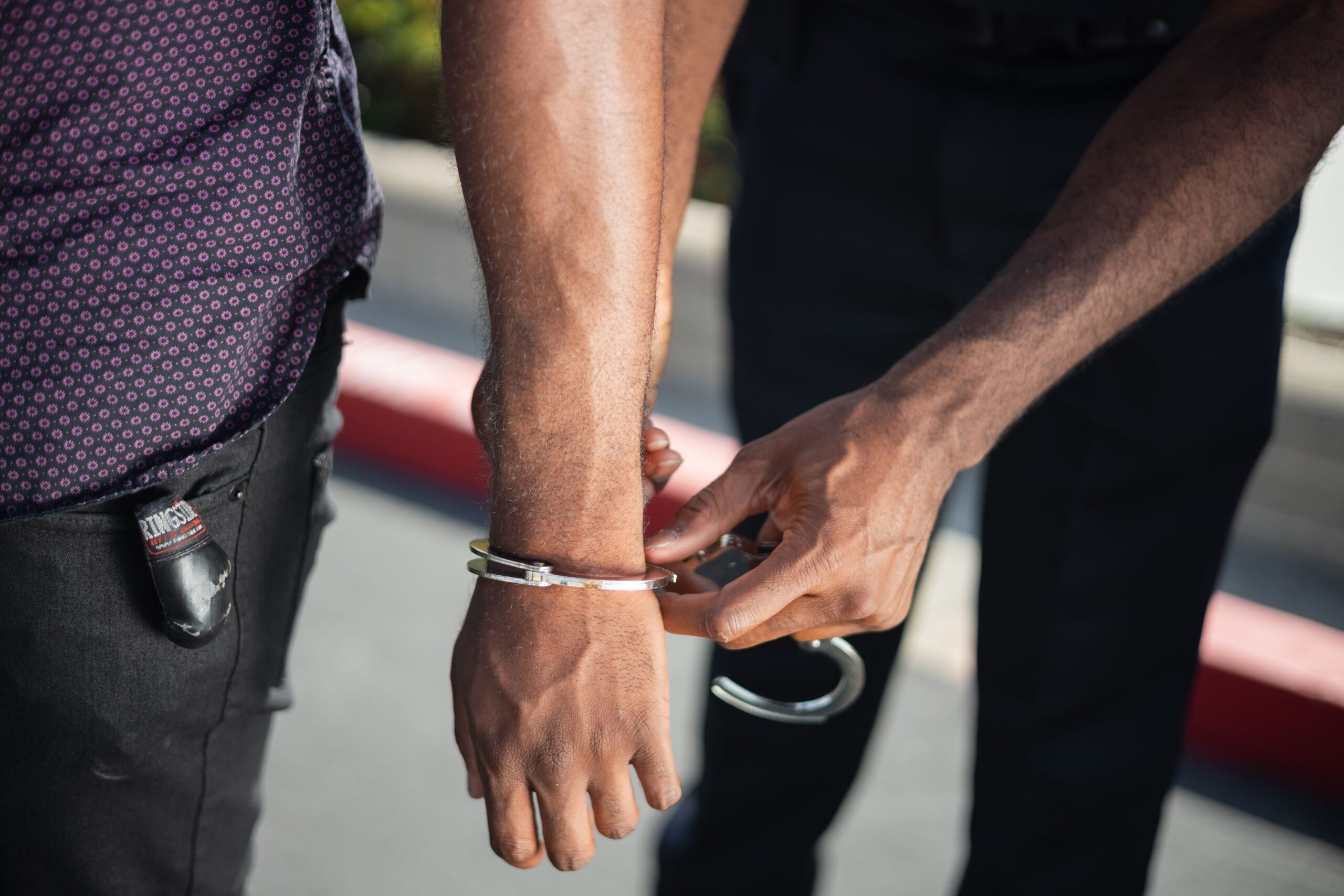
The morning a police officer changed the entire direction of my life, I had eleven dollars in my checking account, an expired driver’s license, and a job interview in forty minutes that I could not afford to miss.
I missed it anyway. Sort of. What happened instead was something I still have trouble explaining to people without my voice giving out.
My name is Marcus Bell, and I am a registered nurse in the emergency department of a hospital in Maryland. I have a wife, two daughters, a small brick house with a mortgage I’m proud to complain about, and a life so ordinary and so good that some mornings it frightens me, because I know exactly how close I came to never having any of it.
It all turned on a traffic stop on a two-lane road, fifteen years ago, and a man in a uniform who had every reason to ruin me and chose, instead, to save me.
How I Got There
I grew up three states away, in a town small enough that the gas station doubled as the post office. My mother left when I was four. My father was never a sentence anyone finished. I was raised by my grandmother, Ruth Bell, in a house that leaned a little to the left and smelled like cornbread and bleach.
Grandma Ruth cleaned other people’s houses for forty years. She had hands like tree bark and a back that had quit asking for mercy a long time ago. She used to tell me, “Marcus, you are going to use your head so you don’t have to use your body up the way I did mine.” She said it like a prayer and a warning at the same time.
So I used my head. I was the first person in my family to finish high school, and then the first to go to college, on a patchwork of small scholarships and large hopes, at a university far enough from home that the bus ticket cost me a week’s pay.
I was a junior, studying biology because somewhere in the back of my mind a door marked nursing had cracked open, when the money got bad. Not tight. Bad. Grandma Ruth’s knees had finally given out, and the little I sent home each month had stopped being extra and started being the difference between her keeping the lights on and not.
I worked nights to cover it — overnight stocking at a warehouse on the edge of town, eleven to seven, then class on no sleep. It was the kind of tired that gets into your teeth. But I did it, because every box I lifted was a month my grandmother didn’t have to choose between her medicine and her power bill.
And then, two weeks before everything happened, the warehouse cut a third of the night crew. Last hired, first gone. They handed me a final check and a handshake and that was that.
The Interview I Couldn’t Miss
For eleven days I applied for everything that moved. Eleven days of nothing, while my account drained toward zero and a thick envelope from my landlord appeared under my door.
Then, on the twelfth day, a call. An entry-level job at Mercy General Hospital — a patient transporter, the person who wheels patients from one floor to the next. It paid barely more than the warehouse. But it was in a hospital. It was a foot in the door of the exact building I dreamed about. And it was steady.
The interview was at nine in the morning, fifteen miles away, in a part of the county I’d never driven to.
I owned a 1998 Honda with a check-engine light that had been on so long I’d named it. The night before the interview I ironed my one white dress shirt on a towel on the floor, because I didn’t own an ironing board. I had a tie — a blue one, a thrift-store tie I’d bought for nine cents — that I had absolutely no idea how to knot, because there had never been a man in my house to teach me, and I had been too proud and too broke to ask anyone.
I figured I’d watch a video on the library computer in the morning and learn. I told myself it would be fine.
What I did not account for was the license.
My driver’s license had expired six weeks earlier. I knew it had. Renewing it meant a trip to the DMV during business hours — hours I’d spent either in class or asleep before a night shift — and it meant a fee I kept pushing to next month, because next month I’d have it, and next month never came. So I drove on an expired license, carefully, the way you carry something you know you shouldn’t be holding.
That morning my hands were shaking so badly from nerves and no sleep that I left twenty minutes early, terrified of being late. I made it about six miles before I saw the lights in my mirror.
The Stop
I want to tell you the truth about that moment, because it matters to the rest of the story.
When I saw those red and blue lights come on behind me, I was afraid in a way that had nothing to do with the ticket. I was a young Black man, alone, on an empty road, being pulled over, and every instinct I had been raised with stood up at once. Keep your hands on the wheel. Speak slow. Don’t reach for anything. Make yourself small. My grandmother had given me that talk before she ever gave me the keys.
I put the car in park. I rolled the window all the way down. I put both hands at ten and two and I waited, and I could feel my own pulse in my ears.
The officer who walked up to my window was maybe forty-five, with a steady, weathered face and gray coming in at his temples. His name tag said Coleman.
“Morning,” he said. “You know why I stopped you?”
“No, sir.” My voice came out thinner than I wanted.
“Your tag’s fine. But I ran the plate and the registered driver’s license came back expired. Can I see your license?”
I handed it over. There was no point pretending. He looked at it, looked at me, and I watched him do the math — the expired date, the kid in the ironed shirt, the cheap tie lying undone on the passenger seat, the shaking hands.
“That’s a serious one, son,” he said, not unkindly. “I can’t have you driving on this. You understand that’s something I’m supposed to act on.”
And that’s when it all just came out of me. I didn’t plan it. I was so tired and so scared and so close to losing everything that the truth fell out of my mouth in a rush.
The Whole Truth, On An Empty Road
“Officer, I’m sorry. I know it’s expired. I’m not from here — I came here for school, I’m at the university, I’m a junior. They cut my night job two weeks ago and I’ve been applying everywhere and I’ve got eleven dollars to my name and I have a job interview at Mercy General at nine o’clock and if I don’t show up I don’t know what I’m going to do, because my grandmother raised me and her knees are gone and I send her what I can and right now I can’t even — ”
I stopped, because my throat had closed.
Officer Coleman didn’t say anything for a moment. He looked down the empty road, and then he looked back at the tie on my passenger seat.
“You don’t know how to tie that, do you,” he said. It wasn’t a question.
I shook my head. I was twenty-two years old and I was about to cry in front of a cop over a nine-cent tie, and I have never in my life felt smaller.
He could have written me up right there. By the book, he should have. An expired license is not a warning offense in most officers’ minds — it’s a citation, maybe an impounded vehicle, definitely a young man who does not make it to his nine o’clock interview and very possibly loses the thread of his whole life.
He had the law in one hand. And he made a choice I will be grateful for until the day I die. He decided to listen to the other thing.
“All right,” he said, and he opened my car door. “Step on out here a second.”
What Officer Coleman Did
I thought, for one cold second, that I was being arrested. Instead, the man picked the tie up off my seat, flipped my collar up with two fingers, and looped that thrift-store tie around my neck like he’d done it ten thousand times.
“My daddy taught me this when I was about your age,” he said, working the knot. “Said a man should never walk into something important with a crooked tie. Over, under, around, up through the front. See? You watching? You’re going to need to know this.”
He snugged the knot up to my throat, straightened my collar back down over it, and stepped back to look at me the way you’d look at your own kid before picture day.
“There,” he said. “Now you look like somebody who’s about to get hired.”
Then he glanced at his watch, and at my car, and at the check-engine light I’d named, and he made a face like a man deciding something.
“Here’s what we’re going to do,” he said. “You are not driving on that license, and that’s final. But you’re not missing this interview either. Lock your car. You’re riding with me.”
I rode to my job interview in the front seat of a police cruiser. We didn’t talk much. About a mile out he said, quietly, “My first real job, I almost didn’t get to the interview. Car broke down. A fella I never saw again pulled over and drove me the rest of the way. I always figured I owed somebody that. Guess today’s the day.”
I have thought about that sentence more times than I can count. He wasn’t being a hero, in his own mind. He was just passing along something that had once been handed to him. That’s how it works, I’ve learned. Kindness isn’t a thing you own. It’s a thing you carry for a while and then hand to the next person.
The Interview
He didn’t just drop me off.
He parked the cruiser, walked in beside me, and when the receptionist looked up startled at a uniformed officer escorting a nervous young man in a fresh-knotted tie, Officer Coleman took off his hat and explained, in front of everybody, that this young man had been pulled over through no fault of his character, that he’d handled himself with more dignity than most grown men Coleman knew, and that if Mercy General was smart they would not let him out of the building without a job.
Then he shook my hand, told me to go renew that license the very first chance I got, and left.
I was so rattled and so moved that I barely remember the interview itself. I remember the hiring manager, a kind woman named Patricia, asking me why I wanted to push hospital beds around for a living, and I remember telling her the truth — that I wanted to be a nurse, that this was the first rung of a ladder I intended to climb all the way, and that a stranger had just shown me more faith in twenty minutes than I’d been shown in years, and I’d be damned if I’d waste it.
They hired me before I left the building.
I got my temporary license sorted that same week, and renewed it in full the month after, with my first paycheck, before I bought myself a single thing.
The Years
That transporter job was the rung I’d promised Patricia it would be.
I pushed beds and wheelchairs through those halls for two years while I finished my degree on no sleep, the same as always. The nurses got to know me. They started teaching me things they weren’t supposed to teach a transporter, because they saw where I was headed. I got into the nursing program. Patricia wrote me a recommendation. I worked through it, passed my boards, and walked back into Mercy General — the same building Officer Coleman had marched me into in a borrowed tie — this time with R.N. after my name.
I brought my grandmother to my pinning ceremony. We hired a van with a wheelchair lift, because by then she couldn’t manage stairs, and she sat in the front row in her good church dress and cried so hard the woman next to her gave up her whole pack of tissues. “You used your head,” she whispered when I hugged her. “You used your head, baby.”
She lived four more years. Long enough to see me marry a labor-and-delivery nurse named Tasha, long enough to hold her first great-granddaughter. When she passed, she did it in a paid-off house with the lights on and the heat running and not one single bill she couldn’t cover, and I will carry the pride of that to my own grave.
I tried, over the years, to find Officer Coleman. I called the department once. I got a polite runaround, a different last name at the desk, a sense that people moved on. Life filled in around the empty space the way it does. I never forgot him. But I stopped expecting to ever see him again.
Which is exactly when you see somebody again.
The Night He Came In
It was a Tuesday, near the end of a long shift, when the radio crackled that we had an incoming — an elderly male, cardiac event, found down at home, CPR in progress.
We do this a hundred times. You don’t look at the face first. You look at the rhythm, the airway, the lines. The medics rolled him in fast and we went to work, and it was a full twenty minutes of controlled chaos before we got him stable, before the monitor settled into something that looked like a man who was going to make it after all.
And then, in the quiet after, I finally looked at his face.
He was older. So much older. Gray all the way through now, thinner, an oxygen cannula under his nose. But I knew that weathered, steady face the second the noise died down. I knew it the way you know a face from the single most important morning of your life.
His name, on the chart, was Dale Coleman.
I had to step out into the hall and put my hand against the wall for a minute.
When I came back, he was awake, groggy, frightened the way they all are. I checked his lines. I adjusted his pillow. I told him he’d had a heart attack, that he was at Mercy General, that he was stable and he was safe and I was going to be his nurse tonight.
He nodded, eyes half closed. He had no idea who I was. Why would he? To him, I imagine, that morning on the road was one small kindness among the thousands a decent man does and forgets in a forty-year life. He’d tied a nervous kid’s tie once. People don’t keep a ledger of the lives they save by accident.
But I keep mine.
What I Told Him
I waited until his numbers were good and his daughter had been called and the worst of the fear had drained out of his face. Then I pulled the stool up next to his bed, and I asked him something a nurse doesn’t usually ask.
“Mr. Coleman, were you a police officer? Years back, in this county?”
His eyebrows went up, slow. “Thirty-one years,” he said, his voice a sandpaper whisper. “How’d you know that?”
“Because thirty-one years ago, give or take,” I said, “you pulled over a scared kid on Route 12 with an expired license and eleven dollars to his name. He had a job interview he couldn’t get to and a tie he couldn’t knot. And instead of writing him up, you tied that tie yourself, and you put him in your cruiser, and you drove him to Mercy General, and you walked him inside and told them they’d be fools not to hire him.”
The old man went very still.
“They hired him,” I said. My eyes had gone hot and useless. “He’s a nurse now, Mr. Coleman. He’s been one for thirteen years. He got his grandmother a house with a paid-off roof. He married a good woman. He has two little girls.”
I took his hand, the way I’d taken so many hands across so many beds in that building he’d carried me into.
“He’s the one holding your hand right now,” I said. “You tied my tie. And tonight I get to be the one who tells you you’re going to be okay.”
Dale Coleman, thirty-one-year veteran, the man who showed me the law could kneel down to the heart, looked at me for a long moment with the monitor beeping steady and slow between us. And then this tough old man’s face folded up completely, and he gripped my hand with all the strength his tired heart could spare, and he said the only thing he could get out.
“Over, under, around,” he whispered, “and up through the front.”
I laughed and I cried at the same time, standing there in my scrubs. “Yes, sir,” I said. “You taught me good. I never forgot a step.”
After
Dale Coleman walked out of my hospital eight days later, on his own two feet, with a stent in his heart and his daughter on one arm and a follow-up plan I went over with him three times because I wasn’t taking any chances.
We stayed in touch after that — real touch, the kind I’d wanted for fifteen years. He came to my younger daughter’s birthday party that summer and sat in a lawn chair telling my kids embarrassing stories that he swore were true. He told me, more than once, that he barely remembered that morning on Route 12 until I reminded him of it, and that it shook him to learn that the smallest decision of his whole career had turned into a person, a family, a house with the lights on.
“You never know,” he said to me once, “which one’s going to be the one that matters.”
He’s gone now. His heart finally finished what it started, three winters ago, and I was there, and I held his hand again at the end the way he’d held mine at the beginning. His daughter asked me to be a pallbearer. I have never been so honored by anything in my life.
There’s a tie in my locker at the hospital. A plain blue one. I keep it there on purpose.
Every so often a young person comes through those doors for an interview — a new tech, a nursing student, a kid from a hard place with shaking hands and a collar that won’t sit right. And when I see one of them fighting with a knot they were never taught, I walk over, and I flip up their collar with two fingers, and I say the words a police officer said to me on the worst and best morning of my life.
“Over, under, around, and up through the front. You watching? You’re going to need to know this.”
Then I straighten their collar back down, and I step back, and I tell them they look like somebody who’s about to get hired.
Because that’s the thing about kindness. It was never mine to keep.
It’s just mine to tie onto the next person, and send them walking through the door.

Lila Hart is a dedicated Digital Archivist and Research Specialist with a keen eye for preserving and curating meaningful content. At TheArchivists, she specializes in organizing and managing digital archives, ensuring that valuable stories and historical moments are accessible for generations to come.
Lila earned her degree in History and Archival Studies from the University of Edinburgh, where she cultivated her passion for documenting the past and preserving cultural heritage. Her expertise lies in combining traditional archival techniques with modern digital tools, allowing her to create comprehensive and engaging collections that resonate with audiences worldwide.
At TheArchivists, Lila is known for her meticulous attention to detail and her ability to uncover hidden gems within extensive archives. Her work is praised for its depth, authenticity, and contribution to the preservation of knowledge in the digital age.
Driven by a commitment to preserving stories that matter, Lila is passionate about exploring the intersection of history and technology. Her goal is to ensure that every piece of content she handles reflects the richness of human experiences and remains a source of inspiration for years to come.