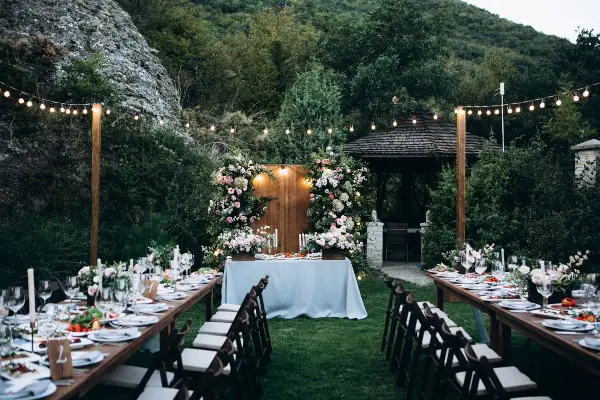
Three months after my mother’s funeral, my father married her sister.
I tried to convince myself that grief can drive people to make unimaginable choices. People do strange things when the floor drops out from under their lives. I told myself that over and over, the way you press a bruise to see if it still hurts. But then my brother showed up late to the wedding, drew me aside into a quiet hallway, and pressed a letter into my hands. One my mother had never intended for me to see. And after that, I could not tell myself anything anymore.
I thought nothing could be more painful than watching my mother die. I was wrong.
She battled breast cancer for nearly three years. That number sounds clean when you say it out loud, three years, but it was not clean. It was a thousand small surrenders. It was her hair the first time, then the second time. It was the wig she bought and then refused to wear because she said it itched and made her look like someone pretending to be her. It was the way she learned the names of her medications the way other people learn the names of their grandchildren, with familiarity and exhaustion both.
Near the end, she barely had the strength to sit upright. And still, even then, she worried about everyone but herself. She asked whether I was eating properly. She asked whether my brother Robert was staying on top of his bills, because Robert had always been the kind of person who let envelopes pile up unopened on the kitchen counter. She asked whether Dad remembered to take his blood pressure medication, because she had been the one to set it out for him every single morning for thirty years and she could not imagine the house functioning without her hand in it.
Even as she was dying, she never stopped being a parent. She never stopped being a wife either. That was the part that would gut me later, once I knew. She spent her last strength worrying about a man who had already decided to replace her.
After we buried her, the house still carried the scent of antiseptic and her lavender lotion. I would walk through the front door and that smell would reach me before anything else, and for half a second my body would forget. For half a second she was still in the back bedroom and I could call out and she would answer. Then the rest of me would remember, and the half second would close like a wound.
People repeated the same consolations over and over. She’s not suffering anymore. She was incredibly strong. Time will help. You’ll be okay. They said these things at the funeral, in the grocery store, in text messages that arrived at strange hours. I learned to nod. I learned to say thank you. I learned that grief makes other people uncomfortable, and that part of mourning is managing the discomfort of everyone around you.
Time didn’t help. It only made the quiet heavier. Each week the house seemed to absorb more silence, the way a sponge takes on water until it can hold nothing more.
Three months after the funeral, my father asked Robert and me to come by.
“Just to talk,” he said on the phone, and there was something in his tone I had never heard before. Cautious. Rehearsed, almost, as if he had practiced the sentence before dialing. At the time I thought it was just grief making him careful. Now I understand it was something else entirely. It was a man bracing to say a thing he already knew was indefensible.
When we stepped into the living room, nothing had changed. That was the strange part. Mom’s coat still hung by the door, the gray wool one she wore in autumn, the one I kept meaning to take to my own closet and could never quite bring myself to move. Her slippers were tucked beneath the couch where she always left them. The funeral flowers were gone, finally, but the emptiness they left behind felt permanent, like the outline a picture leaves on a wall after you take it down.
My aunt Laura was sitting beside my father. Mom’s younger sister. She looked tense, her hands clasped tightly in her lap, knees pressed together, eyes red as if she’d cried earlier, though not recently. There was a stillness to her that I mistook for sorrow. We had all been crying for months. Why would Laura be any different. She had lost her sister.
I remember thinking, though, why is she here. Not unkindly. Just a small flicker of confusion. We were supposed to be talking as a family, the three of us who were left, and here was a fourth chair pulled close to my father’s, closer than the furniture had ever been arranged before.
“I want to be upfront with you both,” Dad finally said. “I don’t want any secrets.”
That should have been my first red flag. People who have nothing to hide don’t announce their honesty before they speak. They simply speak.
Laura reached for his hand. He didn’t pull away. I watched it happen and some animal part of my brain understood before the rest of me caught up, the way you sometimes flinch at a sound a half-second before you consciously hear it.
“I’ve met someone,” Dad said. “I didn’t expect it. I wasn’t looking for it.”
Robert frowned. “What are you saying?”
Dad hesitated. The hesitation lasted only a moment, but I felt it stretch. “Laura and I… we’re together.”
The room seemed to spin. I stared at him, waiting for it to be a joke, waiting for the punchline that would let us all exhale and shake our heads. It wasn’t a joke. His face was solemn and resolved. He had already crossed this line somewhere far behind us, and he was only now telling us where the line had been.
“You’re… together?” The words came out of me strange and flat.
“We never planned this,” Laura rushed to say. “Please understand. Grief just… changes people.” She said it quickly, the way you say a line you’ve prepared in case someone questions you. I noticed that. I filed it away without knowing why.
Dad nodded along with her. “We leaned on each other. We shared the same loss. Things just happened.”
Things just happened. As if the two of them had been carried along by some force outside themselves, helpless, blameless. As if no one had made any choices at all.
My brother stood abruptly. His chair scraped the floor. “You’re telling us this three months after Mom died. Three months.”
“I know how it sounds,” Dad said quietly. “But life is short. Losing your mother showed me that.”
That line cut deep. I wanted to stand up and shout that she was the one who lost her life, not him. He had lost a wife, yes. But she had lost everything, every future morning, every holiday, every chance to grow old, and he was standing in her living room with her sister’s hand in his, using her death as a lesson about seizing happiness. The unfairness of it was so enormous I could not find the edges of it.
Instead, I stayed frozen in my seat. I have asked myself many times why I didn’t say anything. I think it was because some part of me still could not believe what I was seeing, and saying it aloud would make it real.
Laura gripped Dad’s hand more tightly. “We love each other. And we’re getting married.”
The words felt wrong. Too quick, too rehearsed, too smooth, like they had been said before, to each other, in private, many times. I remember nodding, though I don’t recall choosing to nod. My body was making small agreeable motions while my mind stood somewhere far away, watching.
My brother said nothing more. He simply walked out. The front door opened and closed, and the gray wool coat by the door swayed slightly in the draft.
Later that night, he called me.
“This isn’t right,” Robert said. “None of it feels right.”
“It’s grief,” I replied without thinking. “People do strange things.” I had become so practiced at saying it to other people that now I said it to my own brother, defending the very thing that had made him walk out of a room.
“You don’t believe that,” he said.
“I don’t know what I believe.”
That, at least, was true. I lay awake that night staring at the ceiling, and I genuinely did not know. I’m not sure who I was trying to reassure when I called it grief. Robert, or myself.
In the weeks that followed, everything moved fast, and quietly. That was what unsettled me most, looking back. There were no public announcements. No happy phone calls to relatives. No celebration in the way that engagements usually bring celebration. Just documents, appointments, and hushed conversations they assumed Robert and I couldn’t hear. Whenever I came by the house, Dad and Laura would be bent over papers at the kitchen table, and they would go quiet when I entered, and then start again once I’d passed into another room.
Laura made a few attempts to draw me in. She had a way of offering closeness that felt like she was reading from a manual on how families are supposed to behave.
“Would you like to help pick out the flowers?” she asked once.
“I thought you might want to see the venue,” she said another time.
I turned her down every time. “I’m okay,” I said. “Do whatever you like.” I could not bring myself to be cruel to her, but I could not bring myself to participate either. So I hovered in that cowardly middle place, polite and absent.
Once, Dad took me aside. We were in the hallway, near the photographs that still hung on the wall, photographs of Mom at my graduation, Mom holding Robert as a baby, Mom and Dad on their own wedding day a lifetime ago.
“You’re all right with this, aren’t you?” he asked.
I paused. I looked at him, this man I had loved and trusted my whole life, and I felt something I could not name. Then I nodded. “If you’re happy, that’s what matters.”
His shoulders visibly eased, as if he’d just been absolved of something I didn’t yet understand. I thought I was being generous. I thought I was being the good daughter, the one who put her father’s happiness above her own discomfort. I did not know that I had just handed comfort to a man who had spent years lying to the woman whose photographs watched us from the wall.
The wedding invitation arrived six weeks later. Heavy cardstock, tasteful, understated. An intimate ceremony. Immediate family only. I stared at it for a long time, turning it over in my hands. Mom’s name was nowhere to be found. There was no mention of her, no acknowledgment of how little time had passed since we lowered her into the ground. It was as if she had been edited out of the story entirely, as if the three years of her dying and the three months of our grieving were an inconvenient preface everyone had agreed to skip.
Still, I went. I told myself it was the grown-up thing to do. The loving thing. The daughter thing. I told myself that if I stayed away, I would only create a rift that could never heal, and that Mom would not have wanted her children estranged from their father. I dressed carefully. I practiced my expression in the mirror.
On the wedding day, surrounded by smiles, champagne, and gentle music, I kept repeating the same lie in my head. This is just grief. Just two broken people finding solace. Just two people who lost the same woman and reached for each other in the dark. If I said it enough times, maybe it would become something I could live inside.
Then Robert arrived late, eyes frantic, jacket half on, his tie loose around his neck like he’d dressed in a moving car. He crossed the room and grabbed my arm hard enough that I felt his fingers through the fabric of my sleeve.
“Claire. We need to talk. Now.”
Before I could ask what was wrong, he said the words that shattered everything. “You don’t really know who Dad is.”
He didn’t slow down until we were nearly outside, steering me by the elbow through the crowd of guests. The music softened behind us. Laughter spilled through the open doors. Someone clinked a glass in celebration, a bright crystalline sound, and against everything happening inside me it felt grotesque, obscene almost, like laughter at a graveside.
“What’s going on?” I whispered sharply. “You missed the ceremony. You look like you ran here.”
“I almost didn’t come,” he said. His hand trembled when he finally released my arm. “I was told not to.”
“Told by who?”
Robert glanced back toward the reception hall, then lowered his voice until I had to lean in to hear it. “Mom.”
I stared at him. The word didn’t make sense, so my mind refused it. “That’s not funny.”
“I’m serious. I swear.”
“You’re saying Mom told you something… after she died?”
“No,” he said quickly. “Before.”
We stood near a row of coat racks, half concealed by tall potted plants. Guests passed by, smiling, holding flutes of champagne, unaware that just a few feet away my legs felt ready to give out beneath me.
“A lawyer called me this morning,” Robert said. “I almost ignored it. I thought it was spam, some scam about a warranty or a settlement. I almost let it go to voicemail.”
“And?”
“He knew Mom’s name. Her illness. The exact day she died.” Robert’s voice was unsteady. “He knew things a stranger couldn’t know.”
My mouth went dry.
“He said Mom asked him to contact me when Dad remarried,” Robert went on. “Specifically. Not just if Dad remarried. When Dad married Laura. She named her, Claire. Months ago. Before she died. She knew.”
A chill traced its way down my spine, slow and deliberate, like a finger drawn along the bones.
“That doesn’t make sense,” I said. “Why would she—”
“She found out,” Robert cut in.
“Found out what?”
He didn’t answer right away. Instead, he reached inside his jacket and pulled out an envelope. Thick, cream-colored, sealed. The kind of paper you use when the words inside are meant to last.
“She wrote this after she knew she was dying,” Robert said. “She gave it to the lawyer. She told him to hold onto it until the right moment. And he decided the right moment was today. The day Dad married her sister.”
My gaze fixed on the envelope. I couldn’t look away from it. “What’s inside?”
“The truth about Dad.”
I let out a shaky laugh, a sound with no humor in it at all. “Dad stayed. He cared for her. He was there every day. He drove her to every appointment. He sat with her through the chemo. Whatever you think is in there—”
“That’s what she believed too,” my brother said softly. “At first.”
I swallowed. “Read it.”
“I can’t. Not here. Not yet.”
“Why?”
“Because once you know, there’s no going back. Once you read it, you can’t un-read it. And I needed to make sure you were ready.”
A burst of laughter erupted from inside the hall. Someone called out my name, bright and oblivious. “Claire! They’re about to cut the cake!”
I didn’t move. I didn’t even turn my head. “What did Mom discover?” I asked again, quieter this time.
Robert rubbed his face with both hands, like he was trying to pull himself awake from a dream he couldn’t escape. “She discovered that Dad had been deceiving her for years. Not about small things. Not a forgotten anniversary or a hidden expense. About who he truly was.”
“That’s deliberately vague,” I snapped, and the sharpness in my voice surprised me. “Stop doing that. Stop circling it. Just say it.”
He met my eyes, and there was something pleading in his expression, as if he wanted me to arrive at it myself so he wouldn’t have to be the one to say it. “Do you remember how Laura suddenly moved closer when Mom got sick?”
“Yes. She said she wanted to help.” And she had helped. She had brought meals. She had stayed over. She had sat in the waiting rooms with us. I had been grateful to her.
“And how Dad always insisted she stay? How she was constantly around whenever Mom wasn’t well? How there was always a reason for Laura to be in that house?”
“Grief makes people hold on,” I said, but the words came out thin, and I could hear my own uncertainty in them.
“Or conceal things,” Robert said.
I shook my head. The motion felt involuntary. “No. If you’re suggesting what I think you’re suggesting—”
“I’m telling you exactly what Mom wrote,” he said. “Dad had been involved with someone else through much of their marriage. Not a brief mistake. Not one weak moment. Years. And when she finally pieced everything together, when she finally understood who that someone was… that person wasn’t a stranger.”
My head spun. The hallway tilted. “Her sister.”
“There’s more,” Robert cut in, and his voice dropped even lower. “There’s a child. One everyone believed belonged to someone else.”
“What are you saying?”
Robert glanced back toward the reception. At the smiling guests in their good clothes. At the white tablecloths. At our father somewhere in the middle of it all, accepting congratulations.
“I’m saying,” he whispered, “this wedding didn’t begin after Mom died.”
I opened my mouth, but he raised a hand to stop me. “Not here. We need privacy. And time. Because once I tell you what’s in that letter, once you really understand it, you’ll understand something I can’t take back. You’ll understand that Mom knew she was being betrayed while she was dying. That she lay in that bed, sick, frightened, exhausted, knowing exactly what was happening in her own house.”
He pressed the envelope into my hand. The paper was heavier than paper should be.
Behind us, the music swelled. Someone lit sparklers, and through the doorway I could see them throwing gold light across the laughing faces. My hands began to tremble as I felt the weight of what I was holding, heavy with the truth that was about to shatter everything I thought I knew about my own family.
I don’t remember deciding to move. We simply stopped speaking and started walking. Life continued just a few steps away, the music and the sparklers and the cake, while mine quietly split open. We slipped into a small side room off the main hall. Empty chairs stacked against one wall. A lonely coat rack. A window cracked open for air, letting in the cool evening and the distant sound of celebration. Robert shut the door, and the noise dropped away.
“Sit,” he said.
I sat. My legs barely held me, and I was glad for the chair. Robert stood in front of me, holding the envelope as if it were something that could detonate.
“Promise me something first,” he said.
“What?”
“Promise you won’t interrupt. Not until I’m finished. I need to get through all of it, and I won’t be able to if you stop me.”
I nodded. I didn’t trust my voice.
He broke the seal. The sound of the paper tearing was very loud in that small room. He unfolded the pages inside, and even from where I sat I recognized the handwriting. Neat. Careful. Slightly slanted. The same handwriting that had filled my lunchbox notes and my birthday cards my whole life. Seeing it there, knowing she had written these words in the last months of her life, made my throat close.
“It starts like a farewell,” Robert said softly. “She wrote it knowing she wouldn’t be there to explain it to us herself.”
He took a steadying breath and began to read.
“My sweet children. If you’re reading this, then my fears were true. And it also means I didn’t live long enough to protect you myself.”
I clamped a hand over my mouth.
“I didn’t tell you while I was alive because I didn’t want my final months consumed by conflict. I was already exhausted. I was already in pain. I wanted my last days to be filled with love, not spent exposing betrayals. I wanted to look at your faces, not at his.”
My chest tightened until it was hard to breathe.
“I found out by accident. Messages I wasn’t supposed to see, left open on a screen. Dates that didn’t line up. Money that moved quietly, carefully, as if someone believed I would never notice. As if a dying woman stops paying attention to the world.”
My hands started to shake.
“At first, I convinced myself I was wrong. That fear was playing tricks on my mind, that the medication was making me suspicious, that no one I loved could possibly do what I was beginning to suspect.”
Robert paused. The paper rustled in his hands. Through the window, faint laughter drifted in from the reception.
“But the truth doesn’t disappear just because you are too weak to face it. I kept finding the same answer no matter how many times I tried to find a different one. And the answer was this. It wasn’t a stranger. It was my own sister.”
I felt dizzy. I gripped the edge of the chair to keep myself upright.
“I gave him one chance to be honest. Just one. I asked him calmly, on an ordinary evening, because I wanted to believe there was an explanation I could live with. I wanted so badly to be wrong. I would have forgiven almost anything if he had only told me the truth.”
Tears burned behind my eyes.
“He told me I was imagining things. He told me my illness made me suspicious. He told me I should rest, that I was tiring myself with worry. He looked me in the eyes, the eyes of his dying wife, and he lied.”
My brother’s voice cracked, and he stopped for a moment to steady it before continuing.
“I believed him. Not because the lie was good, but because I wanted it to be true. Because when you love someone for decades, you learn to doubt yourself before you doubt them. That is the cruelest thing love teaches you.”
The silence pressed in around us.
“But I kept watching. Quietly. I had nothing left but time and attention, and I spent both. And that is when I understood something worse than the affair. The child everyone believes belongs to another man is his.”
“No,” I whispered. The word escaped before I could stop it.
Robert looked up from the page and nodded slowly. “He’s Dad’s.”
I shook my head, over and over, as if I could shake the information back out. “That can’t be true. Someone would have noticed. Someone would have said something. The family, the relatives, someone—”
“She did,” Robert said gently. “Eventually. She noticed. That’s the whole point. She was the one who noticed.”
He looked back down and kept reading.
“Once I knew that, everything finally made sense. Why he stayed all those years when the love had gone cold. Why he never left, even when we were unhappy. Why he played the role of the devoted husband so perfectly in front of everyone we knew, while living a second life right beside me, under my own roof.”
The words felt like knives, each one finding a new place to land.
“It wasn’t love that kept him here. It was safety. It was what I owned. It was what he would lose if he walked away. The house, the savings, the life we had built. He didn’t stay because he couldn’t leave me. He stayed because leaving was too expensive.”
My nails dug into my palms hard enough to leave marks.
Robert lowered the letter for a moment. He couldn’t look at me. “She believed they were waiting,” he said. “All of them. Waiting for her to die. Waiting until they could be together openly without the inconvenience of a wife in the way. Waiting to inherit everything she had spent her life building.”
I jumped to my feet so abruptly that the chair shrieked across the floor and nearly tipped over. “No. That’s not—”
“She didn’t confront them,” Robert cut in, and his calm somehow steadied me. “That’s the thing, Claire. She didn’t scream. She didn’t throw it in their faces. She knew that if she did, he would just lie again, and twist it, and make her look like a paranoid dying woman to everyone who would listen. So she did something else. She prepared.”
I stared at him, my breath ragged.
“She went to a lawyer. Quietly. While she still had the strength. She revised her will. All of it legal, all of it airtight, witnessed and notarized and sealed. And she left everything to us. To you and me. Nothing to Dad. Nothing to Laura.”
I sank back down into the chair as the meaning of it landed. “So Dad gets nothing,” I said slowly. “Laura gets nothing.”
A brittle laugh escaped me, sharp and unsteady and close to tears. “So this wedding. All of this. The flowers, the champagne, the immediate-family-only invitation with her name erased from it—”
“They believe they’ve already won,” Robert said. “They think they waited her out. They think the house is theirs, the money is theirs, the future is theirs. They have no idea what she did before she went.”
The door swung open without warning.
“Claire?” My father stood in the doorway, backlit by the warm light of the reception behind him. “Are you all right in there? You two disappeared.”
Robert folded the letter calmly and slipped it back into the envelope, and slid the envelope into his jacket.
“Yes,” I answered, and I was amazed at how level my voice came out. “We’ll be out in a moment.”
He studied us for a second, something flickering behind his eyes, then withdrew. The door shut again, and the music returned to a muffle.
I swallowed. “What do we do?”
Outside, the music swelled toward a crescendo. The cake was about to be cut. Somewhere out there my father was about to slice into white frosting beside the woman he had been with while my mother was dying. And he had no idea that his celebration was about to become a reckoning.
We returned to the reception together, Robert and I, side by side. Dad spotted us immediately and smiled, relief loosening his face. “There you are. I was starting to worry. They’re waiting on us for the cake.”
“We need to talk,” I said.
His smile faltered. “Can it wait? They’re about to—”
“No.”
Something in my tone carried. The nearby conversations hushed, the way a room senses weather changing. A few heads turned. Laura, standing near the cake table in her pale dress, went rigid, her smile freezing in place.
My brother stepped forward. He didn’t raise his voice. He didn’t have to. “Mom knew,” he said. “About all of it.”
“Knew what?” Dad asked, but the question was already weaker than he wanted it to be.
I lifted the envelope so they could both see it. “She knew about you and her sister. She knew it had been going on for years. She knew about the child. And she knew exactly why you stayed.”
Across the room, Laura whispered his name. “Stop.” Just that. One word, almost too quiet to hear.
Dad let out a short laugh, the kind people use when they are trying to make a sudden terrible silence into a misunderstanding. “You’re mistaken. Whatever you think you’ve found—”
“No,” I said evenly. “You are.”
Robert went on, steady as anything. “She changed the will before she died. Quietly, legally, all of it. Everything goes to us. The house, the accounts, all of it. You get nothing.”
The color drained from Dad’s face in real time. I watched it happen. “That’s impossible,” he said.
“It isn’t,” I replied. “It’s already done. It was done months ago, while you were busy telling her she was imagining things.”
For a moment no one moved. Then Laura stepped away from him. One step, then another, putting distance between herself and the man she had just married. Her voice came out flat and cold. “You said it was taken care of. You told me it was handled.”
I looked at the two of them, standing in the wreckage of their perfect intimate ceremony. “This wedding didn’t secure your future,” I said. “It revealed the truth.”
We left without a goodbye. We walked out past the cake and the sparklers and the bewildered guests, out into the cool evening air, and we did not look back.
Months later, Laura left him as well. It turned out there was nothing holding her there once the inheritance was gone. Love, the kind built on waiting for a woman to die so you could take what was hers, disappears very quickly when there’s nothing left to take. The house was ours. The accounts were ours. He was left with the truth and very little else.
I think about my mother often now. About those last quiet months, when she lay in that bed knowing what she knew, choosing not to spend her final strength on screaming, choosing instead to act. Everyone said she lost her battle. They said it at the funeral, gently, the way people do. She was so strong, but she lost her battle.
They were wrong. She didn’t lose. She didn’t even fight, not the way they meant. She did something steadier and far more devastating than fighting.
She won. Quietly.

Specialty: Emotional Turning Points
Rachel Monroe writes character-driven stories about betrayal, second chances, and unexpected resilience. Her work highlights the emotional side of family conflict — the silences, the misunderstandings, and the moments when someone quietly decides they’ve had enough.