For fifty-one years I believed I was the daughter my mother tolerated and my sister was the daughter she loved. I was so certain of it that I built my whole self around the certainty, the way you build a house on a foundation you never think to question until the day a crack runs up the wall and you finally look down and see what you poured it on.
The crack came on a Tuesday in October, in a lawyer’s office that smelled of old coffee and printer toner, when a man named Howard Pruitt slid a small brass key across the table and said it was mine.
Let me start before that, though. You cannot understand the key until you understand the chest, and you cannot understand the chest until you understand what it was like to grow up in our house as the one who was not Diane.
My name is Carol. My sister is Diane, two years older, and from the time I could form a memory she was the sun our mother turned her face toward. I do not say that bitterly anymore, though I said it bitterly for most of my life. I say it now the way you describe weather. It simply was. Diane was the pretty one, the easy one, the one who got the lead in the school play and the new coat and the corner of the kitchen table where the good light fell. I was the other one. The dependable one. The one who was told, again and again, in a dozen small ways, that I was fine, that I would manage, that I did not need fussing over the way Diane did.
I want to be fair to my mother, Eleanor, because she is gone now and cannot defend herself, and because the whole point of this story is that I was wrong about her. But I cannot tell you the truth of how it felt without telling you the cold parts, so here they are.
When I was nine I made my mother a birthday card. I worked on it for two weeks. I drew our house and the three of us in front of it, holding hands, and I wrote a poem inside that did not rhyme but that I had labored over until my hand cramped. I gave it to her at breakfast. She said thank you, sweetheart, and set it on the counter behind the toaster, and that afternoon I found it in the trash under the eggshells. That same week Diane brought home a clay pinch pot from school, lopsided and ugly, and my mother put it on the windowsill above the sink where it stayed for thirty years. I remember standing at that sink as a grown woman, washing dishes at a holiday, looking at that pot and feeling nine years old again.
That is the kind of thing I am talking about. Not cruelty with a raised voice. My mother almost never raised her voice. It was the cold version. The quiet sorting of two children into a keep pile and a manage-on-your-own pile, done so smoothly that for years I thought I must be imagining it, because surely a mother could not do that to a child and never once say why.
There was a Christmas, I think I was twelve, that I have carried my whole life like a stone in a shoe. We were poor that year, the year my father’s plant cut hours, and my mother told us both, carefully, that money was tight and there would be one real present each. On Christmas morning Diane unwrapped a gold-colored bicycle with a banana seat and white tassels on the handlebars, the exact one she had circled in the catalog, and she shrieked and rode it up and down the hallway. I unwrapped a pair of sensible brown winter boots, a size too big so I would grow into them. Practical. Necessary. I needed boots, it was true, my old ones leaked. But I sat on the floor in my pajamas holding those boots and looking at my sister flying down the hallway on her gold bicycle, and I understood something about my place in that family that no twelve year old should have to understand on Christmas morning. I said thank you. I always said thank you. My mother watched me say it and her face did a small thing I did not understand at the time, a tightening around the mouth, and she turned away and went into the kitchen and ran the water for a long time. I thought she was annoyed with me for not being happier about boots. I know now what she was doing in there with the water running. I know now exactly what that tightening was.
I wore those boots for two winters and never once said anything but thank you, and I told myself the story I told myself about everything in those years, which was that Diane was the kind of girl you gave bicycles to and I was the kind of girl you gave boots to, and the difference between us was simply a fact of nature, like one of us being tall.
Diane felt it too, of course, but from the warm side. She grew up knowing she was loved the way you know the ground is under your feet, which is to say she never had to think about it. That confidence made her careless with me in the way favored children often are careless with the ones standing in their shadow. She did not mean to wound me. She simply never had to notice me. When our father died, the year I was twenty-six, it was Diane our mother leaned on at the funeral, Diane she called at night, Diane she planned the small life of her widowhood around. I drove the four hours every other weekend. I fixed the gutters and balanced her checkbook and took her to the appointments Diane was always too busy for. And at the end of every visit my mother would walk me to the door and say, tell Diane I miss her.
I want you to hold onto that, the gutters and the checkbook and the appointments, because it matters later. I was the one who showed up. I just never felt like the one who was wanted.
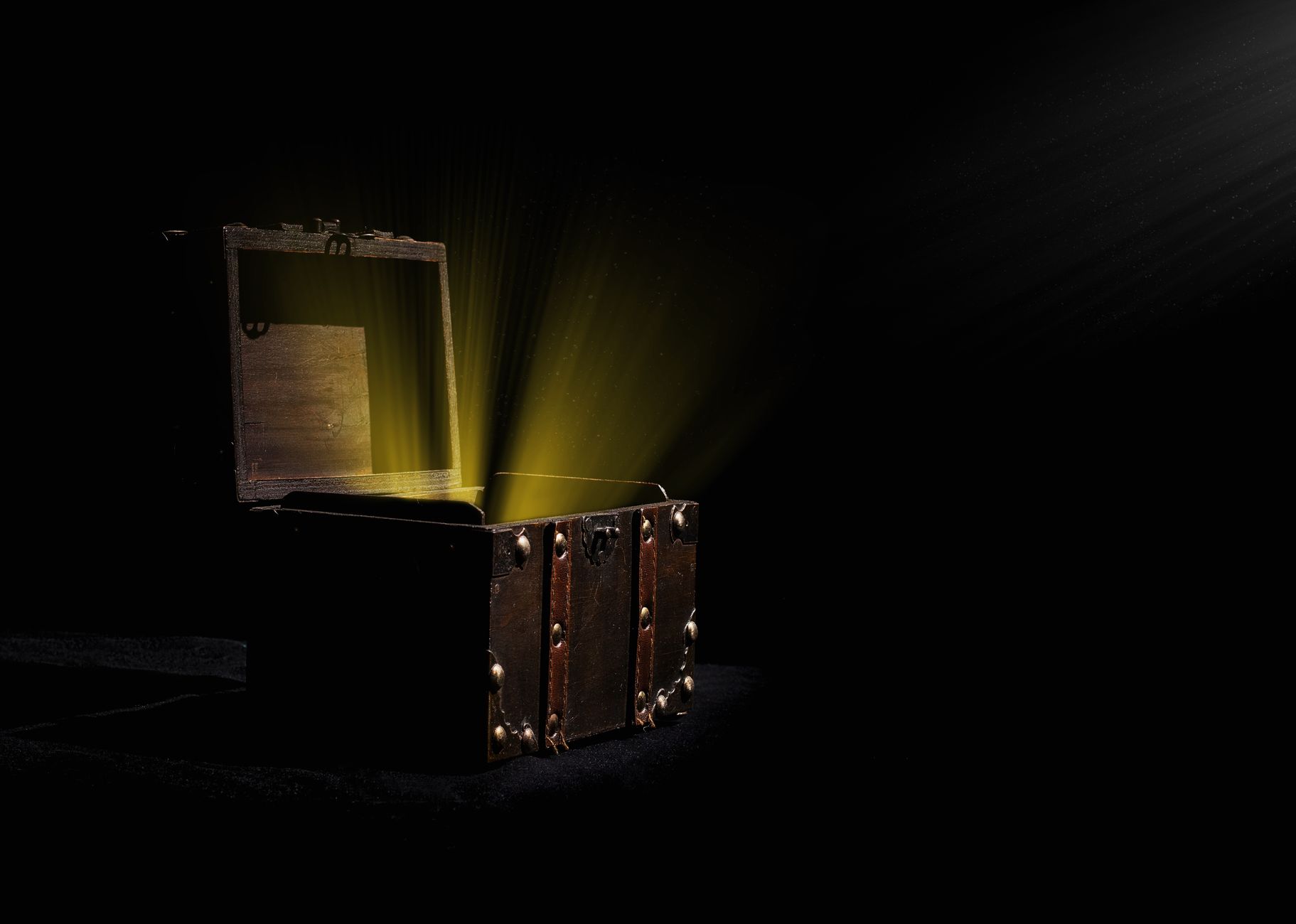
At the foot of my mother’s bed, for as long as I can remember, there was a hope chest. Cedar, dark with age, with a tarnished brass lock and a lid that closed with a soft heavy sound like a door in another room. It had been her mother’s. It was always locked. As children Diane and I were told, in the one tone our mother used that left no room at all, that the chest was not ours to open, not ever, not until she was gone, and that even thinking about it was a kind of disrespect.
So naturally we thought about it constantly. We invented theories. Diane was sure it held jewelry, our grandmother’s diamonds, the good silver. I was sure, in the dark private way I was sure of most sad things, that it held the proof. Photographs of Diane and none of me. Letters that explained, in my mother’s small slanted hand, why she had chosen her firstborn and turned away from the second. I imagined it so many times that the imagined version became almost real, a little wound I could press whenever I needed to remind myself who I was in that family.
My mother died on a Sunday in September, in her sleep, the way she had always said she wanted to. Diane was at a conference in Phoenix. I was the one in the recliner beside her bed, where I had been for the last eleven nights of her life, because the hospice nurse said the end was close and Diane had a flight she could not move.
Let me tell you about those eleven nights, because they are part of this, and because I did not understand them while I was living them.
I slept in a vinyl recliner the hospice company delivered, the kind that never quite reclines flat, with a quilt over my legs and a baby monitor on the nightstand so I would hear her if she stirred. The house was so quiet at three in the morning that I could hear the refrigerator cycle on downstairs and the tick of the radiator and, under it all, my mother’s breathing, which had gone shallow and uneven in a way the nurse called the beginning of the end. I learned to count the gaps between her breaths. I learned the small sounds that meant she was uncomfortable, and how to lift her, and how to wet her lips with a little pink sponge on a stick when she could no longer drink. I did the things daughters do in those rooms, the unglamorous tender things nobody writes on a sympathy card, and I did them alone, and I did them for a woman I believed did not love me, and I want you to sit with how strange that is. I gave her the most intimate care a person can give another person, night after night, and the whole time a voice in the back of my head was saying, she would rather it were Diane in this chair. She would rather be dying with her favorite in the room.
On the ninth night she woke a little, more lucid than she had been in days, and she looked at me across the dark and she said my name. Just my name. Carol. And then she said, so quietly I had to lean in, “You’re still here.” Like she was surprised. Like even at the end she expected me to be the one who left. I said of course I’m here, Mom, where else would I be, and I held the cup of water to her lips and she drank a little, and her eyes stayed on my face the whole time in a way they never had in daylight in fifty years, studying me, and I thought it was the morphine. I thought she did not know who I was. I know now she knew exactly who I was. I know now what she was looking at. She was looking at the daughter she had built, doing the thing she had built her to do, and she could not say what she was feeling because she had spent her whole life not saying it, and the not-saying was a muscle even dying could not relax.
I held my mother’s hand while she died. She did not say anything tender to me. Near the end she surfaced once, looked at me, and said Diane’s name, asking where she was, and I said she was coming, Mom, she’s coming, and my mother closed her eyes and that was the last word she ever spoke. Diane’s name. To the very end.
I drove home that night on empty roads and I told myself I was done crying about it, that a fifty-one year old woman should be past needing her dead mother to have loved her, and I almost believed it.
The will reading was three weeks later, in Howard Pruitt’s office downtown. Diane wore black and cried beautifully and the lawyer told us the things we expected. The house was to be sold and split evenly. The savings, split evenly. Our mother had been fair, scrupulously fair, on paper, the way she had been all our lives, dividing things down the middle while keeping the one thing that could not be divided, her warmth, all on one side.
Then Howard Pruitt took off his reading glasses and said there was an additional instruction. He looked at me, only at me.
“To my daughter Carol,” he read, “I leave the cedar hope chest at the foot of my bed, and the key to it, which I have kept on the chain around my neck for fifty years. It is to go to Carol alone. Diane is not to open it. Carol will understand why.”
I remember the silence in that room. I remember Diane’s head turning toward me, slow, and the look on her face, which was not grief anymore but something closer to alarm, because in our whole lives our mother had never once divided anything unevenly in my favor, and we both knew it.
Howard Pruitt slid a small brass key across the table. It was warm. It had been against my mother’s skin until the morning she died.
“She wanted you to have this directly,” he said. “She was very specific.”
Diane said, in a voice gone thin, “What’s in it?”
And the lawyer, this kind tired man, looked at her and said, “Mrs. Reyes, I don’t know. Your mother sealed it. But she was clear that it was for your sister, and that your sister would understand.”
I drove to my mother’s house that evening with the key in my fist the whole way, so tight that when I finally opened my hand in her empty bedroom there was a red mark pressed into my palm in the shape of it.
The chest was where it had always been. I knelt in front of it the way I had wanted to as a child and never dared, and I fit the key into the tarnished brass lock, and it turned with a small reluctant click that I felt in my teeth, and I lifted the lid.
The cedar smell came up first, sweet and sharp, fifty years of it. And then I saw what was inside, and I had to sit down on the floor, all the way down, because my legs simply stopped holding me.
It was full of me.
The chest was full of me. Not Diane. Me.
On top was the birthday card I had made when I was nine. The one I had watched her throw in the trash under the eggshells. It was creased down the middle where I had folded it, and the corner was stained brown where an eggshell must have touched it, and she had taken it out of the trash and smoothed it flat and kept it for forty-two years. Inside, in pencil so old it had gone silver, my non-rhyming poem. And beneath it, in her handwriting, on a small slip of paper she had clipped to the back, she had written: *Carol’s card. She watched me put it down and I saw her face. I could not let her see me cry, so I let her think I threw it away. God forgive me. I keep it where she will find it when I am gone.*
I read that four times before it went in.
Under the card was everything. My report cards, every one, from kindergarten through high school, with her notes in the margins, *Carol is so much smarter than she lets anyone see,* *Carol got the science prize and would not let me come, she said I would only watch Diane, my heart, my fault.* A lock of my baby hair in a twist of tissue, labeled *Carol, first haircut, she did not cry.* The program from a piano recital I had been certain she skipped, with a ticket stub, and a note: *I sat in the back so she would play freely. She plays better when she thinks no one she loves is watching. I am always watching.*
There were letters. Dozens of letters, in envelopes, each one with my name on the front and none of them ever mailed. She had written to me my whole life and never sent a single one. I sat on her bedroom floor until the light went gray and then dark and I read every one of them, and what they told me, over and over, in a hundred different ways, was a thing I had never once suspected in fifty-one years.
She had loved me more. Not equally. More. And she had hidden it on purpose.
The longest letter, the one at the bottom, written in a shakier hand than the others, was dated the spring before she died. It was the explanation. I will not give you all of it, because some of it belongs only to me and her now, but I will give you the part that broke me open and then, somehow, put me back together different.
She wrote that when Diane was a baby, before I was born, she had nearly lost her. A fever, a hospital, a night a young doctor told her to prepare herself. Diane lived. But something had happened to my mother in that hospital corridor, some fault line that opened in her and never closed, and from that night on she could not love Diane without a terror underneath it, a fear so total that she fussed and clung and watched her firstborn every waking minute because some animal part of her was always back in that corridor being told to prepare herself.
And then I was born. Healthy, easy, squalling and strong. And my mother wrote that she looked at me in the hospital and felt, for the first time in two years, that she could breathe. That she loved me with a love that had no terror in it, a free clean love, the kind she had not been able to feel for Diane since the fever. And that this frightened her more than anything, because she believed, the way her own hard mother had taught her to believe, that to love one child openly more than the other was the worst sin a mother could commit. That it would ruin us both. That Diane, who needed reassurance like air, would wither if she ever sensed she was the less-loved one. And that I, strong as I was, would survive being loved in secret.
*So I chose,* she wrote. *I chose to spend my warmth where it was needed and to keep my heart where it was true. I gave Diane the windowsill and the front-row seats and the soft words, because she would die a little without them. And I gave you nothing anyone could see, and I gave you everything no one could. I made you strong by withholding, and I have hated myself for it every single day, and I would do it again, because you turned out to be the daughter who came and fixed my gutters and held my hand at the end, and Diane sent flowers from Phoenix. I knew which of you I had built. I built you. Forgive me for the cost of it.*
*The chest is the proof. I kept it locked because if I had ever opened it while I was alive I would not have been able to stop, I would have told you everything and undone the only thing I knew how to do for you. Now I am gone and you can have the truth and the truth cannot hurt Diane, because Diane will never see this. You will understand why. You always understood more than I let you know I saw.*
I sat in the dark with my mother’s whole hidden heart spread around me on the floor and I cried in a way I had not cried since I was a child, the kind that comes up from somewhere below the lungs. Fifty-one years. Fifty-one years I had carried the certainty that I was the one she did not love, and the certainty had been a lie, and the lie had been, in her terrible backwards way, the truest love she had.
I want to tell you I felt only joy. I did not. For a long hour I felt rage. I was furious at her for choosing for me, for deciding I was strong enough to do without the windowsill, for spending half a century letting me believe the worst thing a child can believe so that my sister would never have to feel a fraction of it. She had been wrong. She had been so wrong. A mother does not get to ration her warmth like that and call it love and leave the bill in a locked box for her daughter to find after she is safely dead and cannot be argued with.
But I sat with the rage and underneath it, slowly, came the other thing. Because I am a mother too. And I know the corridor. Not that exact one, but I have stood in versions of it, the 2 a.m. emergency room, the call that comes from the school, the fault line that opens in you the first time you understand how easily you could lose them. I know that fear can make you do crooked things in the name of love and dress them up as principle. My mother was raised hard by a hard woman and she did the best crooked thing she could think of with the love she had. It was not enough. It was also more than I ever knew. Both of those are true.
Now I have to tell you about Diane, because this is where the story could have gone wrong and I have to tell you how it did not.
I drove to Diane’s house the next morning with the chest in the back seat. I had not slept. I had decided, somewhere in that long night, that my mother was wrong about one more thing, the most important thing, and that I was not going to obey her last instruction. She had written that Diane must never see it. She had built her whole architecture of secret love on the belief that Diane could not survive knowing. But my mother had been gone three weeks, and I had spent the night learning that she did not actually know her daughters as well as she thought she did. She thought I needed nothing. She thought Diane needed everything. She had been wrong about me. Maybe she was wrong about Diane too.
Diane opened the door in her robe, and her face when she saw the chest in my arms went through about four things at once, fear and old jealousy and grief and something defensive, and she said, “She left that to you. The lawyer said I’m not supposed to.”
“I know what she said,” I told her. “Let me in, Diane. There’s something you have to see, and I’m not going to do what she wanted, because for once in her life she was wrong about us.”
We sat at Diane’s kitchen table, the good light falling on it the way it used to fall in our mother’s kitchen, and I showed her. Not all of it. I will tell you honestly that I kept two of the letters, the most private ones, the ones that were only ever meant for me, and I think my mother would forgive me that, or I do not care if she would. But I showed Diane enough. I showed her the report cards and the note about the science prize. I showed her the part where our mother explained the fever, the corridor, the terror that had bent her love into the strange shape it took. I showed her the line, *Diane will never know she was loved out of fear and Carol will never know she was loved out of freedom, and the cost of protecting them both will be mine.*
I watched my sister read our mother’s confession that the warmth she had basked in her whole life, the windowsill and the front-row seats, had come not out of a simple bottomless preference but out of a wound, a frightened clinging, a mother trying to hold onto a child she had almost lost. I watched her understand that the thing I had envied her for my whole life had been, underneath, its own kind of loneliness. To be loved that way, anxiously, hovered-over, watched every minute because some part of your mother is always afraid you will be taken, that is not the free clean thing I had imagined either.
Diane put the letter down and she looked at me and she said the truest thing my sister has ever said to me. She said, “I always thought you were the strong one because you didn’t need her. I didn’t know she made you that way on purpose. I didn’t know you needed her the whole time.”
And I said, “I didn’t know you were carrying her fear. I thought you just got the love. I didn’t know it came with a string around your neck.”
We cried at her kitchen table, two women in their fifties, over a mother who had loved us both so badly and so much that she had managed to make each of us spend our whole lives certain the other one had gotten the better deal. There is a particular grief in finding out, too late to tell her, that the person who hurt you most was doing it out of love. It does not undo the hurt. But it changes its shape. It turns it from a wall you stand on one side of into a thing the two of you can finally stand on the same side of, looking at together.
Diane and I are different now. Not perfect. Fifty years of a groove does not smooth out in one morning at a kitchen table. There are still days the old reflex catches me, the small flinch when she gets the attention, the manage-on-your-own muscle that my mother trained into me so well that it will probably never fully relax. But we talk now, really talk, the way we never did when our mother was alive triangulating us, passing her love to each of us through the other one, telling me to tell Diane she was missed and telling Diane, I now know, that I was fine and did not need fussing. With her gone we found each other. That is the strangest gift in this whole strange inheritance. She kept us apart by loving us in opposite secret languages, and in death, by accident, she finally let us read each other’s.
The chest is at the foot of my bed now. I had Diane help me carry it up the stairs, and that felt right, the two of us carrying it together when it had only ever been meant for one. I keep it unlocked. The key is in the lock, turned, and I never take it out. My children know what is inside, and someday it will go to my daughter, and I have already decided that I will not leave any of my love locked. Whatever I feel for my children I am going to say to their faces while I am alive to say it, even the crooked parts, even the parts that scare me, because the one thing I learned from my mother’s beautiful terrible cedar box is that love kept secret to protect someone is still love withheld, and a child cannot feel the love you are hiding for their own good. They can only feel the cold.
I forgive her. I want to be clear about that, because forgiveness was the last thing I expected to feel when I knelt in front of that chest. I forgive my mother. Not because what she did was right, it was not, and I will spend the rest of my life undoing the lesson she taught me about being the one who manages alone. I forgive her because I finally know that she was not the cold woman I built her into. She was a frightened one, doing arithmetic on her own heart, getting the sums wrong, hating herself for it, and keeping the truth where her strongest daughter would one day be strong enough to find it and carry it for everyone.
She was right about one thing. I did understand why. I understood the moment I lifted the lid.
She built me strong enough to forgive her. That was the last thing in the chest, underneath all the letters, the thing she never wrote down because she did not have to.
She built me strong enough to forgive her, and then she trusted me to do it.
I have.

Ethan Blake is a skilled Creative Content Specialist with a talent for crafting engaging and thought-provoking narratives. With a strong background in storytelling and digital content creation, Ethan brings a unique perspective to his role at TheArchivists, where he curates and produces captivating content for a global audience.
Ethan holds a degree in Communications from Zurich University, where he developed his expertise in storytelling, media strategy, and audience engagement. Known for his ability to blend creativity with analytical precision, he excels at creating content that not only entertains but also connects deeply with readers.
At TheArchivists, Ethan specializes in uncovering compelling stories that reflect a wide range of human experiences. His work is celebrated for its authenticity, creativity, and ability to spark meaningful conversations, earning him recognition among peers and readers alike.
Passionate about the art of storytelling, Ethan enjoys exploring themes of culture, history, and personal growth, aiming to inspire and inform with every piece he creates. Dedicated to making a lasting impact, Ethan continues to push boundaries in the ever-evolving world of digital content.