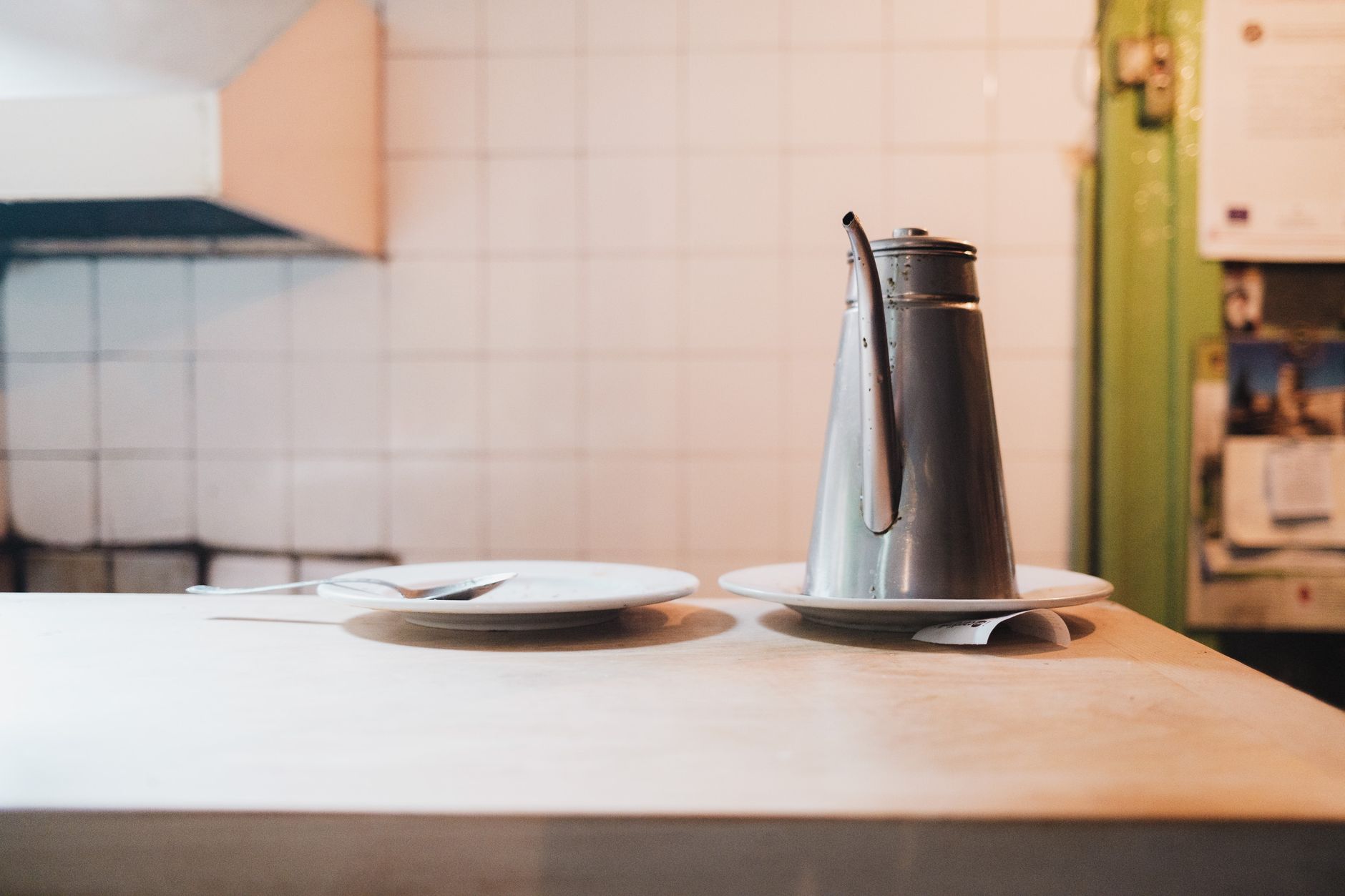
The first time Sutton Vance walked into the Bluestem, he wiped the seat of the corner booth with a paper napkin before he sat down. I watched him do it. He held the napkin between two fingers like the vinyl might give him something, and then he balled it up and set it on the table, and he looked around our dining room the way a man looks at a lot he has already decided to clear.
I had been carrying coffee to that corner booth for thirty-one years. I knew the give of every cushion in this room, which ones leaned, which ones hissed when you sat. I knew the booth he was scared of better than he knew his own kitchen. And I knew, the second he wiped that seat, exactly what kind of man had come to Coyle County.
“Coffee?” I said, because that is what I say.
“Is it fresh?” he asked, not looking at me.
“Made it eleven minutes ago.”
He looked at me then, finally, the way you look at a coat rack you bumped into. “I’ll have water. Bottled, if you have it.”
We did not have bottled. We had a tap that ran cold and clean off the same well that watered half of Quarrytown, and we had coffee, and we had pie under a glass dome that Velda Aldous baked at four in the morning six days a week. We did not have whatever Sutton Vance thought a person should be able to buy in a town of nine hundred people forty miles from the interstate.
“I can bring you a glass of well water,” I said. “It is the best water in the county. People drive in from Pell to fill jugs.”
He smiled at that the way you smile at a child who has told you something untrue and charming. “Sure,” he said. “Sure they do.”
My name is Lurleen Stagg. I am sixty-three years old. For most of my life, when people in Quarrytown talked about me, the word they reached for was *just*. That is just Lurleen. Just the waitress. She has been at the Bluestem forever, you know, she is just part of the furniture out there. I heard it so many times I stopped hearing it. I let it sit on me like the smell of bacon grease, something you carry home and stop being able to smell on yourself.
I want to tell you how a woman who was *just* the waitress came to own the man who tried to bulldoze the only home she ever had. But to tell it right, I have to start a long way back, because the part everybody talks about now, the part that ended in a lawyer’s office with Sutton Vance’s face going the color of dishwater, that part only makes sense if you understand what the Bluestem was. And what it cost me. And what nobody, not one soul in that county, ever thought I had in me.
So sit. Refill your own cup. This is a long one.
—
The Bluestem Diner sits where the old Rock Island spur used to cross Route Nine, at the edge of Quarrytown, which is the kind of place you have driven past without slowing down. We have a grain elevator, a Methodist church, a Lutheran church that does not speak to the Methodist church except at the fish fry, a co-op, a feed store, a school that buses kids in from three counties, and us. The diner is a low brick building with a tin roof that sings in hail and a sign out front that has read BLUESTEM in red neon since before I was born. Two letters flicker. They have flickered my whole life. I would not fix them if you paid me.
I started there in the spring I turned thirty-two. I had a daughter, Marigold, who was eight, and a husband, Orrin, who was driving a gravel truck for the county and who would be gone within the year, not dead, just gone, to a woman in Sapulpa and a life that did not have us in it. The Bluestem was owned then by a man named Thaddeus Brisco, who everybody called Brick, and Brick hired me because I was the only one who applied who could carry four plates and not cry about it.
I was going to work there until something better came. That is what I told myself. Something better was always one season away. And then it was thirty-one years later and I was still carrying four plates and not crying about it, and Brick was in the cemetery behind the Lutheran church, and the diner belonged to his nephew Cobb Brisco, who lived in Wichita and thought of the Bluestem the way you think of a tooth you keep meaning to have looked at.
Here is what I want you to understand about those thirty-one years, because the people who called me *just the waitress* never bothered to learn it. I did not just carry plates.
When Brick’s hands started shaking too bad to make change, I learned the register. When his eyes went, I learned the books. When the health inspector came and Brick could not remember the new code on the walk-in cooler, I was the one who had it memorized. I ordered the food. I scheduled the cooks. I trained every kid who ever tied an apron on at the Bluestem, and there were dozens of them, and a good number of them are doctors and welders and mothers now and they still come back and hug me at the counter. I knew the regulars by their orders and their griefs. I knew that Aldous Tilden took his eggs over hard because his wife had made them runny the morning she died and he could not bear it. I knew which farmers were behind at the bank by how long they nursed one cup of coffee, and I knew to keep refilling it for free, and I never once told a single soul who they were.
The Bluestem was not a job. It was the place I poured myself into when my marriage emptied out, the place that fed my girl, the place that became, without my deciding it, the whole shape of my life. I gave it everything. And the town looked at all that giving and saw a woman who had simply failed to leave.
That is the thing about being underestimated. It is not loud. Nobody stands up and announces that they think you are nothing. They just keep handing you the small parts of the day, the refills and the wipe-downs and the holiday shifts nobody else will take, and they keep their plans and their bank accounts and their futures in a room you are not invited into. You get used to the size of the room they give you. You forget there was ever a bigger one.
I had forgotten. I had clean forgotten what I was capable of, until Sutton Vance came in and wiped that seat with a napkin and reminded me, all at once, that a person can be looked at like furniture for thirty-one years and still be a load-bearing wall.
—
Let me say it plain. I had forgotten myself. Then he came.
Sutton Vance was the front man for a company called Meridian Crossing Development, out of Tulsa. They had been buying up dead and dying main streets all across our part of the state, the way a certain kind of bird picks at a field after the combine. The pattern was always the same. They would find a town where the young people had left and the old people were tired, and they would buy the anchor properties cheap, and then they would put up a gas station the size of a county fair with a fast food box attached, and they would call it revitalization in the newspaper and progress at the county commission, and three years later the local cafe and the local hardware and the local everything would be gone and the money would flow to Tulsa and the town would have a place to buy a corn dog at two in the morning and nothing else.
The Bluestem sat on the best corner in Quarrytown. Route Nine and the old spur, with the new bypass coming through, the bypass everybody had been fighting about for a decade. Meridian had run the numbers. They wanted our corner for a travel plaza. Fuel, fast food, a forty-foot sign you could see from the highway. And they did not want a diner with flickering neon and a tin roof in the middle of it.
So Sutton Vance came to buy us.
He did not come to me, of course. He went to Cobb Brisco in Wichita, the absentee owner, and Cobb, who had never made a single dollar off the Bluestem that he had not had to drive down here and pry out of a building he resented, was happy to listen. I found out the way you find out everything in a small town, which is to say all at once and too late. Velda heard it from her cousin who cleaned at the bank. The Bluestem was under contract. Meridian Crossing was buying the building and the lot. Closing in ninety days. And the contract had a line in it, a line Cobb had not bothered to fight, that said the buyer could take possession with the business as is and do with the structure what they pleased.
They were going to bulldoze us. They were going to take the corner I had stood on for thirty-one years and turn it into a fuel island.
I remember the morning I knew it for certain. Velda told me at five-fifteen, before we unlocked, her flour-white hands wrapped around a coffee mug, and I remember I did not say anything for a long time. The grill was warming. The neon was humming its two dead letters. Out the front window the sky over the elevator was going from gray to pink the way it had every morning of my working life. And I felt the floor of my whole world tip, very slowly, like a plate sliding off a tray.
“They can’t,” Velda said. “Where would people go?”
But of course they could. That is the part nobody tells you. They could and they would, and there was no law against it, and the only people who would mind were the people the world had already decided did not matter very much. Old farmers. A few widows. A waitress named *just Lurleen*.
That is the morning I should have folded. Everybody expected me to fold. I think, if I am honest, that I expected it too.
I did not fold. I want to tell you it was courage. It was not courage, not at first. It was the wiping of the seat. It was thirty-one years of *just*. It was something that had been pressed down so long it had gone hard as a fossil, and it cracked, that morning, and what came out of the crack was not a sob. It was a question.
I asked myself: Lurleen, what do you actually know?
And I started writing the answer on the back of an order pad.
—
Here is what nobody knew about me, because nobody had ever thought to ask.
When Orrin left, in the bad year, I had to learn money fast or lose my daughter’s roof. So I learned it. I did not have anybody to teach me, so I taught myself, the way you teach yourself anything when the alternative is drowning. I read. I sat at the library in Pell on my days off with books about contracts and bookkeeping and, later, about real estate. Not because I had grand plans. Because the world had shown me, hard, that a woman who does not understand the paper is a woman things get done to.
And then, quietly, over thirty years, I had done a thing that not one person in Quarrytown knew about.
I had bought land.
Not much, and never grand. But every time the Bluestem made a little, and every time I scraped a little off my own tips, I had put it where Brick taught me to put it before his hands shook, which was into ground. A quarter-section of pasture I bought with two other women in the church when a farm went under. A tax parcel nobody bid on. The old dry cleaner’s lot on Second Street that I picked up for back taxes and rented to a man who fixed small engines. Over the years it added up, the way water adds up, one quiet drop at a time, into something with weight. By the time Sutton Vance wiped that seat, I was, on paper, the third-largest landowner inside the Quarrytown limits. And not a living soul knew it, because I had never once acted like a woman who owned anything. I had acted like *just the waitress*, and people see what they expect to see.
So when I asked myself what I knew, the answer came back longer than I thought it would.
I knew real estate. I knew this county better than any man in a Tulsa office ever would. I knew, because I had stood at this register and listened for thirty-one years, exactly which families owned what, who was tired, who was angry, who would sell to a stranger and who would die first. And I knew, because Aldous Tilden had told me over his over-hard eggs, that he sat on the zoning board.
I started to make a map. Not on paper at first. In my head, the way I keep an eight-top’s order in my head. A map of how a development like Meridian’s actually works. Where its weak points are. Because a thing that big is not strong everywhere. A thing that big is only as strong as the one corner it absolutely has to have.
And Meridian absolutely had to have my corner.
—
I am going to slow down here, because this is the part where I became, again, after thirty-one years, a person who does things instead of a person things are done to.
The first thing I did was the hardest, and it was this: I did not tell anyone what I was doing. Not Velda. Not Marigold, who was grown now and living in Stillwater with babies of her own. Not the regulars who would have wanted to march on the courthouse with pitchforks. Because the second Sutton Vance learned that *just the waitress* had any cards at all, he would have moved his whole hand to take them, and he had a Tulsa law firm and I had an order pad. My only advantage in the entire world was that he did not think I was a player in the game. He thought I was the table.
So I let him keep thinking it.
I kept pouring his coffee, the days he came in. He came in more than you would expect, because the deal was not closing as smooth as he wanted. I was sweet to him. I called him hon. I refilled his water (he made me buy a case of bottled, and I bought it, and I served it to him cold with a smile, and every bottle was a little knife I was happy to hand him). I let him talk. Men like Sutton Vance cannot help but talk in front of a woman they have decided is furniture. He took calls in that corner booth like the booth was his office and I was the houseplant. And I have very good ears.
I learned that Meridian Crossing was not as deep-pocketed as it pretended. They were leveraged. They had three travel plazas going up at once across the region and they had borrowed against all of them, and the whole tower of it was balanced on getting each anchor corner closed on schedule, because their lender released the next tranche of money only when each site cleared. I learned that the Quarrytown site was the keystone. It was the one with the bypass interchange, the crown jewel, the one the projections were built around. If Quarrytown slipped, the lender got nervous about all of it.
I learned, sitting a coffeepot’s distance away, that Sutton Vance had personally guaranteed a piece of it. His own name on the line.
And I learned the date. The closing on the Bluestem was set, and Cobb Brisco was eager, and there was nothing, on the face of it, that *just the waitress* could do about a contract between two men in two other cities.
Except there was. Because I had spent thirty-one years learning where the bodies of this county were buried, and Sutton Vance had spent ninety days learning my coffee was fresh.
—
Let me tell you about the title.
When Cobb Brisco put the Bluestem under contract, the contract was for the building and the lot. But the Bluestem’s lot, the actual legal parcel, had a wrinkle in it that went back to the Rock Island railroad, a wrinkle that I knew about because Brick had told me about it twenty years before, the way an old man tells you the things that worry him at two in the afternoon when the rush is over. The diner sat on its own parcel, but its only legal access, the only way a vehicle could lawfully reach that corner from Route Nine, ran across a thin strip of ground that had once been railroad right-of-way. An easement. And that strip did not belong to the Bluestem lot. It never had.
For decades it had not mattered, because nobody develops a corner in Quarrytown. The strip had reverted, years back, when the railroad abandoned the line, to the adjoining landowner under an old Oklahoma statute about abandoned rights-of-way. And the adjoining landowner, the one who had quietly picked up that worthless ribbon of dirt at a tax sale eleven years before because she happened to know it touched the diner she loved, was me.
A travel plaza without legal access from the highway is not a travel plaza. It is a very expensive field.
Sutton Vance did not know. His Tulsa firm had run a title search, but title searches find what they are told to look for, and a forty-foot ribbon of abandoned railroad easement that reverted under a statute most lawyers have never read does not jump out at a man in a hurry who has already decided the locals are furniture. They had the building under contract. They had never thought to ask who owned the dirt the trucks would drive across.
I had it. I had held it for eleven years. And I had paid the taxes on it every single year, in cash, at the courthouse, the way you pay for something you know is worth more than it looks.
So now you see the shape of it. They could buy the Bluestem from Cobb Brisco. They could bulldoze the diner. And then they would own a beautiful corner that no truck could legally reach, and they would have to come to the one person in Coyle County who could grant them access, and that person would be a sixty-three-year-old woman they had spent ninety days treating like a coat rack.
I could have stopped there. I could have just sat on the easement and let their deal die and kept my diner standing out of pure spite, and it would have been sweet. But I did not want spite. Spite is for people who lose well. I had not spent thirty-one years getting underestimated to settle for losing well.
I wanted to win.
—
Here is how it actually went, the part that is in the courthouse record now, the part people in Quarrytown still tell at the counter when I am not in earshot, and sometimes when I am.
I went to see a lawyer in Pell, a young woman named Imelda Frostick who had grown up bussing tables at the Bluestem the summer she was sixteen and who had cried into my apron the day she got into law school. I laid the whole thing out for her on her conference table, the deeds and the tax receipts and the statute and the easement, all of it, the work of thirty quiet years. She read it twice. Then she took off her glasses and she looked at me and she said, “Lurleen. Do you understand what you are holding?”
“I think I do,” I said.
“You are holding their whole project by the throat,” she said. “And they have no idea.”
We did not go to the newspaper. We did not march on the courthouse. We did the thing that men like Sutton Vance never expect from people like me, which is that we were patient, and we were quiet, and we let the clock run.
Meridian closed on the Bluestem building. Cobb Brisco took their money and signed away the place his uncle had loved, and I poured Sutton Vance a celebratory cup of coffee on the morning it closed, on the house, and I told him congratulations, hon, and I meant every word, because I knew what he did not. He had just paid good money for a building he could not use, on a lot he could not reach, and the only road to making it worth anything ran through me.
Then I waited. I waited until their lender’s deadline got close, until the next tranche of money was due to release and would not release because the engineers had finally, finally found the access problem on the survey. I waited until I knew, from the phone calls Sutton Vance took louder and louder in that corner booth, that the whole leveraged tower was starting to lean. I waited until the man who had personally guaranteed it was sweating through his good shirt in my dining room.
And then Imelda made the offer.
We did not ask Meridian to sell us the diner back. We made them an offer to buy out their entire Quarrytown position. The building, the lot, the contract, all of it, at a number that was a deep, deep discount from what they had paid, because a corner with no access is worth almost nothing and we all knew it. We offered them a quiet, clean exit. Take the loss, walk away, let the lender be calmed by a sale instead of a default, and never have to explain to anyone in Tulsa that the keystone of their three-plaza tower had been pulled out by a waitress with a forty-foot ribbon of railroad dirt.
It was a buyout. Quiet, legal, and complete. No reporters. No spectacle. Just a number on a page and a deadline that was theirs, not mine, and the slow, beautiful arithmetic of a man realizing he has no other move.
Sutton Vance came to the closing himself. He did not have to. I think he came because he needed to see the face of whoever had done it to him, the way you need to see the thing that wrecked you. He walked into Imelda Frostick’s conference room in Pell with two lawyers from Tulsa, and he was looking around the room for the man, the developer, the rival, the somebody who had outmaneuvered Meridian Crossing.
And then I came in.
I had taken my apron off for it. That was the only difference. I sat down across the table from him, and I folded my hands, and I watched him do the math, watched it move across his face slow and then all at once, the same way the morning light moves across the elevator. The waitress. The houseplant. The coat rack he had wiped a seat to avoid. *Just Lurleen.*
He did not say anything for a long moment. His face went the color of dishwater. One of his Tulsa lawyers started to speak and he put up a hand to stop him.
“It was you,” he said.
“It was me,” I said.
“The whole time.”
“The whole time, hon,” I said. “I’d have brought you a coffee, but I retired Tuesday.”
—
We signed. I will not pretend the number did not matter, because it did, it mattered enormously, it was the difference between a diner that survived and a diner that did not. But I will tell you the truth about the moment, which is that the number was not the thing I will remember. The thing I will remember is that he wiped the seat when he came in, and he shook my hand when he left.
He shook it the way you shake the hand of somebody you have decided, too late, that you should have taken seriously. A real handshake. He looked me in the eye. “Where did you learn all this?” he asked, and there was no sneer in it anymore, just a kind of tired wonder.
“Right here,” I said. “Pouring coffee. You learn a county pretty well in thirty-one years. You should try staying somewhere that long sometime. You hear things.”
He almost smiled. Then he gathered his lawyers and he drove back to Tulsa, and Meridian Crossing’s travel plaza got built two towns over, on a worse corner, and as far as I know nobody there ever tells the story of how they lost Quarrytown, because it is not the kind of story a company like that likes to tell.
But we tell it. Lord, do we tell it.
—
Here is the part I care about most, the part that is not about him at all.
I own the Bluestem now. Free and clear. The neon still flickers its two dead letters and I still will not fix them. Velda still bakes the pie at four in the morning, except now she owns a piece of the place, because the first thing I did when the ink was dry was cut her in, and the second thing I did was cut in the two cooks and the girl who buses, because a place is not a building, a place is the people who keep showing up to it before the sun, and I had spent thirty-one years being treated like I did not own what I had built, and I was not about to do that to a single soul who worked beside me.
I did not get rich. People hear this story and they think I must have. I did not. The whole point was that I bought their position at a loss to them, which is to say at the most I could scrape together and not a dollar more, and most of what I scraped together was thirty years of quiet drops of water, the pasture and the dry cleaner’s lot and the tax parcels, all of it leveraged and pledged and sweated to put the Bluestem out of reach forever. I am not a rich woman. I am a woman who owns her own corner. At sixty-three. After everybody, including me, had stopped expecting anything of the sort.
The morning after we signed, I came in at five like always. I made the coffee. I flipped the sign. Aldous Tilden came in for his eggs over hard and I made them myself and I sat down in the booth across from him, the corner booth, Sutton Vance’s old booth, and I had a cup of my own coffee, which is a thing I had not done in thirty-one years of working through every shift. And Aldous, who is ninety and does not waste words, looked at me over his eggs and said, “Heard you bought the whole thing out from under that Tulsa fella.”
“I did,” I said.
He chewed. He thought about it. “Always knew you had more than coffee in you,” he said.
I laughed so hard I had to put my cup down. Because he had not. Nobody had. That was the entire point. But it was kind of him to say, and at ninety you have earned the right to rewrite a thing or two, and I let him have it.
—
I want to say one more thing, to whoever is reading this, and especially to the women my age, the ones the world has gotten comfortable calling *just*.
For thirty-one years I let other people decide the size of the room I was allowed to stand in. I let them hand me the refills and keep the futures. And I want to be honest with you: a great deal of that was on me. I forgot myself. I let the word *just* sit on me until I could not smell it anymore. The cruelty of being underestimated is real, but the deeper danger is that you start to agree.
It took a stranger wiping a seat with a napkin to crack me open. It took a man who had decided I was furniture to make me remember I was a load-bearing wall. I would not wish Sutton Vance on anyone. But I owe him this much: he reminded me, by treating me like nothing, of exactly how much I was.
You do not have to wait for your Sutton Vance. You can ask yourself the question now, the one I wrote on the back of an order pad at five-fifteen in the morning with my whole world tipping like a plate off a tray. The question is not *what have they let me be.* The question is *what do I actually know.* Write the answer down. It is longer than you think. It has been adding up your whole life, one quiet drop at a time, into something with weight. Into something load-bearing.
They called me just the waitress. Then I bought the man who came to bulldoze us, and I did it with thirty-one years of attention that everybody mistook for failure to leave.
The neon still flickers. The pie is still warm. The well water is still the best in the county, and people really do drive in from Pell to fill jugs, and I will tell that to anybody who doubts it, and I will pour them a cup of coffee while they argue, and it will be fresh, because it is always fresh, because some things you do right for thirty-one years just because they are right, long before anybody is watching to see whether you can.
I was always watching. That was the secret. I was always, always paying attention.
And in the end, the woman who was paying attention owned the corner.

Ethan Blake is a skilled Creative Content Specialist with a talent for crafting engaging and thought-provoking narratives. With a strong background in storytelling and digital content creation, Ethan brings a unique perspective to his role at TheArchivists, where he curates and produces captivating content for a global audience.
Ethan holds a degree in Communications from Zurich University, where he developed his expertise in storytelling, media strategy, and audience engagement. Known for his ability to blend creativity with analytical precision, he excels at creating content that not only entertains but also connects deeply with readers.
At TheArchivists, Ethan specializes in uncovering compelling stories that reflect a wide range of human experiences. His work is celebrated for its authenticity, creativity, and ability to spark meaningful conversations, earning him recognition among peers and readers alike.
Passionate about the art of storytelling, Ethan enjoys exploring themes of culture, history, and personal growth, aiming to inspire and inform with every piece he creates. Dedicated to making a lasting impact, Ethan continues to push boundaries in the ever-evolving world of digital content.