The First Time I Said It and Meant It
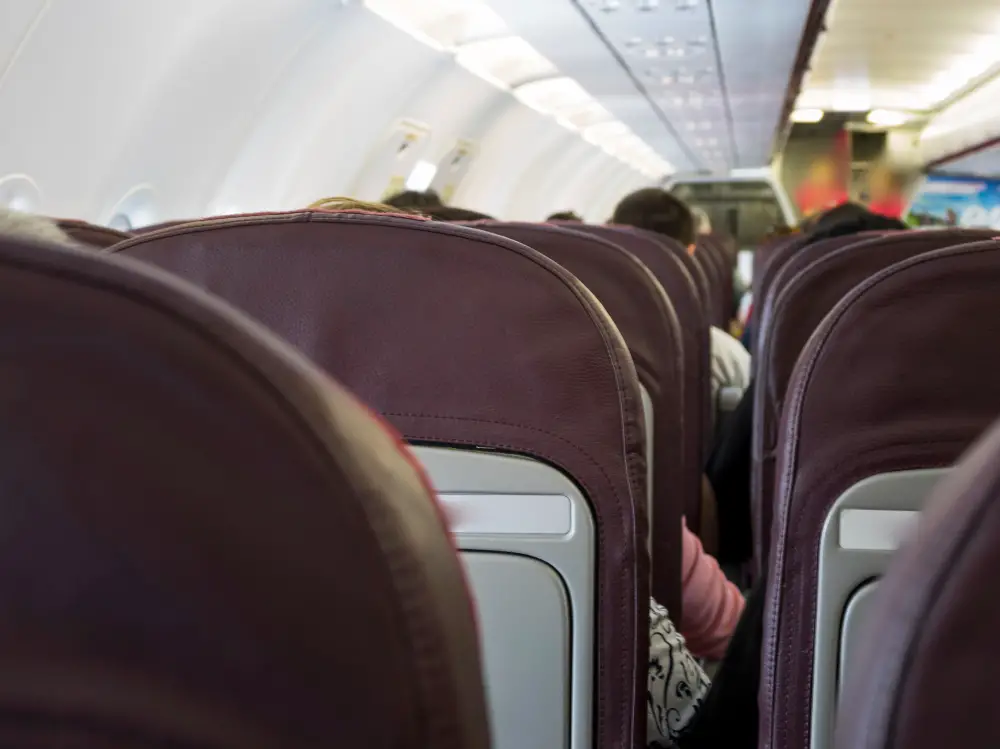
I had barely lowered myself into the middle seat when the woman beside me looked at my stomach and sighed.
It was not a quiet sigh. It was the kind of sigh that is designed to be heard, engineered for maximum communication, the audible equivalent of a billboard. She did not look away after delivering it. She held her gaze on my body with the open assessment of someone examining a piece of furniture that has been delivered in the wrong dimensions, and then she looked at my face, and her expression said that she found the face equally disappointing.
“You cannot be serious,” she said.
I paused with one hand still gripping the seatback, half-seated, in the awkward intermediate position of someone who is in the process of sitting down and has been interrupted. I looked at the armrests. Both were down. My hips were within the boundary of my assigned seat. My bag was already under the chair in front of me. I was not touching her, was not even close to touching her, was not encroaching on her space in any measurable way.
Still, I said, “I’m sorry. I’ll try to give you as much room as possible.”
I said it before I had decided to say it. Apologizing had become a reflex over the past several months, something that happened in the gap between stimulus and response without requiring my participation. I had apologized when my husband Sydney told me he needed space, two weeks after we sat together in the doctor’s office and looked at the ultrasound screen and he had held my hand and said wow in the soft voice he used for things that moved him. I had apologized when he moved his things to a furnished apartment and told me that my crying was making him feel manipulated. I had apologized when he said that becoming a father during a failing marriage was unfair to him, as though I had conceived our daughter in a moment of unilateral decision-making.
The apologies had become a kind of currency I spent trying to keep things from getting worse, without ever examining whether they were actually working.
The woman in the aisle seat, who would later tell the flight attendant her name was Norah, leaned across me toward the woman in the window seat.
“People that size should have to buy two seats,” she said. She said it loudly, with the particular volume of someone who wants to be overheard, who is building an audience rather than having a private conversation. “Why are we the ones being punished?”
The woman by the window stiffened.
Several passengers in the rows ahead turned around.
Heat climbed from my chest into my face in the specific way of humiliation: starting somewhere internal and moving outward until it arrives at your skin and you become aware of your own visibility.
“I’m pregnant,” I said quietly.
Norah looked directly at my stomach with the expression of someone noting an additional grievance. “That doesn’t make you smaller.”
For a moment, I could not find anything to say. The sentence was so precisely designed to strip away every possible response. It was technically accurate, offered without the decency to be false or even softened, delivered with the confidence of someone who had spent years saying difficult things without consequences.
I had expected this trip to be hard. I had not expected it to be hard in this particular way.
It was my first time flying alone since Sydney left, though the ticket had been purchased when we were still together. We had planned four days near the coast, a quiet trip before the baby came, a last extended period of being just the two of us before everything changed. We had talked about the hotel, about whether to rent a car or walk everywhere, about which restaurants to try. Sydney had sent me links to places he wanted to visit. I had bookmarked them and then, after he left, had kept them bookmarked for reasons I did not fully examine.
My sister was the one who convinced me to go anyway.
“You need to remember that you are a person outside this divorce,” she said.
“I’m five months pregnant and flying alone.”
“Then you will be a pregnant person flying alone on a trip you deserve.”
She said it the way she said most things, with the particular insistence of someone who loves you and has decided that the most loving thing they can do right now is to refuse to allow you to cancel.
So I changed the hotel reservation to one guest. I packed a book I was fairly certain I would not read. I boarded the plane and attempted to feel something that resembled bravery.
Norah pressed the call button.
A flight attendant appeared with a professional smile and the careful composure of someone who has managed difficult passengers before and has learned to begin from a position of neutrality. Her name tag read ELENA.
“How may I help you?”
Norah pointed at me. “This passenger needs to be moved.”
Elena glanced at our seats with the rapid professional assessment of someone trained to identify actual problems. “Is there a problem with your assigned seat, ma’am?”
“Yes. She is the problem.”
I stared at my hands in my lap. The skin over my knuckles. The ring I had not yet decided whether to take off.
Norah continued. “I paid for a full seat. I should not have to share my space because the airline refuses to enforce basic standards.”
Elena’s smile had disappeared, though her voice remained even. “Both armrests are down, and the passenger is seated within her assigned space.”
“She is making me uncomfortable.”
“She is not violating any seating policy.”
“Then charge her for another seat.”
“That is not something we do because another passenger requests it.”
Norah sat back with the expression of someone who has been subjected to a personal insult. “I want to speak to someone with actual authority.”
Elena’s voice dropped slightly. “The aircraft is still boarding. I need you to remain seated and refrain from directing comments at this passenger.”
Norah laughed. “Of course. Protect her feelings and ignore everyone else’s comfort.”
The word her had a specific emphasis, as though I were a category of problem rather than a person.
A man across the aisle was frowning at Norah. Someone behind us whispered something that sounded like that’s enough. These were sympathetic responses, and I recognized them as sympathetic, and they still did not help. Humiliation does not always sort carefully through the intentions of the people who are watching. Sometimes knowing that strangers are looking at you with kindness and strangers are looking at you with cruelty produces the same sensation, which is the sensation of being looked at, of being visible, of your body being the subject of a public conversation you did not agree to participate in.
Norah kept talking.
She said that pregnant women expected special treatment.
She said the airline should have warned her.
She said that people who needed accommodations should be required to make them in advance rather than burdening other paying customers.
Each sentence arrived on top of something else. Sydney saying he was not sure he still loved me. Sydney saying I had become too emotional to talk to. Sydney saying he would be involved with the baby but could not promise what that involvement would look like, as though fatherhood were a subscription service whose terms he had not yet reviewed.
I unbuckled my seat belt.
“Excuse me,” I said.
Norah raised both hands theatrically. “Now I have to move too?”
She stood to let me pass, making the motion of someone being significantly inconvenienced, and I moved past her and walked toward the rear of the aircraft with my eyes on the floor.
Elena noticed me.
“Ma’am, are you all right?”
“I just need the bathroom.”
The aircraft door was still open. Passengers were still boarding. Elena hesitated for a moment and then stepped aside.
I locked the lavatory door.
I pressed both palms flat against the small sink and looked at my face in the mirror, the way you look at your face in a mirror when you are trying to determine what someone else sees when they look at you.
I tried to breathe quietly.
Then the crying came. Not gradual, not polite, not the kind you can manage. It came hard and sudden and complete, the way things come when they have been waiting behind a door you have been keeping shut, and I pressed one hand over my mouth and shook.
It was not because of Norah.
Not really.
Norah was the thing that had finally pressed on the bruise, but the bruise had been there for months, deep and unaddressed, beneath the surface of all the being strong that everyone kept telling me I was doing.
My mother said I was handling things remarkably well.
My sister said I was so much stronger than she would be in my position.
My lawyer said she was impressed by how clearly I was thinking through everything.
I had begun to hate the word strong the way you hate a word that has been pressed into service for something it was never designed to carry. People called you strong when something terrible was happening to you that they could not fix and needed you to survive. It was not a description. It was a request.
What nobody seemed to want to acknowledge was that being strong required constant, exhausting, invisible effort. That I was going to sleep every night making calculations about money and custody and pediatricians and whether I would be able to afford the apartment I was in once my maternity leave ended. That I was waking at three in the morning with a specific fear that I could not name but that lived in my chest like a stone. That I was writing and deleting texts to Sydney asking whether he still wanted to be there for the birth, because I could not decide which answer would hurt more.
A knock at the door.
“Ma’am?”
Elena’s voice, careful and professional.
I wiped my face with rough paper towels. They did nothing good for the skin around my eyes.
“I’ll be out in a minute.”
“Please open the door. Something has happened.”
My heart jumped. I unlocked the door.
Elena was standing in the narrow aisle with another flight attendant, a tall man whose name tag read MARCUS. Both of them had the composed, serious expressions of people delivering information they would prefer not to be delivering.
“Are you feeling physically unwell?” Elena asked.
“No.”
“Any dizziness, pain, or difficulty breathing?”
“No. I was upset.”
She nodded once. “I need you to come back with us. A statement has been made about the interaction at your seat.”
“What kind of statement?”
Her expression tightened in a way that told me what she was about to say before she said it.
“The other passenger says you shoved her.”
I stared at her.
“I never touched her.”
“I understand. Please come with me.”
When I stepped back into the cabin, the quality of silence was different from before. The boarding had stopped. Every seat appeared to be occupied. The overhead bins were still open but no one was moving, and the stillness of the cabin was the specific stillness of a room that is waiting for something.
Norah was standing near our row with her arms crossed. A third crew member was positioned beside her.
She pointed at me.
“That’s her. She shoved me when she stood up, and then she became hysterical and ran to the bathroom.”
“I did not touch you,” I said.
“You pushed your whole body into me when you got up.”
“I moved past you. I did not touch you.”
“You did, and everyone is afraid to say so because you’re pregnant and everyone feels sorry for you.”
A woman in the row immediately beside ours turned her head.
“No, she didn’t.”
Norah blinked. The blink of someone encountering a response they did not anticipate.
The woman continued. “I was watching. She apologized to you when she sat down even though she was completely in her own seat. She did not touch you when she got up.”
A man sitting beside that woman raised his hand slightly, a small gesture of corroboration. “I saw the same thing.”
“So did I,” said a voice from further back.
Then a younger woman in the row across from mine held up her phone. “I recorded part of it. I started recording after you said pregnant women should have to buy two seats. The video shows her sitting quietly while you kept making comments.”
Norah’s face moved through several expressions quickly.
“Why were you recording me?”
“Because you were causing a scene and I wanted documentation.”
“Delete it.”
“No.”
Marcus held up a hand to stop the escalation. “Ma’am, I need you to return to your seat while we review what occurred.”
Norah looked at Marcus with the expression of someone who has not been spoken to in this manner in some time and has not missed it.
“I am the person who was assaulted. I should not be the one sitting down.”
“Return to your seat while we review the situation.”
“I want the captain.”
“The captain has been informed.”
“Good. Perhaps he will understand how to provide actual customer service.”
Marcus repeated his request.
Instead of complying, Norah raised her voice to a level that ensured the entire cabin could hear her.
“This entire cabin is participating in discrimination against me. I am a paying customer who was assaulted and is now being threatened by crew members because of a false complaint.”
The older woman by the window had been quiet until that moment. She was perhaps sixty-five, with silver hair pinned at the nape of her neck and the stillness of someone who chooses their words deliberately.
“No one pushed you,” she said. Her voice was steady and not particularly loud, but it cut through. “You were being cruel to her, and now you are lying about it.”
Norah turned on her. “Stay out of this.”
“I was seated beside both of you. That makes it my business.”
I would learn her name was Miriam.
Norah stepped into the aisle, effectively blocking it.
Marcus said, very clearly, “Ma’am, you need to take your seat immediately.”
“I will not sit beside her.”
“The instruction is for you to take your seat.”
“I am not going to sit there.”
Elena stepped forward. “We can discuss your seating concern off the aircraft.”
Norah went very still.
“You would not remove me from this flight.”
“The cabin door remains open. You have refused repeated crew instructions and made an allegation we have evidence does not reflect what occurred. We are asking you to gather your belongings.”
Norah’s mouth opened.
“The captain has determined you will not be traveling on this flight,” Elena said.
What followed was not quiet. Norah accused the crew of humiliating her. She demanded the names and employee numbers of everyone who had spoken to her. She held up her phone and announced that she was livestreaming, though several passengers near me noted that her screen appeared to be locked. She said she would be contacting corporate, contacting her attorney, and contacting the relevant government agencies that oversee airline conduct.
When Marcus asked a second time for her to collect her bag, she dropped back into the aisle seat and fastened her belt with the finality of someone declaring that they are not moving.
The captain came out of the cockpit then. He introduced himself as Captain Harris. He was calm in a way that had nothing performative about it, the calm of someone who is the final authority in a situation and knows it and does not need to demonstrate it with volume.
“You have been directed to leave the aircraft,” he said.
“I will sue the airline.”
“You may file any complaint you believe is appropriate. At this moment, you need to leave.”
“She should be the one leaving.”
“This decision concerns your conduct,” Captain Harris said. “Not hers.”
He did not look at me when he said it. The not was not about me. It was about her.
Two airport police officers boarded shortly after. By this point the delay was significant. A child near the front had been crying for several minutes. Passengers were checking their phones and sending messages to people who were waiting for them. The cabin had gotten warmer, as though the sustained presence of Norah’s anger had raised the temperature in some measurable way.
The officers spoke to her privately near the front galley. She refused again, audibly, the refusal carrying back through the cabin. They told her that if she did not leave voluntarily, they had the authority to remove her. They told her that her choices at this moment would determine what happened next.
That finally made her stand.
She yanked her carry-on from the overhead bin with enough force that a crew member had to reach up and steady the bin door. She moved toward the front with the rigid posture of someone who has decided that the only remaining form of dignity available to them is a certain quality of exit. At the door, she twisted back.
“This is because of her. You are all taking the pregnant woman’s side because she was crying.”
Nobody answered.
“I hope you are proud of yourself,” she said. It was aimed at me specifically. I knew because she was looking at me when she said it.
I was not proud. I felt sick, and tired, and responsible in the way that people who have been told they caused disruption feel responsible even when the facts establish otherwise. I had wanted the insults to stop. I had not planned for an entire aircraft to be delayed forty minutes and for two police officers to have to board and for a woman to be removed. I had wanted to sit in my seat and be left alone.
As Norah walked through the door and disappeared, a few people began to clap. Then more joined. It was not a triumphant sound. It sounded like the collective exhale of a cabin that had been holding its breath.
Elena turned to address everyone. “Thank you for your patience. We will complete our departure procedures as quickly as possible.”
I was standing in the aisle. I did not know where I was supposed to go.
Elena touched my arm, lightly and briefly.
“This was not your fault.”
“I think I made everything worse.”
“You did not. She was removed because she refused repeated crew instructions and made an allegation that multiple witnesses and recorded evidence contradict. Your behavior did not contribute to this outcome.”
Miriam was already out of her seat.
“Come sit by the window,” she said.
“That’s your seat.”
“And I am offering it to you.”
I looked at her. She looked back at me with the direct patience of someone who has made a decision and is waiting for you to accept it without making her explain it twice.
I sat by the window.
Once we were settled, Miriam handed me a packet of tissues. Not with comment or performance. Simply handed them across as a practical offering.
“I’m Miriam.”
“Helen.”
“I know this is not the best moment to say it, but you handled that with more restraint than most people would have managed.”
I looked down at my stomach. “I hid in the bathroom and cried.”
“That’s reasonable. She was mocking you quite publicly.”
The plane pushed back. Elena brought me water before takeoff and told me to use the call button if I felt unwell at any point. During the safety demonstration, the woman who had recorded the video caught my eye across the aisle and gave me a small, decisive nod, the nod of someone who wants you to know that they did what they did deliberately and would do it again.
When we reached cruising altitude, Miriam asked if I was traveling for business.
“Vacation,” I said. “Sort of.”
“Sort of?”
The story came out. Not because I had decided to tell it but because the containment I had been maintaining since Sydney left had used up most of its capacity over the preceding two hours and the remaining reserves were not sufficient for casual conversation.
“It was supposed to be a trip with my husband,” I said. “Ex-husband now, I suppose. We’re divorcing.”
Miriam waited. She was good at waiting. She did not fill the space with preemptive reassurances or the sound of her own sympathy.
“He left after we found out I was pregnant.”
Something moved through her expression that was not pity. Pity requires a slight elevation of the observer above the observed, a subtle separation. This was something closer to recognition, the expression of someone who has seen this shape of thing before and knows its weight.
“He said the marriage had been struggling for a long time,” I continued. “I did not know it was struggling enough for him to leave. Or I knew it was struggling and I thought we were the kind of people who worked through struggling.”
“Sometimes people rewrite the history of a relationship to make their current choices feel more justified,” Miriam said. “They need the past to have been bad enough to warrant what they are doing now.”
I turned toward her.
She looked out the window for a moment. “My daughter married a man who did that,” she said. “After twelve years together, he told her he had been miserable for eleven of them.” She let a beat pass. “Apparently he had smiled through every vacation, every anniversary, every family holiday photograph as an act of tremendous personal sacrifice that he had simply never mentioned.”
Despite everything, I laughed. It came out surprised and genuine and slightly cracked around the edges.
Miriam smiled. “She raised two children through the divorce. Those are the grandchildren I am flying to visit.”
“How did she do it?”
“Badly, some days. She cried. She made mistakes she later had to apologize for. She called me at two in the morning more times than I can count. She also kept showing up. That was the only requirement, and she met it every day.”
I ran my finger around the rim of my water cup. “I am afraid that I am not going to be enough.”
“For the baby?”
“For everything. The appointments and the money and the nights when I am alone with a newborn and I do not know what I am doing. The co-parenting with someone who already treats the baby like an entry on his calendar. The being everything to someone who needs everything, when I am not even sure right now that I have everything.”
Miriam nodded slowly. “That is genuinely frightening,” she said.
I appreciated that she did not immediately contradict it. That she received it as the true thing it was rather than rushing past it to reassurance.
Then she said, “I watched you today.”
“Please do not tell me I was strong.”
She looked at me with a slight expression of amusement. “All right. I will not say that. What I will say is that you apologized to someone who gave you no reason to apologize, and you did it without thinking, as though apologizing were simply what you did. You did not retaliate when she was cruel. When she lied about you in front of an entire aircraft, you told the truth without trying to make her look worse than the truth already made her look. Those are not small things. Those are the qualities of someone who has thought, perhaps not consciously, about how they want to be in the world.”
My throat tightened.
“Being gentle is not the same as being weak,” she continued. “But your daughter will also need you to know when to stop apologizing. When you are sitting entirely within your own seat and someone sighs at you, you do not owe them an apology for occupying your space.”
The baby moved. A slow, rolling shift beneath my ribs that I felt from the inside, the sensation that still surprised me every time, that still required me to pause and register it as the thing it was: a person, moving, in a space I was providing.
I placed my hand on my stomach.
Miriam noticed. “Is the baby moving?”
“Yes.”
She looked at my hand on my stomach with an expression that had more warmth in it than almost anything I had seen directed at me in months.
“Together,” she said, “you are going to be all right.”
For the rest of the flight, we talked in pieces, with comfortable intervals of quiet between. Miriam told me about her grandchildren, a ten-year-old who had recently become interested in geology and brought rocks to family dinners, and a seven-year-old who was currently of the view that the correct number of cats for any household was significantly higher than any adult in her life would agree to. I told her about the name situation, about how every name I had considered, Sydney had found a reason to object to, and how I had reached the point of considering names in secret, auditing them privately before presenting them, which was exhausting and also absurd.
“Choose the name you love,” Miriam said, without any particular emphasis, as though this were obvious. “He may have opinions. He does not get to remove your voice from the decision.”
Elena checked on me three times before we landed. She brought crackers when I mentioned feeling slightly nauseated. She told me quietly that the incident would be documented and that the airline might be in touch as a witness to the formal report. She also confirmed, without my having to ask, that Norah’s removal would create no record affecting my account, no charge, no complication.
When we landed and the cabin returned to the ordinary business of standing and retrieving bags and moving toward exits, several passengers paused near me.
The man across the aisle: “I am sorry you had to deal with that today.”
The woman with the video: “You did not deserve any of it. I hope your trip is good.”
Captain Harris, near the aircraft door as I was leaving: “I hope the rest of your time is peaceful, ma’am.”
Before Miriam left, she hugged me. Carefully, aware of the logistics. The hug of someone who has raised children and is comfortable with the physical reality of pregnancy, who knows how to arrange themselves around another person’s body without making a production of it.
“You are not as alone as you feel right now,” she said.
I watched her walk away into the airport, into the crowd of people meeting their flights and reading their phones and wheeling their bags, and she disappeared the way people disappear in airports, absorbed back into the ordinary movement of the world.
I stood for a moment before following.
I thought about what she had said. I thought about the woman with the phone who had started recording because she had seen something wrong and had decided that documentation was a reasonable response to it. I thought about the man across the aisle who had raised his hand when it mattered. I thought about Miriam calling me out gently on the reflexive apology, on the habit of making myself smaller in spaces I was entitled to occupy.
I thought about Sydney, who had decided that my grief was a form of manipulation, that my fear was a form of emotional excess, that the appropriate response to the news that he was going to be a father was to find himself a furnished apartment and renegotiate the terms of his involvement from a safe distance.
I thought about my daughter, who did not have a name yet because I had been writing down names and then not saying them out loud, keeping them in a private list on my phone as though they required approval before becoming real.
I took my phone out.
I opened the note I had been keeping.
I looked at the name that had been at the top of the list for two months, the name I kept returning to every time I opened it, the name I had not said to Sydney because I had been waiting for the right moment and the right moment had not arrived and at some point the waiting had become another form of the apology reflex.
I said it out loud, quietly, to no one in particular, in the middle of the airport.
It sounded right. It sounded like something I was choosing for myself rather than waiting for permission to choose.
I started walking toward the exit.
I still grieved the marriage I had believed I was in. I still feared the specific collection of things that were waiting for me: the appointments and the negotiations and the nights and the money and the learning how to be a mother without the partner I had expected to do it beside.
One conversation on a flight did not dissolve any of that. Miriam had not fixed anything. The kindness of strangers, genuine and unexpected as it was, did not restructure the situation I was returning to.
But I had walked onto that plane believing that I needed to be invisible in order to be tolerable, that my body and my presence and my grief were inconveniences I owed the world apologies for. And somewhere between the middle seat and the airport exit, between the woman who sighed at my stomach and the woman who handed me tissues and told me I was not as alone as I felt, something had shifted. Not dramatically. Not completely. But in the small, measurable way that things shift when someone shows you a version of yourself that you had forgotten was available.
The first time I said it, standing in the airport with my hand on my stomach, it was the first time I said it and genuinely, without performance, without the effort of convincing myself, believed it.
We are going to be all right.
The doors opened.
I walked through them into the light of the coast, into the beginning of four days that were mine, into a trip I had almost canceled and had instead taken, into the first day of whatever came next.
My daughter moved beneath my hand, slow and certain, the way she moved when the world was quiet enough to notice.
I kept walking.

Laura Bennett writes about complicated family dynamics, difficult conversations, and the quiet moments that change everything. Her stories focus on real-life tensions — inheritance disputes, strained marriages, loyalty tests — and the strength people find when they finally speak up. She believes the smallest decisions often carry the biggest consequences.