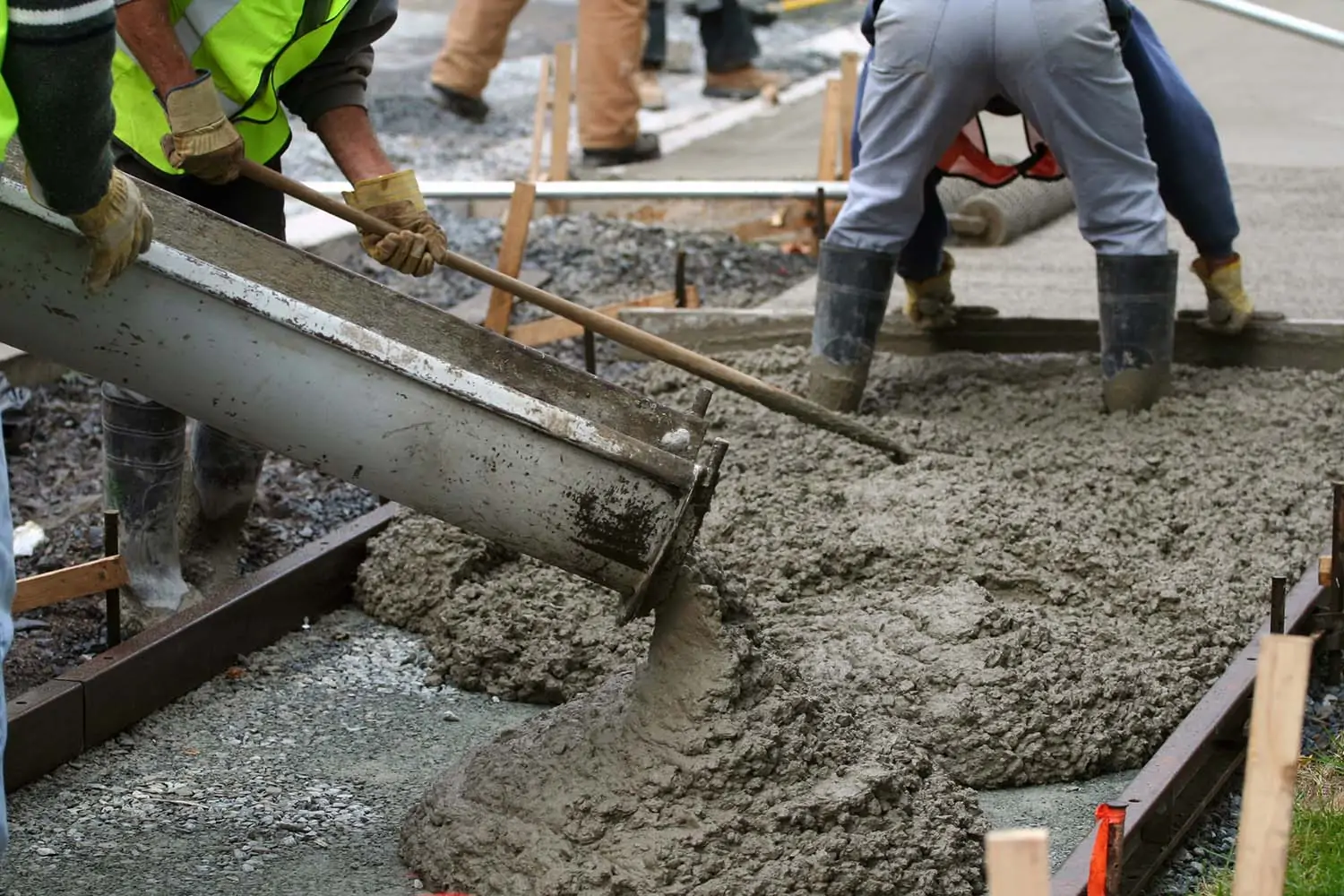
The concrete came out the next morning.
Not gracefully. Not quietly. A demolition saw arrived just after seven, its blade already spinning before the truck bed had fully lowered, and behind it came jackhammers stacked two to a rack, and behind those a compact loader idling low and patient at the curb like it had all day to wait.
Karen did not come.
That surprised me. I had genuinely expected her, expected to look up from my coffee and find her standing at the edge of my driveway in her cardigan with her clipboard, arguing with anyone who would hold still long enough to listen. Instead, the contractor’s foreman, a broad, tired-looking man named Miguel Santos, walked up my front path carrying a revised work order in one hand and an expression that said he wanted this entire job behind him by lunch.
“Morning, Mr. Bennett.”
“Morning.”
“We’re removing everything we placed yesterday.”
“I appreciate it.”
He glanced toward the flagstone path, at the corner where the loader had chipped and cracked two of the stones. “We’ll replace that too.”
“Who’s paying?”
He hesitated just long enough for the hesitation itself to answer me. “The billing department’s handling that with the association.”
Which meant Karen was already fighting with somebody over money. I could live with that.
The first cut through the concrete sounded almost as violent as the original pour had felt, that same tooth-aching screech, dust rising in a fine gray curtain that drifted toward the fence line. But emotionally it was a completely different sound. Yesterday I had stood on my own porch and watched something permanent get imposed on my property against my will, watched it settle and gray and begin to cure into a fact I would have had to live beside for the rest of my life. Today I watched it come apart. Slab by slab. Chunk by chunk, lifted and stacked and hauled away, the garden underneath slowly reappearing like a photograph developing in reverse.
The utility company had sent a crew out overnight to mark the entire easement, and by morning the bright spray paint ran through what was left of the disturbed soil like an invisible map that had suddenly been made visible to the naked eye. Red for electric. Orange for communications. Blue near the water-control access, curving in a long confident line almost exactly along the border where Susan had laid her garden beds fifteen years before.
That made sense once I actually thought about it, standing there with my coffee going cold. She had deliberately kept anything permanent, anything with real roots or real footings, away from the back third of the yard, because the closing documents had warned us, back when we bought the house, about a utility easement running through the rear of the lot. I had forgotten that entirely, the way you forget things that never come up for twenty years. Apparently Susan hadn’t. Apparently she’d built her whole garden plan around a piece of paper she’d read once in 2003 and simply never mentioned again, because it never needed mentioning, because nobody was ever supposed to need to know.
By noon the fresh concrete was gone. The damaged flagstone had been lifted out. Miguel’s crew replaced the base material underneath and reset new stones as close to the original pattern as they could manage, working carefully, almost tenderly, around the clumps of lavender that had somehow survived the whole ordeal with their roots intact. They were more careful with my garden in three hours than Karen had been in three weeks. One young worker actually stopped and asked me, politely, whether it was all right to move a terra-cotta planter six inches to the left so he could get a level line on a stone. That small courtesy mattered more than it should have. I told him it was fine. He thanked me like I’d done him a favor.
After lunch, Carl from the utility company came back out. He walked the length of the easement with a handheld device that beeped periodically, then crouched at the brass access marker and ran his thumb over it.
“Scratched up some,” he said, “but intact.” He lifted the cover and looked down into the vault. “No damage.”
“Good.”
“You got lucky.”
“I know.”
He stood, brushing dirt off his knees, and looked past my fence toward the HOA clubhouse, just visible through a gap in the trees. “Your association president know this easement serves more than your house?”
“She does now.”
Carl smiled, the kind of smile a man gives when he’s seen this particular movie before, just with a different neighborhood as the backdrop. “I imagine so.” He handed me a folded copy of the utility map, the whole corridor traced in confident blue ink. “Keep this.”
“I plan to.”
That afternoon, an email went out to every homeowner in Stonebrook. Karen wrote it. The subject line, in bold, read: IMPORTANT COMMUNITY INFRASTRUCTURE UPDATE.
I laughed out loud before I even opened it.
The message explained, in careful HOA prose, that a planned “beautification improvement” had been postponed after “previously unidentified underground infrastructure” was discovered on the property.
Previously unidentified.
The easement was recorded. It appeared in my deed, in the utility company’s own records, on the subdivision plan filed with the county twenty-some years ago. The only person in the entire chain who had somehow failed to identify it was the woman who’d ordered a concrete truck onto my land.
Then came the sentence that pushed me from amused to something colder. “The association regrets that one homeowner’s refusal to cooperate with the improvement project contributed to scheduling complications.”
I read that twice, standing at my kitchen counter with the phone in my hand. She was blaming me.
I forwarded the whole email to my attorney, David Price, with no commentary attached, because none was needed. His reply came fifteen minutes later. Two words. Call me.
When I did, his first question wasn’t about the email at all. “Do you still have the original violation notices?”
“All of them.”
“The contractor invoice?”
“Yes.”
“Photos?”
“Plenty.”
“Utility map?”
“Carl gave me one this afternoon.”
“And the email she just sent?”
“Saved.”
There was a pause on the line, the sound of a pen tapping against a legal pad. “Good,” David said.
That was the beginning of the second problem Karen hadn’t seen coming. Until that call, I had treated the whole ordeal as a property dispute, an infuriating but essentially private matter between one homeowner and one overreaching neighbor. David treated it as something else entirely. Evidence of unauthorized HOA action.
“Thomas, did the board actually vote to pave your garden?”
“I don’t know.”
“Then find out.”
Under Stonebrook’s own governing documents, homeowners had a right to inspect association records. So I submitted a written request, formal, dated, itemized: meeting minutes, the vendor contract, the work authorization, the landscaping plan, and any vote approving the project. The association had ten business days by its own bylaws to produce them.
Karen responded on day nine. Not with records. With an email explaining that internal board deliberations were confidential.
David laughed out loud when I read it to him over the phone. “Meeting minutes are not magically confidential because they’re inconvenient to somebody.” He sent a formal demand letter that afternoon, citing the specific bylaw section, the specific statute, the specific consequence of continued noncompliance. Three days later, the records arrived in a manila envelope, thick and a little damp from sitting in my mailbox overnight.
That was when everything changed.
There had been no board vote approving any construction on my property. None. The minutes from the landscaping committee showed two meetings where the phrase “uniform rear-yard presentation” had been discussed in vague, aspirational terms. Karen had suggested, according to the record, replacing several visible garden areas with hardscape for consistency. Two board members had objected. One of them, a man I barely knew named Franklin Osei, had written directly into the minutes, in language too precise to be accidental: PRIVATE LOT IMPROVEMENTS REQUIRE OWNER CONSENT.
No vote had followed that objection. The matter had simply died in committee, on paper.
And yet, in the contractor’s file, under the line labeled OWNER / AUTHORIZED REPRESENTATIVE, Karen had signed her own name. Stonebrook Hills HOA — K. Whitmore, President.
She had represented the association as though it possessed authority over my deeded parcel, authority that a documented vote had specifically failed to grant her. Miguel’s company had believed the garden was HOA-controlled common space for one simple reason: Karen told them it was. That explained why his crew had shown up that first morning so confidently, so certain of their footing, mixer already turning before I’d even made it out to the driveway.
I called Miguel directly. “Did anyone from your company review a property survey before starting?”
“No.”
“Why not?”
“We were told it was association property.”
“By Karen?”
“Yes.”
“Did she tell you I had consented?”
Silence on the line, long enough that I thought the call had dropped. Then: “She said the affected homeowner had been notified and the board had authority to proceed.”
That sentence went straight into my notes, word for word. David requested a written statement from the contractor, and Miguel’s company provided one within the week, plainly and without much emotion, because they had no interest in being left holding the blame for someone else’s false representation. Businesses like that survive by staying out of exactly this kind of fire.
Then another homeowner called me. Her name was Patricia Lowell. She lived three houses down, a retired schoolteacher I’d waved to a hundred times without ever really talking to.
“Thomas, did Karen try to pave your garden?”
“Not try. She started.”
Patricia sighed, long and heavy, the sigh of someone who has been holding something in for a while and has finally found a reason to let it out. “I think you need to see my backyard.”
I walked over that same afternoon. Near her back fence stood a newly poured gravel pad, rectangular, tidy, entirely out of place against the rest of her landscaping.
“What am I looking at?”
“The HOA installed it last month.”
“For what?”
“Trash-bin storage.”
“Did you ask for it?”
“No.”
My stomach tightened in a way I recognized now, a specific cold twist that I was starting to understand meant the same pattern was repeating itself somewhere new. Patricia explained that Karen had cited her because her trash cans were occasionally visible from the walking trail behind the property line. Patricia had ignored the notices, the way you ignore a parking ticket you plan to fight eventually. Then one morning, HOA contractors had simply arrived and installed a gravel enclosure on the rear edge of her lot without further warning.
“You let them?”
“I thought they had the right.”
“Did you sign anything?”
“No.”
That evening, David and I sat at my kitchen table going through Stonebrook’s property records line by line, and the pattern widened with every page. Karen had apparently spent years treating a narrow strip of land behind several homes, land that technically belonged to individual owners, as though it were HOA landscaping territory simply because it bordered the community walking trail. It wasn’t. The trail itself was common property. The private yards running alongside it were not, and never had been.
For years nobody had challenged the distinction, because the HOA’s involvement there had mostly meant trimming a stray branch, planting the occasional shrub, small unobjectionable things. Then Karen became president. Shrub trimming became fences. Fences became gravel pads. Gravel pads became decorative screening. And finally, concrete. Each project pushed a little farther than the last. Each homeowner’s silence, each shrug, each I thought they had the right, taught her the same lesson over and over: nobody would stop her.
Until she reached my garden.
I started talking to my neighbors after that. Not campaigning, not going door to door with a petition, just asking, in the ordinary way you’d ask about anything else over a fence line. Did the HOA perform work on your lot without written permission?
Nine people said yes.
Three had decorative hedges installed they never requested. Two had garden beds quietly removed while they were at work. Patricia had her gravel pad. Another man, Eric Sloan, two streets over, had had part of his backyard drainage modified after Karen labeled a patch of standing water a “visual nuisance” in a violation letter. His basement flooded during the next heavy rain, three inches of water across a finished floor he’d put in himself the year before.
That was the story that finally got everyone’s full attention, mine included. Eric had assumed, reasonably, that any drainage change on his property would have gone through the county. It hadn’t. The HOA’s contractor had simply redirected the runoff to improve how the trail edge looked from a jogger’s eye level, with no engineering review at all.
David stared at the photographs Eric brought over, water stains climbing the drywall in a dark tide line. “Your utility easement,” he said slowly, “may have exposed something much larger than your garden.”
That was exactly what had happened.
Karen, I came to understand, never thought of herself as trespassing. That was the real problem, the thing that made her so dangerous and, in a strange way, so hard to hate cleanly. Somewhere across her three years as president, she had simply stopped distinguishing between managing shared community property and controlling private property she happened to be able to see. If she could see something from the trail, she believed the HOA had standing to regulate it. If she could regulate it, she believed the HOA could change it outright. And if a homeowner objected, she filed them away under a single tidy label: noncompliant.
The next board meeting drew more residents than any meeting in Stonebrook’s recorded history. Normally, by every account I heard, about twelve people bothered to show up, mostly the same twelve, mostly out of habit. That night there were eighty-three, folding chairs dragged in from a storage closet, people standing along the back wall of the clubhouse because the seats ran out twenty minutes before the gavel.
Karen sat at the center table between the vice president and the treasurer, her binder squared perfectly in front of her. I sat in the second row. Patricia sat beside me with her own folder of photographs. Eric sat directly behind us, his flood pictures organized in a manila envelope he kept tapping against his knee like he couldn’t wait for his turn.
David had given me one piece of advice on the phone that afternoon. “Ask questions. Don’t argue with her. Let her answers do the work.”
So that’s what I did.
During homeowner comments, I stood. Karen’s face went tight with irritation before I’d said a single word, like she already knew whose voice this would be.
“Mr. Bennett, please limit your comments to three minutes.”
“I only have four questions.”
She glanced at the wall clock, exhaling through her nose. “Proceed.”
I held up the contractor authorization form, Miguel’s copy, the one with her signature on the owner line. “Did the board vote to approve paving my garden?”
She leaned toward her microphone with practiced smoothness. “The board previously authorized community beautification initiatives.”
“That’s not what I asked.”
A ripple of murmurs moved through the folding chairs behind me. Karen’s jaw tightened. “There was broad authority.”
“Was there a recorded vote approving construction specifically on my parcel?”
Silence. Real silence, the kind that has weight to it. The vice president, a quiet man named Roland who hadn’t said a word all evening, looked down at the table in front of him.
“No,” he said finally, quietly, but the microphone caught it and carried it to the back wall.
Karen turned sharply toward him, something flashing across her face that she smoothed over half a second too late for anyone in that room to miss.
I asked my second question. “Did I give written permission for the work?”
“No,” Karen said, clipped now.
“Verbal permission?”
She hesitated. “You were notified.”
“That wasn’t the question.”
Someone near the back called out, not unkindly, just plainly, “Answer him.” Karen’s face reddened, two spots of color rising high on her cheeks.
“No.”
Third question. “Did you tell the concrete contractor that my garden was HOA-controlled property?”
“I told them the association had authority to correct violations.”
I already had Miguel’s written statement sitting in the folder on my lap. I didn’t need to argue the point out loud. I let the silence after her answer do that work instead, exactly like David had said.
Fourth question. “Were you aware of the utility easement before ordering the concrete poured?”
“No.”
“Did you check before ordering it?”
Silence again. Longer this time. That particular silence changed something in the room, I could feel it happen physically, like a pressure shift before a storm. Karen had spent weeks insisting my garden was enough of the HOA’s business to justify tearing it out and burying it. But apparently not enough of its business to warrant five minutes of due diligence before she sent a concrete truck to do it.
Then Patricia stood, without waiting to be called on. “Who authorized the gravel pad in my yard?”
Karen tried to redirect, reflexively, the way you’d swat at a wasp. “Please wait for your comment period.”
“My comment is now.”
Scattered applause broke out, quickly building. Then Eric stood, his envelope of flood photos already open in his hands. “Who authorized the drainage change behind my house?”
Another homeowner near the back raised a violation letter over her head like evidence at trial. “Who authorized removing my garden beds?”
The meeting stopped being about me somewhere in that stretch of two or three minutes. That was the exact moment Karen lost the room, and I don’t think it was the utility truck arriving that morning, or the concrete getting demolished that afternoon. It was this. It was eighty-three neighbors realizing, all at once, in the same overheated clubhouse, that my garden hadn’t been an isolated mistake. It was a pattern with a name and a signature on the bottom of it.
The treasurer requested an executive session to discuss the matter privately. The room objected, loudly, several people talking over each other at once. Finally the vice president made a motion himself: effective immediately, all physical modification projects affecting individual lots would stop, pending full legal review.
It passed unanimously. Except Karen.
Then a second motion followed close behind it: an independent review of every expenditure and property modification approved during Karen’s presidency. That one passed too. Karen sat through both votes rigid in her chair, hands folded on top of her binder like she was holding it together by sheer pressure.
A month later, the findings were presented at another meeting, smaller this time but still well attended. Most of the work, the reviewers found, had not involved outright financial fraud, and that mattered, I think, more than people expected it to. Karen hadn’t been stealing money from the association. She had been abusing authority she never legally held. In some ways that made the whole story simpler and somehow sadder at the same time. She genuinely, I came to believe, thought she knew what everyone’s property should look like, down to the last hedge and the last visible trash can, and somewhere along the way she had simply stopped caring whether she had any actual legal right to make that vision real.
The review identified eleven separate projects performed on private lots without adequate owner authorization. Three had caused measurable property damage. Two had interfered with drainage systems. Mine had come within a hair’s breadth of obstructing protected utility infrastructure serving half the block. The association’s insurance carrier got involved. So did its attorney. Contractors were reimbursed for the corrective work. Affected homeowners received restoration payments out of association reserves. Eric’s drainage was professionally redesigned by an actual engineer this time. Patricia had her gravel pad removed at her own request, down to bare soil, and planted grass over it that spring. My flagstone path was fully restored. The Japanese maple survived the entire ordeal without so much as a broken branch. So did nearly all of Susan’s lavender.
Then came the election.
Karen ran again for president, because of course she did. She gave a speech about protecting property values and resisting what she called “organized negativity” in the community, a phrase that made several people in the audience exchange looks. People listened politely, the way you listen to a coworker’s excuse you’ve already stopped believing. Then they voted.
Karen received eleven votes.
Her opponent, a retired architect named Helen Brooks who had lived in Stonebrook for close to twenty years and had never once, as far as I knew, filed a violation notice against anyone, received sixty-eight.
Karen left the clubhouse before the results were formally read aloud.
I saw her only once after that, about two weeks later, while I was out pruning roses along the fence line in the cool of a Saturday morning. She stopped on the walking trail on the other side of the fence. For once, she stayed entirely on the public side, hands in the pockets of her jacket, not stepping so much as a toe onto the grass that belonged to me.
“You know,” she said, looking past me toward the garden beds, “I was trying to improve this neighborhood.”
I set down the pruning shears on the low stone wall. “I believe you.”
That seemed to genuinely surprise her. “You do?”
“Yes.”
“Then why did you fight me on everything?”
“I didn’t fight you because you wanted things to look better.” I gestured toward the newly reset flagstone, still a slightly different shade of gray than the older stones around it, a seam you could see if you knew to look for it. “I fought you because you thought wanting something made it yours to change.”
She folded her arms across her chest, a familiar posture, though it had lost most of its old force. “That garden is still visible from the trail, you know.”
“It always will be.”
“It doesn’t match the rest of the landscaping.”
“No,” I agreed. “It doesn’t.”
She looked at the Japanese maple for a long moment, its leaves just starting to turn at the edges, and then at the roses along the wall between us. For just a second, something in her face went soft, the hostility draining out of it the way tension leaves a fist when it finally unclenches.
“Your wife planted all this?”
“Most of it.”
Karen looked down at the trail beneath her feet. “I didn’t know.”
“You never asked.”
That was the last real conversation we ever had.
The new board, under Helen, rewrote Stonebrook’s procedures within the first two months of her term. Any physical work on private lots now required written owner authorization, full stop, except in genuine emergencies specifically defined and narrowly limited by the governing documents. Property maps were attached to every maintenance contract going forward. Utility easements were flagged and confirmed before any excavation or hardscape work could even be scheduled. Contractors were handed clear, written limits of work before they were ever allowed to bring equipment onto a street. Most importantly, in Helen’s own words at the first meeting she chaired, violation notices could no longer be quietly converted into self-help construction orders simply because a board member disagreed with how a yard looked from the sidewalk.
The neighborhood grew noticeably less dramatic after that. I preferred it that way, more than I expected to.
A year later, almost to the week, Carl came back with a full utility crew. This time they actually needed the access point behind my fence. A communications fault had knocked out service to several houses farther down the street, and the fix ran directly through my easement.
I watched them work from my porch. They lifted two of my movable planters aside, gently, and raised the access cover with a tool built exactly for the purpose. Within twenty minutes, technicians were down in the vault working on the fault. No jackhammers. No demolished slab. No emergency scramble to undo a mistake nobody should have made in the first place. Just quiet, competent work, finished by early afternoon.
When they packed up, I carried the planters back into place myself. Carl stood at the fence gate, looking over the whole garden, the maple, the lavender, the reset flagstone.
“This is why they allow gardens over easements, you know,” he said. “Soft cover, easy access, nothing to demolish.”
“Makes sense.”
“Looks better than concrete too.”
I smiled. “Careful. That opinion could get you cited.”
He laughed, a real laugh, and got back in his truck.
That afternoon I sat beneath the Japanese maple with a cup of coffee going lukewarm in my hand, the way I had a hundred times before, and looked at what was left of Susan’s garden. It was different now. It had to be. Plants change. People change. Some of the lavender had been replaced with new stock after the concrete mess, and one rose bush hadn’t survived being crushed under the loader that first terrible afternoon. The repaired section of flagstone wasn’t quite the same shade as the original, a visible seam running through the path like a scar that had healed a little paler than the skin around it.
For a while, those differences bothered me more than I let on to anyone. Then I realized, sitting there with the maple’s shadow moving slowly across the grass, that Susan would have laughed at me for minding it so much. She never wanted this garden preserved like something under glass in a museum. She wanted it alive. And alive means imperfect. Alive means changing every single season whether you approve of the change or not. Alive means requiring care, real ongoing care, rather than control.
Maybe that was the one thing Karen never understood, not really, not even at the end when she was standing on the far side of my fence asking quiet questions. A neighborhood isn’t improved by forcing every private yard into a single approved image. Sometimes the things that make a place worth living in are exactly the things that don’t match. A vegetable bed gone a little wild at the edges. An old maple that drops too many leaves in October. A child’s basketball hoop with a rusted rim two doors down. A weathered bench nobody’s gotten around to restaining. A garden someone built, slowly, over twenty years, with the person they loved and then lost.
The HOA had looked at mine and seen an eyesore. The utility company had looked at the exact same patch of ground and seen something genuinely useful, soft landscaping sitting harmlessly over infrastructure that might someday need access again. I looked at it and saw something neither of them could measure.
I saw memory.
None of those three ways of seeing the garden required a concrete slab to settle the argument.
A few months after the election, the new board installed a small marker along the walking trail, on common land this time, well clear of any private lot line. It read, simply: UNDERGROUND UTILITY CORRIDOR — KEEP ACCESS CLEAR. Nothing dramatic. Just useful. No threat behind it, no clipboard, no implied ownership of anything beyond the words themselves.
Every time I walk past it, I think of Karen standing beside that mixer that first morning, arm raised, telling the crew to cover it completely. She wanted permanence. Concrete feels permanent, solid, unarguable, and I think that’s exactly why some people reach for it the way she did. But permanence is a dangerous thing to chase when you haven’t bothered to check what’s underneath you. Pipes. Cables. Easements. Rights that were recorded and filed and forgotten by everyone except the one person who happened to need them one ordinary Tuesday morning.
Sometimes the most important part of a piece of property is the part nobody can see standing at the fence line.
The same, I’ve come to think, is true of people.
Karen looked at an old garden and saw a violation waiting to be corrected. She never saw Susan in it at all. She didn’t see twenty years of family dinners carried out on paper plates when the power went out one August, summer tomatoes split warm off the vine, Christmas lights strung crooked along the porch rail every December because Susan refused to let me use a level, mornings spent drinking coffee beside someone I knew, even then, I would eventually have to live without. Karen saw something inconsistent with the rest of the block. I saw home.
That difference could have stayed a simple disagreement between two neighbors who saw a fence line differently. It became a crisis only the moment she decided that disagreeing with me gave her permission to act on my property without me.
Years later, the brass utility marker is still there beside the trail, a little dulled now with weather. The scratches Miguel’s equipment left across its surface that first chaotic morning never fully disappeared. I could polish them out easily enough, five minutes with the right cloth. I don’t.
They remind me of the morning a concrete truck backed into my yard because one woman with a clipboard had decided that disliking something was the same thing as owning it.
And they remind me of the moment, right in the middle of all that grinding and pouring, when one tired contractor looked down at the ground beneath his boots and did the one thing nobody else had bothered to do.
He checked what was underneath.
That question saved my garden. It likely saved the HOA thousands of dollars more in utility damage it never had to pay. And it taught an entire neighborhood a lesson that, frankly, it never should have needed in the first place.
Before you cover something permanently, you had better be certain you understand exactly what you’re burying.

Ethan Blake is a skilled Creative Content Specialist with a talent for crafting engaging and thought-provoking narratives. With a strong background in storytelling and digital content creation, Ethan brings a unique perspective to his role at TheArchivists, where he curates and produces captivating content for a global audience.
Ethan holds a degree in Communications from Zurich University, where he developed his expertise in storytelling, media strategy, and audience engagement. Known for his ability to blend creativity with analytical precision, he excels at creating content that not only entertains but also connects deeply with readers.
At TheArchivists, Ethan specializes in uncovering compelling stories that reflect a wide range of human experiences. His work is celebrated for its authenticity, creativity, and ability to spark meaningful conversations, earning him recognition among peers and readers alike.
Passionate about the art of storytelling, Ethan enjoys exploring themes of culture, history, and personal growth, aiming to inspire and inform with every piece he creates. Dedicated to making a lasting impact, Ethan continues to push boundaries in the ever-evolving world of digital content.