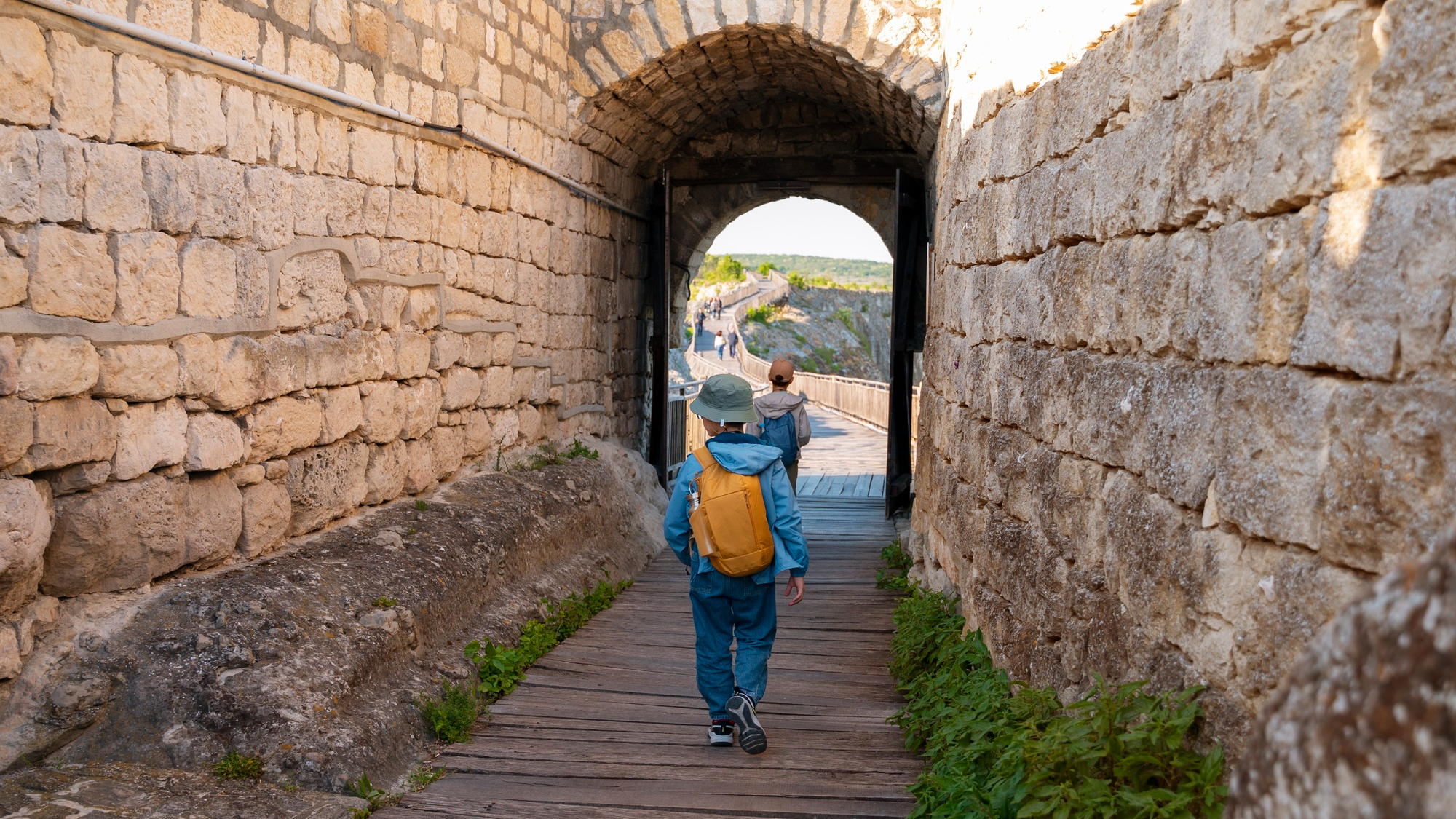
Avery had been afraid of doctors before she got sick.
Not the irrational kind of fear that is really just unfamiliarity, the kind that goes away after a few visits and a lollipop at the end. A considered fear, the kind that a child develops when she has observed something carefully and arrived at a conclusion.
She had broken her arm at six, at a birthday party, coming off a trampoline at exactly the wrong angle, and the emergency room had been loud and bright and full of strangers doing things to her that hurt even when they were trying to help.
She had remembered all of it.
She told me about it once, a year after it happened, unprompted, sitting at the kitchen table while I made dinner. She said: the worst part was that they didn’t ask. They just did things. Like I was a problem to solve instead of a person.
She was seven when she said this.
I had stood at the stove and thought: she is more articulate than I am about most things.
By the time she was diagnosed at eight, she had incorporated the fear into a kind of professional stoicism. She answered the doctors’ questions clearly and without embellishment. She held still for the things that required holding still. She thanked the nurses.
But in the car afterward, driving home, she was sometimes very quiet in a way that meant she was managing something she had not yet found words for.
I would drive and she would be quiet and eventually she would say something, or she would not, and we would go home and make dinner and the evening would proceed.
This was the rhythm of our life.
Before I tell you about the castle, I want to tell you about Avery.
She was small for her age, and she had brown hair that was thick and curly before the treatments and that grew back in a softer wave, as if the illness had changed the texture of things. She had my eyes, which were green in most light and gray in certain kinds of afternoon light, and she had her father’s nose, which was the kind of nose that children outgrow into but which on her looked like it had always been exactly right.
Her father James and I had separated when she was four. Not in a painful way, in the way of two people who had been wrong about something and who discovered this gradually and who had decided, when they understood the mistake, that kindness was still available to them.
James lived three hours away. He came for Avery every other weekend and he came for more than that when Avery was sick, which was most of the last two years. He sat in hospital waiting rooms without being asked. He drove through the night when there were nights that required someone to drive through.
He was a good father.
He was at work on the weekend of the castle because the timing had not accommodated his schedule and because Avery had wanted it to be just us.
Just mom, she said. It’s a mom thing.
I had not asked what she meant by a mom thing.
Some things you accept without definition.
The diagnosis was acute lymphoblastic leukemia.
The specific kind that is the most common childhood cancer and that has good survival rates in children and that Avery had nonetheless managed to have a version of that responded to initial treatment and then stopped responding and that had required a second protocol and that the second protocol had slowed but not stopped.
Her oncologist, Dr. Park, was a woman in her forties who had been doing this work for fifteen years and who had the specific quality of someone who has decided that the most important thing is honesty delivered with warmth.
She had sat across from me in December and said: we are running out of first-line options.
She had said: there are experimental protocols. There are clinical trials. There are things we have not tried.
She had said: but I want you to understand where we are.
I had understood.
Not completely. You don’t understand completely until you are there. But I had begun to understand, and the beginning was enough to change how I organized time.
I stopped saying maybe someday.
I started saying yes.
Pancakes for dinner on a Tuesday because Avery wanted pancakes and dinner is arbitrary.
Staying up past midnight watching the animated movies she had loved at six and that she wanted to watch again because she liked the way they felt.
Letting the dog sleep on the bed, which we had never done, and watching Avery’s face when the dog curled up beside her as if he had always slept there.
The castle happened because of a picture.
She had been doing something on my laptop, looking at something for a school project, a school she attended when she was well enough and did not attend when she wasn’t, and she had found a photograph.
She called me over.
She said: Mom, can we sleep in a real castle just once?
The photograph was of Ashfield Castle, which is in County Tipperary in Ireland and which is not the most famous castle in Ireland or the largest but which is the most fully realized as a hotel, which means it has kept its stones and its towers and its age and has added beds and heating and the specific human infrastructure required for people to sleep there comfortably while still feeling that they are sleeping in history.
I looked at the photograph.
I looked at the price.
I had part of my savings.
Not a large part, after two years of medical costs that insurance covered in varying amounts and then stopped covering and that I covered with the savings I had been building since Avery was born.
But there was enough.
I said: yes.
She stared at me.
She had been ready for negotiation.
She said: really?
I said: yes. Let’s book it.
She said: it’s in Ireland.
I said: yes.
She said: that’s a long way.
I said: yes.
She said: are we really going to go?
I said: yes. We are really going to go.
She was quiet for a moment.
Then she said: can we bring the fancy pajamas?
I said: we are absolutely bringing the fancy pajamas.
We had bought the fancy pajamas at a sale the previous Christmas, soft flannel with a pattern of small crowns on them, the kind of pajamas that are impractical for regular use and perfect for extraordinary occasions. They had been in the drawer waiting for an occasion.
This was the occasion.
Avery talked about the castle for weeks.
She talked about it the way she talked about things that mattered to her, with a specific focused enthusiasm that was different from ordinary excitement, that had a quality of the thing already being real in her mind, already inhabited in her imagination.
She talked about the towers.
She talked about the fact that real people had lived in it a long time ago, that the stones had been placed by hands that were now gone, that the place was older than the country it was in’s current form.
She was interested in the ancientness of it.
She said: do you think people slept in the same room we’re going to sleep in?
I said: I think other rooms. The room we’re in will be newer.
She said: but the stones are old.
I said: the stones are old.
She said: so the room is inside the old thing.
I said: yes.
She said: that’s enough.
I said: yes. I think it is.
We flew on a Friday afternoon.
Avery had flown before, several times, but the transatlantic flight was longer than anything she had done and she was tired before we got there, the specific bone-tired of someone whose body was using most of its energy for fighting rather than for other things.
But she had the window seat and she watched the clouds and she fell asleep against the window and when she woke as we were descending into Dublin she looked out at the green and said: it’s so green.
I said: it’s always green here.
She said: why?
I said: it rains constantly.
She said: oh.
She thought about this.
She said: I don’t mind rain.
The drive from Dublin to Tipperary was two and a half hours.
We took it slowly and stopped twice, once because Avery wanted to look at a field where cows were doing the specific cow thing of standing in a group near a stone wall looking satisfied, and once because there was a small town with a bakery that had a sign she found funny.
She photographed everything.
She had a small camera, a digital one I had bought her for her ninth birthday, and she used it with the specific purposeful attention of someone who understood that photographs were a way of keeping things.
She photographed the cows.
She photographed the bakery sign.
She photographed the road ahead of us from the passenger window, the long empty Irish road with the hedges on both sides and the sky above doing what Irish skies do, which is everything at once, sun and clouds and the suggestion of rain all present simultaneously.
She photographed her own hand against the window.
She photographed me from the side without telling me.
I found that photograph later.
I will get to that.
Ashfield Castle appeared in the late afternoon.
It appeared the way old things appear in landscapes, not suddenly but gradually, first as a shape that doesn’t quite fit the surroundings and then as something that explains itself, that has been there long enough to have generated the landscape around it rather than been placed in it.
Towers.
Gray stone.
A driveway of gravel that was old enough to have compressed into something almost solid.
Avery was tired.
She had been drooping for the last forty minutes.
And then she saw it.
Her whole face changed.
This is the only way to say it.
Her face, which had been the tired face of a ten-year-old who had been traveling all day, became the face of someone who is receiving something they have been imagining for a long time and who is discovering that the reality matches the imagining.
She said: Mom.
I said: yes.
She said: it’s real.
I said: yes.
She said: it’s actually real.
I said: it is.
She pressed her face against the window.
She said: I want to see everything.
We checked in.
The manager was a man named Cian, which he pronounced Keen, which Avery found interesting and asked him to explain.
He explained Irish pronunciation with the patience of someone who had explained it many times and who found the explaining itself pleasant.
She asked several follow-up questions about other Irish words.
He answered them with the specific willingness of someone who recognizes genuine curiosity and who does not want to cut it short.
I watched my daughter charm a castle manager in a foreign country with questions about linguistics and I thought: she is so much herself.
The room was on the third floor.
A stone staircase, spiral, with a wooden banister that was smooth from use.
Avery climbed it with her hand on the banister, slowly, and I walked beside her, and she did not say anything about the climbing being hard, which it was, and I did not mention it.
The room had a four-poster bed.
It had a window that looked out over the grounds, over the fields that extended toward a line of trees at the horizon.
It had a fireplace that was decorative rather than functional, but that had the specific presence of a fireplace, the carved stone and the memory of heat.
Avery walked to the window.
She looked out at the fields.
She said: can you imagine waking up here every morning?
I said: what would that feel like?
She said: safe.
She said: it would feel safe.
She said: because of the walls.
She said: the walls are so thick.
I said: yes. They are.
She said: if the walls are thick enough, nothing bad can get in.
I said: yes.
I sat on the bed.
She turned from the window.
She said: can we explore?
I said: let’s get dinner first.
She said: and then explore?
I said: and then explore.
The dining room was in the great hall, which was an actual great hall, with a ceiling that went up to the full height of the original structure and with stone walls that had been hung with tapestries and with the specific chill of a large stone room that no amount of central heating fully resolves.
Avery was wearing her fancy pajamas.
She had changed into them after dinner, in our room, and then decided she wanted to come back down.
I had said: you can’t go to dinner in your pajamas.
She had said: why not?
I had thought about this.
I had said: you’re absolutely right. Why not.
She wore the fancy pajamas to the exploration.
The small library at the end of our hallway was her favorite thing.
It was a room that had probably been a bedroom originally and that had been converted at some point in the castle’s history into a library, with shelves that went to the ceiling and with a ladder on a rail that slid along the shelves.
Avery rode the ladder.
She did this twice, pushing herself along the shelf rail with the specific delight of someone who has discovered something that adults have forgotten is wonderful.
The books were old.
Not rare, not priceless, but old in the way of books that have been in a place for a long time and that have absorbed the quality of the place, that smell like stone and time.
She took one down.
It was a natural history published in 1887.
She opened it to a page about birds.
She said: I didn’t know there were this many kinds of birds.
I said: neither did I.
She said: do you think the person who owned this read all of it?
I said: probably not all of it.
She said: but some.
I said: some.
She said: that’s enough.
She put it back carefully, in the exact place she had taken it from.
We found the painting on the staircase.
It was a portrait, oil, of a woman who appeared to be in her thirties, wearing the clothing of approximately two hundred years ago.
The woman had brown hair and green eyes.
Avery stood in front of it.
She said: she looks like you.
I looked at the painting.
The resemblance was not uncanny but it was there, in the coloring and in something about the expression.
I said: a little.
She said: do you think she was happy?
I said: what makes you ask that?
She said: her eyes.
She said: the eyes in paintings are usually doing something.
She said: hers look like she’s thinking about something else.
I said: what do you think she’s thinking about?
Avery considered this.
She said: I think she’s thinking about a person she loves who isn’t in the painting.
I said: who?
She said: someone who is somewhere else.
She said: and she’s waiting for them to come back.
We went back to the room.
We ate cookies in bed.
The castle had provided a small plate of shortbread with the turndown service and we ate them all.
We talked about the woman in the painting.
Avery decided her name was Catherine and that she had a brother who was a sea captain and that she was waiting for him to return from a voyage and that he did return, eventually, and that she was very glad.
I said: do you think they were close? Catherine and her brother?
She said: yes.
She said: the kind of close where you don’t have to explain yourself.
I said: what do you mean?
She said: where the other person just knows.
She said: you don’t have to say: I’m scared, or I’m happy, or I miss you.
She said: they just know.
I said: yes.
I said: I know that kind of close.
She said: yes.
She said: me too.
She said it simply.
Without looking at me.
She was eating the last cookie.
I said: with who?
She said: you.
She said: and Dad.
She said: and sometimes with my friend Maya.
She said: but mostly you.
I held her against my side.
She did not say anything else about this.
We talked about other things.
We talked about the fields she had seen from the window and whether there were sheep in them.
We talked about the ladder in the library and whether we could find one like that at home.
We talked about Irish pronunciation and whether the name Siobhan really sounded like Shi-vawn and why.
The clock on the wall showed eleven-thirty.
Then eleven forty-five.
She started to fall asleep.
Her breathing changed.
Her weight against my side increased slightly.
I turned off the lamp.
The room was dark except for the glow of the fire-shaped lights in the fireplace and the slice of moonlight through the window.
I lay there beside her.
At midnight there was a knock at the door.
It was soft. Not urgent.
The kind of knock that knows it is late and apologizes in its rhythm.
Avery was awake immediately, the way sick children often wake, from very deep sleep to full alertness with nothing in between.
She said: who would knock this late?
I said: I don’t know.
I went to the door.
Cian, the manager, was standing in the hallway.
He was wearing his jacket still, which meant he had not yet finished his shift or had come back for something.
He was holding an envelope.
A cream-colored envelope, the kind that is slightly heavier than ordinary paper, the kind that communicates seriousness through its material.
My full name was written on the front in handwriting I did not recognize.
He said: ma’am. I was told to give you this only after midnight.
I said: told by whom?
He said: I don’t know, ma’am. It was left with instructions for tonight.
I said: when?
He said: it was here when I came in this morning. In an envelope with my name and instructions to deliver it to your room after midnight. The instructions said to give it only to you and only after midnight.
He said: I don’t know who left it. It was on the front desk when the morning staff arrived.
I took the envelope.
I closed the door.
Avery was sitting up in bed.
She said: open it, Mom.
I sat on the edge of the bed.
I turned the envelope over.
It was sealed with a wax seal, which was not something I had seen outside of period dramas, a circle of dark red wax with a pressed design.
I broke the seal.
I unfolded the letter.
Halfway through the first paragraph, my hands began to shake.
I will not reproduce the letter in full.
Some of it is private in the way that certain words are private to the person who was meant to receive them, that would lose their specific weight in the retelling.
But I will tell you what it was and where it came from.
The letter was from James.
From Avery’s father.
He had written it six weeks before our trip.
He had called the castle, had explained the situation, had asked whether they would hold the letter and deliver it on the specific evening of our stay.
They had said yes.
Because this was the kind of thing that the people who ran that castle apparently did for guests, the kind of extra human thing that old places accumulate in their staff along with the knowledge of their history.
James had written the letter by hand because he felt, he said in the letter, that typed words were not sufficient for this.
He said: I know you didn’t want me on this trip. I know this was your time with her. I am not trying to intrude on it. I wanted to be part of it in the only way I could without being there.
He said: I have been thinking about what I want Avery to know. Not just know in her head but carry with her. And I have been trying to find a way to tell her things that will not be weighted by all the impossible feelings we both have right now.
He said: so I am writing you a letter instead. To hold for her, or to read to her, or to keep, as you think is right.
He said: please tell her that her father sat at the kitchen table for three evenings trying to write this and that none of the drafts were good enough and that this one is not good enough either but it is the best I can do.
He said: please tell her that the specific way she laughs, where she tilts her head slightly to the left and closes her eyes for a second, is the most beautiful thing I have ever seen in my life.
He said: please tell her that when she was three and she got her first bike and she rode it to the end of the driveway and turned around and came back and her face had the expression of someone who has understood something new about the world, I had to go inside for a minute because I did not want her to see me cry in case she thought something was wrong.
He said: please tell her that she was never wrong. Not about any of the things she worried about being wrong about. She was never too loud. She was never too much. She was never the wrong kind of kid. She was exactly right and she should know that.
He said: please tell her that the years of her life are the most important thing that has ever happened to me. Not despite the hard parts. Including the hard parts. The whole of her, from the beginning to now, is what I will carry for the rest of my life.
He said: please tell her that someday she may need to know that her father loved her father’s love for her more than he loved anything else in his life. That it was the best version of himself he was ever capable of.
He said: please tell her that in the last two years I have watched her be braver than I knew it was possible for a person to be. And that brave is not the same as unafraid. She has been afraid. I have held her when she was afraid. Brave means doing the thing anyway.
He said: please tell her that I hope she is wearing the fancy pajamas.
I stopped reading.
I looked at Avery.
She was watching me.
She said: Mom.
I said: yes.
She said: what does it say?
I said: it’s from your father.
She went very still.
She said: what?
I said: he had the castle keep it for tonight.
She said: how did he?
I said: he called them.
She said: when?
I said: six weeks ago.
She said: he planned it.
I said: yes.
She said: can you read it to me?
I said: yes.
I started from the beginning.
I read it slowly.
My voice held for most of it.
By the part about the bike, I was not entirely holding it, but I kept reading.
By the part about the years of her life, I was reading in a voice that was wet and unsteady but that kept going.
When I finished, the room was quiet.
Avery said: he said the fancy pajamas.
I said: yes.
She said: how did he know about the fancy pajamas?
I said: I think I told him.
She said: when?
I said: a few weeks ago. When we were packing.
She said: and he remembered.
I said: yes.
She was quiet.
Then she said: he was thinking about me. Weeks ago. When I wasn’t even there.
I said: yes.
She said: and he couldn’t come. But he was thinking about me.
I said: yes.
She said: and he found a way.
I said: yes.
She said: to be here without being here.
I said: yes.
She said: that’s really smart.
I said: yes.
She said: Dad is sometimes really smart.
I said: yes. He is.
She said: the thing about the bike.
I said: yes.
She said: I remember that day.
I said: yes.
She said: I didn’t know he went inside.
I said: no.
She said: I thought he was watching.
I said: he was watching until he couldn’t.
She said: because of the crying.
I said: because of the crying.
She said: I do that too.
I said: I know.
She said: when something is too good.
I said: yes.
She said: it’s like too much happiness.
She said: it has to go somewhere.
I said: yes.
She was quiet again.
She said: Mom.
I said: yes.
She said: can I hold the letter?
I gave her the letter.
She held it.
She did not read it again.
She just held it, the specific way of holding something that is not valuable for what it says but for what it is, for being a physical object that was touched by a person you love.
She said: his handwriting.
I said: yes.
She said: it’s messy.
I said: it is.
She said: he always wrote in messy cursive.
I said: always.
She said: I like it.
She held the letter and she lay back on the pillow.
She said: Mom.
I said: yes.
She said: I’m really glad we came.
I said: yes.
She said: to the castle.
I said: yes.
She said: I’m glad we did the maybe someday thing.
I said: the not maybe someday thing.
She said: yes.
She said: just the now thing.
I said: yes.
She said: I want to keep doing that.
I said: yes.
She said: not just for the big things.
She said: I want to do it for the small ones too.
I said: yes.
She said: pancakes for dinner.
I said: yes.
She said: staying up late.
I said: yes.
She said: the dog on the bed.
I said: yes.
She said: that stuff matters.
I said: it does.
She said: I think that’s what life is.
She said: not the big things.
She said: the things you do because you want to. Even when it’s a little late or a little expensive or a little not-practical.
She said: the yes things.
I said: yes.
She said: that’s a good thing to know.
She said: I know lots of people don’t know that.
I said: you’re right.
She said: they keep saying maybe someday.
I said: yes.
She said: and then someday doesn’t come.
I said: yes.
She was quiet.
She said: I’m tired.
I said: yes.
She said: will you stay with me while I fall asleep?
I said: always.
She settled.
I lay beside her.
She held the letter against her chest.
Outside the window, the Irish countryside was doing what Irish countryside does at night, which is to be absolutely still in a way that cities never are, the specific stillness of old land at rest.
I listened to her breathing change.
I thought about James at the kitchen table for three evenings.
I thought about three drafts.
I thought about a man who could not be there finding the one way to be there that did not require his presence.
I thought about the morning staff arriving at the front desk and finding the envelope.
I thought about Cian keeping it through a full day, waiting for midnight.
I thought about all the ways that people reach toward the people they love when the ordinary ways are not available.
Avery was asleep.
I lay still.
The letter was still against her chest.
I thought about the woman in the painting, Catherine, whose name Avery had given her, waiting for a brother at sea.
I thought about what Avery had said.
The kind of close where you don’t have to explain yourself.
I thought about the photograph she had taken of me from the side, which I would find on her camera three months later, after everything, and which I would look at for a long time.
In the photograph I am driving on the Irish road.
My hands are on the wheel.
I am looking at the road ahead.
My expression is the expression of someone who is completely present in a moment, who is not anywhere else, who is just here, in this specific light, on this specific road, with this specific person.
I do not look worried.
I look the way I hope I look when I am with her.
She had taken it without telling me.
She had kept it.
There is a thing that happens in grief, in the middle part of it, that nobody prepares you for, which is that the missing becomes so specific that it has its own texture.
Not the general sadness of absence, which is there too.
But the specific missing of this thing: the way she held the letter against her chest while she fell asleep.
The way she said the yes things.
The way she tilted her head slightly to the left when she laughed and closed her eyes for a second.
That was James’s detail.
He was right about it.
The yes things became what I called them after.
The pancakes for dinner things.
The stay up late things.
The dog on the bed things.
The rent the room in the castle and go now things.
The thing you do because you want to, even when it is a little late or a little expensive or a little not-practical.
The things that are actually life.
I started saying yes to them.
Not because I had made a rule.
Because Avery was right.
She had been right about a great many things.
She had been right about the walls.
If they are thick enough, she said, nothing bad can get in.
She said it about the castle.
She meant something larger.
The thick walls of love, of yes, of the things you do now rather than later, of the letters written at kitchen tables over three evenings and delivered at midnight by a manager who understood that this was what the job sometimes required.
The thick walls of showing up in whatever way you can.
Those walls hold.
They hold longer than anything.
They hold after everything.
I have the letter.
I have the photograph.
I have the blue camera with the images on it, the cows and the bakery sign and the Irish road and the hand against the window and my face in profile in the afternoon light.
I have the fancy pajamas with the small crowns.
I have three months of evenings after the castle that were full of yes things.
I have the conversation we had on that last drive, which I will not repeat here because some conversations are private, and I have her hand in mine for the last part of it.
I have everything she left behind, which is quite a lot.
More than I expected.
More than I knew was possible.
She was ten years old and she slept in a castle in Ireland in fancy pajamas and she held her father’s letter against her chest and she said the yes things and that is enough.
It is more than enough.
It is the whole thing.

Adrian Hawthorne is a celebrated author and dedicated archivist who finds inspiration in the hidden stories of the past. Educated at Oxford, he now works at the National Archives, where preserving history fuels his evocative writing. Balancing archival precision with creative storytelling, Adrian founded the Hawthorne Institute of Literary Arts to mentor emerging writers and honor the timeless art of narrative.