The winter I was nine years old, an ice storm came across the Texas Hill Country and took down a quarter mile of our fence in one night.
I remember waking up at four in the morning to a sound like gunshots. Sharp cracks, one after another, out in the dark. I ran to my bedroom window. Everything outside was glass. The live oaks. The mesquite. The power lines. Every branch was coated in ice so thick it glowed under the porch light.
And the branches were breaking. One after another. Crack. Crack. Crack. Falling under the weight.
Dad was already in the kitchen when I came down. Pulling on his canvas coat. His work gloves. His old brown hat with the sweat stain around the band.
“Where are you going?” I asked.
“North pasture,” he said. “Big oak came down across the fence line. Heard it go. Cattle’ll be on the county road by daylight if somebody doesn’t get out there.”
“Can I come?”
He looked at me. Nine years old. In my pajamas and my socks.
“It’s cold, Jake,” he said. “Colder than you’ve ever been.”
“I don’t care.”
He looked at me for a long moment. Then he took my coat off the hook by the door and held it out.
It was colder than I’d ever been. He was right.
We drove out in the old Ford with the heater blasting and the windshield wipers scraping ice. When we got to the north pasture, the headlights showed a giant live oak lying on its side across the fence. Crushed it flat. Barbed wire tangled in the branches. Fence posts snapped like toothpicks.
And beyond it, standing in a frozen huddle, our whole herd. Forty-two head of cattle. Steam coming off their backs. Looking at the open gap like they were thinking about it.
Dad got out of the truck. I got out after him.
We worked for four hours. In the dark and then in the gray morning. Dad cut the branches with his chainsaw. I dragged them out of the way. My hands went numb inside my gloves. Then they stopped hurting. Then they started hurting again, worse.
We set new posts. We strung new wire. Dad showed me how to stretch it tight with the come-along. How to wrap it around the post three times and tie it off. How to check it by plucking it like a guitar string.
“Hear that?” he said. He plucked the wire. It sang. A high, clean note. “That’s a good fence. If it thuds, it’s loose. If it sings, it’ll hold.”
By the time the sun came up over the ridge, the fence was singing.
We sat on the tailgate of the truck and drank coffee out of a thermos. Dad let me have some. It was terrible. I drank it anyway.
He looked out over the pasture. The ice was starting to melt in the sun. Everything was dripping. Sparkling. The cattle had wandered off toward the stock tank.
“You know what my dad told me,” he said, “the first time he brought me out to fix a fence?”
“What?”
“He said, Hank, you don’t own land. Nobody owns land. You just keep it for a while. And the only question that matters is what shape it’s in when you hand it to the next person.“
I didn’t understand. I was nine.
“So who are you keeping it for?” I asked.
Dad looked at me. Then he looked back toward the house. Toward the kitchen window. Where my sister, Clare, twelve years old, was standing in her bathrobe. Watching us. Holding two mugs of something.
“For both of you,” Dad said. “For whoever wants it.”
Clare came out a minute later. In her bathrobe and her rain boots. Shivering. She walked all the way across the icy yard to the truck. She held out the mugs.
“Mom made cocoa,” she said. “She said you’d be frozen.”
She handed one to Dad and one to me. Then she looked at the fence. At the new posts. At the wire.
“Does it sing?” she asked.
Dad smiled. He reached over and plucked it.
It sang.
Clare listened. Then she turned around and walked back to the house without saying anything else.
I didn’t understand that either. Not for twenty years.
My name is Jacob Calloway. I’m twenty-nine years old.
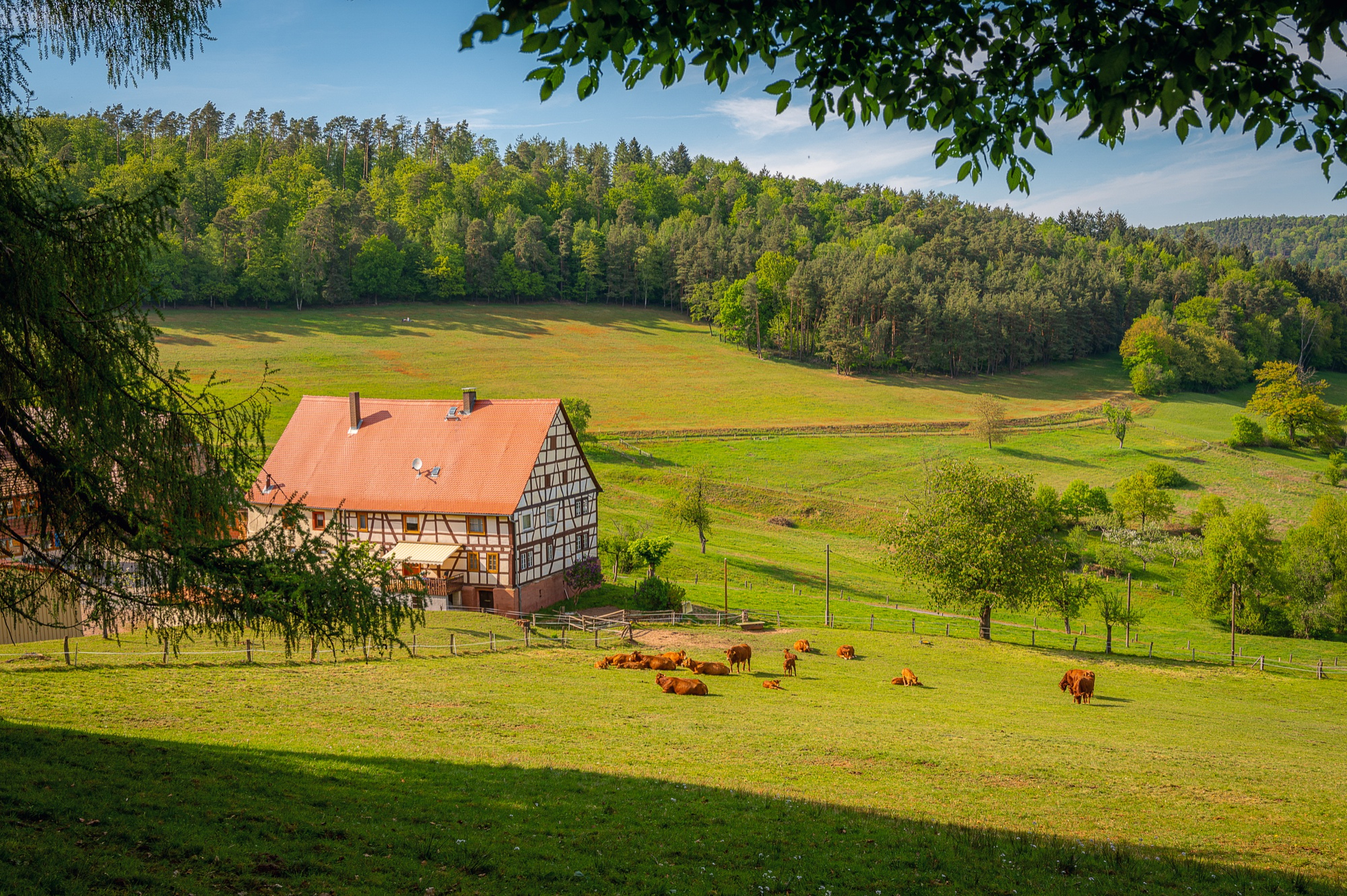
My parents were Hank and Marianne Calloway. They owned eighty acres outside of Fredericksburg, Texas. Rolling hills. Live oaks. A creek that runs most of the year. A white limestone farmhouse my great-grandfather built in 1924, with a wide front porch and a tin roof that sounds like applause when it rains.
It isn’t a big ranch. Not by Texas standards. Forty or fifty head of cattle. A few horses. Some hay. My parents never made a lot of money. Dad worked the ranch and drove a feed truck for the co-op three days a week. Mom taught fourth grade at the elementary school in town for thirty-two years.
But the land was worth a lot. More every year. Fredericksburg turned into a wine-country weekend town while I was growing up. People from Austin and San Antonio started buying up ranches and turning them into vineyards and wedding venues and subdivisions with names like Vista Ridge Estates.
By the time my parents died, our eighty acres were appraised at $1.2 million.
To everybody else, that was a number.
To me, it was home.
Clare is three years older than me.
She was always the smart one. Straight A’s. Debate team. Valedictorian. She left for the University of Texas at eighteen and never really came back. Law school at Baylor. A job at a big firm in Dallas. A condo with a view of downtown.

Adrian Hawthorne is a celebrated author and dedicated archivist who finds inspiration in the hidden stories of the past. Educated at Oxford, he now works at the National Archives, where preserving history fuels his evocative writing. Balancing archival precision with creative storytelling, Adrian founded the Hawthorne Institute of Literary Arts to mentor emerging writers and honor the timeless art of narrative.