He came the next morning. In his old Chevy pickup. Seventy-four years old. Moving slow.
I sat him down at the kitchen table. The same table where Dad signed the easement.
I showed him everything.
My green notebook. The notices addressed to Tenant. The photographs of Bryce measuring the counters. The forged deed from the county records, with my signature that wasn’t my signature.
Then I played him the recording from the barn.
“Once we control the property, we can sell it for several times what it’s worth now. We just need Jacob to cooperate. Or not.”
“Four point five. Maybe five, if we close fast.”
“My brother has been feeding cows since he was nine years old. He’ll be gone by spring.”
Uncle Walt sat very still.
“Lone Star Ridge,” he said quietly. “They’re the ones who did the Lindner place.”
“Yes, sir.”
Then I showed him my phone. The text messages. All of them. Every single one between me and Clare for the last three years.
Not the ones she showed him. The real ones. Unedited.
Clare, Mom’s asking for you. Can you come this weekend?
Clare, she’s getting worse. The doctor says it might be days.
Clare, please come. She keeps saying your name.
Clare, Dad’s in the hospital. Heart. Please call me.
Clare, he’s asking for you. Can you get here tonight?
And Clare’s replies.
Can’t this weekend. Big trial.
I’ll try to come next week.
Work is insane. Tell her I love her.
I’m in depositions all week. I’ll call him.
She came to the hospital twice in the last six months of Mom’s life. She came to Dad’s bedside once, the day before he died. She stayed for forty minutes.
Uncle Walt read every message. All of them. Scrolling slowly with one finger. His reading glasses on the end of his nose.
When he got to the end, he took off his glasses. He set them on the table.
He put his face in his hands.
“She showed me screenshots,” he said. “Of you. Telling her not to come. Don’t bother coming, Clare. They don’t need you.” He looked up at me. “You never wrote that. Did you.”
“No, sir.”
“She made them,” Uncle Walt said. “Or edited them. Or… I don’t know. I don’t know what she did.” He looked at the phone. “She keeps saying your name. Marianne kept saying Clare’s name. And Clare was in depositions.”
He sat at my parents’ kitchen table and cried. Seventy-four years old. A deacon. The most honest man I knew.
“I signed an affidavit,” he said. “Under oath. Saying you kept them from her. When it was the other way around. When you were begging her to come.”
“You didn’t know,” I said.
“I should’ve asked you,” Uncle Walt said. “I should’ve picked up the phone and asked you. I’ve known you since you were born. I let her tell me who you were.” He wiped his eyes. “What do you need, Jake? Tell me. Whatever it is.”
On Friday morning, at eight-thirty, I walked down to the gate.
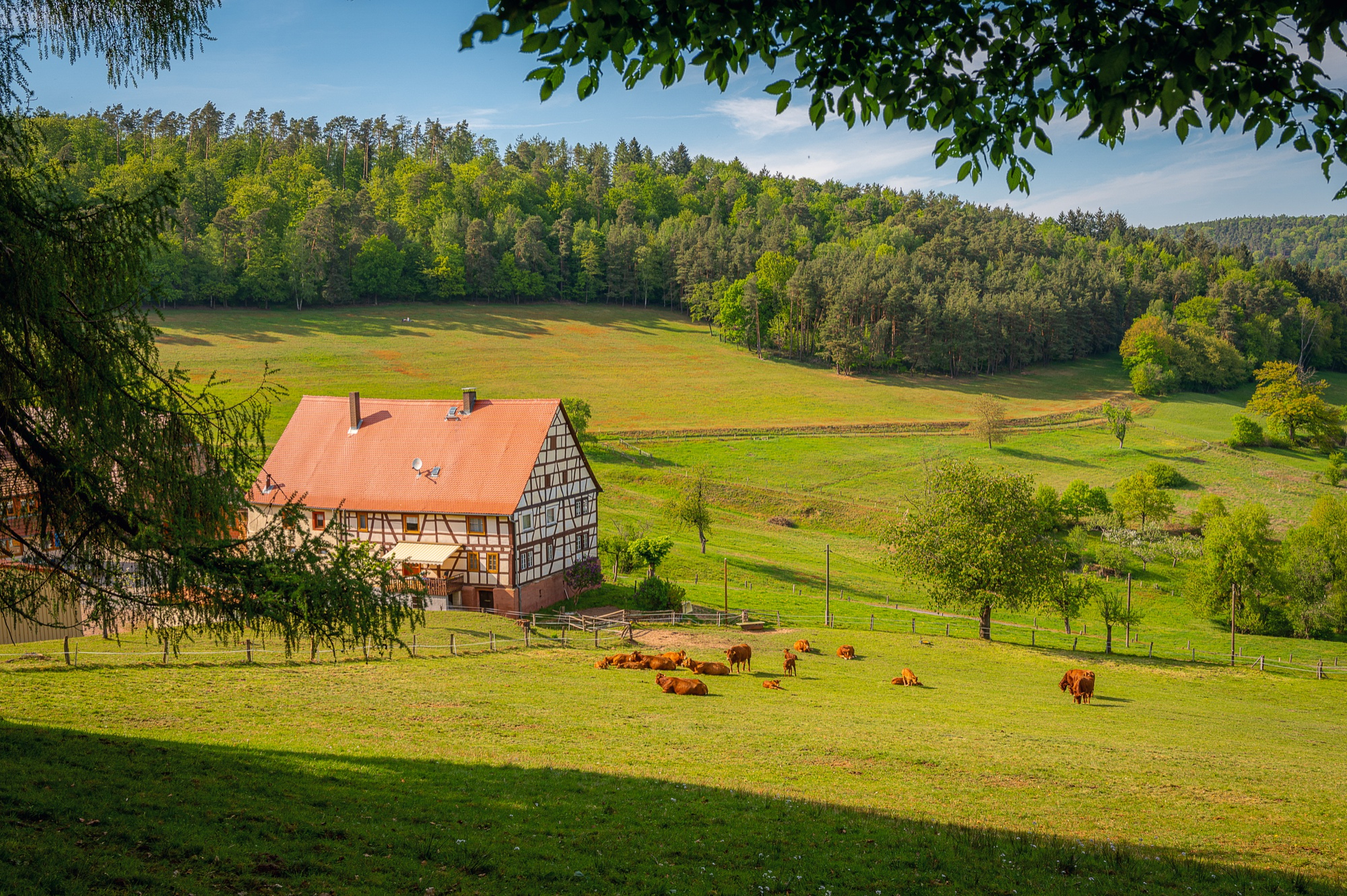
It was cold. Clear. The sun was just coming up over the ridge. Frost on the pasture. My breath came out in clouds.
I closed the gate. I locked it with the big chain Dad used to use during calving season.
Then I waited.
At eight-forty-five, a white county pickup came up the road. Deputy Hector Salinas from the Gillespie County Sheriff’s Office. I went to high school with his older brother. He got out. He tipped his hat. He stood beside me at the gate.
At eight-fifty, a gray Subaru pulled up. Nadia Brooks got out. In a navy blue suit and cowboy boots. Carrying a leather briefcase so full it wouldn’t close all the way.
At eight-fifty-two, a muddy green Jeep. Delia Marsh from the Land Conservancy. Gray braid. Canvas vest. A thick folder under her arm.
At eight-fifty-five, an old Chevy pickup. Uncle Walt got out. In his church clothes. His good jacket. His string tie. He was carrying a manila envelope.
He came and stood next to me at the gate. He didn’t say anything. He just put his hand on my shoulder. The way he did at the funerals.
At nine o’clock exactly, the moving trucks came up the road.
Two white trucks. Dallas Premier Movers. Then Clare’s silver Range Rover. Then Bryce’s black pickup. Then a black BMW. Martin Gage, the attorney.
And behind the BMW, one more car I didn’t expect. A white Lexus SUV. With a LONE STAR RIDGE PARTNERS magnet on the door.
The trucks stopped at the closed gate. The drivers honked.
Clare got out of the Range Rover. She was smiling. Carrying her folder. Wearing sunglasses and a camel-colored coat.
“Open the gate, Jacob,” she called. “It’s Friday.”
Then she saw who was standing at the gate with me.
I watched her face. I watched her see the deputy first. Then Nadia in her navy suit. Then Delia Marsh with her gray braid and her canvas vest and the Land Conservancy logo on her chest.
Then Uncle Walt. In his church clothes. With his hand on my shoulder.
She stopped walking.
All the confidence vanished from her face.
“Uncle Walt?” she said. “What are you doing here?”
Uncle Walt didn’t answer her. He stepped forward. He held out the manila envelope.
Not to Clare. To Martin Gage. Her attorney. Who’d gotten out of the BMW and was walking up behind her.
“Mr. Gage,” Uncle Walt said. His voice was steady. “I’m Walter Hutchins. I signed an affidavit in your client’s case. I’m withdrawing it. This is a sworn statement saying so. And another one, saying why.” He looked at Clare. “I was lied to. I was shown text messages that weren’t real. I swore to things that weren’t true. I’ll say so in front of any judge in Texas.”
Martin Gage took the envelope. He looked at Clare.
Clare’s face had gone white.
“Uncle Walt,” she said. “You don’t understand—”
“I understand fine, Clare,” Uncle Walt said quietly. “I read Jake’s phone. All of it. She keeps saying your name. Your mother said your name, Clare. Over and over. At the end. And you were in depositions.”
Clare didn’t say anything.
“Travis and Lacey are withdrawing theirs too,” Uncle Walt said. “I called them last night. They didn’t know either. They’re sick about it.” He shook his head. “Ernie’s still thinking. Ernie always takes a while.”
Nadia stepped forward.
“Mr. Gage,” she said. Pleasant. Professional. “Nadia Brooks. I represent Mr. Calloway and Calloway Creek Ranch, LLC. I’ve got a few things for you too.”
She opened her briefcase.
“First,” she said. She handed him a document. “A certified copy of the deed transferring this property from Jacob Calloway individually into Calloway Creek Ranch, LLC. Recorded on September eighth.”
Martin Gage took it. He read it.
“Second.” Another document. “A certified copy of the quitclaim deed your client recorded on October second. Purporting to transfer the property from Jacob Calloway individually to Clare Calloway.” Nadia smiled slightly. “Please note the dates, counselor. Mr. Calloway didn’t own this property on October second. The LLC did. An individual can’t quitclaim land he doesn’t own. That deed transferred nothing. It’s void.”
Martin Gage looked at the two dates. His jaw tightened.
“Third,” Nadia said. “A sworn affidavit from Mr. Calloway stating that he never signed that quitclaim deed, along with a handwriting comparison from a certified forensic document examiner in Austin. It’s not his signature.” She handed it over. “We’ve also identified the notary in Dallas whose seal is on the document. She’s a paralegal at your client’s former firm. Mr. Calloway has never been to Dallas in his life. The district attorney’s office has a copy. They’re very interested.”
Clare made a sound.
“Fourth,” Nadia said. She held up a small black flash drive. “An audio recording made by Mr. Calloway, lawfully, on his own property, on November ninth. In which your client discusses with representatives of Lone Star Ridge Partners her plan to gain control of this ranch and sell it for residential development for five million dollars. Also in which she predicts her brother will be, quote, gone by spring.“
Behind us, the door of the white Lexus SUV opened. A man in a Lone Star Ridge polo shirt started to get out. He heard five million dollars. He got back in. He closed the door.
“And fifth,” Nadia said.
She stepped aside.
Delia Marsh came forward with her thick folder.
“Ms. Calloway,” Delia said. Very gently. “I’m Delia Marsh. Executive director of the Hill Country Land Conservancy. I knew your parents.”
Clare stared at her.
“Two years ago,” Delia said, “your father placed a perpetual conservation easement on this property. With our organization. It’s recorded with Gillespie County. Book 1144, page 302.” She opened her folder. She held up a document. With Dad’s signature at the bottom. And mine, as witness. “It permanently prohibits subdivision, residential development, or commercial development of this land. It runs with the deed. It binds every future owner. Forever.”
Clare’s lips parted. Nothing came out.
“There will never be a subdivision here,” Delia said. “Not a hundred and forty lots. Not one. No matter who owns it. Your father made sure of that.” She paused. “He sat at that kitchen table and signed it four months after your mother died. He told me why. He said, My wife watched those fields every morning for forty years. Nobody’s going to put a house in her view.“
Delia closed the folder.
“It was recorded publicly,” she said. “Anyone could have found it. Any title search would have shown it.” She looked at Clare. “I’m surprised your developer friends didn’t pull one before they offered you five million dollars.”
Behind us, the white Lexus SUV with the LONE STAR RIDGE PARTNERS magnet started its engine. It backed up. It turned around on the county road.
It drove away.
Clare didn’t move. She stood in front of the locked gate in her camel coat, holding her folder, staring at Dad’s signature on Delia’s document.
“I didn’t know,” she whispered. “He never told me.”
“He told me not to,” I said.
She looked up at me.
“He said you’d hate it,” I said. “He said, Your sister sees what this place is worth. You see what it is. He said, Don’t tell her unless you have to.” I looked at the moving trucks behind her. At the boxes she’d left on my porch. “I guess I have to.”
Martin Gage cleared his throat.
He’d been reading. All of it. The LLC deed. The void quitclaim. The handwriting analysis. The notary. Uncle Walt’s withdrawal.
He looked at Clare.
“Ms. Calloway,” he said quietly. “May I speak with you privately?”
“No,” Clare said. “Whatever you have to say, say it.”
Martin Gage hesitated. Then he said it.
“The will contains a no-contest clause,” he said. “You’re aware of that.”
“Yes.”
“By filing this petition,” Martin Gage said, “you’ve contested the will. Under Texas law, a no-contest clause is enforceable unless the contest was brought with probable cause and in good faith.” He looked at the stack of papers in his hand. The forged deed. The fabricated text messages. The recording. “I don’t see how any court will find good faith here, Ms. Calloway. Not with this.”
Clare didn’t say anything.
“If the court enforces the clause,” Martin Gage said carefully, “you forfeit your entire share of the estate.”
“The four hundred thousand,” I said quietly.
“The savings,” Nadia said. “The retirement account. The pension benefit. The life insurance. And the Kerrville land. All of it.” She looked at Clare. “It would pass under the will as if you’d predeceased your parents. Which means it would go to the other beneficiary.”
To me.
“And that’s before the criminal referral,” Nadia added. “For the forged deed.”
Clare’s knees buckled.
She didn’t fall. Not quite. She caught herself on the iron bars of the gate. She held on with both hands.
Bryce had been standing by his black pickup the whole time. Leaning against it. Watching.
He straightened up.
“Clare,” he said. “Get in the truck.”
She didn’t move.
“Clare,” he said again. Sharper. “Get in the truck. We’re leaving. Gage can handle this.”
She turned her head and looked at him.
“You said you’d checked,” she said. “You said you’d pulled the title. You said Lone Star had pulled it. You said everything was clean.”
Bryce didn’t answer.
“You said,” Clare said, louder now, “that if I just got the deed in my name, you’d handle the rest. You said this was how it worked. You said Jake was a cowboy who wouldn’t know how to fight back.”
Bryce looked at the deputy. At Nadia. At Delia Marsh. At Uncle Walt.
He looked at Clare.
“I’ll call you,” he said.
He got in his black pickup. He backed up. He turned around on the county road.
He drove away. Just like the Lexus.
The moving truck drivers looked at each other.
“Ma’am?” one of them said. “Do you still want us to…”
“No,” Clare said. She didn’t look at them. “No. Go home.”
The trucks left. Martin Gage left. Deputy Salinas tipped his hat to me, gave Clare a long look, and left. Delia Marsh hugged me and said she’d call me next week about the annual monitoring visit. She left.
Nadia stayed by her car. On the phone. Giving me space.
Uncle Walt stayed beside me. His hand still on my shoulder.
Clare stood at the gate. Holding the bars. Not moving.
The sun was all the way up now. The frost on the pasture was melting. Everything was dripping. Sparkling.
Like the morning after the ice storm.
“Jake,” Uncle Walt said quietly. “Open the gate.”
I looked at him.
“She’s your sister,” he said. “She did a terrible thing. Several terrible things. And there’s going to be consequences. A lot of them.” He squeezed my shoulder. “But she’s standing at your parents’ gate on a cold morning. And your daddy never once in his life left anybody standing at that gate in the cold.”
I took the key out of my pocket.
I unlocked the chain.
I pulled the gate open.
Clare didn’t come in right away.
She stood there in the open gateway. Looking up the gravel drive at the house. At the white limestone walls. At the tin roof. At Dad’s chair on the porch, surrounded by her flattened moving boxes.
“I used to stand at the kitchen window,” she said. Very quietly. “Every morning. When you and Dad went out to feed.”
I didn’t say anything.
“I used to watch you,” she said. “The two of you. Walking out to the barn in the dark. Talking. Laughing. Him showing you things. How to check a hoof. How to fix a fence. How to tell if it’s going to rain.” She swallowed. “He never showed me any of it.”
“You never wanted to go,” I said.
“Nobody ever asked me,” Clare said.
She looked at me.
“He asked you,” she said. “Every single morning. Jake, you coming? And you’d go. And I’d stand at the window and hold Mom’s cocoa and watch.” Her voice cracked. “And then one day, I thought, fine. If he doesn’t need me here, I’ll go somewhere that does. And I left. And I got good at something he didn’t understand. And he didn’t come to my law school graduation because it was calving season.”
I remembered. Dad was so sorry. He called her from the barn at midnight with a heifer in labor and said he was sorry.
“Mom came,” Clare said. “Mom came by herself. She sat in the third row by herself. And when they called my name, I looked out and there was this empty seat next to her.” She wiped her face. “I’ve been looking at that empty seat for nine years, Jake.”
We sat on the porch steps. Not in the chairs. On the steps. Like we used to when we were kids, waiting for the school bus.
Uncle Walt went inside to make coffee. He knew where everything was.
“I’m in debt,” Clare said. Looking at the pasture. “A lot. Bryce’s company went under last spring. He’d borrowed against everything. My condo. My retirement. He said Lone Star would make it all back. He said all I had to do was get the ranch.”
“Did you love him?”
She laughed. It came out broken.
“I thought he saw me,” she said. “That’s the stupid part. He was the first man who looked at me like I was worth something. Like I was smart and tough and could do anything.” She shook her head. “Turns out he was just looking at what I could get him.”
I didn’t say anything.
“I forged your signature,” she said. “I made those text messages. I lied to Uncle Walt. I recorded you on the worst day of your year and used it against you.” She closed her eyes. “I don’t know who that person is, Jake. I don’t know when I turned into her.”
“I think,” I said slowly, “it was when you stopped asking.”
She looked at me.
“Asking what?”
“Anything,” I said. “You never asked me what happened to Mom at the end. You never asked what Dad said before he died. You never asked what the ranch actually needed. You never asked why I’d move it into an LLC.” I looked at her. “You never asked if there was anything on the deed you didn’t know about. You just decided you already knew. About everything. About me. About Dad. About this land.”
Clare was quiet for a long time.
“Dad never asked me either,” she said. “If I wanted to come feed.”
“I know,” I said. “He told me that. Near the end.”
She turned and stared at me.
I went inside.
I came back with an envelope.
It was in Dad’s desk. In the top drawer. With his reading glasses and his cattle records. I’d found it three days after his funeral. It had her name on the front. In Dad’s handwriting.
Clare.
I’d never opened it. It wasn’t mine to open.
I’d been planning to give it to her at Thanksgiving. Then she cornered me in the kitchen. You’ll be gone by spring. And I put it back in the drawer.
I held it out to her.
“He left you this,” I said. “I should’ve given it to you a year ago. I’m sorry.”
She stared at her name in our father’s handwriting.
She took it. Her hands were shaking.
She opened it. She read it to herself.
Then she put it down in her lap and cried. Harder than I’d ever seen her cry. Harder than at either funeral.
She held it out to me.
“Read it,” she said. “I can’t.”

Adrian Hawthorne is a celebrated author and dedicated archivist who finds inspiration in the hidden stories of the past. Educated at Oxford, he now works at the National Archives, where preserving history fuels his evocative writing. Balancing archival precision with creative storytelling, Adrian founded the Hawthorne Institute of Literary Arts to mentor emerging writers and honor the timeless art of narrative.