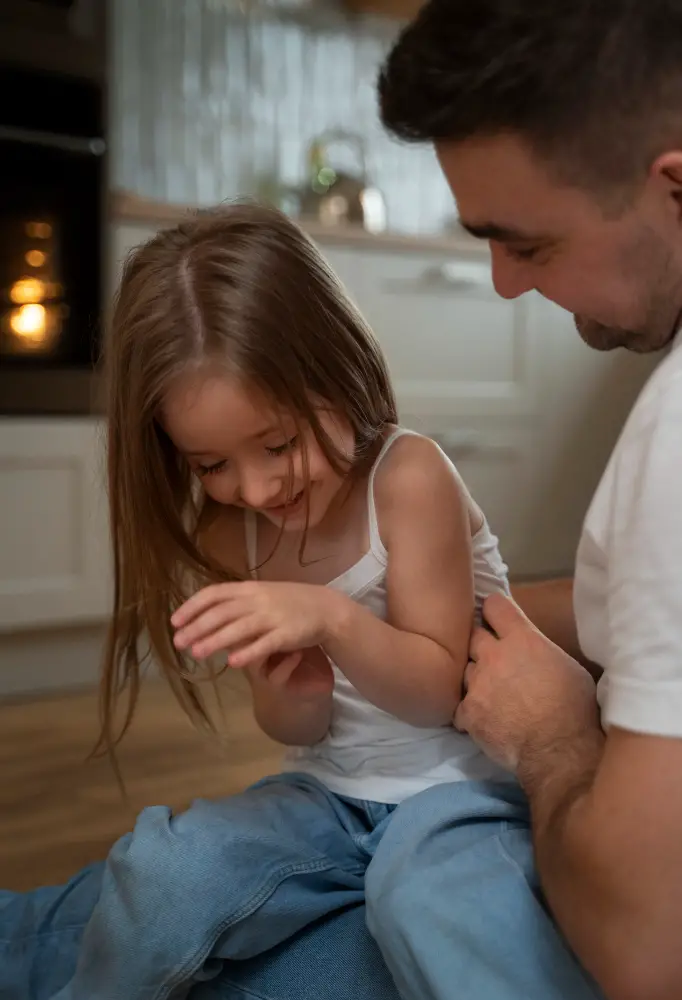
Weeks passed. The twins grew stronger. The mother’s steps became steadier. The house filled again with ordinary noises: bottles being washed, laundry running, someone looking for a missing sock, a baby protesting a diaper change, the older girl asking for a snack five minutes after saying she was full.
Those noises mattered more than anyone expected. They meant nobody was lying beside a bed while a six-year-old tried to decide whether nighttime had lasted too long.
The aunt stayed on for nearly a month before finally returning to her own home and her own job, though she made the three-hour drive back up on weekends for most of that first season, a rhythm that eventually settled into something more sustainable as the mother regained her strength and her confidence. The home-visiting nurse, a calm, unhurried woman named Grace who came twice a week for the first six weeks, became a steady presence in the house, checking the mother’s recovery, monitoring the twins’ growth, and, almost incidentally, keeping a gentle eye on the six-year-old as well, noting the way she still sometimes hovered near her mother’s elbow during ordinary tasks, as though some part of her was still keeping watch.
The girl started a weekly session with a child therapist in town that September, a woman who specialized in exactly this kind of thing, children who had been asked, by circumstance rather than anyone’s intention, to carry more than their small shoulders were built for. The sessions were gentle, mostly play-based, the therapist later explaining to the mother that children often process these experiences sideways, through stories and games rather than direct conversation, and that patience mattered more than progress markers in the early months. The girl liked going. She liked, her mother noticed, having somewhere that was entirely, uncomplicatedly hers, a room where nobody needed anything from her except to be exactly as old as she actually was.
One afternoon, the mother found her daughter standing near the wheelbarrow. The girl had both hands on the handles. For a second, the mother could not move. Then she noticed what was inside.
Not babies. A bag of potting soil, a pair of small gardening gloves, and a plastic watering can.
The girl looked toward her. “Can I use it?”
Her mother swallowed. “For the yard?”
“Yeah. It’s easier than carrying the bag.”
The mother walked over and tested one of the handles with her palm. Then she stepped aside.
“Okay.”
The girl pushed. The wheel squeaked once. Her mother flinched before she could stop herself.
The girl heard it too. She paused, then looked back.
Her mother could have taken the handles from her. Instead she nodded toward the yard. “Go ahead.”
So the six-year-old pushed the wheelbarrow across the grass, this time with dirt instead of newborns, moving only a few yards while her mother watched from the porch. The twins, nearly four months old by then, lay side by side on a blanket in the shade nearby, kicking at the warm afternoon air, entirely unaware of the role that same patch of metal and rubber had once played in making sure they got the chance to kick at anything at all.
The key still hung on its piece of string, but not around the child’s neck anymore. It had been moved to a hook near the front door where the adults could reach it. That was where it belonged.
The wheelbarrow belonged in the yard. The babies belonged in safe arms. And the little girl who had carried an adult-sized responsibility for three days was finally free to leave both hands empty when she wanted to.

Sophia Rivers is an experienced News Content Editor with a sharp eye for detail and a passion for delivering accurate and engaging news stories. At TheArchivists, she specializes in curating, editing, and presenting news content that informs and resonates with a global audience.
Sophia holds a degree in Journalism from the University of Toronto, where she developed her skills in news reporting, media ethics, and digital journalism. Her expertise lies in identifying key stories, crafting compelling narratives, and ensuring journalistic integrity in every piece she edits.
Known for her precision and dedication to the truth, Sophia thrives in the fast-paced world of news editing. At TheArchivists, she focuses on producing high-quality news content that keeps readers informed while maintaining a balanced and insightful perspective.
With a commitment to delivering impactful journalism, Sophia is passionate about bringing clarity to complex issues and amplifying voices that matter. Her work reflects her belief in the power of news to shape conversations and inspire change.