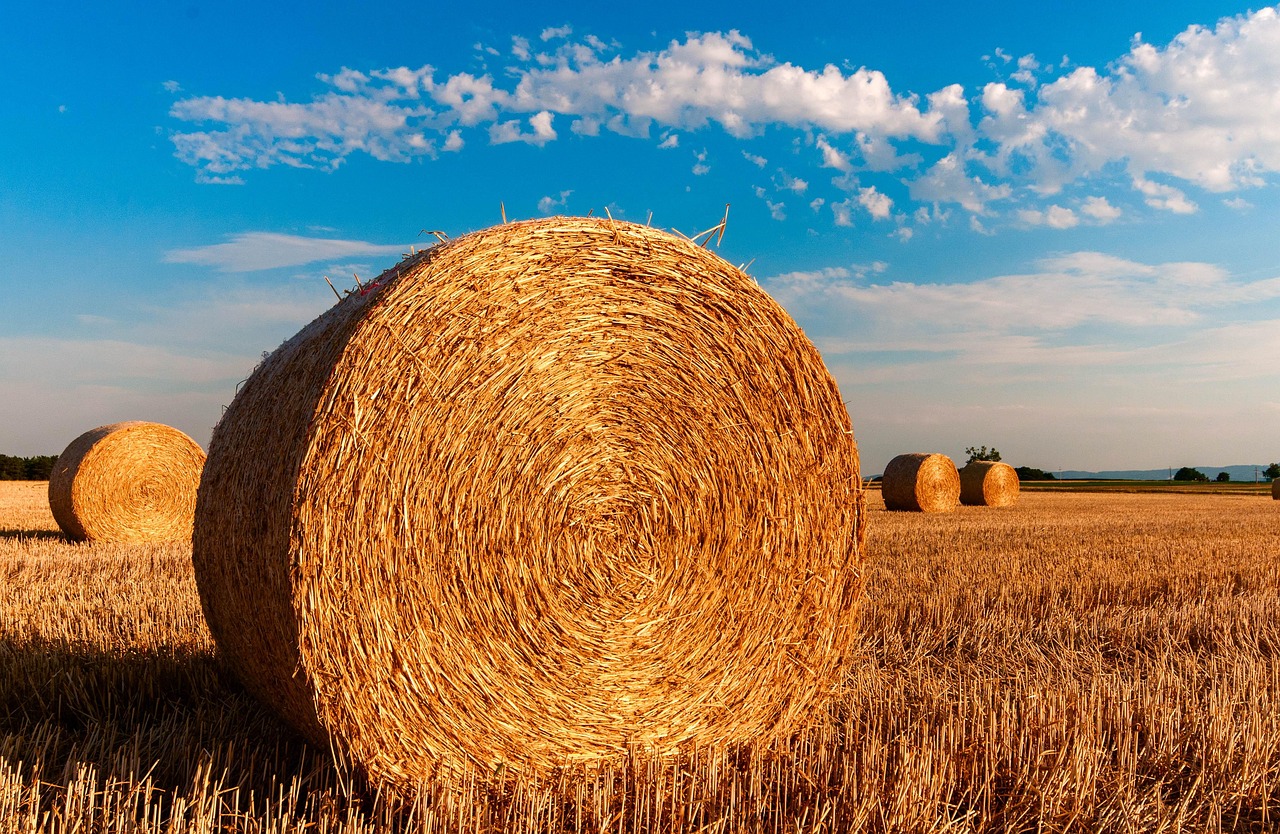
Ben came in from the shop a minute later. He was seventeen that summer, six foot one, and he had Tom’s way of standing in a doorway and filling it, like the frame had been built around him special. He had heard enough through the screen.
“Where’s the truck keys,” he said.
“On the hook. And they’re staying there.”
“Mom.”
“Sit down, Ben.”
“He stole from us. He stole from Dad. Dad cut that hay on Monday and he was dead on Tuesday and that,” and he stopped, because he was raised not to use the word he wanted, “that man didn’t even wait a week.”
“I know what he did.”
“Then call the sheriff. If you won’t let me go over there, call the sheriff.”
I sat down across from him in the chair Dwayne had just left, and I told my son the truth, because he was old enough for it, old enough to have carried one corner of his father’s casket not five days before.
“I could call,” I said. “It’s theft. Any deputy in this county would say so, and half of them went to school with your dad. But I put your father in the ground on Saturday. I am not going to put his only brother in the county jail on Tuesday. And I am not going to have you stand in this yard and watch your uncle put in the back of a patrol car the same week you carried your dad’s casket. I won’t do it. Not this week.”
Ben’s jaw was working, that same muscle Tom used to get along the side of his face when a storm was coming in and the hay was still down.
“And here is the other thing,” I said. “A case does not feed a cow. A case takes months. It takes statements and a county attorney and maybe a year, and at the end of it somebody hands me a piece of paper. A deputy can arrest a man, but he cannot haul two hundred and twelve bales home. Those bales are sitting in three stackyards today. By fall they’ll be fed or sold on, and no judge can order back hay a steer has already eaten. Forty cows eat every single day from November to April. I need that hay in the stack before the first snow a whole lot more than I need a case.”
“So he just gets away with it.”
“I didn’t say that.”
He looked at me then. Really looked, the way he hadn’t managed to since the morning we got the call about the hayfield, since his face had gone white and stayed that way clear through the funeral.
“What are you going to do?”
“I’m going to bake,” I said.
He thought I had lost my mind. I could see it, the way his eyebrows went up and then he glanced toward the window like he was checking whether the world outside still made sense. But he sat there, and after a while he put his head down on his arms on the table, the way he used to when he was little and had a fever, and I put my hand on the back of his neck and left it there a long while, feeling the warmth of him, the solid fact of my living child in a week that had taken so much else.
When he went out to do chores I took Tom’s chore coat down off the nail. I do not know why that was the moment. I think I wanted something of his in my arms, something with weight to it, something that had touched him and not just an idea of him.
It still smelled like him. Diesel, and hay dust, and the wintergreen he chewed after he quit tobacco three years back, right after Ben was born, because he said he wanted to still be breathing hard enough to run after the boy.
In the chest pocket was his notebook. Tom carried one all his life, the little spiral kind the seed dealers give away free with a calendar stapled to the back, and he wrote down everything: rain to the hundredth, calving dates, which cow had a bad quarter, what he’d paid for diesel in March compared to what he was paying by June and how it made him swear under his breath every single time. I have a shoebox of them going back to before we were married, stacked in the closet like proof of a whole life measured out in small careful handwriting.
I turned to the last page with writing on it.
It was dated the second of June, the Monday. The day before.
N80 down. Heavy. Looks like 200 plus. Enough for Karen’s cows and then some.
Karen’s cows.
They were our cows. They had always been our cows. But he teased me that they were mine, because I was the one who named them and I was the one who would not let him sell old Number 12 when she came up open two years running, because she’d been the first heifer we ever bought together with money we didn’t quite have, and I said she’d earned her retirement same as anybody. He had written it the way he said it out loud, in that dry half-laughing voice he used when he was teasing me about something he actually agreed with. He had no idea anyone would ever read it but him. He had written it on a Monday afternoon with the sun still high and twenty more years of Mondays, by every reasonable expectation, still ahead of him.
I sat on the kitchen floor with that coat in my lap and I cried harder than I had at the church, harder than I’d let myself cry in front of anybody, because a crowd of people watching you weep for your husband is one kind of grief and a notebook entry nobody was ever meant to see is a different kind entirely, a private one, a door swinging open onto a room you didn’t know was there.
Then I got up, washed my face, and went out to the rhubarb patch by the windmill with a paring knife.
The rhubarb had come up thick that spring, the way it always did, red stalks fat as a man’s wrist, and I cut what I needed and carried it back to the house in my apron, the way Tom’s mother had carried it, the way her mother had before her, I imagine, the two of us women forty years apart in the same patch of ground doing the same patient work with our hands while the men’s world fell apart or held together around us as it would. I made the crusts with lard the way she’d taught me, working it cold and quick with my fingertips so it wouldn’t turn to paste, rolling it thin, crimping the edges with my thumb the way she’d shown me standing behind me at her own counter, her hands over mine.
I worked past midnight. The kitchen window went dark and then, far off, I could hear a coyote somewhere up along the draw, and Pete lifted his head once from the porch and then settled again, deciding it wasn’t his business.
I had three pies out of the oven by one in the morning, and I sat down in the chair by the stove to let them cool, just for a minute, I told myself, and that was where Ben found me at five, with my apron still on and flour dried along my forearm, and the whole house smelling like cinnamon and browned butter and, underneath it, faintly, like diesel from the coat still folded over the back of the other chair.

Adrian Hawthorne is a celebrated author and dedicated archivist who finds inspiration in the hidden stories of the past. Educated at Oxford, he now works at the National Archives, where preserving history fuels his evocative writing. Balancing archival precision with creative storytelling, Adrian founded the Hawthorne Institute of Literary Arts to mentor emerging writers and honor the timeless art of narrative.