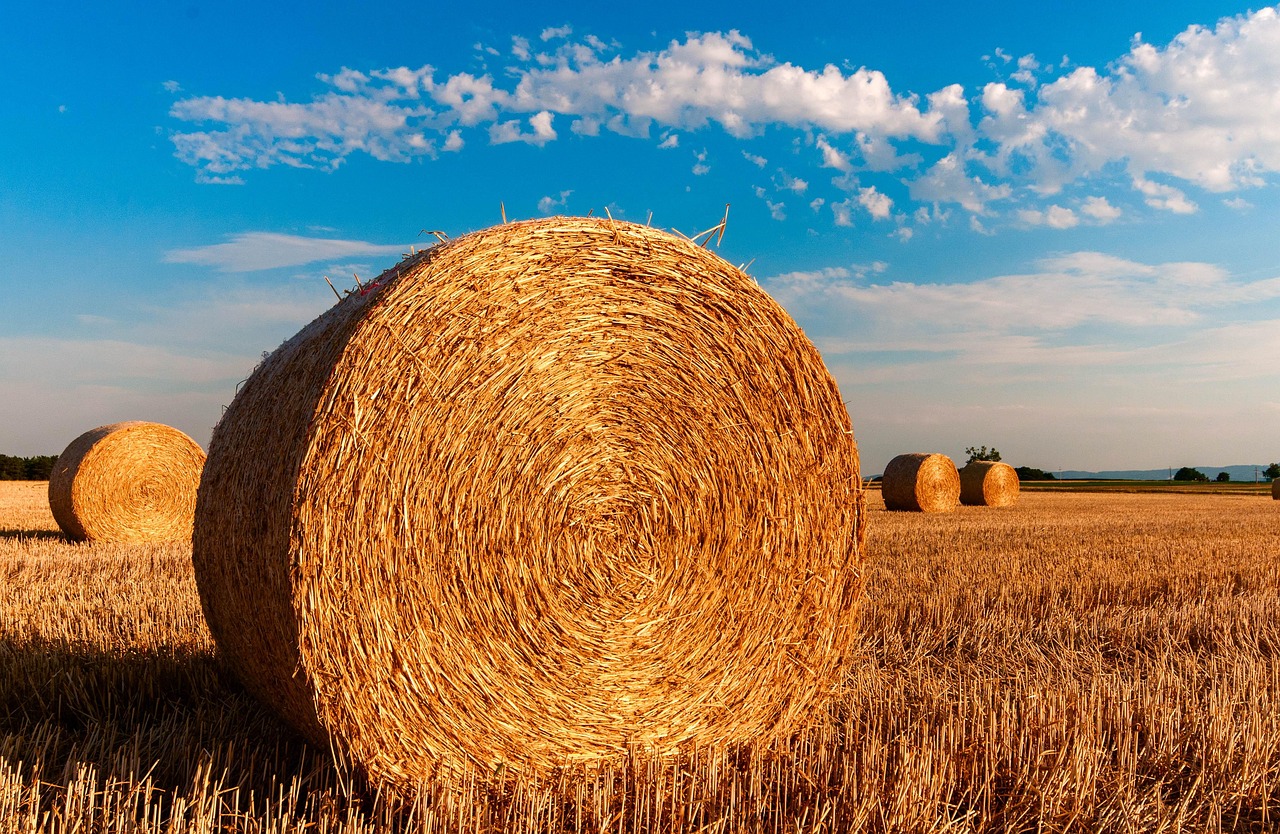
By the following Sunday, the stackyard up along the north eighty looked almost the way it had the week Tom laid the hay down, bales lined along the road fence in neat rows, the smell of them still faintly green when the wind came up out of the south.
Arlen’s grandson brought ten loads over the course of three evenings, the boy backing the gooseneck up to the fence with more patience than most men twice his age, Arlen standing at the gate each time with his hat pushed back, supervising nothing in particular, just wanting, I think, to be present for it. Gene’s semi came Thursday and again Saturday, his hired man running the bale fork like he’d done it his whole life, which I suppose he had. Steve made eight trips over nine days with his two-bale trailer, the pickup laboring up the last rise each time, and he would not take so much as a glass of water for his trouble, though Kim brought the baby out once to sit on the tailgate and watch, and I gave her the empty pie plate to take home filled with a second pie, because some debts run in a direction nobody keeps count of.
Ben ran the loader every single time, every load, standing up in that tractor cab with his cap pulled low exactly the way his father used to stand, and I watched him from the kitchen window some evenings and had to look away, because grief, I was learning, does not come only in the hard moments. Sometimes it comes sideways, in the shape of your living son doing your dead husband’s work in your dead husband’s exact posture, and you have to decide, standing at your own sink with a dish towel in your hands, whether that is the saddest thing you have ever seen or the most comforting, and some days it was both at once and I let it be both.
I did not see Dwayne for the rest of that summer. He did not come to help with haying, which we no longer needed him for, and he did not come to Sunday dinner, which we no longer invited him to, not out of spite, I told myself, but because some things take longer to set right than a season allows, and I was not interested in pretending otherwise for the sake of looking forgiving before I actually was. Ben asked me once, in August, whether I thought his uncle would ever come around and say he was sorry properly, not the half apology of returned hay but the real kind, spoken plain. I told him I didn’t know, and that it wasn’t something I was going to spend my nights worrying over, because I had forty cows and a boy starting his senior year and a whole winter still to get through, and a man’s conscience, if he had one left worth the name, was his own business to settle.
The cows wintered fine. Every single one of them, through a January that brought two blizzards back to back and cold enough that the water tank heater ran nearly around the clock, and I stood out at that stackyard more mornings than I could count, peeling frozen twine off a bale with hands gone numb inside my gloves, and I thought of Tom every single time, the way you think of someone standing in the exact spot where they did their last and best work, which is to say I thought of him constantly and without any particular sorrow attached to it anymore, just a kind of steady company, the feeling of not being entirely alone out there in the cold.
I still have his notebook. I keep it in the drawer of the kitchen table now, not the shoebox in the closet with all the others, because that last page is one I go back to more than I’d ever admit to anybody but Ben, and he’s the only one who’d understand why. N80 down. Heavy. Looks like 200 plus. Enough for Karen’s cows and then some. He was right, in the end, though it took three pies and three hard conversations and the better part of two weeks to make it come true the way he’d meant it. Enough for Karen’s cows and then some.
That’s what I was baking for, that night in the kitchen with the rhubarb and the lard crust and the flour drying pale on my arm. Not pie, exactly. Just a way to walk into three kitchens that weren’t mine and tell three families the truth without taking anything from them that wasn’t already, by every right that mattered, already ours to begin with.

Adrian Hawthorne is a celebrated author and dedicated archivist who finds inspiration in the hidden stories of the past. Educated at Oxford, he now works at the National Archives, where preserving history fuels his evocative writing. Balancing archival precision with creative storytelling, Adrian founded the Hawthorne Institute of Literary Arts to mentor emerging writers and honor the timeless art of narrative.