Arlen’s place is two miles east of ours as the crow flies and four by road, the extra two miles owed to the creek that cuts between our sections and won’t be bridged except at the county line. His wife, Jean, passed six years ago, and he keeps the house just as she left it, down to the African violets on the washing machine, blooming away in their little plastic pots like she might come back through the door any minute and ask after them.
He met me on the porch with his hat already in his hand.
“Karen,” he said. “You shouldn’t be bringing me food. It ought to go the other way this week.”
“It’s rhubarb,” I said. “Can I come in, Arlen? I need to tell you something and I’d rather do it sitting down.”
He cut two pieces and put the coffee on. I let him take a bite first, watched him close his eyes a second the way he always did over good pie, a habit from a lifetime of meals at Jean’s table, and I thought, not for the first time that week, that I was about to take something from an old man that he hadn’t known he was being given to begin with.
Then I told him. I did not dress it up and I did not run Dwayne down. I said that I was not selling out. I said that I had never told anyone to clear that field. I said Dwayne had baled it without asking and sold it without asking, and that I had not seen one dollar and did not expect to. I said that hay was the last thing Tom ever did on this earth, and that without it I had no way to winter his cows.
“I’m not here to ask you for anything, Arlen,” I said. “You bought it honest. I only wanted you to hear the truth from me, at your own table, before you heard it some other way.”
Arlen set his fork down.
He looked at me for a long time. He has a face like a fence post that has stood in the weather, and I could not read one thing in it, not that morning, not with his coffee going cold between us and the violets blooming silently behind him on the washing machine.
Then he stood up, took his hat off the nail by the door, and walked out of his own kitchen without a word.
I sat there with my hands in my lap. I thought, well, I have insulted him. I have come into an old man’s house and as good as called him a fool, and now I have lost a neighbor along with everything else this terrible week has already taken.
Then I heard his pickup turn over, and the rattle of safety chains.
By the time I got to the porch he had the dually backed up to his gooseneck flatbed and was down on one knee, seventy-eight years old, dropping the hitch with a grunt I could hear from where I stood.
“Arlen.”
“You said you weren’t asking,” he said, not looking up. “Good. Then I don’t have to be asked.”
“Arlen, you paid for that hay.”
“I paid eight dollars a bale for seventy-dollar hay and I told myself it was neighborly.” He got up by degrees, one hand on the trailer, the other braced against his knee the way men his age brace themselves against everything now, gravity having become, somewhere along the way, a thing to be managed rather than ignored. “I knew better, Karen. Sunday afternoon, loading it, I knew something was wrong with it. Tom never left a field so much as a week before he had the bales lined up on that road fence. He was particular. And I thought, well, it isn’t my business to ask a grieving family their business.” He shook his head. “I stood at that man’s grave on Saturday. And on Sunday I hauled off his hay.”
“You didn’t know.”
“I didn’t ask. That’s a different thing, and I know which one it is.”
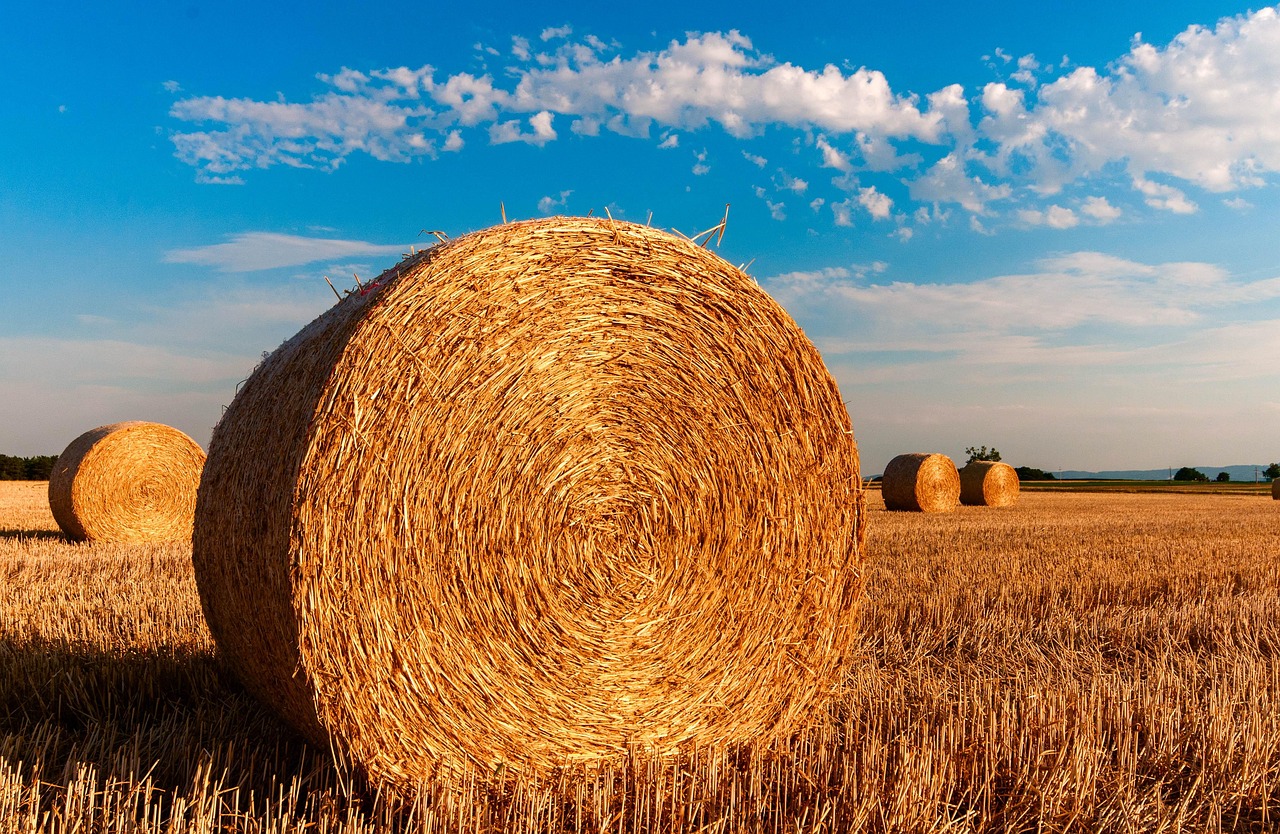
He pulled a handful of hay out of the nearest bale in his stackyard and held it under his nose, and then he held it out to me. It was still green. It smelled like June, like the particular sweetness of a field cut at exactly the right moment, which was a thing Tom had an instinct for that I never fully understood, some combination of the color of the sky and the feel of the stems between his fingers that told him when the sugar was highest in the grass.
“That’s the last hay Tom ever laid down,” he said. “It ought to feed his cows.”
I am not ashamed to say I could not answer him.
“Eight to a load,” he said. “Ten loads. My grandson’s coming at noon. You tell Ben to have that loader ready.”
I drove away from Arlen’s with the windows down, the morning still cool, and I let myself feel, for about a quarter mile, something close to hope, before I made myself set it aside. There were two more stops to make, and I did not yet know how either of them would go.
I had to go through town to get to Gene Pokorny’s, and I needed salt and mineral for the cows on summer grass regardless of anything else that was happening that week, because cattle do not care about a man’s grief, and the mineral feeder had been running low since before the funeral and would keep running low whether I attended to it or not.
Hruska Feed and Supply has been on the south side of Broken Bow since before I was born, a low cinderblock building with a tin roof and a smell inside, feed dust and leather and WD-40, that has not changed one particle in all the years I’ve walked through that door. Mrs. Hruska has run it alone for twenty-two years, since Ed died, and she keeps the charge accounts in a green ledger under the counter, by hand, refusing every piece of computer equipment her nephew has ever tried to talk her into. She knows what every operator in three townships owes to the penny, carries the whole economy of this corner of the county in that one cloth-bound book and in her own head besides.
She came around the counter and held me a minute. She did not say anything foolish about God’s plan. She just held on and then let go, the way only another widow really knows how to do it, without words getting in the way.
“Four bags of mineral and six salt blocks,” I said. “On our account.”
She wrote it down. Then she kept her pen where it was, hovering above the page, and I knew something else was coming.
“Karen, I’m going to ask you something that’s none of my affair.”
“Go ahead.”
“Dwayne was in Monday at closing. He put seventeen hundred dollars cash on his bill. It’s the first money I’ve had from him since Christmas.” She took her glasses off, the way she does when she means business. “Where does Dwayne get seventeen hundred dollars in the first week of June? He hasn’t got a calf to sell until fall.”
I had not planned to tell anyone but the three who had the bales. But she had asked me a direct question, and I was not going to lie to that woman across her own counter, not in that store that had fed and mended half the ranches in this county through droughts and blizzards and every kind of trouble a person could name.
So I told her. Same words, no more.
Mrs. Hruska did not gasp. She put her glasses back on and turned the ledger around and looked at a page for a while, running one finger down a column of figures I couldn’t read upside down.
“I was fifty-one when Ed died,” she said. “The week after the funeral a man from the co-op sat right there on that stool and told me a widow didn’t need a feed store. He had a number all ready.”
“What did you tell him?”
“I told him to get off my stool.” She shut the ledger. “You go see Gene. Leave Dwayne’s bill to me.”
I did not ask her what she meant. I found out later, when the fall settlement came due and Dwayne discovered that his credit at Hruska’s had quietly dried up to cash-only, no explanation given, none asked for, the kind of consequence that moves through a small town without ever once raising its voice.

Adrian Hawthorne is a celebrated author and dedicated archivist who finds inspiration in the hidden stories of the past. Educated at Oxford, he now works at the National Archives, where preserving history fuels his evocative writing. Balancing archival precision with creative storytelling, Adrian founded the Hawthorne Institute of Literary Arts to mentor emerging writers and honor the timeless art of narrative.