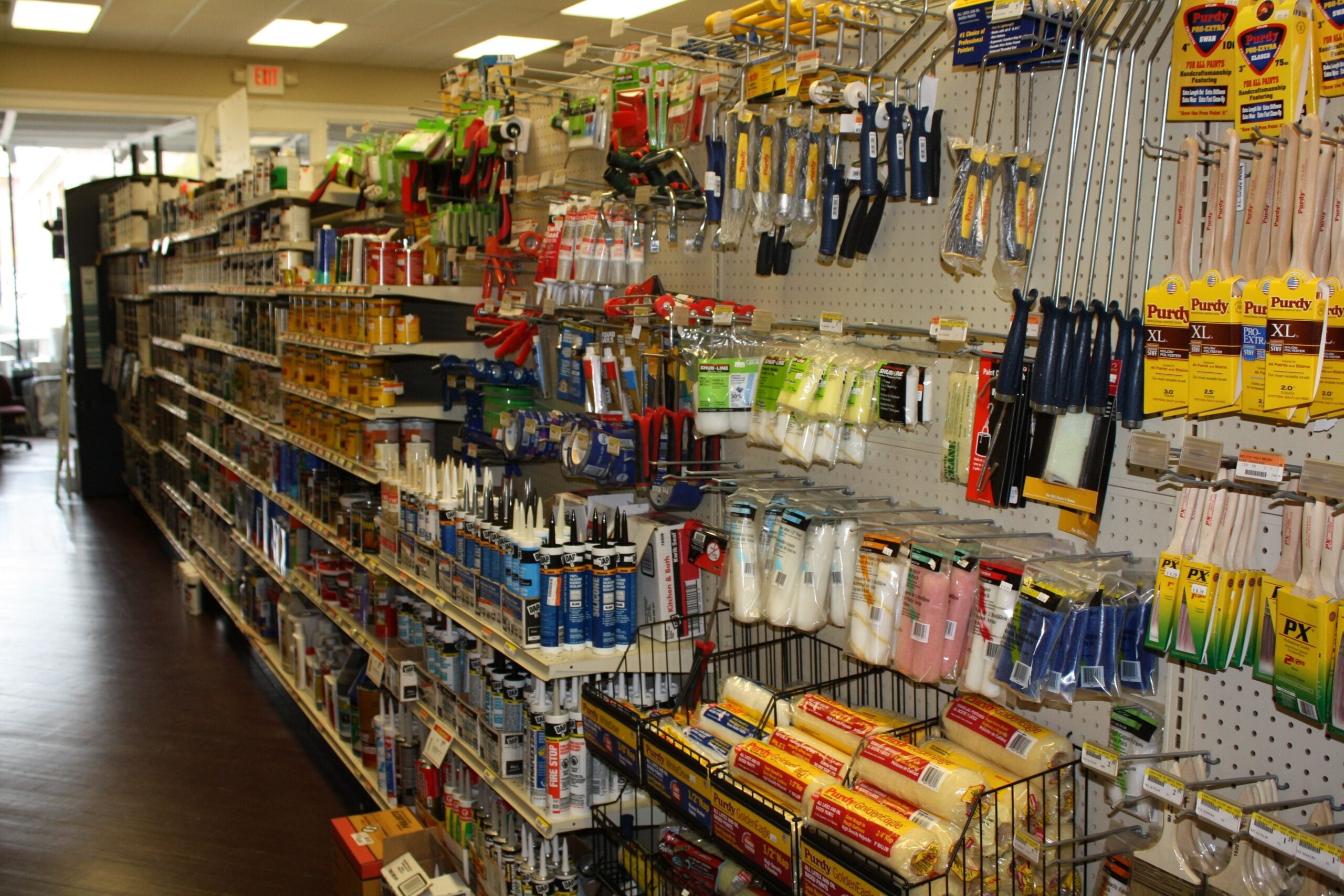
We pulled up in front of the store at 7:52.
It opened at eight. Dad had opened it himself every morning for forty-five years. He’d had his key since 1983, when Mr. Engstrom started taking Mondays off.
This morning, the lights were already on. Brandon Kowal was behind the counter.
Dad sat in the truck for a minute with the shoebox on his lap.
“Dad, you don’t have to do this today.”
“It’s his key. He should have it.”
“He could have come and gotten it.”
“Sarah.” He opened the door. “Stay in the truck.”
I didn’t stay in the truck.
I waited until he was through the door and the bell had stopped ringing, and then I got out and followed him in. He heard the bell ring again and looked over his shoulder and saw me and just shook his head a little. But he didn’t send me back out.
Brandon looked up from the computer screen.
He was a nice-looking young man. Clean-shaven. Northline polo shirt, navy blue, with the company logo on the chest. He had an energy drink by the register.
When he saw my father in the green Engstrom apron, his face did something complicated.
“Oh. Ron. Hi.”
“Morning, Brandon.”
“I, uh. I wasn’t expecting you to come in. You could have just mailed the key, or dropped it in the slot.”
“I’d rather hand it to you.”
Dad walked up to the counter. He reached into the front pocket of his apron and took out a brass key on a green plastic ring. He set it on the counter.
Brandon looked at it.
“Thanks,” he said. “And, listen, Ron. I’m sorry about the text. Corporate wanted it handled quickly. They said it’d be easier for everybody that way.”
“Was it easier for you?”
Brandon hesitated.
“Not really,” he said.
Dad nodded like that was the answer he’d expected.
Then he set the shoebox on the counter next to the key.
Brandon looked at it.
“What’s that?”
“That’s Mr. Engstrom’s book.”
“His what?”
Dad untied the twine. It took him a minute. His hands were stiff in the mornings now. He coiled the twine up neatly and set it beside the box. Then he took off the lid.
The box was full of paper.
Little slips. Hundreds of them. Maybe a thousand. Some were on the old carbon receipt paper from the register. Some were on notebook paper. Some were on the backs of envelopes and seed packets and bank deposit slips. They were packed in tight, standing on end, organized in rows by year with little cardboard dividers.
1974. 1975. 1976. All the way to last spring.
Every slip had handwriting on it. A date. A name. A list of items. A dollar amount.
And at the bottom of every single one, in the same slanted hand, the same three letters.
A.E.
“Every one of those,” my father said, “is somebody in this town who couldn’t pay.”
Brandon looked at him.
“Mr. Engstrom never sent a bill,” Dad said. “Not once. In fifty years. He’d write it down. He’d put it in the box. And that was the end of it.”

Specialty: Quiet Comebacks & Personal Justice
David Reynolds focuses on stories where underestimated individuals regain control of their lives. His writing centers on measured decisions rather than dramatic outbursts — emphasizing preparation, patience, and the long game. His characters don’t shout; they act.