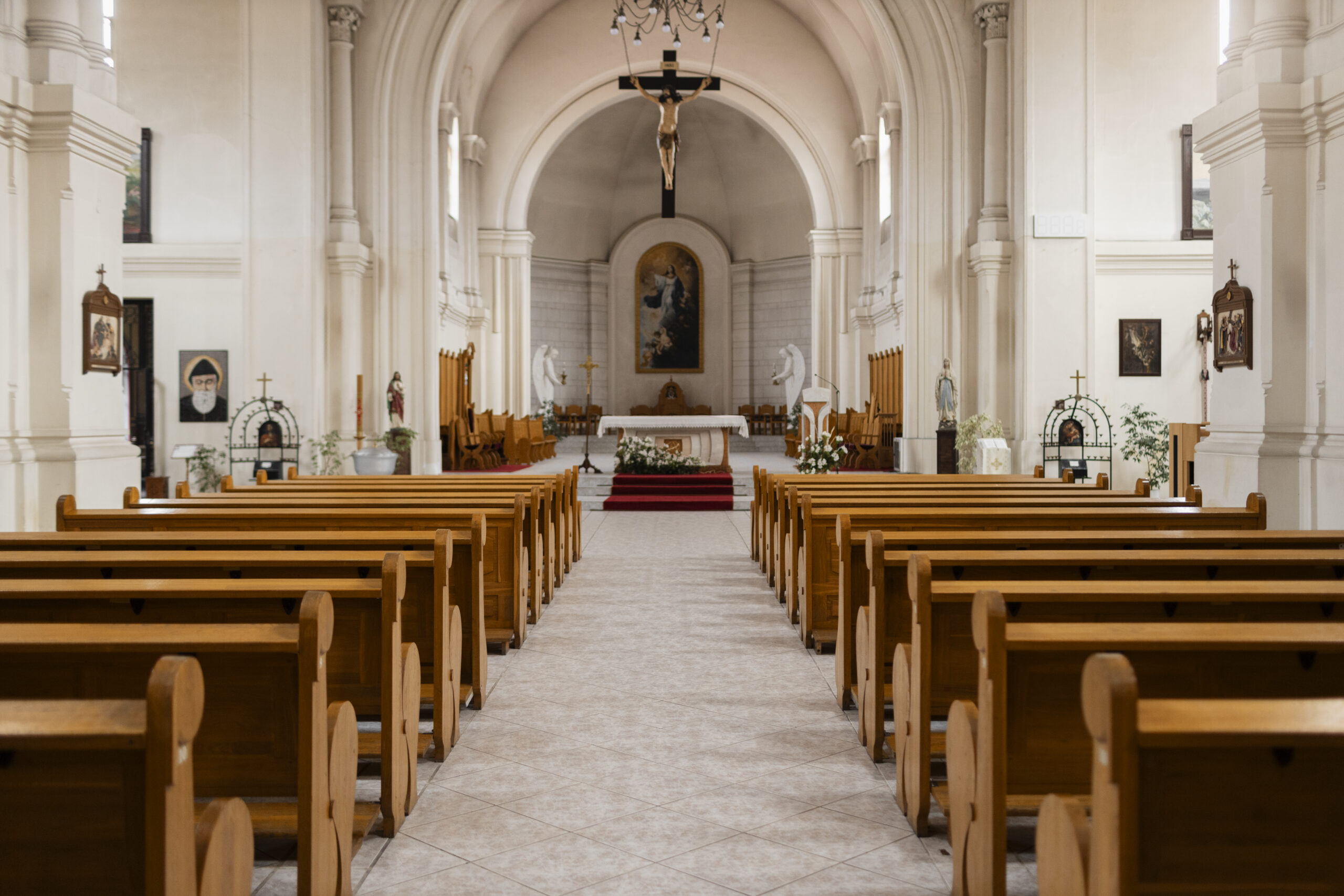
Then the Brennans in the sixth pew. All four of them. Her father, 1996.
Then Jim Kowalski. His wife, Diane, two years ago this April. He stood with his pie dish still in the car and his face working.
Then the whole fifth row at once. I didn’t know who they were for. My mother would have.
Then the Pedersons. The Anfinsons. Old Mrs. Dykstra, who couldn’t stand without help, and so her two sons lifted her up between them.
It moved through the room like wind through a field of wheat. Not all at once. One family at a time. One loss at a time.
Every person who stood up had buried someone in that church.
And every single one of those services, my mother had played. For free. For fifty-two years. Without being asked twice.
By the middle of the third verse, the room was more standing than sitting. The people along the side aisles were on their feet. The people in the back were already standing, but I watched them straighten up anyway.
My brother was crying beside me. I didn’t look at him. I was crying too.
Nobody had organized it. I want to be very clear about that. I asked around for weeks afterward, and nobody had called anybody and said, when she plays, stand up. It just happened. One old woman decided she wasn’t going to sit for this, and then the next person saw her, and then the next.
Up front, Pastor Whitfield had turned around.
He was looking out at his congregation. All of them standing. Hundreds of them. Not singing. Not clapping. Just standing there in silence while an eighty-one-year-old woman in a lavender dress played a hymn on an organ he had decided was dated.
I watched him look for an explanation.
I watched him not find one.
He looked at the organ. At my mother’s back. At her hands moving on the keys.
And then I watched something else happen to his face.
The last verse was beginning. And he was hearing the hymn. Really hearing it, for the first time, I think. The tune. The one his grandmother had written on a card in her own handwriting in 2003 and left with the pastor so that somebody would know to play it.
I saw him put it together.
I saw him remember a church full of people in March of 2009. A suit too big for him. His father’s hand on his arm, walking him out the side door. The sound of an organ following him down the hall.
He didn’t sit down. But he didn’t stand either. He just stood there at the front of the room, in his robe, with his hand over his mouth.
My mother played the last chord.
She held it. She always holds the last chord a beat longer than the hymnal says. My father used to tease her about it. She’d say, “It’s not done until it’s done, Walter.”
Then she lifted her hands.
She folded them in her lap.
And she waited.
The room was silent. Two hundred and six people on their feet, I found out later. The ushers counted. Nobody moved. Nobody sat down. Nobody spoke.
It was the longest silence I have ever heard in my life.
Then Pastor Whitfield walked across the front of the sanctuary to the organ.

Sophia Rivers is an experienced News Content Editor with a sharp eye for detail and a passion for delivering accurate and engaging news stories. At TheArchivists, she specializes in curating, editing, and presenting news content that informs and resonates with a global audience.
Sophia holds a degree in Journalism from the University of Toronto, where she developed her skills in news reporting, media ethics, and digital journalism. Her expertise lies in identifying key stories, crafting compelling narratives, and ensuring journalistic integrity in every piece she edits.
Known for her precision and dedication to the truth, Sophia thrives in the fast-paced world of news editing. At TheArchivists, she focuses on producing high-quality news content that keeps readers informed while maintaining a balanced and insightful perspective.
With a commitment to delivering impactful journalism, Sophia is passionate about bringing clarity to complex issues and amplifying voices that matter. Her work reflects her belief in the power of news to shape conversations and inspire change.