He moved a few feet away when I knelt down. But he didn’t leave.
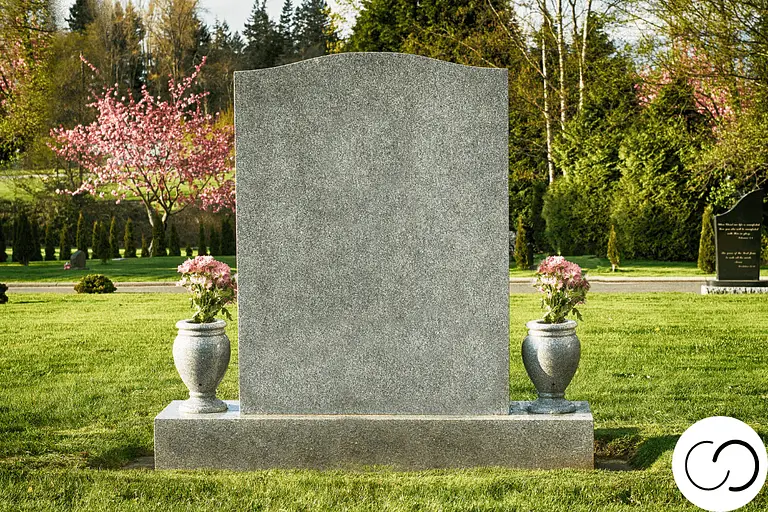
I laid the flowers I’d brought against the stone. Yellow carnations. Caleb always said roses were boring.
I looked over at the dog.
“Did you know him?” I asked quietly.
The dog tilted his head. The floppy ear flopped a little more.
I almost laughed. It was the first thing in that cemetery that had made me want to smile in months.
After that, I started looking for him.
Sunday after Sunday, there he was.
Sometimes curled up in the grass with his nose tucked under his tail. Sometimes sitting straight up, like a soldier on guard. Sometimes sound asleep with his chin resting on his paws, right against the edge of Caleb’s stone.
He never came to me begging for food. He never jumped up for attention. He just stayed near Caleb.
Eventually I started bringing dog treats in my purse. The first time I held one out, he looked at it for a long moment. Then he stretched his neck out as far as it would go and took it from my fingers very, very gently. Like he was afraid of being rude.
“You’re getting expensive,” I told him a few weeks later, opening my third bag.
His tail thumped the grass. Once.
That tiny movement stayed with me the whole rest of the day.
But his being there bothered me in a way I couldn’t put into words.
Not because I didn’t like him. Just the opposite. I’d started looking for him the second I got out of my car. If I didn’t see him right away, my stomach dropped a little. And then I’d spot him, curled up by Caleb’s stone, and something in my chest would loosen.
What bothered me was how deliberate it seemed.
That cemetery is huge. Hundreds and hundreds of graves across six sections. Families coming and going all day. People bringing flowers and balloons and pinwheels and photographs in little plastic frames.
And this dog always, always chose Caleb.
One Sunday, I went to find Edwin.
Edwin is the groundskeeper. He’s in his seventies and has worked at that cemetery for so long that he knows every regular visitor by face, if not by name. He always nods at me when I come in. Once, the first winter, he shoveled the path to Caleb’s grave before I got there, and he never said a word about it.
I found him by the maintenance shed, oiling a lawn mower.
“Edwin. The dog. The scruffy one by my son’s grave. Does he belong to anybody?”
Edwin wiped his hands on a rag and looked over toward Section Four.
“That one? He’s been coming around a while now. Few months. Nobody knows where he’s from.”
“Does anybody feed him?”
“Not that I know of.”
“Does he stay here? At night?”
Edwin shook his head.
“Shows up in the morning. Gone by afternoon. Every Sunday, mostly. Some Saturdays too.” He squinted at me. “Always the same spot. I figured you knew him.”
“No,” I said. “I don’t.”
That answer only made me more curious.

Adrian Hawthorne is a celebrated author and dedicated archivist who finds inspiration in the hidden stories of the past. Educated at Oxford, he now works at the National Archives, where preserving history fuels his evocative writing. Balancing archival precision with creative storytelling, Adrian founded the Hawthorne Institute of Literary Arts to mentor emerging writers and honor the timeless art of narrative.