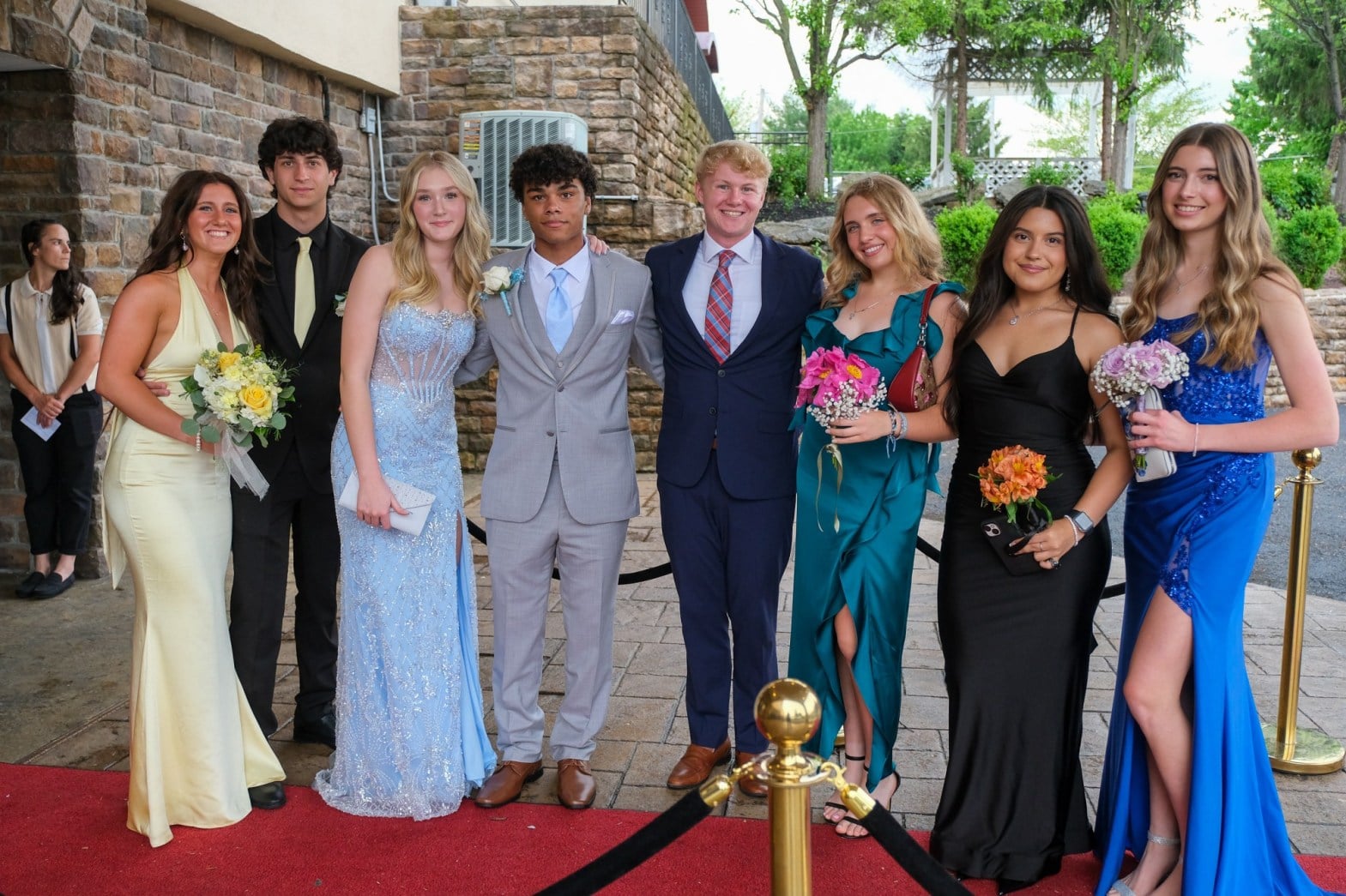
He opened the little box. His hands were careful. He pinned the corsage to the strap of my dress, right near my shoulder. He kept his eyes on the pin, very focused, like it was surgery.
Then he glanced up at me.
“You’re shaking,” he said. “What’s going on?”
“I’m… is this too much?”
He smiled. But his eyes stayed right on mine.
“Is this the dress you wanted?”
“Yes.”
“Then it’s not too much.”
I swallowed.
“I don’t want to embarrass you, Noah.”
His hand stopped on the pin.
“Damien.”
“What?”
“You could walk into prom wearing a traffic cone,” he said, “and I’d still be proud to hold your hand.”
I laughed. It came out wet.
Noah and I met in October of junior year, at the coffee shop. He came in every day at 3:15 and ordered a plain black coffee and sat in the corner doing calculus homework. For three weeks, he barely said a word to me.
Then one day, he walked up to the counter and said, “Oat milk, extra shot, no foam, never caramel. Right?”
I stared at him. “How do you know my order?”
“You make it for yourself every day at four,” he said. “When your manager goes on break.”
He’d been watching. Not in a creepy way. In a noticing way.
Nobody had ever noticed me like that before.
He wasn’t out back then. Not at school. His parents knew, and his little sister, but that was it. He came out at school the week before winter break. He did it by holding my hand in the hallway outside the chemistry lab.
That’s all. He just reached over and took my hand. In front of everybody.
He told me afterward his hands were sweating so bad he thought I’d let go.
I didn’t let go.
Behind us, in the kitchen doorway, I heard a sound.
I turned around.
My mom was standing there. She had her old Canon camera in her hands. The one she used for every first day of school since kindergarten. Her eyes were red.
“I’m sorry it took so long,” she said. “I had to find the battery charger. And then I had to stop crying.”
“Mom.”
“Stand by the stairs,” she said. “Both of you. Your dad would want a good one.”
My dad died when I was eleven. A heart attack, at work. He used to say the best pictures were always by the stairs, because of the light from the window.
We stood by the stairs.
My mom took eleven pictures. Her hands were shaking on every one.
When she was done, she came over and hugged me. Hard. Careful of the corsage.
“You look beautiful, baby,” she whispered. “Your father would have punched anybody who said otherwise.”

Specialty: Quiet Comebacks & Personal Justice
David Reynolds focuses on stories where underestimated individuals regain control of their lives. His writing centers on measured decisions rather than dramatic outbursts — emphasizing preparation, patience, and the long game. His characters don’t shout; they act.