It had always smelled like her cedar chest. A dry, sweet, pencil-shavings smell. When she died two years ago in March, at ninety, that chest came to me, and I used to lift the lid some evenings for no reason except to breathe in.
I carried the quilt into the spare room and laid it out on a clean sheet on the bed and put my face down to it.
Burnt plastic. Bread bag and milk jug and whatever else a man eats out of when he is cooking for one.
I opened both windows on the north side. Then I went and turned off my tomatoes, because I was not going to can anything decent in the frame of mind I was in.
I should tell you how we got to that fence, because it did not start that Monday.
Lyle and Joan Becker lived south of us for twenty-six years. You could not have asked for better. Lyle ran a road maintainer for the county for thirty years, and ours was the best bladed stretch of gravel in Boone County. Joan took home the last of my zucchini every September, which is the real test of a friend.
Joan burned on Mondays.
She had a reason. She washed on Tuesdays, so Monday the barrel could smoke all it wanted and her own line was bare. And she only ever burned paper. Feed sacks, the newspaper, junk mail, the box the cereal came in. They had the trash pickup for everything else, same as us, same as everybody out here who doesn’t want to haul to the transfer station. Thirty-one dollars a month, a green cart at the end of the lane on Thursdays.
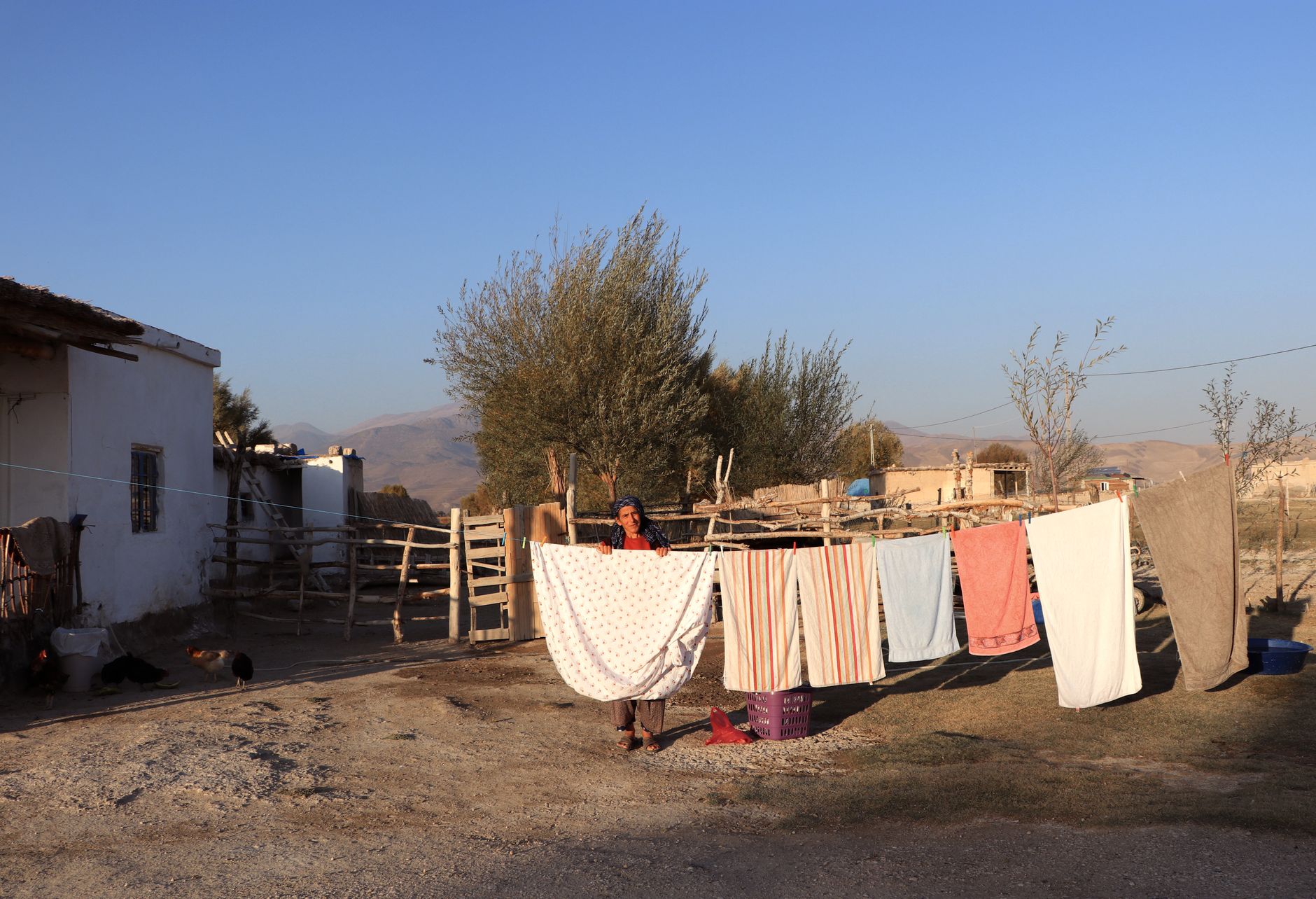
Here is a thing I did not understand until this fall. In twenty-six years, Joan’s Monday smoke never once touched my Monday wash.
I never thought about why. You don’t think about the things that go right.
Joan died a year ago August. Her heart, in the night, no warning. I took food over for a month and Tom mowed for him until the frost, and then winter came and we waved from our pickups the way people do.
In April he quit the trash service.
The hauler came and took the green cart from the end of his lane. A man alone doesn’t make much trash, and thirty-one dollars a month is three hundred seventy-two dollars a year, and a county pension is not a fortune. I didn’t think a thing about it.
Then the wind turned around to the south in May, and the first Monday I had sheets out, they came in smelling like a tire.
He was burning all of it now. Everything that used to go in the green cart. And he was burning it Monday morning about ten past nine, because Monday was the day, and nobody had ever told him there was more to it than the day.
The first time I asked was in June. I caught him at that same fence and I was as pleasant as I know how to be.
“Lyle, I wash Mondays. I wonder if you could burn a different day. Or wait until evening, when it’s in.”
“Why, sure,” he said. “Sure I can.”
And I believe he meant it. He just did not have anywhere in his head to keep it. The next Monday at ten past nine, up it went.

Sophia Rivers is an experienced News Content Editor with a sharp eye for detail and a passion for delivering accurate and engaging news stories. At TheArchivists, she specializes in curating, editing, and presenting news content that informs and resonates with a global audience.
Sophia holds a degree in Journalism from the University of Toronto, where she developed her skills in news reporting, media ethics, and digital journalism. Her expertise lies in identifying key stories, crafting compelling narratives, and ensuring journalistic integrity in every piece she edits.
Known for her precision and dedication to the truth, Sophia thrives in the fast-paced world of news editing. At TheArchivists, she focuses on producing high-quality news content that keeps readers informed while maintaining a balanced and insightful perspective.
With a commitment to delivering impactful journalism, Sophia is passionate about bringing clarity to complex issues and amplifying voices that matter. Her work reflects her belief in the power of news to shape conversations and inspire change.