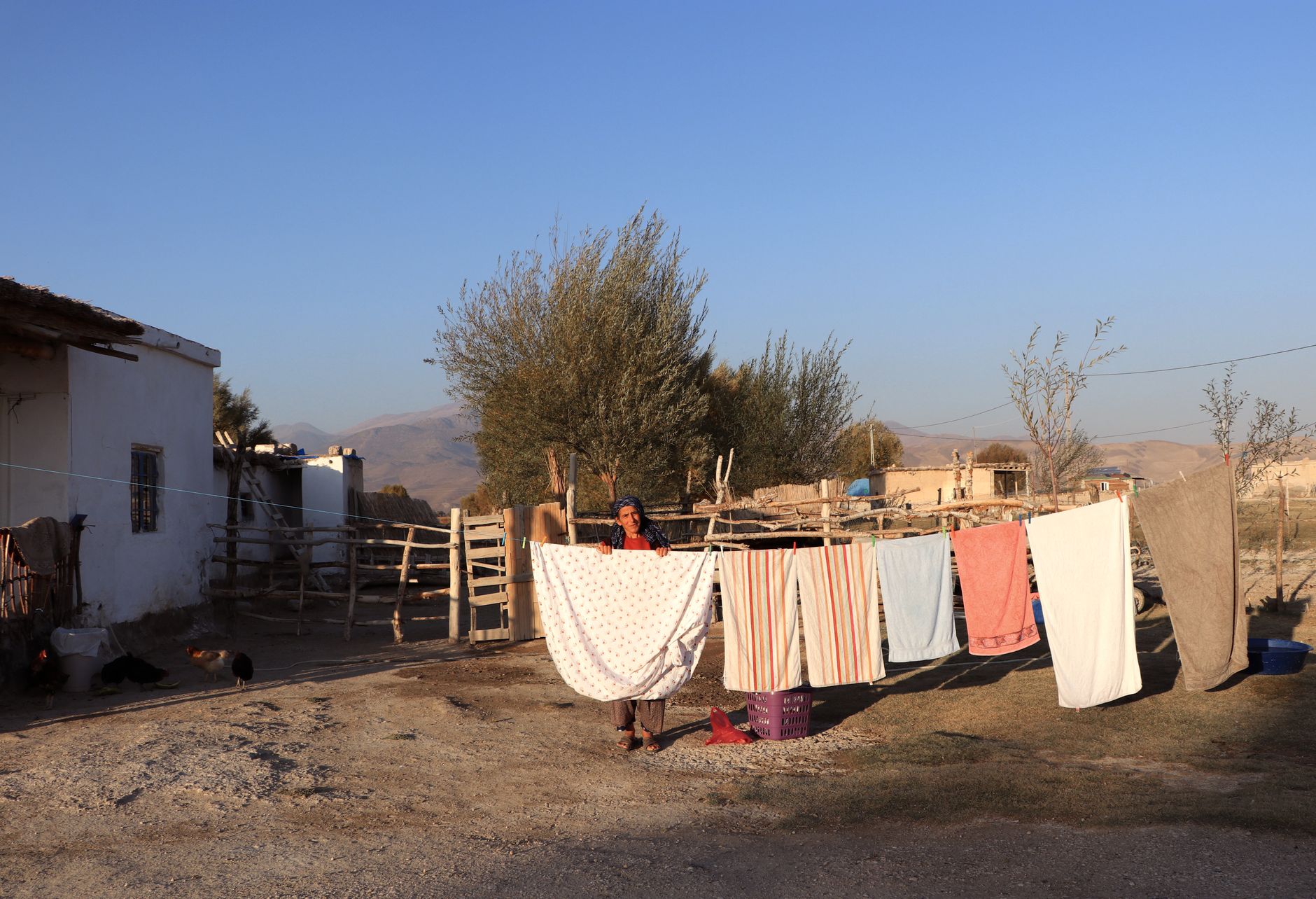
The second time was July. I baked zucchini bread and carried a loaf over, because my mother raised me to believe you can say nearly anything to a person if you are holding something warm.
He had me into the kitchen. It was clean. Cleaner than mine. And there on the counter by the coffee maker were two cups, set out upside down on a dish towel, his and one with yellow roses on it.
I looked at those two cups a little too long and he saw me do it, and neither one of us said a word about it.
“I’ll make it easy,” I told him. “Wash days, I’ll hang a red dish towel on the end pole. You see red, you wait. That’s all you have to remember.”
“You do that,” he said. “That’s a good system.”
I hung that red towel four Mondays running. You could see that towel from the highway.
Up it went.
The third time I telephoned, in August, on a Sunday night, thinking a reminder the night before might stick. I got his answering machine. It is still Joan’s voice on it. I was so rattled to hear her that I left a message like a woman reading a grocery list. Monday, wash, red towel, thank you, this is Sandra, from next door. As if there were another Sandra.
Up it went.
By September I was doing sheets at night and running them through the dryer, and resenting every minute. Sheets off a line smell like the inside of a cloud. Sheets out of a dryer smell like a dryer.
But the quilt does not go in a dryer. The quilt gets aired twice a year, late September and the first warm week of May, and it has been that way since before I was born.
I checked for the barrel that morning. I truly did. At eight o’clock there was nothing going over there, and his pickup was gone, and I thought he had driven into Albion for the day. I hung the sheets. I hung my red towel out of plain stubbornness. I draped the quilt.
Then I went in to my tomatoes, and my kitchen windows face north, and I had the radio on.
He had only gone for gas.
Tom called that night from a truck stop outside Rawlins. He hauls for an outfit out of Columbus, out on Sunday night or Monday before daylight and home Friday, and he calls every night at eight our time whether he has anything to say or not.
I told him.
There was a long quiet on the line, and the sound of somebody’s diesel idling.
“Irene’s quilt,” he said.
“Yes.”
“The wedding one.”
“Yes, Tom.”
“And he laughed.”
“He said smoke was good for the sinuses.”
“I’m home Friday,” he said. “I’ll go over and have a talk with him.”
“You will not.”
“Sandra.”
“Thomas. I have heard your talks. Your talks are about nine words long and then somebody has to sell their house.”
“Lyle bladed our road for thirty years. He pulled you out of the ditch in the blizzard of 2009. He’s seventy-one and his wife is dead and he doesn’t know what day it is without her. I’m not having you go over there and be large at him.”
“Then what are you going to do?”
“I don’t know yet.”
“You could call Bud Hagen. That’s a fire matter. You can’t burn garbage. Bud would be out there in ten minutes.”
“With the red truck and the lights, and Lyle standing in his yard being written up while the whole road drives by slow? No.”
“Then the sheriff.”

Sophia Rivers is an experienced News Content Editor with a sharp eye for detail and a passion for delivering accurate and engaging news stories. At TheArchivists, she specializes in curating, editing, and presenting news content that informs and resonates with a global audience.
Sophia holds a degree in Journalism from the University of Toronto, where she developed her skills in news reporting, media ethics, and digital journalism. Her expertise lies in identifying key stories, crafting compelling narratives, and ensuring journalistic integrity in every piece she edits.
Known for her precision and dedication to the truth, Sophia thrives in the fast-paced world of news editing. At TheArchivists, she focuses on producing high-quality news content that keeps readers informed while maintaining a balanced and insightful perspective.
With a commitment to delivering impactful journalism, Sophia is passionate about bringing clarity to complex issues and amplifying voices that matter. Her work reflects her belief in the power of news to shape conversations and inspire change.