“Doris, come out for coffee tomorrow. I still have your pie plate and I’m ashamed of myself.”
“Two years, Sandra.”
“I know it.”
“I’d written that plate off. I’d grieved it.” She was getting her arm into her coat. “What time?”
“Quarter to nine?”
“I’ll bring nothing, then, since you owe me.”
“That’s fair.”
I did not say why. If I had told her, it would have been a report, and I had already decided I was not making one.
Monday came up bright, with a breeze. South, twelve miles an hour by the radio. A perfect drying day.
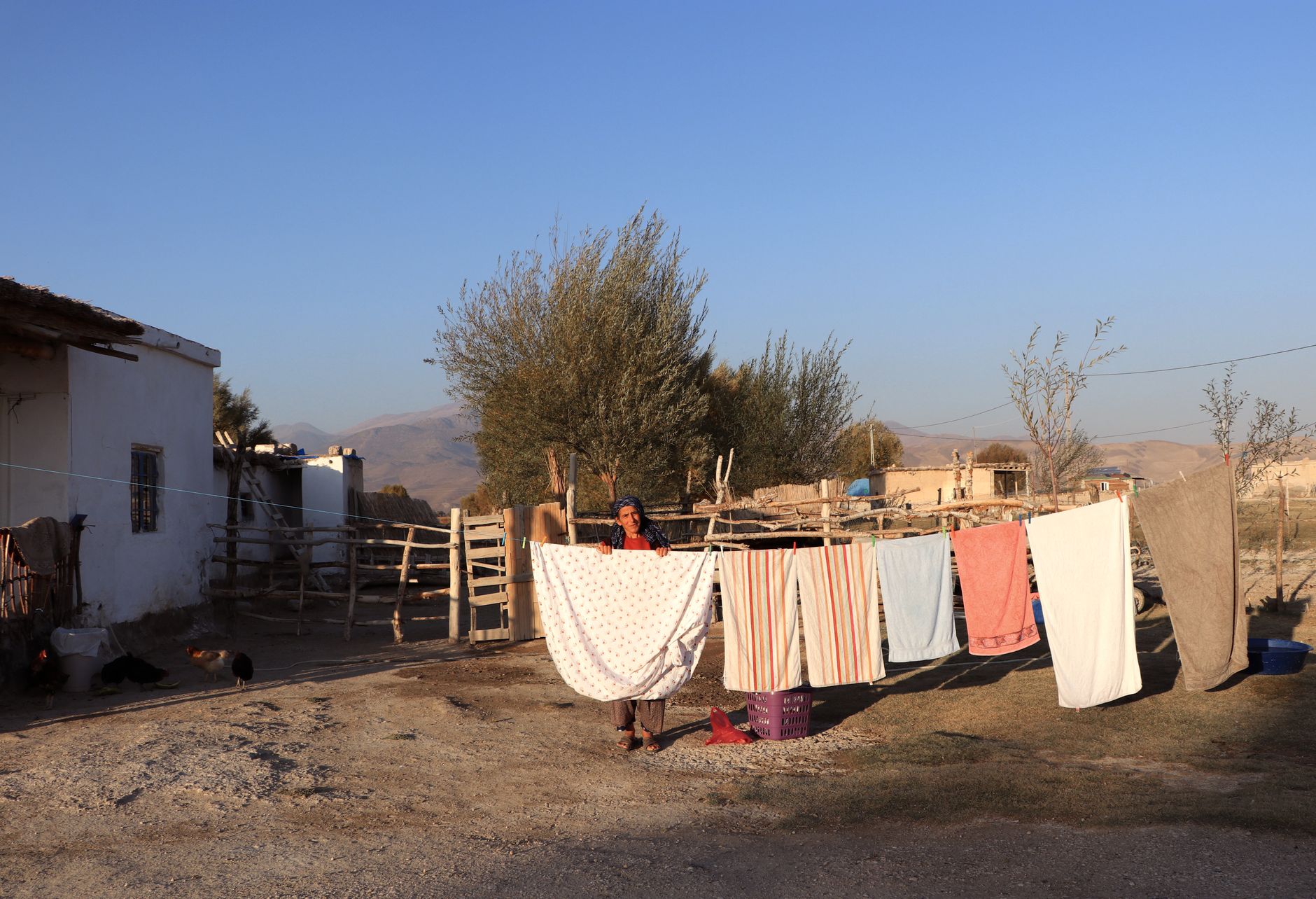
I stripped both beds and had the white sheets on the line by eight. I hung my red dish towel on the end pole, where it has hung every Monday since July, snapping like a flag.
Then I made a coffee cake, because you do not ask a woman out six miles of gravel for coffee alone.
Doris pulled in at 8:45 on the dot with her purse on her arm. We sat on the back porch. I have two metal chairs out there that were Mother’s and a little table between, and from those chairs you look down the whole length of the yard: clothesline, garden, wire fence, and Lyle’s place beyond it.
I poured. She took a piece of coffee cake and inspected the bottom of it before she ate it, the way good cooks do.
“Buttermilk,” she said.
“Yes.”
“Hm,” she said, which from Doris is a blue ribbon.
We talked about the fall bazaar, and whether anybody under sixty was ever going to sign up for funeral lunches. Her pie plate sat on the table between us, washed and shining.
Nine o’clock came.
Five after.
I will admit that I got up to fetch the cream I had already brought out, so that I could look at the kitchen clock. I will admit I did it twice.
Lyle’s pickup was in the yard. His kitchen light was on. And I sat there with the oddest feeling in my chest, because some part of me was hoping, hard, that he would stay in. That he had seen the red towel. That this one Monday he would remember, and Doris would eat her cake and take her plate, and I would be a foolish woman who had baked for nothing.
At 9:10 his back door opened.
He came down the steps with a white kitchen trash bag in one hand and the rebar in the other. He did not look north. He dropped the bag in the barrel, bent, and I saw the little flare of the lighter.
Doris was telling me about her knee. The doctor in Norfolk wanted to replace it and she wanted to know what was wrong with the one the Lord had issued her.
The smoke started thin. A gray thread, straight up, polite.
Then the bag caught, and it thickened, and the south wind laid it over like a hand pushing down a cowlick. It came north through the wire. It went through my garden. It reached the clothesline and went into those white sheets and through them and out the other side, and the sheets bellied toward us, full of it.
Then it came up on the porch.
Doris stopped in the middle of a word.
She sniffed, once, short, the way a woman does who has washed a fireman’s shirts since 1986.

Sophia Rivers is an experienced News Content Editor with a sharp eye for detail and a passion for delivering accurate and engaging news stories. At TheArchivists, she specializes in curating, editing, and presenting news content that informs and resonates with a global audience.
Sophia holds a degree in Journalism from the University of Toronto, where she developed her skills in news reporting, media ethics, and digital journalism. Her expertise lies in identifying key stories, crafting compelling narratives, and ensuring journalistic integrity in every piece she edits.
Known for her precision and dedication to the truth, Sophia thrives in the fast-paced world of news editing. At TheArchivists, she focuses on producing high-quality news content that keeps readers informed while maintaining a balanced and insightful perspective.
With a commitment to delivering impactful journalism, Sophia is passionate about bringing clarity to complex issues and amplifying voices that matter. Her work reflects her belief in the power of news to shape conversations and inspire change.