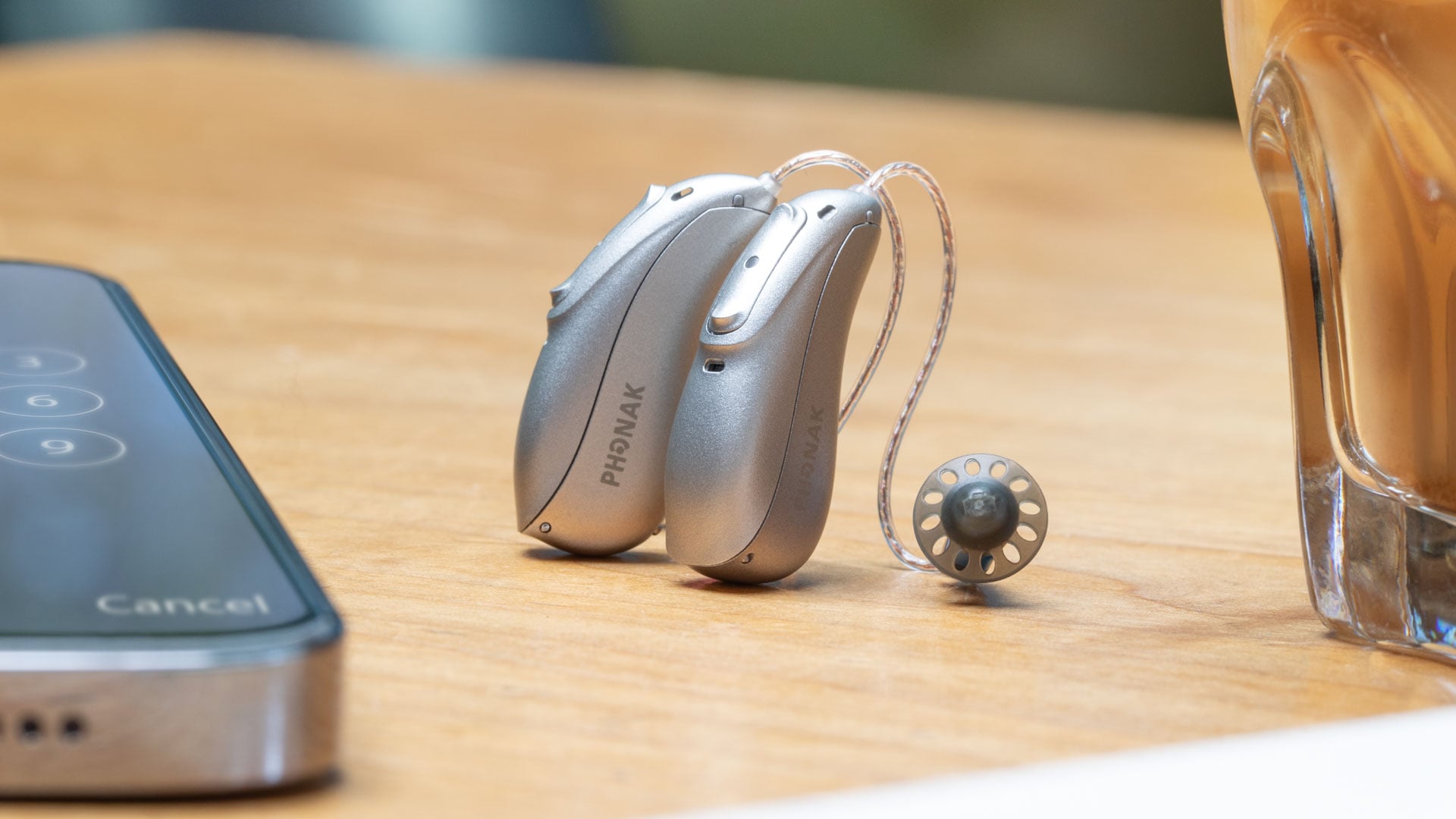
Mrs. Lund called me at 8:20 on a Monday morning in April, and the first thing she said was my daughter’s name.
Not hello. Not good morning. Just, “Amanda, it’s about Emma.”
She said it in that careful voice teachers use when they’ve already decided how to say a hard thing.
I was standing behind the front desk at Olson Family Dentistry with the second phone line blinking and a patient’s insurance card in my other hand. I set the card down. Kim, who does our scheduling, looked up from her screen, saw my face and stopped talking mid-sentence.
“Emma isn’t wearing her hearing aids today,” Mrs. Lund said. “I asked her where they were. She said her stepmom has them. She said she gets them back on Friday.”
For a second, I honestly thought I’d heard her wrong.
That’s the kind of joke the world plays on you when your child is hard of hearing. You start doubting your own ears instead of the thing you just heard.
“Friday,” I said.
“That’s what she told me. She said it was for talking back at supper on Saturday.”
Mrs. Lund paused. I could hear children’s voices somewhere behind her, the hallway noise of a school waking up.
“We had our spelling test first thing this morning,” she said. “I read the words out loud, like I always do. She sat there and cried through the whole thing. She couldn’t hear a single word, Amanda. She wrote her name at the top of the paper, and then she just put her head down on her desk.”
I put my free hand flat on the counter. It was cold. I remember that. And I remember the little bell on the front door jingling as Mr. Peterson came in for his nine o’clock cleaning half an hour early, the way he always does.
“I sent her down to the nurse once already,” Mrs. Lund went on. “Not because she’s sick. Just so she could have a quiet minute. She came back and sat in the front row and watched my mouth the whole time I was teaching fractions. She’s working so hard. She’s exhausted, and it isn’t even nine o’clock.”
“Thank you for calling me,” I said.
My voice came out flat and polite. The voice I use for patients who are behind on their bills.
“Thank you, Mrs. Lund. I’m going to fix it.”
“I didn’t know if I should call you or her dad,” she said. “You’re both on the emergency card.”
“You did right,” I said. “Give me a couple of hours.”
I hung up and stood there in my light blue scrub top with my gray fleece zipped all the way to my chin, because the office is always freezing in the morning. And I tried to decide what to do first.
Kim came around the desk. She’s worked with me for six years. She has two boys of her own, and she knows Emma, because Emma does her homework in our break room on the afternoons when the sitter cancels.
“What happened?” she asked.
“Kendall took Emma’s hearing aids,” I said. “Over the weekend. As a punishment.”
Kim’s mouth opened. Then it closed again. She didn’t say anything for a moment, which for Kim is a very long time.
“Took them where?” she finally said.
“Home, I guess. She’s keeping them until Friday.”
“She can’t hear without them,” Kim said, like I might not know.
“No,” I said. “She can’t.”

Laura Bennett writes about complicated family dynamics, difficult conversations, and the quiet moments that change everything. Her stories focus on real-life tensions — inheritance disputes, strained marriages, loyalty tests — and the strength people find when they finally speak up. She believes the smallest decisions often carry the biggest consequences.