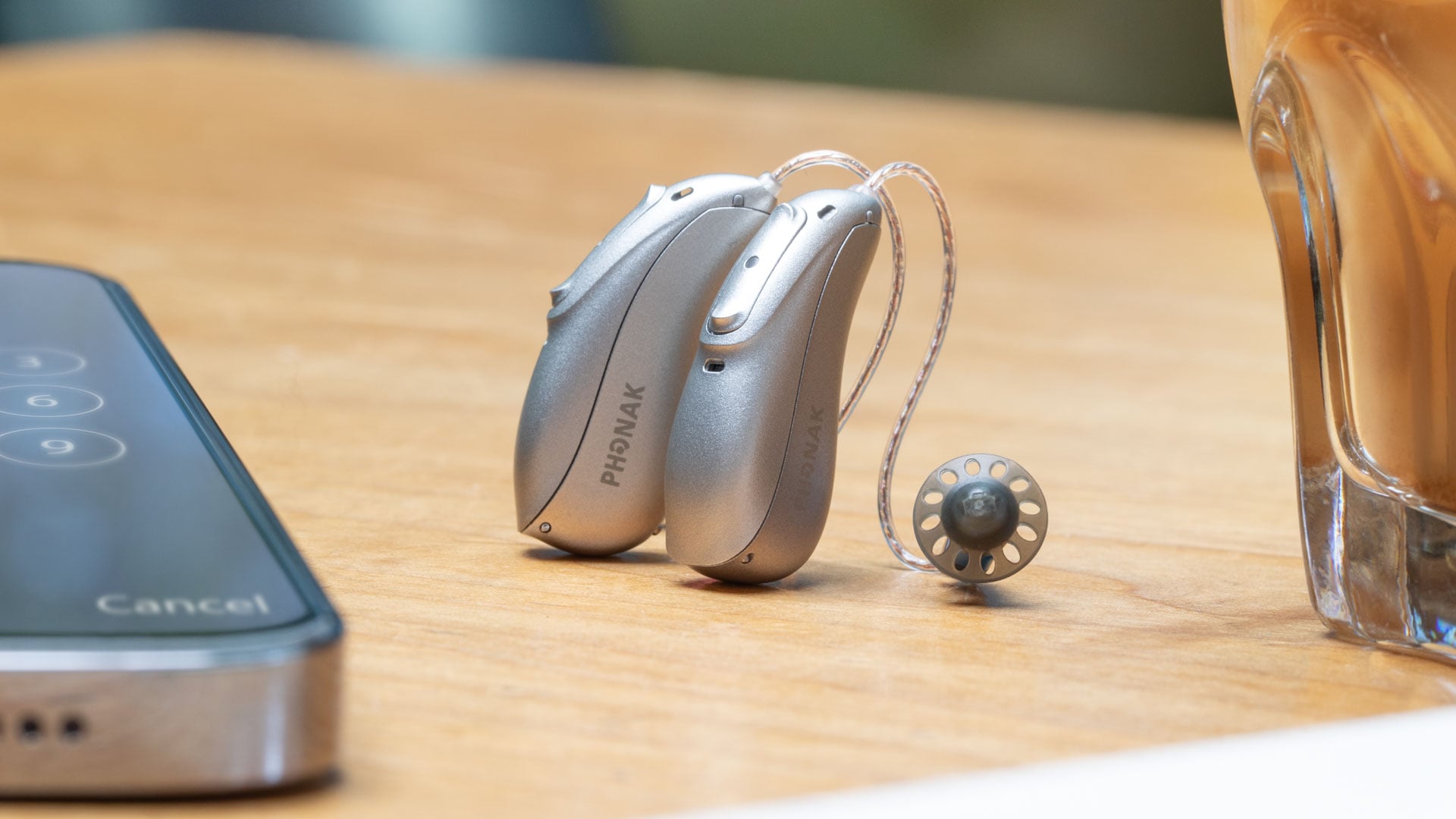
Dr. Meyer had a pair of loaner hearing aids laid out on a paper towel on her desk, already hooked up to her computer by a thin cord.
They were plain beige. Nothing like Emma’s purple ones.
Dr. Meyer has known Emma since that very first booth with the blocks and the bucket. She looked up when I came in and didn’t smile. She just nodded at the chair.
“I pulled her last audiogram from March,” she said. “Her hearing’s stable, which is good news. I’m setting these to her prescription now. They won’t be exactly like hers, but they’ll be close.”
I sat down in the chair where Emma usually sits. I watched the numbers move across the screen. Dr. Meyer worked fast and didn’t make me fill the silence.
After a while, she asked, without looking up, “Do you want to tell me what happened?”
So I told her. The weekend. The supper table. The talking back. Friday. I told it as plainly as I could.
When I finished, Dr. Meyer stopped typing. She took off her glasses and rubbed her eyes.
“I see this more than you’d think,” she said. “Not usually as a punishment. But grown-ups who don’t understand. A grandparent who thinks she’s faking. A stepparent who thinks the aids are like reading glasses. Something you only need now and then.”
“She can hear some without them,” I said. “That’s what confuses people. If you talk loud, right in front of her face, she gets most of it.”
“Right. And so people think she’s choosing not to listen.” Dr. Meyer shook her head. “She’s not choosing anything. Without these, she’s guessing at half of every sentence, all day long. A school day like that is like running a race with a sack over your head.”
She tested the loaners in a little metal box that beeped and hummed. Then she snapped a pair of soft silicone domes onto the tubes in place of earmolds, because Emma’s custom molds were back at Chad’s house, sitting in a case with her own aids.
“These will sit a little looser without her molds,” she said. “She might get some whistling if they’re not seated right. Push them in gently, and tell her to keep her hair tucked behind them. But she’ll hear.”
She slid the loaners into a small clear pouch and set a card of 312 batteries beside it. Then she pushed a single sheet of paper across the desk.
“Loaner agreement,” she said. “Just says you’ll bring them back in the same shape. Replacement value’s $2,200 if they get lost, but nobody’s ever had to pay it.”
I signed it. My signature looked shaky.
Dr. Meyer pressed the pouch into my palm and closed my fingers around it.
“No charge for loaners,” she said. “Keep them as long as you need them. And Amanda?”
“Yes?”
“You did right, driving down here. A day matters at her age. Every day of words matters.”

Laura Bennett writes about complicated family dynamics, difficult conversations, and the quiet moments that change everything. Her stories focus on real-life tensions — inheritance disputes, strained marriages, loyalty tests — and the strength people find when they finally speak up. She believes the smallest decisions often carry the biggest consequences.