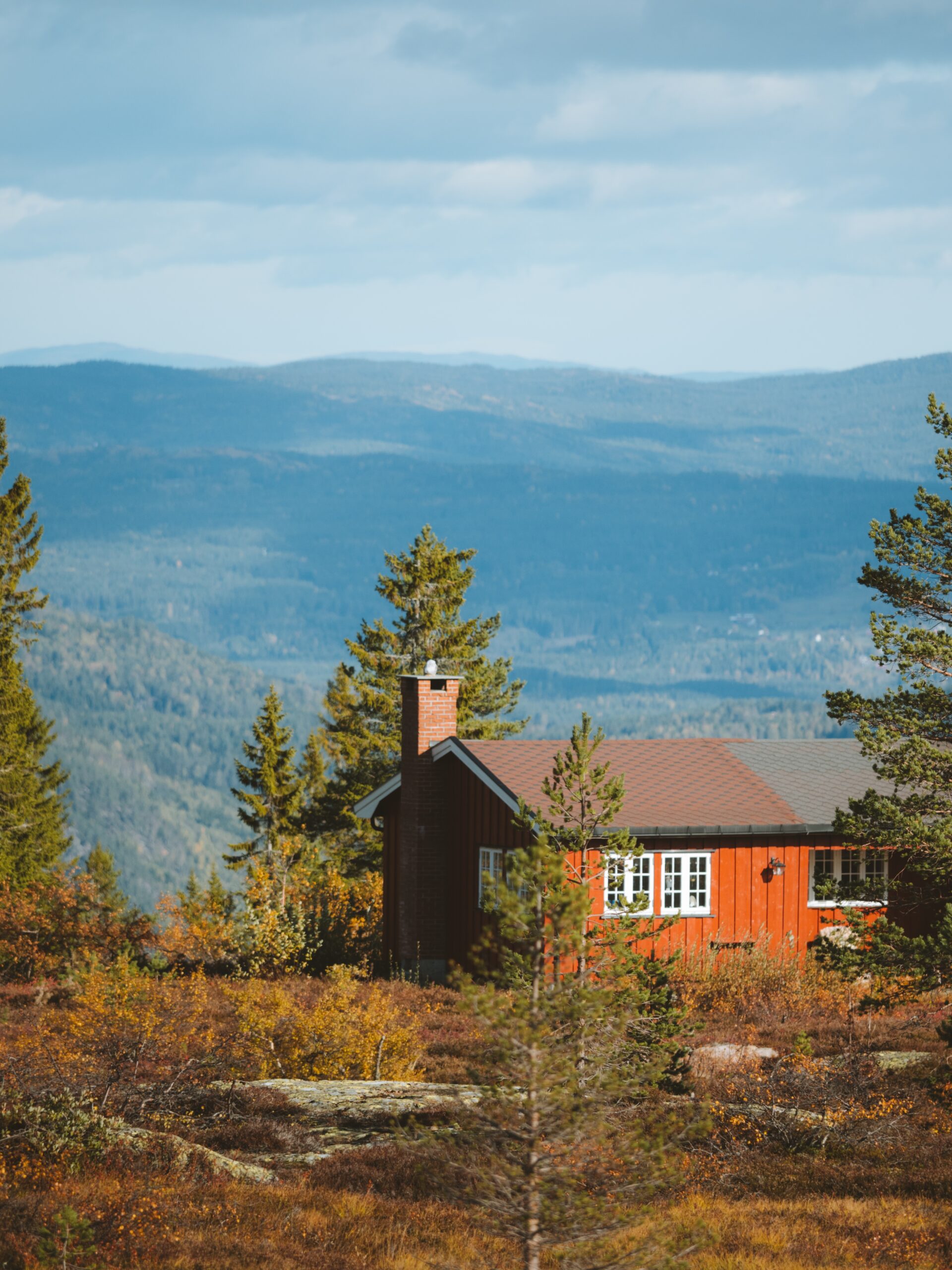
So there I stood at 9:30 that morning, the guest book open in my hands, my mother’s voice still ringing in my ears.
Your grandmother would be ashamed of you.
I read Nessa’s last entry once more.
She knew exactly who I was.
I picked up my phone. I took a photograph of the recorded deed, with its blue notary stamp and the clerk’s embossed seal and the single line reading Grantee: Lane Pruitt. I sent it to the family group chat with one sentence.
The cabin is mine. I asked for the deputy to be here.
Then I turned off my phone, put on my boots, and went outside to split wood.
Rey told me what happened next, months later, over coffee. I’ll tell it plainly.
Gil sat in the truck for twenty minutes after the deputy spoke to him, his hands on the steering wheel, staring at the dashboard. Then he got out and talked quietly with Deputy Okafor for about ten minutes. Rey watched from the Honda.
When Gil came back, he climbed into the truck and called Rey on her cell, in a voice she’d never heard from him before.
“Rey. Dad told me it was fine. He said Lane had agreed.”
“Had she?”
“I never asked her.” He put his forehead against the steering wheel. “I never asked, Rey. I just took his word for it.”
Rey says she looked across at her husband, a forty-year-old man with his head on a truck’s steering wheel, and felt something she hadn’t expected. Not anger. A kind of tired tenderness.
“Turn around, Gil,” she said.
They drove back down Ridge Road in a little convoy, past the deputy, who lifted two fingers off his steering wheel in a half salute.
They had nowhere to go. Their old apartment was gone. The U-Haul cost $189 a day, plus mileage. So they drove two hours back to my parents’ split-level and moved their boxes into the basement.
My mother, I’m told, stood in the driveway in her housecoat as the moving truck turned in.
“Well?” she said. “Where’s Lane?”
“She’s at her place, Mom,” Gil said.
“What do you mean, her place?”
“The cabin. The one she owns.”
Rey says the silence after that lasted a good long while.
For a week, nobody heard from me.
I went back to work. I drove Bus 14 on the first morning back after break, thirty-eight kids in coats and mittens, fogging up the windows. A boy named Deshawn in the third row told me his front tooth had come out over Christmas. I told him congratulations. A little girl named Priya handed me a lopsided crayon drawing of a yellow bus with a smiling driver. I taped it to the dashboard.
I didn’t answer my phone. I didn’t open my email. I came home every afternoon to Cleo, a plate of leftover spaghetti, and a quiet apartment.

Adrian Hawthorne is a celebrated author and dedicated archivist who finds inspiration in the hidden stories of the past. Educated at Oxford, he now works at the National Archives, where preserving history fuels his evocative writing. Balancing archival precision with creative storytelling, Adrian founded the Hawthorne Institute of Literary Arts to mentor emerging writers and honor the timeless art of narrative.