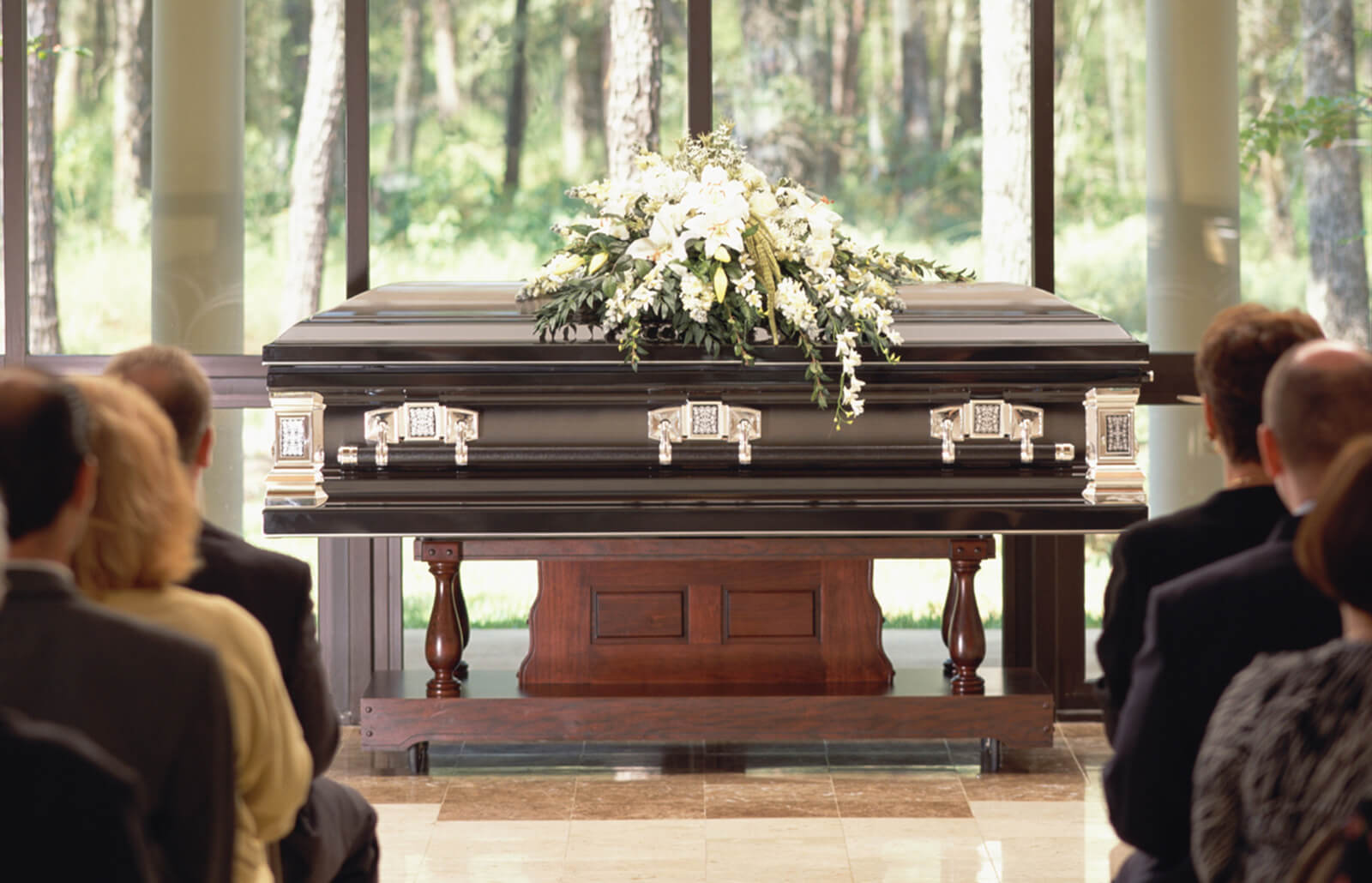
Nobody at my mother’s funeral was dressed in white.
Except Dolores.
She came in ten minutes late. The organist had already started “Abide with Me,” and Pastor Lindqvist was standing at the front with his Bible open, waiting for the last of the stragglers to find their seats.
Then the big wooden doors at the back of Trinity Lutheran swung open. And every head in the church turned around.
Dolores Kaminski was standing in the doorway in a full wedding gown.
Long lace sleeves. A high lace collar. A train that dragged behind her on the red church carpet. A thin veil pinned into her short gray hair.
The dress was old. You could tell from across the room. The white had gone the color of weak tea, especially down the front. It didn’t fit her anymore, either. It pulled tight across her back and her shoulders. When she turned to close the door behind her, I saw the zipper. It wouldn’t go up the last six inches. She’d held it together with a row of big silver safety pins.
Dolores has been my mother’s best friend since they were nineteen years old.
They were roommates at the Mercy School of Nursing in Davenport, Iowa, in 1972. They shared a dorm room the size of a closet, with one hot plate and a radio that only picked up the farm report.
When I was born, in the middle of a February blizzard in 1980, my father was stuck in a snowdrift on Highway 61 for six hours. Dolores was working the night shift at Mercy that night. She walked into the delivery room, took my mother’s hand, and didn’t let go for eleven hours.
She’s the first person who ever held me. My mother told me that every single birthday.
And for the last month of my mother’s life, in hospice, Dolores sat beside her bed every single night. From seven in the evening until seven in the morning. Then she drove home, slept four hours, and came back.
So when she started walking down that aisle in a wedding dress, I felt sick to my stomach.
People turned all the way around in their pews. Somebody behind me gasped out loud. Two of my mother’s church friends put their heads together and started whispering. Mrs. Halvorsen covered her mouth with her hymnal.
Beside me, my older sister Karen went rigid.
“Oh, you have got to be kidding me,” she hissed. “This is a funeral. Not a costume party.”
Before I could stop her, Karen was up out of the pew. She marched straight down the side aisle to where Mr. Gustafson, the funeral director, was standing by the wall in his gray suit.
I watched her lean in close to him and say something. I watched her point at Dolores.
I watched Mr. Gustafson nod, slowly. And start walking toward her.
And I didn’t stop him.
I’m not proud of that. I sat right there in the front pew with my hands in my lap, and I let it happen.
Because for one terrible second, I thought Karen might be right. I thought maybe Dolores had finally lost her mind. Seventy-three years old, alone in that little house on Locust Street, grieving the last person she had left.
And here she was. In white. At my mother’s funeral.

Specialty: Quiet Comebacks & Personal Justice
David Reynolds focuses on stories where underestimated individuals regain control of their lives. His writing centers on measured decisions rather than dramatic outbursts — emphasizing preparation, patience, and the long game. His characters don’t shout; they act.