It’s been a year.
Tom and I moved into the farmhouse in June. The floors slope. The kitchen smells of woodsmoke and old coffee. I kept Ruth’s table, her rocking chair, and her pantry, with its row of empty shelves and little hand-lettered labels in her small, upright handwriting: Beets. Corn. Peaches.
I don’t farm the land myself. We sold our house in Marshalltown for $214,000, paid off the last of our mortgage, and put the rest in savings.
I rent the cropland to a young couple down the road, Luis and Marguerite Ortega, who have a toddler and a rented combine. Mr. Pruitt drew up a three-year cash rent lease at $285 an acre, which the extension office in Marshalltown told me was fair for that ground. That comes to about $40,000 a year, paid half in March and half in November. After the property taxes, about $5,800 a year, and insurance on the house and barn, it’s more than Tom and I ever earned together in our best year.
Luis and Marguerite planted the back forty in soybeans. Marguerite, who has a way with gardens, replanted the beds along the porch in cheerful, crooked rows of tomatoes, beans, and zinnias.
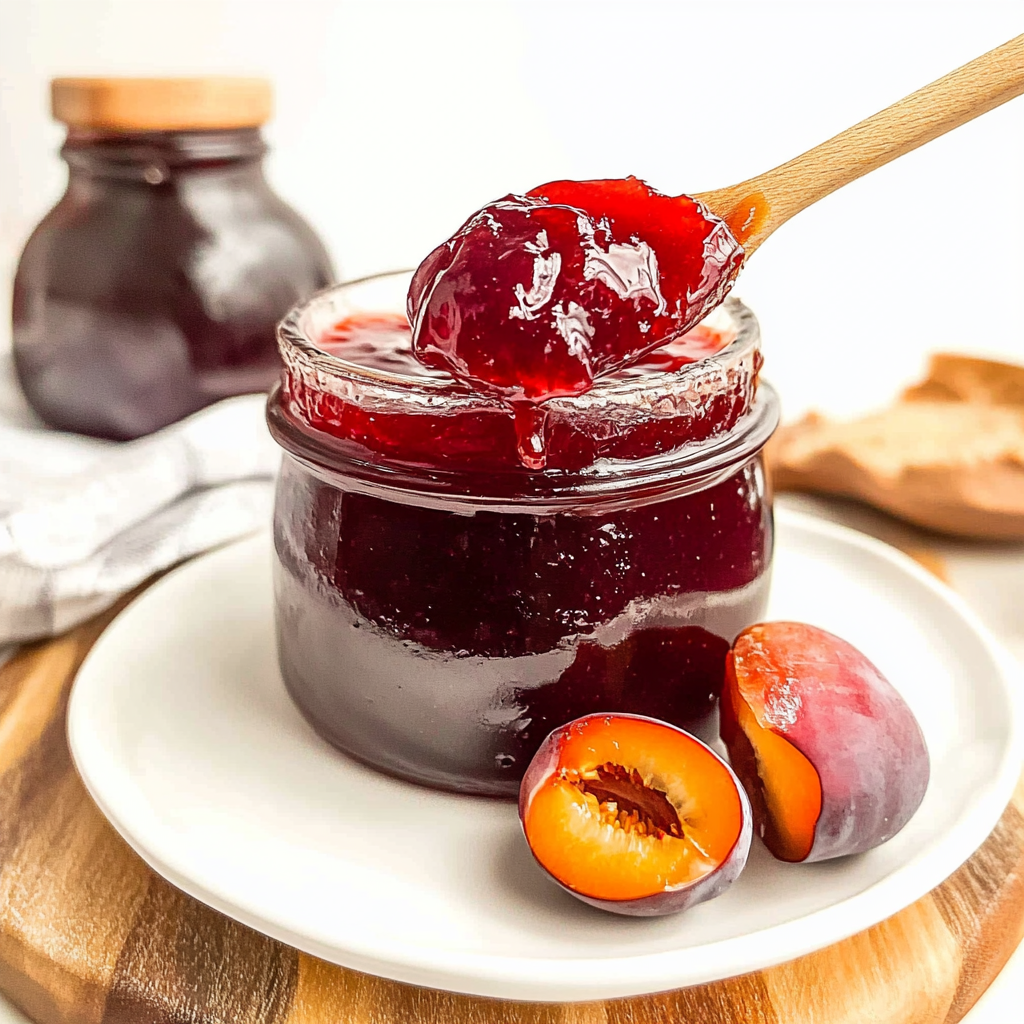
And I kept the plum tree.
It’s a Stanley, planted in 1962, gnarled and gray and bent over behind the barn, with a lopsided crown and branches that droop almost to the ground. I left the bottom branches alone, the way Ruth said. It bears fruit in September.
The first September, I picked eleven pounds of plums and stood in Ruth’s kitchen with a stockpot and a cookbook, trying to remember what her hands used to do.
I made forty jars.
I didn’t plan it. I just kept going, a pint at a time, in a rolling boil, with a wooden spoon and a candy thermometer, the whole kitchen full of dark, sweet, bitter steam. I tied calico over each lid and painted a number on top in white enamel.
1. 2. 3.
Carol came in October.
She came alone, in a plain gray coat, carrying a loaf of bread from a bakery in Ames. She stood on the porch in the cold light, and I opened the screen door.
“Linda.”
“Come in.”
She sat at Ruth’s table by the window, and I made tea. We didn’t talk for a while. The light came through the glass, gold over the old linoleum, and a pair of chickadees worked at the bird feeder.
“I came to ask you something,” Carol said.
“Go ahead.”
“Could I have a jar?”
I stopped with the kettle in my hand.
“Of the jam,” Carol said, very quietly. “I never really tried it. Not once in forty years. I always passed.”
I looked at her, a tall, silver-haired, tired woman sitting in her mother’s kitchen with her hands folded on the oilcloth.
I went to the pantry and took a jar down from the shelf. Plum. Calico tied with twine. A white number on the lid.
7.
I set it in front of her.
She unscrewed the lid, took a spoon from the drawer, and tasted it slowly, with her eyes closed.
“Oh,” Carol said.
“It’s a little bitter.”
“It’s perfect.” She wiped her eyes. “It tastes like her kitchen.”
I sat down and put my hand over hers.
“Look underneath,” I said.
She frowned. She turned the lid over and peeled back the edge of the calico to look at the underside of the metal.
There was nothing there. Of course there wasn’t. It was just jam.
But Carol laughed, a short, wet, cracked sound, and put her forehead down on our joined hands, and her shoulders shook.
I let her.
Lila Hart is a dedicated Digital Archivist and Research Specialist with a keen eye for preserving and curating meaningful content. At TheArchivists, she specializes in organizing and managing digital archives, ensuring that valuable stories and historical moments are accessible for generations to come.
Lila earned her degree in History and Archival Studies from the University of Edinburgh, where she cultivated her passion for documenting the past and preserving cultural heritage. Her expertise lies in combining traditional archival techniques with modern digital tools, allowing her to create comprehensive and engaging collections that resonate with audiences worldwide.
At TheArchivists, Lila is known for her meticulous attention to detail and her ability to uncover hidden gems within extensive archives. Her work is praised for its depth, authenticity, and contribution to the preservation of knowledge in the digital age.
Driven by a commitment to preserving stories that matter, Lila is passionate about exploring the intersection of history and technology. Her goal is to ensure that every piece of content she handles reflects the richness of human experiences and remains a source of inspiration for years to come.