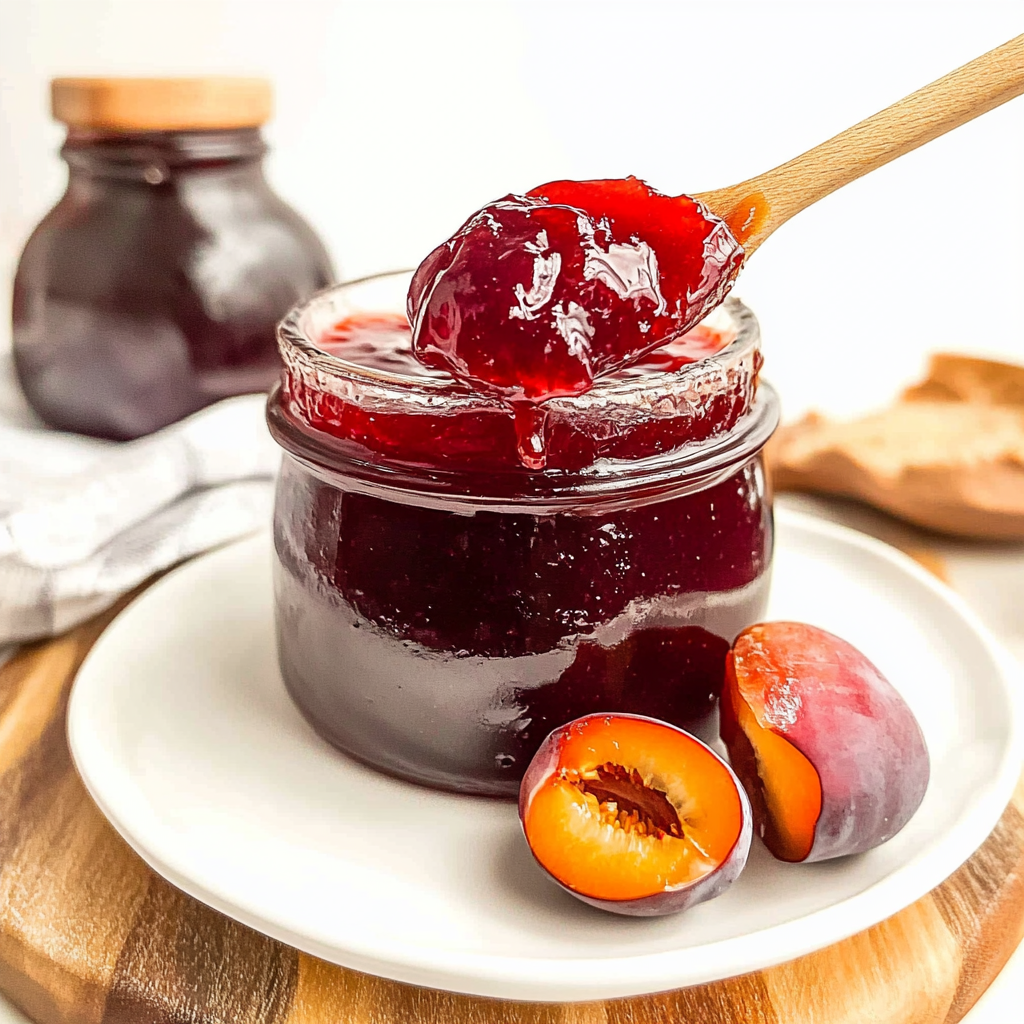
The next Christmas, I got jar number 2. The year after, 3.
Every Christmas, in Ruth’s farmhouse kitchen, after Carol and Jeanette had opened their velvet boxes, Ruth would turn and put a jar in my hands. A bracelet for Carol. Pearl earrings for Jeanette. A cameo. A gold watch. A ring that had belonged to Ruth’s own mother.
And for me, plum jam.
“Mom’s going to give Linda jam until she’s ninety,” Carol said the tenth year, holding a new gold watch up to the light.
“Honestly, Mom,” Jeanette said. “You could at least switch to strawberry.”
“Linda likes plum,” said Ruth.
I did. I’d never said so. I looked across the table at her, a stooped woman in a gray cardigan with her hands folded, and she held my eyes exactly one second longer than she needed to.
I thought: she’s telling me something. I just didn’t know what.
I washed every jar. I dried each one, put the lid back on, and set it on a shelf in our basement with the numbers facing out. Tom thought it was sentimental.
“Lin, you can recycle those.”
“I know,” I said. I never did.
They were the only things in that family that belonged only to me.
In 2019, Ruth’s kidneys began to fail. She needed dialysis three times a week, Tuesdays, Thursdays, and Saturdays, at the clinic in Marshalltown. That was forty minutes each way and four hours in the chair. Tom worked at the John Deere plant in Waterloo and couldn’t get the time off. Carol and Jeanette lived in Ames and Des Moines and were “so busy.”
So I drove her. For four years.
I’d retired from the co-op by then. I brought a thermos and a crossword puzzle. Ruth brought silence. Medicare paid for most of the treatment, and her supplement plan covered the rest. I handled her paperwork at her kitchen table, because I’m a bookkeeper and somebody had to.
Ruth died last March, at ninety-one, in her own bed, with the window cracked open. I was holding her hand. Tom stood at the foot of the bed. She didn’t say anything at the end. She just looked at me, pressed my fingers twice, and was gone.
A week after the funeral, Carol and Jeanette sat at Ruth’s kitchen table with a yellow legal pad, dividing up the jewelry. I stood at the sink, washing coffee cups.
They worked in cheerful, quick murmurs. You take the pearls, I’ll take the ring. The cameo’s yours. I’ll have the brooch. A velvet box snapped open. A bracelet clinked.
I wasn’t on the legal pad. I didn’t expect to be.
Carol looked up once and said kindly, “Linda, you can have the dishcloths.”
Nobody mentioned the will. Ruth’s lawyer, a man named Dennis Pruitt, had told the family he’d be filing it with the court and would be in touch. Carol had waved that away.
“Mom’s will is simple,” she said. “She told me years ago. The farm gets split three ways and sold. We’ll each get a nice check.”
I said nothing.
Then came Christmas at Carol’s, the first without Ruth. There was a gap at the head of the table where Ruth’s chair would have been, and nobody mentioned it. After dinner, Carol went into the pantry for coffee filters and came out holding a jar.
“Look what I found in the back of Mom’s pantry when we cleaned it out. She must have made it right before the hospital.”
Jar number forty.

Lila Hart is a dedicated Digital Archivist and Research Specialist with a keen eye for preserving and curating meaningful content. At TheArchivists, she specializes in organizing and managing digital archives, ensuring that valuable stories and historical moments are accessible for generations to come.
Lila earned her degree in History and Archival Studies from the University of Edinburgh, where she cultivated her passion for documenting the past and preserving cultural heritage. Her expertise lies in combining traditional archival techniques with modern digital tools, allowing her to create comprehensive and engaging collections that resonate with audiences worldwide.
At TheArchivists, Lila is known for her meticulous attention to detail and her ability to uncover hidden gems within extensive archives. Her work is praised for its depth, authenticity, and contribution to the preservation of knowledge in the digital age.
Driven by a commitment to preserving stories that matter, Lila is passionate about exploring the intersection of history and technology. Her goal is to ensure that every piece of content she handles reflects the richness of human experiences and remains a source of inspiration for years to come.