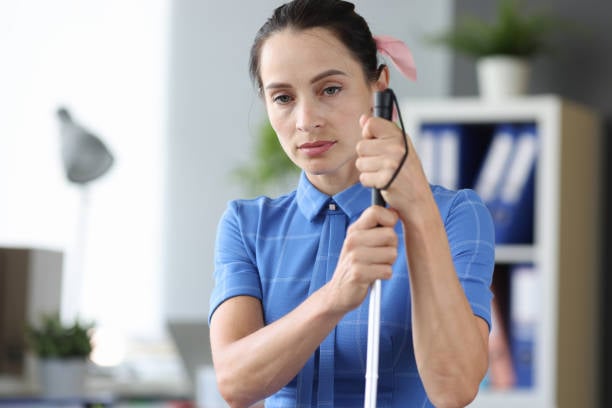
The driver of the pickup truck had been drinking. He pleaded guilty. His insurance company paid the full limit of his policy, two hundred and fifty thousand dollars.
We hired a personal injury attorney, a gray-haired man named Walter Brandt, with an office downtown on Fifth Avenue. Walter negotiated with our health insurance company over what they wanted paid back. He negotiated with the hospital. He fought for months.
When it was finally over, after the medical liens and Walter’s fee, there was about a hundred and thirty-one thousand dollars left.
Walter put it in a separate account. In my name only.
“That money is for your future care, Sutton,” Walter said, in his office, with Ashton sitting beside me. “Your therapy. Your adaptive equipment. If your vision doesn’t come back, it may need to last a long time. Don’t touch it unless you have to.”
“We won’t,” Ashton said.
And we didn’t.
I lost my job at the dental practice. They were kind about it. They kept me on as long as they could. But you can’t run an office you can’t see.
I applied for Social Security disability. It took nine months and one denial before it was approved.
So for almost a year, Ashton carried us. His salary paid the mortgage on our little bungalow in the Sellwood neighborhood. His salary paid the groceries, the car payment, the electric bill, the internet.
He never once complained about it.
One night, about eight months after the accident, I finally asked him the question I’d been afraid to say out loud.
We were sitting on the couch. He was watching a Trail Blazers game. I was listening to it.
“Ashton,” I said. “Do you ever wish you hadn’t married me?”
He turned off the TV. Right in the middle of the fourth quarter.
“Why would you ask me that?”
“Because our lives are so different now. You didn’t sign up for this.”
He took both my hands in his.
“Sutton,” he said. “I married you because I love you. Your eyesight was never the reason.”
For a long time, those words were the thing I held on to. On bad days, I’d whisper them to myself. Your eyesight was never the reason.
But about six months ago, something started to change.

Lila Hart is a dedicated Digital Archivist and Research Specialist with a keen eye for preserving and curating meaningful content. At TheArchivists, she specializes in organizing and managing digital archives, ensuring that valuable stories and historical moments are accessible for generations to come.
Lila earned her degree in History and Archival Studies from the University of Edinburgh, where she cultivated her passion for documenting the past and preserving cultural heritage. Her expertise lies in combining traditional archival techniques with modern digital tools, allowing her to create comprehensive and engaging collections that resonate with audiences worldwide.
At TheArchivists, Lila is known for her meticulous attention to detail and her ability to uncover hidden gems within extensive archives. Her work is praised for its depth, authenticity, and contribution to the preservation of knowledge in the digital age.
Driven by a commitment to preserving stories that matter, Lila is passionate about exploring the intersection of history and technology. Her goal is to ensure that every piece of content she handles reflects the richness of human experiences and remains a source of inspiration for years to come.